
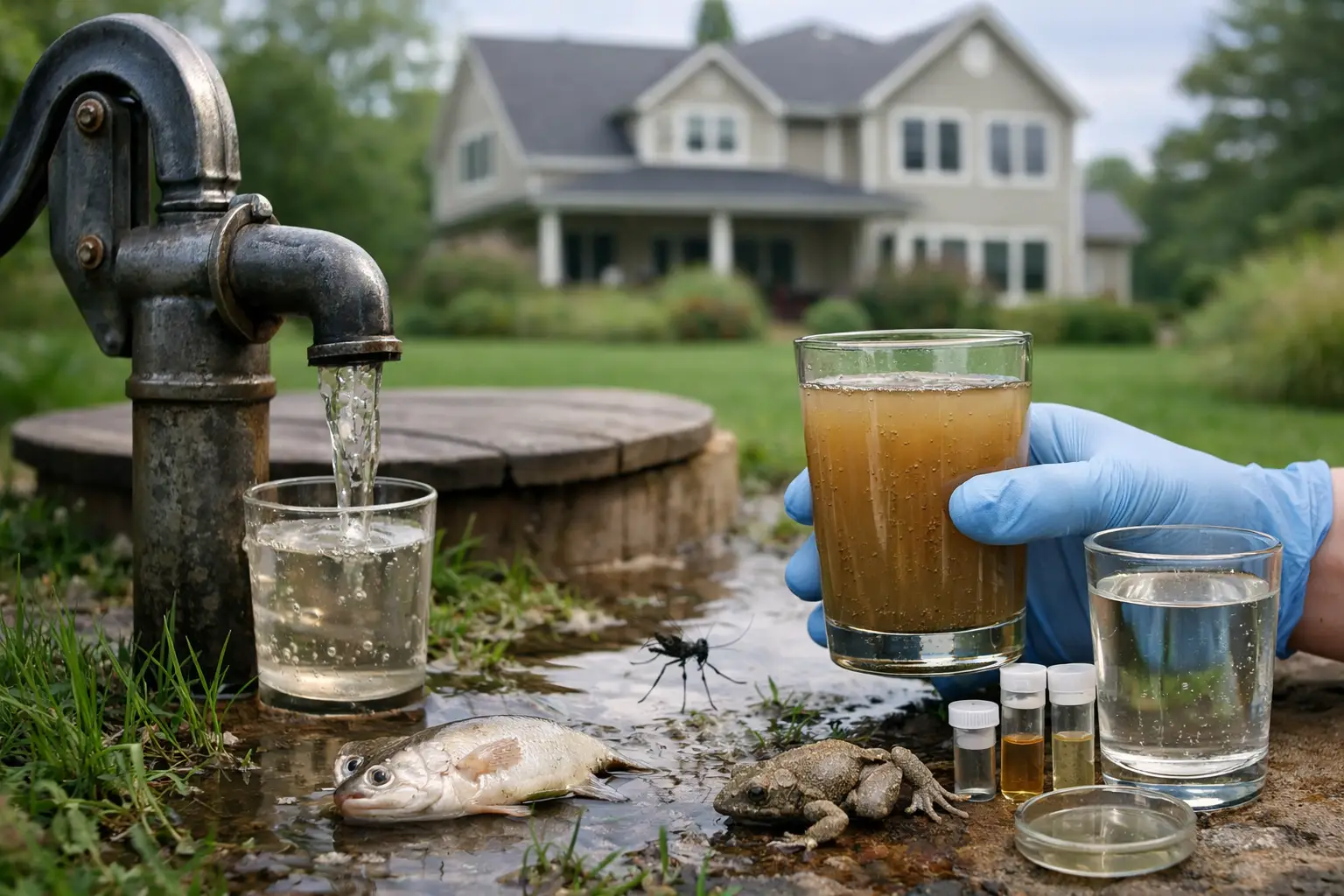
A clear glass of water can still carry a problem. Many well water contamination signs are easy to miss because bacteria, nitrates, and several other contaminants may have no obvious taste, smell, or color. For a homebuyer evaluating a rural property or an owner relying on a private well, appearance is only one part of the assessment. The well location, condition of the casing and cap, nearby drainage, septic systems, flooding history, and laboratory results all matter.
In Southeast Texas, heavy rainfall, high groundwater conditions, aging well components, septic systems, agricultural activity, and storm-related flooding can all affect private wells. A change in water quality deserves attention, particularly when it follows a major rain event, well repair, or a disruption to the plumbing system.
10 Well Water Contamination Signs to Watch For
1. Cloudy, murky, or sediment-filled water
Water that suddenly looks cloudy, brown, gray, or full of floating particles should not be dismissed as a cosmetic issue. Sediment can enter through a compromised well cap, damaged casing, poor surface drainage, or disturbance in the aquifer. Fine sand may also point to a well screen or pump-related issue.
Cloudiness does not automatically mean the water contains harmful bacteria or chemicals. However, it can interfere with treatment equipment and may indicate that surface water or soil is entering where it should not. If the change is new, collect a properly handled sample for laboratory testing and have the well components evaluated.
2. A rotten egg or sulfur odor
A sulfur-like odor is one of the more recognizable well water complaints. It is often associated with hydrogen sulfide gas, sulfur bacteria, or naturally occurring sulfur compounds. The smell may be stronger when hot water runs, which can also indicate activity inside a water heater rather than the well itself.
Although sulfur odor is not always a direct health emergency, it should be investigated. Sulfur bacteria can produce slime that contributes to clogging and unpleasant water conditions. A qualified evaluation can help separate a water-heater issue from a well or groundwater issue.
3. A sewage, musty, or earthy smell
A sewage-like odor deserves more urgent attention than a typical mineral smell. It may suggest bacterial activity, organic material, or possible influence from a failing septic system or surface runoff. Musty or earthy odors can also occur after flooding or when a wellhead is exposed to standing water.
Do not try to solve this by simply adding a filter. First, determine what is present in the water and why it entered the system. Bacterial testing, including total coliform and E. coli testing when appropriate, is a practical starting point.
4. A sudden change in taste
Metallic, salty, bitter, chemical, or unusually sour water can signal changes in mineral content, corrosion, treatment equipment performance, or groundwater conditions. Salty water can be a concern in certain coastal and low-lying areas, where groundwater chemistry may vary significantly by location and depth.
Taste alone cannot identify a contaminant. It also should not be used as a safety test. If water tastes different than it did last week or last month, especially after a flood, drought period, plumbing work, or pump repair, laboratory testing provides far more useful answers than guesswork.
5. Orange, brown, black, blue, or green staining
Stains around fixtures often tell an inspector or water professional where to look next. Orange or brown staining commonly relates to iron, while black staining may be associated with manganese, sulfur-related conditions, or sediment. Blue-green staining can be a warning sign of copper corrosion within plumbing.
Not every stain means the well itself is contaminated. A plumbing issue can create similar evidence. Still, staining should be viewed with the rest of the property conditions, including the age of the plumbing, water heater condition, pH, and any existing filtration or softening equipment.
6. Slime in toilets, tanks, or filters
Pink, orange, brown, black, or clear slime in toilet tanks, fixture aerators, filters, or water treatment equipment may be caused by bacteria. Some bacteria are more of a nuisance than a direct health threat, but their presence can indicate conditions that deserve further testing and maintenance.
Slime that returns soon after cleaning is especially worth documenting. It can foul filters, reduce water flow, and make treatment systems less effective. If the property has a well, note whether the buildup is limited to one fixture, the hot-water system, or the entire house.
7. Recurring stomach illness in the household
Gastrointestinal illness can have many causes, so it is not proof that a well is contaminated. But repeated stomach symptoms among people using the same private water supply should not be ignored, particularly if infants, older adults, pregnant individuals, or people with weakened immune systems are involved.
Private well owners are responsible for monitoring their own water quality. Municipal water is routinely regulated and tested, while a private well requires the owner to arrange testing and address deficiencies. When health concerns and water changes occur together, use an alternative known-safe water source until results clarify the situation.
8. Water quality problems after heavy rain or flooding
A well that performs normally in dry weather but becomes cloudy, odorous, or discolored after a major storm may be vulnerable to surface-water intrusion. This is a significant concern in the Golden Triangle and other Southeast Texas areas where intense rainfall and flooding can occur quickly.
Check the wellhead after storms. The casing should extend above grade, the cap should be secure and sanitary, and the ground should slope away so water does not pond around the well. Floodwater can carry bacteria, chemicals, fuel residues, and debris. If floodwater reached the wellhead, testing and disinfection may be necessary before returning the well to regular use.
9. A damaged, loose, or buried well cap
The well cap is not a minor accessory. It helps keep insects, rodents, debris, and contaminated surface water out of the well. A cracked cap, missing screen, unsecured electrical conduit, or casing that sits too close to grade creates an entry point for unwanted material.
During a property inspection, accessible well components can be visually reviewed, but a visual review does not replace water testing or a full well evaluation. A clean-looking cap does not prove the water is safe, and a damaged cap should be corrected even if current test results are acceptable.
10. Nearby septic, livestock, chemical, or fuel concerns
The land around the well matters. Wells located near septic systems, livestock areas, drainage ditches, fertilizer storage, pesticide use, fuel tanks, or waste disposal areas face greater potential exposure. Improper grading can direct runoff toward the wellhead instead of away from it.
This is particularly relevant during a real estate transaction. Buyers should not assume that an existing well has been properly tested, maintained, or protected simply because the home has been occupied. Ask for available water records, treatment service documentation, and information about prior flooding, septic repairs, and known water-quality concerns.
What Testing Can Confirm
A laboratory water test converts visible warning signs into usable information. The appropriate panel depends on the property and the concern. A basic evaluation often includes total coliform bacteria, E. coli, nitrate and nitrite, and may include pH, iron, manganese, hardness, total dissolved solids, and other mineral indicators. Where local conditions or property history warrant it, expanded testing may address lead, arsenic, volatile compounds, or other contaminants.
Sampling technique matters. A sample taken from a dirty faucet, after a treatment device, or in an improperly handled container can produce misleading results. Follow the laboratory instructions closely, use the correct sample bottles, and meet required delivery times. For bacteria samples, timing and handling are especially critical.
Inspection Findings That Should Lead to Testing
Water testing is a separate service from a standard home inspection, but inspection findings often reveal reasons to test. Examples include a wellhead in a low area, missing sanitary protection, visible casing deterioration, standing water near the well, evidence of flood exposure, aging filtration equipment, a poorly maintained septic system, or an unknown history of water treatment.
For buyers, testing before closing creates a clearer record of the water condition at the time of the transaction. For homeowners, annual bacteria testing is a sensible baseline, with additional testing after flooding, well repair, a change in taste or appearance, or any concern about nearby contamination sources. Texas Country Inspection can help clients coordinate water well and water laboratory testing as part of a broader property-risk evaluation.
A private well can provide dependable water for many years, but it needs the same attention as the roof, foundation, septic system, and electrical service. When something changes, document it, test it, and address the source rather than treating the symptom alone.
