
A small brown ring on a ceiling may look like an old, harmless stain. In Southeast Texas, it can also be the visible result of an active roof leak, a plumbing failure, condensation in an attic, or water entering around exterior flashing. Moisture intrusion warning signs deserve prompt attention because the surface evidence is often smaller than the area affected behind the finish materials.
For buyers, moisture concerns can change the scope of a property decision. For owners, identifying the source early may prevent damaged framing, deteriorated finishes, mold-like growth, and conditions that attract wood-destroying insects. The question is not simply whether a stain exists. A careful evaluation looks at where the moisture originated, whether it is active, how long it may have been present, and what materials may have been affected.
Moisture Intrusion Warning Signs Inside the Property
Water does not always announce itself with a drip from the ceiling. Many problems develop slowly in concealed locations, especially around bathrooms, kitchens, laundry areas, exterior walls, and HVAC equipment. A home can look clean and recently painted while moisture remains trapped behind wall coverings or beneath flooring.
Discoloration is one of the more familiar signs. Yellow, brown, or gray staining on ceilings, walls, trim, or inside cabinets can indicate previous or current wetting. Fresh paint over a stain does not establish that the problem has been corrected. Inspectors consider the location of the stain, the condition of nearby materials, and possible sources above or behind the affected area.
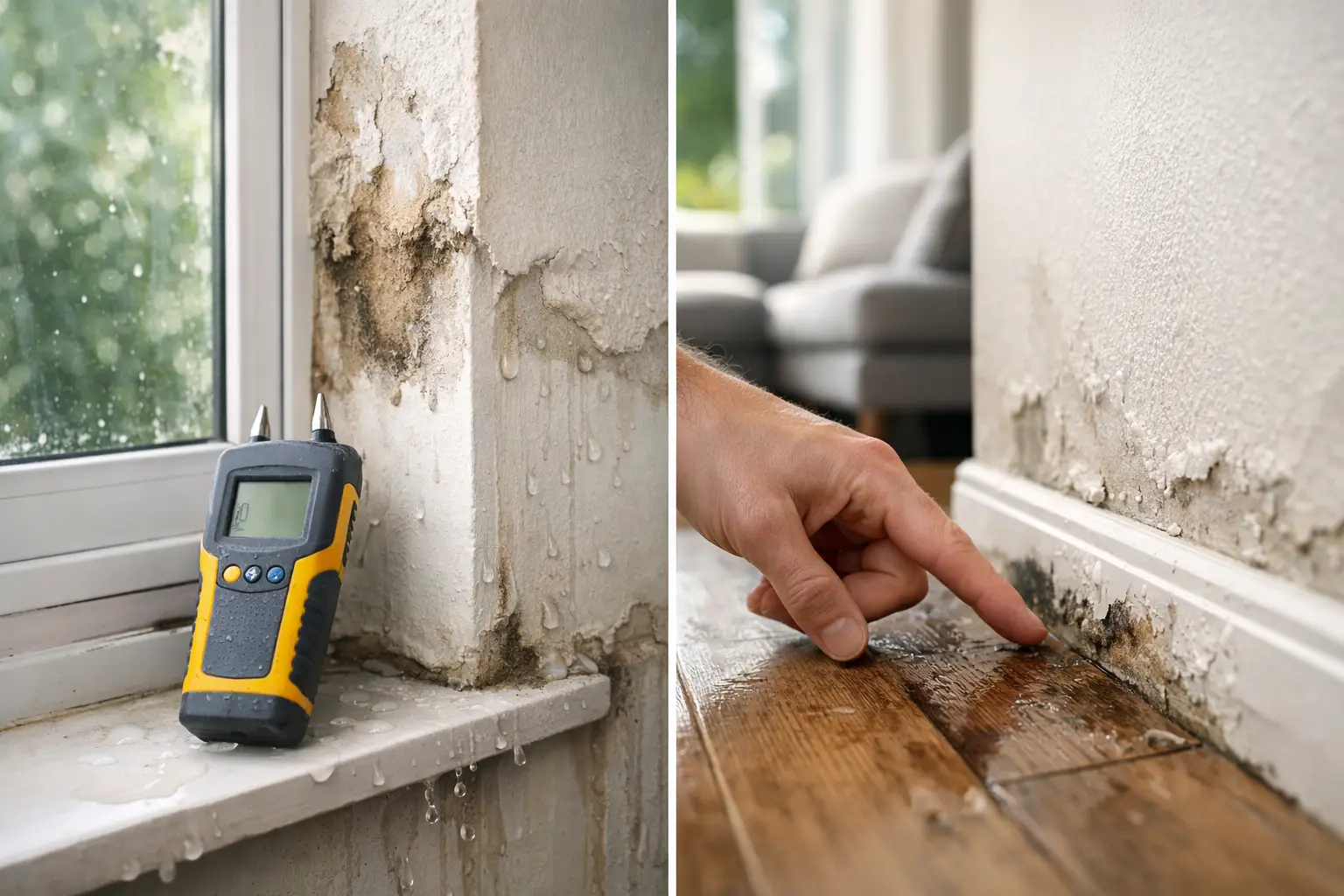
Drywall changes are another concern. Look for soft spots, swelling, blistered paint, peeling texture, cracked joint tape, or a wall surface that appears bowed. These conditions may develop when gypsum board repeatedly absorbs moisture. At a ceiling, they can point to roof leakage, plumbing leakage from an upper floor, or condensation issues in attic areas.
Flooring can provide useful clues as well. Cupped wood flooring, lifted laminate edges, loose tile, cracked grout, or vinyl that has separated from the subfloor may indicate moisture exposure. The cause varies. A dishwasher leak, refrigerator supply line, toilet seal, slab-related moisture, or an exterior drainage problem can all affect flooring. Material damage alone does not identify the source, which is why the surrounding conditions matter.
A persistent musty odor should not be dismissed as an old-house smell. Odor can be associated with damp building materials, limited ventilation, crawlspace humidity, leaking plumbing, or prior water damage that was not fully dried and repaired. Odor is not proof of mold, but it is a reason to look more closely.
Exterior Clues Often Explain Interior Moisture
The most expensive moisture problems often begin outside the living area. Southeast Texas properties face heavy rain, high humidity, wind-driven storms, and extended wet periods. A drainage detail that performs adequately during light rain may fail during a strong storm.
Roof coverings, penetrations, flashing, skylights, chimneys, vents, and roof-to-wall transitions are common areas of concern. Missing or damaged shingles are not the only issue. Improper flashing, exposed fasteners, deteriorated sealant, and debris that blocks drainage can allow water into the roof system without creating an immediate ceiling stain.
At exterior walls, inspectors pay close attention to window and door openings, siding transitions, wall penetrations, trim, and caulking. Gaps around utility lines, hose bibs, light fixtures, and dryer vents can permit water entry. Failed sealant may be visible, but concealed damage around openings may not be apparent without invasive investigation.
Ground drainage also matters. Soil should generally direct surface water away from the structure. Low areas near the foundation, standing water after rain, downspouts that discharge next to the home, and roof runoff that lacks adequate extension can keep moisture against the building. On a slab foundation, this may contribute to elevated moisture around the perimeter. On pier-and-beam construction, it can increase crawlspace humidity and expose wood framing to prolonged damp conditions.
Wood rot at fascia, trim, siding, porch components, or window frames is more than a cosmetic concern. Decayed wood indicates repeated wetting and can create favorable conditions for termites and other wood-destroying insects. The repair should address both the damaged material and the water path that caused the deterioration.
Areas That Need a Closer Look
Some locations deserve added scrutiny because multiple systems meet there. Bathrooms are a frequent example. A loose toilet, deteriorated caulk at a tub or shower, leaking supply valve, failed shower enclosure, or slow drain leak can wet flooring and subflooring over time. Damage may be hidden below a vanity or at the wall behind plumbing fixtures.
Kitchens have their own risk points: sink drains, garbage disposals, dishwasher connections, refrigerator water lines, and icemaker boxes. Small leaks inside a cabinet can go unnoticed until the cabinet bottom swells or a musty odor develops.
Attics can reveal roof-related moisture before the living area shows damage. Darkened roof sheathing, staining around penetrations, damp insulation, rusted fasteners, or active drips are meaningful findings. However, not every darkened area is an active leak. Old staining, manufacturing marks, and ventilation-related condensation can appear similar at first glance. The condition should be evaluated in context.
HVAC systems also produce moisture by design. Condensate must drain correctly. A clogged drain line, damaged secondary drain pan, improperly sloped drain piping, or a leaking air handler can release water into an attic, closet, or ceiling cavity. Excessive indoor humidity may also contribute to condensation on ducts, registers, windows, and other cooler surfaces.
What a Thorough Inspection Can and Cannot Confirm
A visual property inspection is designed to identify observable conditions and report material concerns. It can document stains, damaged finishes, drainage deficiencies, plumbing leaks observed at the time of inspection, roof defects, elevated moisture indications, and visible microbial-like growth. It can also identify conditions that warrant further evaluation or repair by an appropriate specialist.
Some moisture sources are intermittent. A roof may leak only during wind-driven rain from one direction. A shower pan may leak only after sustained use. A plumbing line may drip only when a fixture is operating. Dry weather and recently completed repairs can limit what is visible during the inspection.
Additional tools can help when conditions warrant. Infrared thermography may identify temperature differences that suggest areas for further evaluation, including possible moisture-related anomalies. Moisture meters can help assess accessible materials. Neither tool sees through walls with certainty or replaces destructive testing when concealed damage is suspected. Their value is in helping focus the investigation, not in making unsupported conclusions.
When to Act Before Closing or Before Damage Spreads
A buyer should request further evaluation when there is active leakage, soft or deteriorated materials, widespread staining, suspected concealed damage, poor drainage affecting the structure, or evidence that repairs addressed appearance rather than cause. A roofer, plumber, drainage contractor, HVAC technician, foundation professional, or qualified water-damage specialist may be appropriate depending on the observed conditions.
For homeowners, act quickly if you notice any of the following:
- New ceiling or wall staining, especially after rain or using plumbing fixtures
- Bubbling paint, swollen trim, soft drywall, or flooring that is lifting or changing shape
- Water collecting near the foundation, under a structure, or around exterior doors
- A recurring musty odor, visible growth, or condensation that does not resolve with normal operation
Do not assume that a leak is minor because the affected area is small. Water can travel along framing, piping, and ceiling surfaces before becoming visible. A stain several feet from a roof penetration or plumbing fixture may not be directly below the actual source.
At Texas Country Inspection, moisture observations are evaluated as part of the larger building system – roof, exterior, drainage, plumbing, HVAC, foundation, and visible structural components. That broader view is particularly valuable in the Golden Triangle area, where heavy rainfall and humidity can turn overlooked maintenance items into significant repair issues.
If moisture evidence appears in a property report, use it to ask precise questions: What is the likely source? Is it active? What materials are affected? What professional should evaluate it next? Those answers help turn a vague concern into a practical repair decision before a small water path becomes a larger property problem.
