
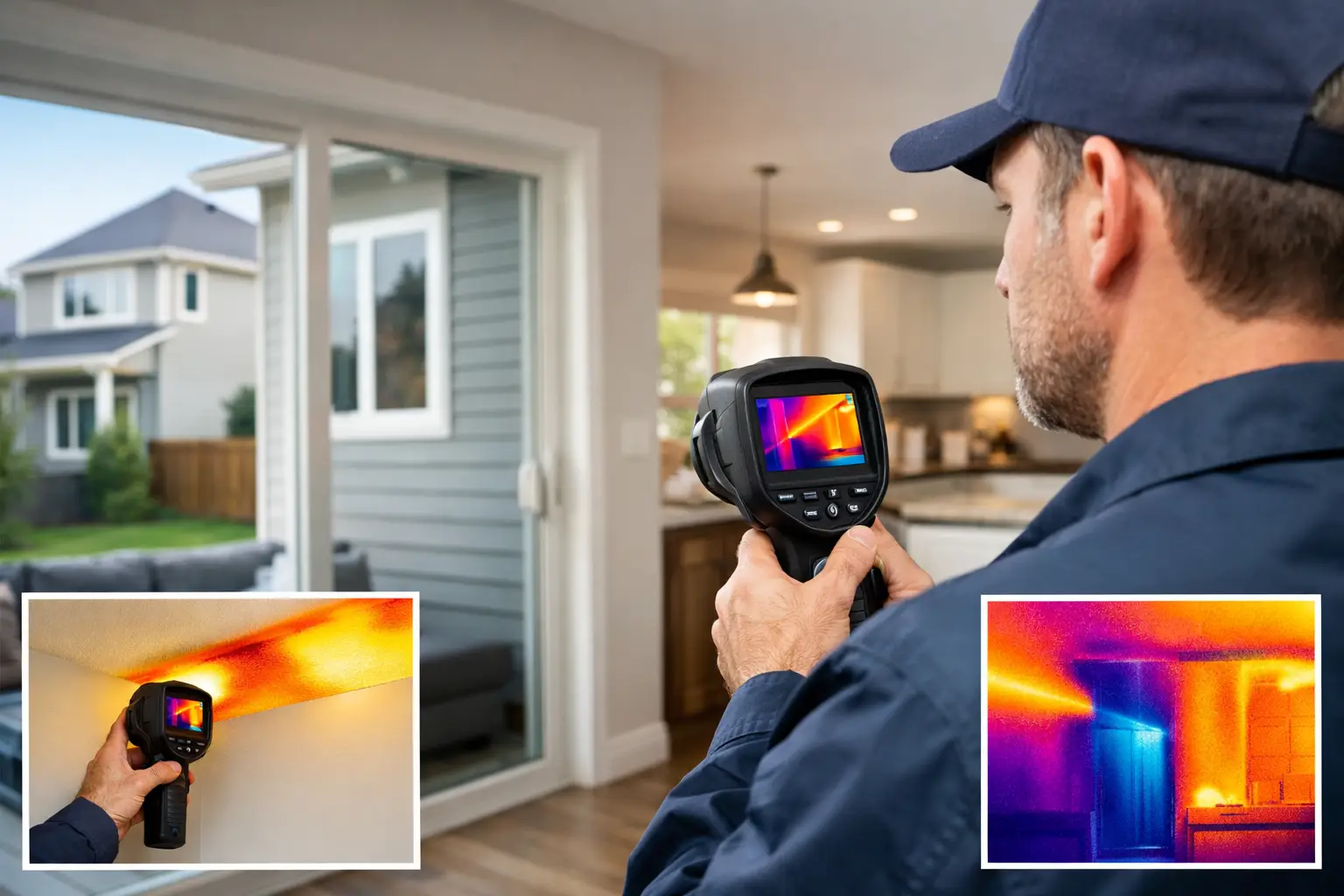
A ceiling stain may have dried weeks ago. An electrical connection may be heating up behind a panel cover. An air-conditioning duct may be leaking into a hot attic. These conditions can be difficult or impossible to see during a visual walk-through. So, what does infrared thermography detect? It detects differences in surface temperature that can point an inspector toward conditions requiring closer evaluation.
Infrared thermography, often called thermal imaging, is a valuable tool during a property inspection because it adds information that the naked eye cannot provide. It does not see through walls or diagnose every defect automatically. Instead, it creates a temperature map of accessible surfaces. An experienced inspector interprets unusual patterns in the context of the building, its systems, current weather, and verification methods such as moisture meters or direct observation.
What Does Infrared Thermography Detect During an Inspection?
A thermal camera detects infrared energy emitted by surfaces and displays varying temperatures as colors or shades. Cooler areas may appear blue, purple, or dark, while warmer areas may appear yellow, orange, or white, depending on the camera palette. The colors themselves are not a diagnosis. Their pattern, location, and temperature difference are what matter.
In a Southeast Texas property, thermal imaging is especially useful because high humidity, frequent heavy rain, intense summer heat, and long cooling seasons can expose weaknesses in the building envelope and mechanical systems. It can help identify a concern before it becomes an expensive repair, but the finding still needs to be evaluated carefully.
Possible moisture intrusion and concealed leaks
One of the most useful applications of infrared thermography is locating temperature patterns associated with moisture. Wet building materials often change temperature differently than dry materials because water holds and releases heat differently. A cooler-than-surrounding area on a ceiling, wall, or floor may lead an inspector to investigate for an active roof leak, plumbing leak, window leak, or moisture intrusion around an exterior penetration.
For example, a roof may look acceptable from the ground and a ceiling may show no obvious staining. If thermal imaging identifies a distinct cool pattern below a roof penetration after recent rain, the inspector can check that area with a moisture meter and document the concern. This may help distinguish a current issue from an old stain that is dry at the time of inspection.
Thermal imaging can also be useful around showers, tubs, water heaters, supply lines, drain lines, refrigerators, and HVAC equipment. It is not a substitute for opening walls or performing destructive testing. It is a noninvasive way to identify locations that deserve further attention.
Electrical components running hotter than expected
Loose connections, overloaded circuits, deteriorated breakers, and failing electrical components can create excess resistance. Resistance produces heat. When conditions allow safe observation, a thermal camera may reveal an unusually warm breaker, conductor, receptacle, disconnect, or electrical connection.
This can be particularly meaningful in older homes, commercial spaces with significant equipment loads, and properties where additions or renovations may have changed electrical demand. A warm component is not automatically defective. Electrical equipment naturally generates some heat when energized, and load conditions during the inspection matter. Still, a localized hot spot can support a recommendation for evaluation and repair by a qualified electrician.
Inspectors do not remove energized panel components or place themselves in unsafe conditions simply to obtain a thermal image. Safety and accessibility remain the first considerations.
Missing insulation and air leakage
In an air-conditioned home, missing or compressed insulation can create warmer patterns on interior ceilings and exterior walls. In colder conditions, the same areas may appear cooler. Thermal imaging may also reveal air leakage around attic access panels, recessed lights, exterior doors, windows, plumbing penetrations, and poorly sealed duct chases.
Not every temperature variation is a defect. Framing members can show as repeating lines because wood transfers heat differently than insulated wall cavities. This is commonly called thermal bridging. An inspector must recognize the difference between a normal framing pattern and a pattern that suggests a substantial insulation gap or air leak.
For buyers, these findings matter because poor insulation and uncontrolled air movement can increase utility costs, make rooms uncomfortable, and contribute to condensation risk. In the humid Gulf Coast climate, unconditioned air entering wall or ceiling cavities can also complicate moisture control.
HVAC and duct performance concerns
Thermal imaging can help identify temperature differences related to heating and cooling performance. During cooling operation, an inspector may observe a warm supply register when nearby registers are delivering cooler air, or find a hot pattern at a ceiling that suggests a disconnected, damaged, or poorly insulated duct in the attic.
It may also show uneven cooling across rooms, leakage around an air handler, or a temperature pattern consistent with a condensate issue. These observations are useful when paired with normal inspection procedures, including operating the system within safe limits, measuring accessible temperature changes, and observing visible equipment conditions.
A thermal camera cannot determine refrigerant charge, calculate system capacity, or replace a full HVAC evaluation. If patterns suggest an issue, further assessment by a licensed HVAC contractor may be appropriate.
What Infrared Thermography Cannot Confirm
Thermal imaging is powerful precisely because it is a screening tool, not a shortcut to certainty. A camera sees surface-temperature differences. It cannot identify the exact cause of every difference without supporting evidence.
A cool ceiling area could be caused by moisture, but it could also result from an air-conditioning duct above the ceiling, an insulation void, or a recent change in sunlight exposure. A warm electrical component may reflect normal operation under load rather than a hazardous defect. The camera image must be considered alongside the building’s construction, the weather, occupancy conditions, and other inspection findings.
Infrared thermography also has practical limitations. It cannot reliably see through dense materials, and it cannot inspect areas that are blocked, unsafe, inaccessible, or outside the scope of the inspection. Newer construction can have concealed issues, while older homes may show temperature variations caused by multiple past repairs and construction methods. Conditions can change from one day to the next.
That is why a meaningful thermal inspection involves more than pointing a camera at a wall. The inspector needs to know where moisture commonly enters, how HVAC systems are routed, what normal heat signatures look like, and when a finding calls for verification.
Why Conditions at the Property Matter
Thermal imaging works best when there is a meaningful temperature difference between the inside and outside of the structure or between the component being inspected and its surroundings. In summer, a well-cooled home can provide favorable conditions for observing insulation and air leakage concerns. After rainfall, moisture-related patterns may be easier to identify. Electrical findings are more likely when equipment is operating under a meaningful load.
At the same time, inspections are a snapshot. A plumbing leak that is inactive during the inspection may not produce a thermal pattern. A roof leak may not be visible if the area has dried. A system that cycles off may not show the same conditions it would under peak use. A careful report should explain what was observed rather than claim certainty where the evidence does not support it.
For a buyer, this is one reason to treat the inspection report as a decision-making tool, not a warranty against future failure. It can identify visible defects, conditions suggesting concealed concerns, and areas where specialist evaluation may protect you from taking on an unknown repair.
How Thermal Findings Are Verified
When an unusual thermal pattern is observed, the next step is to determine whether there is corroborating evidence. Depending on the location and condition, an inspector may compare adjacent areas, use a moisture meter, observe the area from the attic or crawlspace, check plumbing fixtures, review visible roof details, or operate accessible HVAC equipment.
A useful report does not simply include a colorful thermal image. It identifies the location, explains the observed pattern, states the limitation of the observation, and recommends appropriate next steps when needed. For example, a report may note elevated moisture readings at a cool ceiling pattern below a roof valley and recommend repair by a qualified roofing contractor, followed by monitoring or repair of affected interior materials.
Texas Country Inspection uses infrared thermography as part of a thorough, field-based inspection approach when conditions and scope support its use. It is one more way to look beyond surface appearances while keeping conclusions grounded in verifiable evidence.
A property should not have to reveal every problem before closing for you to make a better decision. When thermal imaging points to an unusual condition, asking the right follow-up questions and pursuing qualified repairs or evaluations can turn a hidden concern into a manageable one.
