
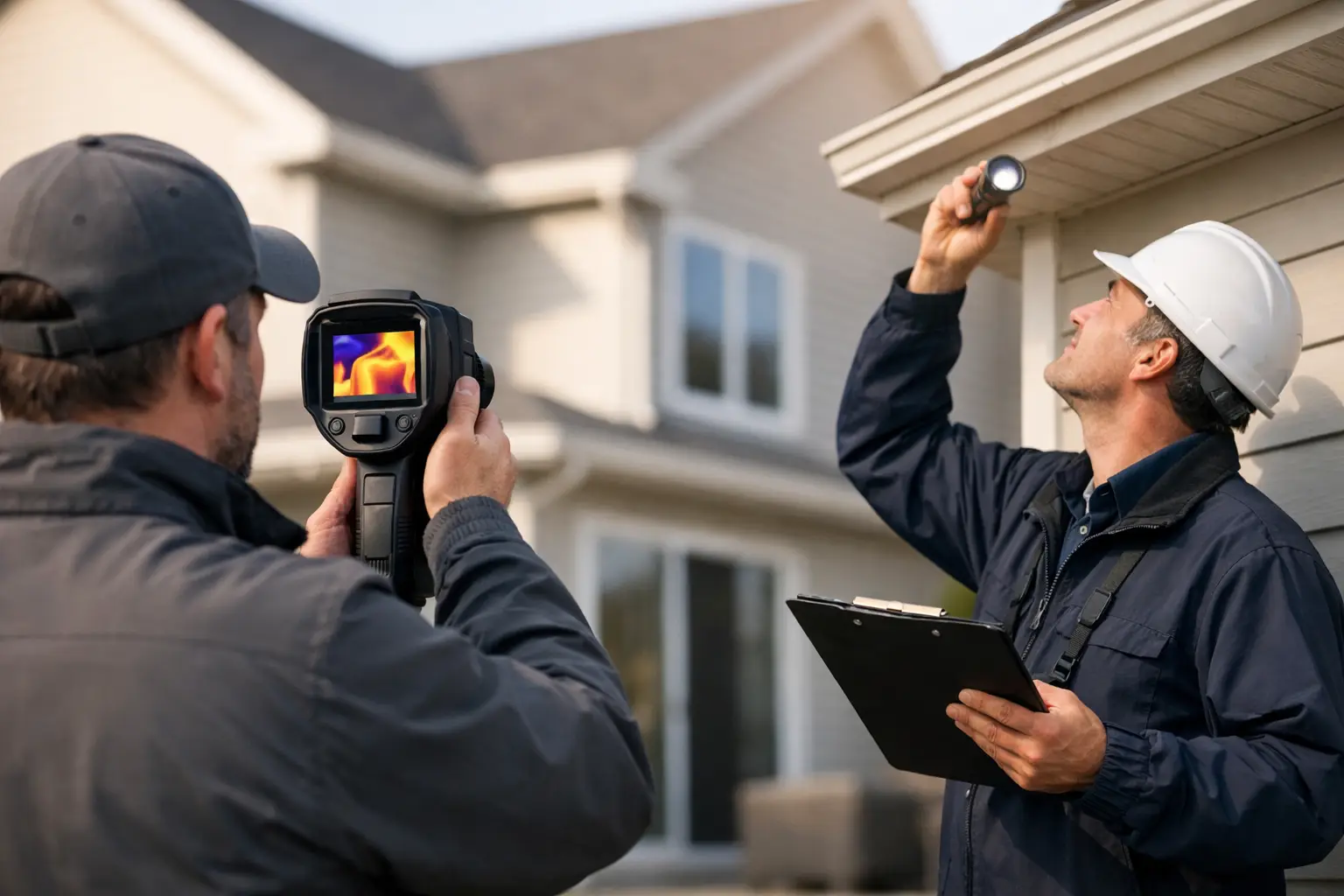
A ceiling stain can tell a buyer that water has been present. It cannot reliably tell them whether the roof leak is active, whether an HVAC drain line is overflowing above the ceiling, or whether moisture has spread beyond the visible discoloration. That is where infrared inspection vs visual inspection becomes a practical question, not just a technical one.
For a property buyer, visual observation remains the foundation of a sound inspection. Infrared thermography adds another layer of information by identifying unusual surface-temperature patterns that may point to hidden moisture, missing insulation, air leakage, electrical concerns, or HVAC performance issues. Neither method replaces the other. Used together and interpreted carefully, they can provide a more complete picture of a property’s condition.
What a Visual Inspection Can Reveal
A professional visual inspection is the starting point for evaluating a home or commercial building. The inspector observes readily accessible components, including the roof covering, exterior cladding, foundation, attic, interior rooms, electrical panels, plumbing fixtures, heating and cooling equipment, and visible structural elements.
Many meaningful defects are identified through direct observation. A lifted shingle, deteriorated flashing, damaged brick veneer, rusted water heater connection, improperly supported drain line, open electrical junction box, or cracked foundation brick can often be seen without specialized equipment. The inspector also looks for patterns: repeated cracks over openings, staining below plumbing fixtures, grading that directs water toward the structure, and wood damage that may be consistent with termite activity or decay.
Visual inspection also relies on practical field judgment. A small crack in drywall may be typical seasonal movement. The same crack, combined with sticking doors, separated trim, sloping floors, and exterior masonry cracks, deserves closer consideration. In Southeast Texas, where expansive soils, heavy rainfall, high humidity, and storm exposure affect buildings, the surrounding evidence matters as much as any single condition.
A visual inspection is not limited to what is obvious at first glance. It involves checking accessible areas methodically, operating representative systems where appropriate, and documenting conditions that could affect safety, performance, or future repair costs. Still, surfaces can conceal problems. Painted drywall, flooring, insulation, cabinetry, and finished ceilings may hide moisture or temperature differences that are not visible to the eye.
Infrared Inspection vs Visual Inspection: The Key Difference
The difference between infrared inspection and visual inspection is simple: visual inspection evaluates what can be directly seen, while infrared imaging evaluates variations in surface temperature. An infrared camera does not see through walls. It produces a thermal image based on the infrared energy emitted from a surface.
Those temperature variations can be useful clues. For example, an unusually cool area on a ceiling may indicate evaporative cooling from moisture. A warm pattern in an electrical panel connection may suggest elevated resistance or an overloaded component. An irregular temperature pattern along an exterior wall can reveal areas where insulation is missing, compressed, or disturbed.
The important word is clue. A thermal anomaly is not automatically a defect, and it is not automatically moisture. Sun exposure, reflective materials, recently operated appliances, air conditioning supply patterns, and differences in building materials can all create temperature changes. An experienced inspector uses infrared findings alongside visual observations, moisture-meter readings when appropriate, system operation, and the history of the area being inspected.
For that reason, an infrared scan should not be treated as a substitute for a detailed property inspection. It is a tool that helps direct attention to areas that may require further evaluation.
Where Infrared Adds Meaningful Value
Infrared thermography is especially useful when conditions are favorable and there is a reason to investigate beyond the visible surface. It can help identify concerns that may otherwise remain unnoticed during a standard walk-through.
Moisture Behind Finished Surfaces
Water intrusion is one of the most costly conditions a buyer can inherit. In the Golden Triangle and other humid Southeast Texas communities, moisture can enter through roof penetrations, window and door flashing, exterior wall leaks, plumbing failures, HVAC condensate issues, and drainage problems around the foundation.
A visible stain may be old and dry. Conversely, a ceiling or wall can appear normal while an infrared scan identifies a cooler pattern that warrants moisture testing. When the thermal image, moisture reading, and visible conditions support the concern, the inspection report can better identify the location and likely source area for further repair evaluation.
HVAC and Insulation Performance
During hot Texas weather, cooling systems work hard. Infrared can help identify uneven cooling at supply registers, potential duct leakage in accessible areas, insulation voids, and air infiltration around exterior doors, windows, and attic accesses.
This does not mean every temperature difference is an HVAC defect. Rooms with more glass, west-facing walls, open doors, or long duct runs may perform differently. But when a significant anomaly appears beside damaged duct insulation, a disconnected duct, or visible attic bypasses, the findings become more meaningful.
Electrical Components
An infrared scan of an accessible electrical panel may identify a connection or breaker operating at a higher temperature than surrounding components. This can be a valuable safety indicator, particularly when electrical loads are present at the time of inspection.
However, electrical thermography has limits. A lightly loaded circuit may not show a problem during the inspection, and a temperature difference needs context. Panel covers, inaccessible wiring, and the electrical load at that moment all affect what can be observed. Any concerning thermal pattern should be evaluated by a qualified electrician rather than diagnosed solely from an image.
Flat Roofs and Commercial Buildings
On commercial properties, infrared may help identify potential moisture areas within some roof systems or thermal differences across larger building assemblies. The usefulness depends heavily on roof type, weather conditions, surface condition, access, and the timing of the scan. A thermal finding can guide more targeted roofing evaluation, but it does not replace a roof moisture survey or invasive testing when those services are needed.
Why Visual Inspection Still Matters Most
Infrared equipment can be impressive, but a camera cannot evaluate everything that affects a property’s condition. It cannot confirm the age of a roof, determine whether a drain line is properly sloped, inspect concealed framing, verify septic operation, or replace a wood-destroying insect inspection.
It also cannot see through standing water, thick materials, or every finished surface. A thermal camera measures the surface temperature it can detect. If no temperature differential exists, a concealed issue may not appear in the image at all.
Visual inspection provides the construction context required to interpret thermal findings. Consider a cool area below a second-floor bathroom. Without visual observation, the image may suggest moisture. With closer inspection, the inspector may find an active air-conditioning supply duct below the floor or a cold-water line producing the pattern. On the other hand, a cool ceiling area paired with a damp moisture-meter reading and staining near a plumbing fixture creates a stronger basis for recommending repair or further investigation.
The same principle applies to foundation concerns. Infrared imaging may show temperature differences, but it does not measure foundation movement. When movement indicators are present, elevation readings and a review of structural symptoms can provide more useful information than a thermal image alone.
Conditions That Affect Infrared Results
Thermal imaging works best when there is enough temperature difference between materials or between the interior and exterior environment. Weather, HVAC operation, recent rainfall, sunlight, occupancy, and building orientation can all influence the results.
A wall heated by afternoon sun may appear warmer than a shaded wall. A recently used shower can alter bathroom wall temperatures. A vacant home with the HVAC turned off may offer fewer useful conditions for identifying air leakage or insulation variation. Rain may help reveal active moisture concerns in some situations, while also making exterior thermal interpretation more complicated.
This is why a careful inspector does not overstate what an infrared camera can prove. The report should distinguish between an observed thermal anomaly, supporting evidence, and the recommended next step. That approach protects the client from both missed concerns and unnecessary alarm.
Which Inspection Method Do You Need?
For most buyers, the answer is not infrared or visual inspection. A thorough visual inspection is essential, and infrared is most valuable as an added diagnostic tool when the property, conditions, or observed evidence justify its use.
A buyer may benefit from infrared scanning when there are ceiling stains, musty odors, suspected plumbing leaks, uneven room temperatures, a history of water intrusion, or concerns around an aging HVAC system. It can also be useful in newer homes, where a clean finish may conceal incomplete insulation, duct issues, or moisture around windows and exterior penetrations.
For rural properties, infrared does not replace evaluation of the systems that carry the greatest risk. Septic components, water wells, drainage conditions, accessible structural elements, and wood-destroying insect evidence still require the appropriate inspection methods. A complete evaluation uses the right tool for each concern rather than applying one technology to every condition.
Texas Country Inspection uses field experience, direct observation, and technical tools to document meaningful issues without turning every irregularity into a major defect. The goal is to give clients clear information they can use before closing or before a repair becomes more expensive.
When reviewing an inspection report, focus on the evidence behind the finding: what was observed, where it was located, whether moisture or other supporting conditions were present, and what follow-up is recommended. A well-interpreted infrared image can help reveal a question behind the wall. A careful inspection helps you decide what that question means for the property you are buying.
