
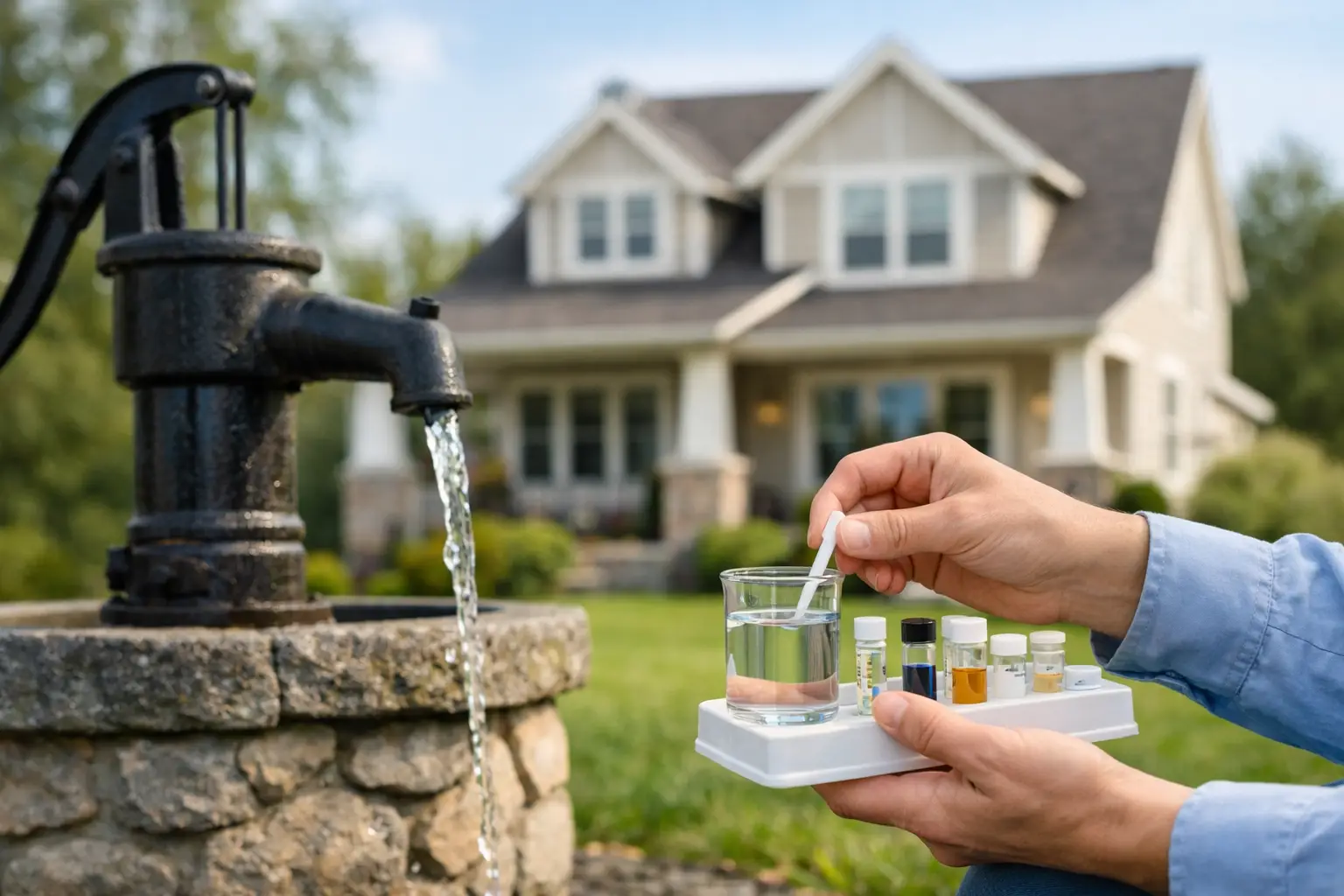
A private well is not a municipal utility connection with routine public monitoring. It is part of the property, and its condition can affect daily use, financing, repair costs, and health considerations. Knowing how to evaluate well water before buying a home means looking beyond whether water comes out of the faucet. You need to consider the well equipment, the water source, the surrounding site conditions, and laboratory results collected correctly.
In Southeast Texas, shallow groundwater, heavy rain, flooding, septic systems, agricultural activity, and aging rural infrastructure can all affect a private water supply. A clear glass of water may be encouraging, but appearance alone cannot confirm that a well is producing safe, dependable water.
Start With the Well System, Not Just the Water
A water test is essential, but it represents one sample taken at one point in time. The physical well installation helps explain whether the system is protected from contamination and whether future maintenance may be needed.
Begin by locating the well and identifying the major components: the well casing, sanitary well cap, electrical connections, pressure tank, pressure switch, plumbing lines, and any treatment equipment. The casing should extend above grade and have a secure cap designed to keep insects, small animals, runoff, and debris out of the well. An open pipe, loose cap, cracked casing, or makeshift cover is not a cosmetic issue. It creates a direct pathway for contamination.
Observe the ground around the wellhead. The area should drain away from the casing rather than allowing ponding around it. In the Golden Triangle and other low-lying parts of Southeast Texas, standing water after storms is common. If runoff collects near a poorly protected well, bacteria and surface contaminants have a better opportunity to enter the system.
The well should also be evaluated in relation to potential contamination sources. Septic tanks, drain fields, livestock areas, chemical storage, fuel tanks, and drainage ditches all deserve attention. Required separation distances can vary based on the system, local rules, and site conditions, but a well located downhill from a failing septic area or in a flood-prone drainage path deserves closer review.
How to Evaluate Well Water at the Faucet
Faucet observations are useful screening tools, not substitutes for lab analysis. Run cold water at a frequently used fixture and pay attention to color, odor, pressure, sediment, and staining. These clues can point to a problem in the well, plumbing, pressure system, or treatment equipment.
Water that is cloudy at first but clears quickly may contain air bubbles. Water that stays cloudy or carries visible particles may indicate sediment, mineral scale, disturbed well material, or plumbing corrosion. Orange or brown staining can be associated with iron, while black staining may be related to manganese or certain bacteria. A rotten-egg odor often suggests hydrogen sulfide or sulfur-related bacteria, but the source needs to be confirmed before selecting treatment.
Pressure matters as well. Low flow at one fixture may be a localized plumbing issue. Low pressure throughout the house can point to a clogged filter, failing pressure tank, pump problem, undersized equipment, leaks, or a well that cannot maintain production under demand. Cycle the water several times if possible. Rapid pump cycling can indicate a pressure tank issue and can shorten pump life if left uncorrected.
Ask the seller how the system performs when several fixtures run at once. A home may appear functional during a brief showing but have poor recovery after laundry, showers, irrigation, or multiple occupants using water. This distinction is especially important for larger homes, rural properties, and homes with guest quarters.
Laboratory Testing Is the Deciding Evidence
No visual inspection can identify many contaminants that matter most. Bacteria, nitrates, arsenic, lead, and other substances may have no obvious taste, smell, or color. A properly collected laboratory sample is the most reliable way to assess the quality of water being supplied to the home.
For a property purchase, the basic testing package should be tailored to the well, location, lender requirements, and visible conditions. At a minimum, many buyers start with total coliform bacteria and E. coli testing. Total coliform can indicate that the water system is vulnerable to contamination. E. coli is a more serious indicator associated with fecal contamination and requires prompt follow-up.
Nitrate and nitrite testing is also worth considering, particularly where septic systems, livestock, fertilizer use, or shallow wells are present. Elevated nitrate levels can be a significant concern for infants and pregnant individuals. In some areas, buyers may also need testing for arsenic, lead, iron, manganese, hardness, pH, total dissolved solids, sulfate, chloride, or other location-specific constituents.
Test selection is not one-size-fits-all. A house near the coast or in an area with brackish groundwater may warrant closer attention to chloride and total dissolved solids. A property with persistent staining or a metallic taste may need mineral analysis. If the property has flood history, an older well, or an improperly sealed wellhead, bacteria testing becomes even more critical.
Samples must be collected using the laboratory’s instructions. The sample point, bottle type, timing, handling, and chain of custody can affect the result. For example, bacteria samples are commonly collected from an untreated interior cold-water tap after removing aerators and disinfecting the outlet as directed. Pulling a sample after it passes through a softener, filter, or ultraviolet unit may not show the raw water condition and can hide a problem in the well supply.
Review Treatment Equipment Carefully
A water softener, sediment filter, reverse-osmosis system, chlorinator, or ultraviolet treatment unit can improve water quality, but it should prompt questions rather than automatic confidence. Treatment equipment may have been installed for convenience, such as hard water, or it may have been installed to address an ongoing contamination or mineral issue.
Identify what the equipment is designed to treat and ask for service records, filter replacement history, water test results, and installation information. A neglected filter can restrict flow. A softener does not disinfect bacteria. A UV unit can be ineffective if the lamp has failed, the sleeve is dirty, or sediment is preventing light from reaching microorganisms. Chlorination systems require correct adjustment and maintenance.
Also determine whether the home has an untreated bypass line. Some systems treat only drinking-water fixtures or only selected plumbing branches. The water at the kitchen sink may be filtered while bath fixtures, exterior faucets, or refrigerator lines receive different water.
Consider Well Yield, Age, and Documentation
Water quality is only one part of a dependable private supply. A well that produces clean water but cannot meet household demand is still a material concern. Sellers may have well logs, pump invoices, previous laboratory reports, maintenance records, or information about the well depth and installation date. These documents can help establish the system’s history, though they should not replace current evaluation.
Ask direct questions. Has the well ever run dry? Has the pump been replaced? Does the water change after heavy rain? Has the system been disinfected because of bacteria? Are there recurring sediment, odor, or staining problems? A seller’s answer is useful context, but current inspection findings and laboratory results should carry more weight.
Well age also affects risk. Older wells may have deteriorated casing, outdated construction methods, unprotected caps, or uncertain abandonment procedures for previous wells on the property. An unused, uncovered well is both a safety hazard and a potential contamination pathway.
Separate Inspection Findings From Water Quality Results
A property inspection can document observable conditions such as a damaged cap, exposed wiring, improper drainage, pressure concerns, missing equipment labels, and visible plumbing defects. It can also identify when the well setup warrants further evaluation by a qualified well contractor.
However, a standard property inspection does not certify well capacity, guarantee future pump performance, or determine potability without laboratory testing. Those are separate questions requiring appropriate testing and, when indicated, specialized evaluation. Clear reporting should distinguish between observed defects, client-provided history, and laboratory findings so buyers understand what has been verified.
For a home purchase, the best time to address a questionable well is before the end of the option or inspection period. A bacterial result may be resolved through disinfection and follow-up testing. A failed pump, poor yield, damaged casing, or recurring contamination can involve more substantial work. The scope and cost depend on access, well depth, soil conditions, equipment type, and the actual source of the problem.
A careful evaluation gives you more than a pass-or-fail answer. It shows whether the water system is being protected, whether testing supports its intended use, and whether the property deserves additional investigation before you commit to ownership.
