
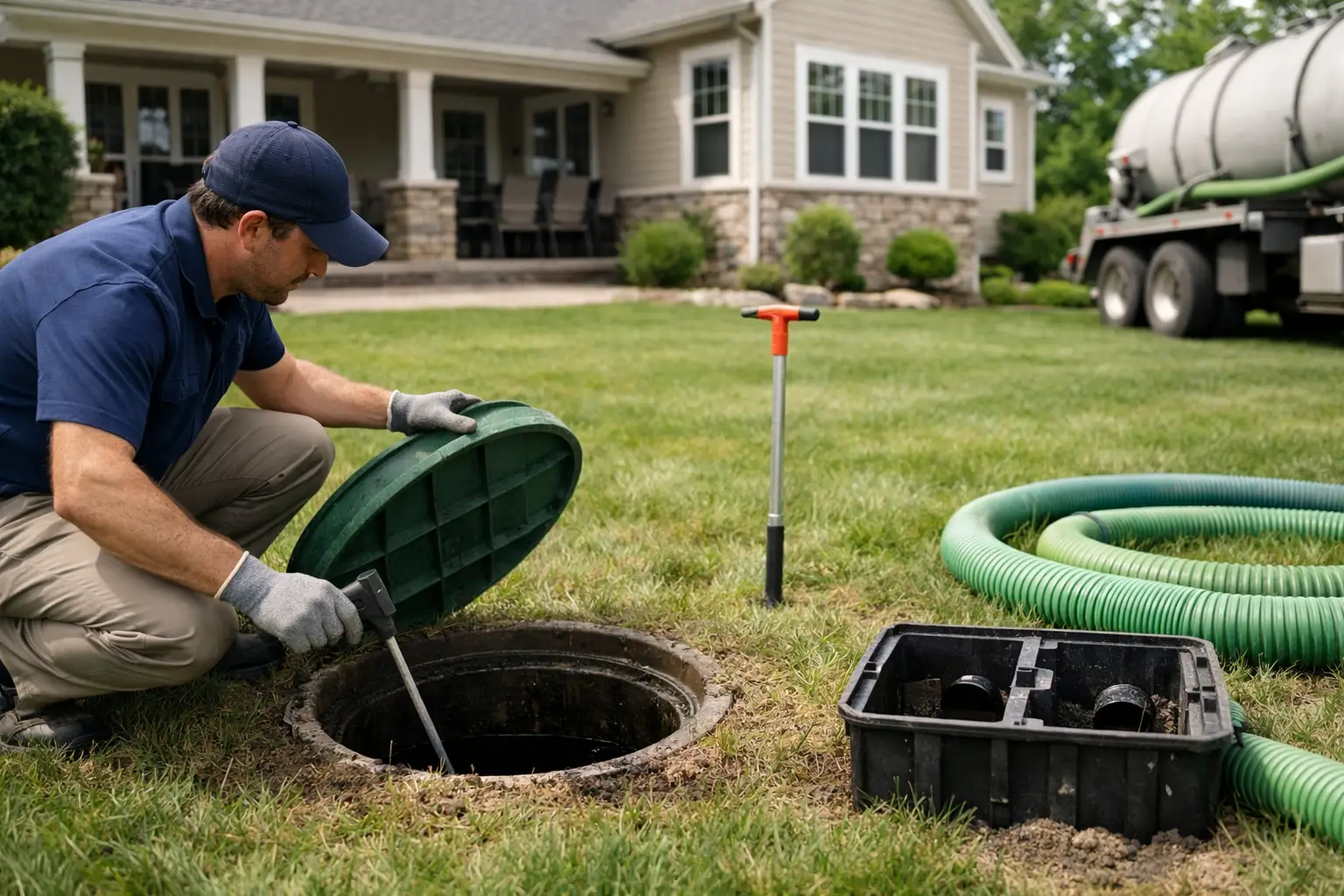
A septic system can serve a property quietly for decades, but a hidden defect can become a major expense shortly after closing. Knowing how to inspect a septic system before you buy helps you separate normal maintenance needs from conditions that may involve a failing tank, damaged piping, or an overloaded disposal area.
For Southeast Texas properties, the site matters as much as the equipment. Heavy rainfall, high groundwater, clay soils, mature trees, and older rural construction can all affect how a system performs. A careful inspection should document visible conditions, ask for records, and identify when further evaluation by a qualified septic professional is warranted.
Start With Records and System Location
Before looking at the yard, ask the seller for the septic permit, installation drawings, pumping records, repair invoices, and any information about the system’s age and capacity. These documents may identify the tank location, disposal field layout, approved occupancy, and type of system installed.
A conventional system generally includes a building sewer line, septic tank, and soil absorption area or lateral lines. Some properties use aerobic treatment units, pump tanks, spray systems, or other engineered components. Those systems have additional electrical, mechanical, and maintenance requirements. You cannot inspect a system properly if you do not first understand what type of system is supposed to be on the property.
The absence of records does not automatically mean the system is defective. Older homes often have incomplete documentation. It does mean the buyer should use greater caution, especially if the tank location, lateral field, or repair history cannot be confirmed.
How to Inspect a Septic System From the Ground Surface
A home inspection typically begins with a noninvasive review of accessible components and site conditions. Start by locating the tank lids or risers, cleanouts, pump controls, alarms, and the apparent disposal area. The inspector should compare their locations to the home, driveways, patios, pools, retaining walls, and large trees.
Watch for surface evidence that the system is struggling. A disposal field should not have standing wastewater, unusually lush strips of grass, dark soil, sewage odor, or persistent wet areas when surrounding ground is dry. In Southeast Texas, rain can make this assessment more complicated. A wet yard after a storm is not proof of septic failure, but ponding or sewage odor around the field deserves further investigation.
The following conditions should be documented and evaluated carefully:
- Depressions or soft ground over the tank or lateral field, which may indicate settlement, damaged covers, or saturated soil.
- Vehicles, heavy equipment, sheds, concrete additions, or swimming pools installed over septic components.
- Large tree roots near the tank, building sewer, or disposal field.
- Missing, broken, loose, or buried tank lids and risers.
- Discharge from an aerobic system that is not properly contained or distributed.
- An alarm light, audible alarm, or control panel showing a fault condition.
A system can appear dry and still have problems. Conversely, a damp area may be caused by drainage or a leaking water line rather than sewage. The point of the inspection is to recognize conditions that need a more targeted diagnosis, not to make assumptions from one symptom.
Check the Home’s Plumbing for Clues
The plumbing inside the house often provides early warning of a septic concern. Run water at several fixtures, flush toilets, and observe drainage where accessible. Slow drains throughout the home, gurgling at tubs or toilets, sewage backup, and wastewater surfacing outdoors may indicate a blockage, an overloaded tank, a failed pump, or a disposal field that is no longer accepting effluent.
One slow bathroom sink alone is more likely to be a localized drain issue. Multiple fixtures draining slowly at the same time are more concerning. Ask whether the home has recently been vacant, whether the seller has used additives, and whether drains have been routinely treated or frequently snaked. These details can reveal a pattern that a quick walkthrough might miss.
Water use also matters. A leaking toilet, continuously running fixture, or water treatment discharge can send unnecessary volume into a septic system. On a marginal system, even excess water from normal household use can expose an existing problem.
Evaluate Tank Access and Visible Components
If tank covers and risers are safely accessible, their condition should be observed. Covers should be secure and appropriate for their location. Damaged concrete lids, makeshift covers, or unsecured openings are safety hazards and should be corrected promptly.
A standard property inspection does not usually include entering a septic tank, probing the disposal field, or pumping the tank. Those activities require specialized equipment, safety procedures, and qualified personnel. Septic tanks can contain toxic gases and oxygen-deficient atmospheres. No buyer, homeowner, or inspector should enter a tank or place their head inside an opening.
When a qualified septic provider opens the tank, they can check the liquid level, inlet and outlet baffles, effluent filter, tank condition, scum and sludge levels, and evidence of backup. This is often the most useful next step when the system’s maintenance history is unknown. Pumping may be necessary to inspect internal conditions, but pumping alone does not prove that the disposal field is functioning properly.
Look Closely at Aerobic and Pumped Systems
Aerobic treatment units and pump-assisted systems need more than a visual check of the yard. Inspect the accessible control panel for power, alarm status, and visible damage. Confirm whether a maintenance contract exists and review service records if available. Many aerobic systems require regular maintenance because they rely on pumps, aerators, floats, filters, and electrical controls.
A silent alarm does not guarantee proper operation. An alarm may be disconnected, a control panel may have lost power, or a component may be operating outside its intended performance range. Likewise, a green indicator light does not replace maintenance documentation or a functional evaluation by a qualified provider.
Spray heads and discharge areas should also be considered. They should not create a nuisance, direct wastewater toward buildings, or discharge where people routinely walk or children play. Local requirements and approved system design determine what is acceptable, so avoid judging an aerobic system solely by appearance.
Consider Soil, Drainage, and Property Changes
Septic systems depend on suitable soil conditions and room for wastewater to disperse. That makes site changes a serious concern. Regrading, added fill, drainage ditches, new roofs draining toward the lateral field, and compacted soil can change how water moves across the property.
A buyer should also ask whether bedrooms were added, a garage was converted to living space, or a guest house and RV connection were installed. A system designed for a smaller household may be overloaded by increased occupancy. This is particularly relevant on rural properties where an addition was completed without clear septic documentation.
Flooding is another practical concern in parts of Southeast Texas. Floodwater can saturate the disposal area, damage controls, and cause wastewater to back up into the home. If the property has a flood history or is located in a low-lying area, request specific information about how the septic system performed during major rain events.
Know When a Septic Specialist Is Needed
A general inspection can identify visible deficiencies and risk indicators, but it has limits. A septic specialist should be called when there are sewage odors, wet or unusually green areas over the field, recurring drainage problems, missing records, alarm conditions, damaged tank covers, or evidence that improvements may be built over septic components.
Further evaluation is also wise when buying an older home with an original system, a property that has been vacant for an extended period, or a home where the system has not been pumped or serviced on a documented schedule. The specialist may perform a tank inspection, pump and component testing, line evaluation, or other testing appropriate to the system type and site conditions.
For a real estate purchase, the best time to investigate is during the option period, when the buyer can still request repairs, negotiate the price, seek a credit, or decide whether the risk is acceptable. A detailed report gives the buyer a basis for making that decision instead of relying on a seller’s statement that the system has “always worked fine.”
Texas Country Inspection approaches septic observations as part of the property’s larger risk picture. The condition of the plumbing, soil, drainage, visible equipment, and maintenance history all matter. A careful review cannot guarantee future performance, but it can identify the questions that should be answered before a septic issue becomes the buyer’s problem.
A septic system does not need to be new to be a sound investment. It does need to be appropriate for the property, maintained, and free from warning signs that deserve a closer look before closing.
