
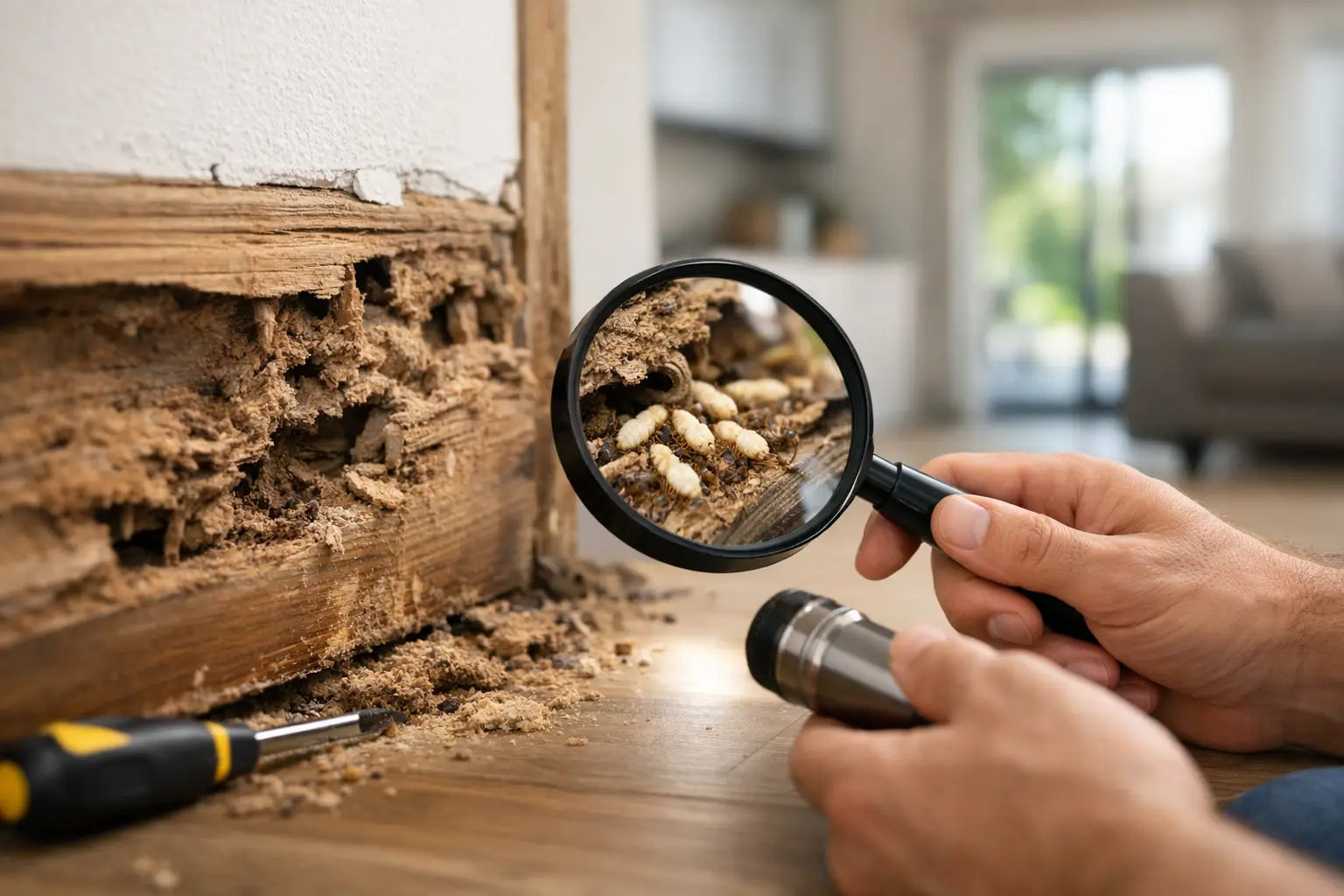
A stained baseboard near a bathroom, a soft spot at an exterior door, or a thin line of mud on the foundation can signal a much larger problem behind the surface. Knowing how to identify termite damage means looking beyond cosmetic defects and understanding where termites travel, feed, and remain hidden. In Southeast Texas, where warm temperatures, high humidity, and frequent moisture exposure create favorable conditions, early recognition can protect a property from costly structural repairs.
Termite damage is often mistaken for age, water damage, carpenter ant activity, or simple wood rot. Those conditions can occur together, especially where a leak or poor drainage has kept framing wet. A careful evaluation considers the evidence as a whole rather than relying on one visible mark.
What Termite Damage Usually Looks Like
The most common concern in this area is subterranean termite activity. These termites live in the soil and need moisture to survive. They typically enter a structure from below through cracks, expansion joints, plumbing penetrations, wood-to-soil contact, or areas where the exterior grade is too high against siding or brick veneer.
Unlike wood-destroying insects that leave obvious sawdust, subterranean termites often consume wood from the inside. The painted face of a trim board, door casing, or wall may appear intact while the material behind it has been hollowed into thin layers. Damaged wood may sound dull when lightly tapped, flex under pressure, or break apart with little force.
When exposed, termite galleries often follow the grain of the wood. The interior can look layered, rough, or packed with soil-like material. Termites do not create the smooth, clean tunnels commonly associated with carpenter ants. They also do not push piles of dry pellet-like droppings out of small holes, which is more consistent with drywood termite activity.
How to Identify Termite Damage Around the Property
Start with accessible areas where moisture, soil, and wood meet. This is not a substitute for a professional inspection, but it can help a homeowner or buyer recognize conditions that deserve prompt attention.
Look for mud tubes at the foundation
Mud tubes are pencil-sized to finger-sized covered pathways made of soil, wood particles, and moisture. Subterranean termites build them to travel from the ground to a food source without exposure to dry air or predators. Tubes may be found on foundation walls, slab edges, crawlspace piers, plumbing lines, garage walls, porch supports, and behind stored materials.
An intact tube does not prove current activity by itself, and a broken tube does not prove termites are gone. A tube may be abandoned, or termites may rebuild it in another location. The finding still matters because it documents prior access to the structure and calls for closer evaluation of nearby wood and conditions.
Check doors, windows, trim, and flooring
Termites often remain unnoticed until damage affects components that move or flex. Doors and windows may become difficult to operate when moisture damage, foundation movement, or insect damage affects surrounding framing. Baseboards can separate from walls, trim may feel soft, and wood flooring can develop unusual sagging or localized weakness.
These symptoms are not exclusive to termites. In the Golden Triangle and other humid Texas areas, elevated moisture and seasonal foundation movement can also cause sticking doors, cracked finishes, and trim separation. The distinction requires inspection of the underlying materials, not a guess based on one symptom.
Inspect exposed wood in the attic and crawlspace
Where accessible, inspect unfinished framing, sill plates, floor joists, subflooring, and wood supports with a flashlight. Pay particular attention to areas below bathrooms, kitchens, laundry rooms, and HVAC equipment, since plumbing leaks or condensate issues can create moisture conditions that attract termites and accelerate decay.
In crawlspaces, evidence may be concealed by insulation, ductwork, stored debris, or limited clearance. A thorough inspection includes visible structural members, foundation walls, piers, and plumbing penetrations. It also documents limitations when areas cannot be safely accessed. No inspection should claim certainty about concealed areas that were not visible.
Do not overlook exterior details
Damaged fascia, soffits, window trim, porch columns, fences attached to the home, and wood siding can provide termite access or show signs of moisture-related deterioration. Wood mulch piled against the foundation, landscape timbers touching siding, and firewood stored beside the home do not automatically cause an infestation, but they can make inspection more difficult and create favorable conditions.
Clearance matters. Exterior siding should not be buried by soil or mulch, and weep holes in brick veneer should remain visible and open. When soil covers the inspection gap, termites may enter behind the wall covering without leaving visible evidence at the foundation edge.
Know the Difference Between Termites, Rot, and Other Insects
Termites are not the only cause of damaged wood. Water-damaged lumber may be dark, soft, and crumbly, particularly around roof leaks, plumbing leaks, or poorly flashed exterior openings. Fungal decay can significantly reduce wood strength and may be present with or without termite activity.
Carpenter ants prefer softened or damp wood but do not eat it for nutrition. They excavate smoother galleries and often leave coarse sawdust-like debris called frass near their nesting areas. Powderpost beetles leave small exit holes and fine, powdery dust. Each condition requires a different response, which is why identifying the source matters as much as documenting the visible damage.
A trained inspector evaluates the pattern, location, moisture conditions, insect evidence, and accessibility of the area. In some cases, a pest-control professional may need to confirm active infestation or recommend treatment. Repairing damaged trim without correcting the moisture source or addressing active termites can leave the main issue unresolved.
Warning Signs That Merit a Prompt WDI Inspection
A wood-destroying insect inspection is especially appropriate when a property has visible mud tubes, suspected hollow wood, unexplained wood deterioration, or an active moisture issue near structural components. It is also a practical step before closing on a home, even when no obvious damage is visible. Termites work behind finishes, beneath flooring, and inside wall cavities, so a clean-looking room is not proof that the structure is free of concern.
Buyers using VA financing and certain rural or agricultural loan programs may be required to obtain a wood-destroying insect report. Even when no lender requires it, the report can provide meaningful documentation of visible evidence, inaccessible areas, conducive conditions, and recommendations for further evaluation or treatment.
For a homebuyer, the timing matters. Request the WDI inspection early enough to review findings before the end of the option period or contingency period. If evidence is found, ask clear questions: Is there visible active activity? What areas were inaccessible? Is repair recommended? Is a licensed treatment evaluation needed? A report should help you understand the observed risk, not simply provide a pass-or-fail impression.
What a Thorough Inspection Can and Cannot Tell You
A professional termite inspection is visual and noninvasive. Inspectors examine readily accessible interior, exterior, attic, and crawlspace areas for visible signs of wood-destroying insects and conditions that support them. Tools such as moisture meters and infrared thermography may help identify moisture anomalies that warrant closer examination, but they do not see through walls or prove termite activity on their own.
Furniture, wall finishes, insulation, floor coverings, heavy vegetation, and stored belongings can limit what is visible. A careful report identifies these limitations. That transparency is valuable, particularly in older homes, pier-and-beam structures, properties with additions, and buildings that have experienced prior water intrusion or repair work.
Texas Country Inspection approaches termite and WDI concerns as part of the property’s larger condition. Moisture management, grading, roof and plumbing leaks, foundation details, and damaged exterior components all affect the risk picture. The goal is not to create alarm over every soft board or settlement crack. It is to document meaningful evidence, distinguish likely causes where possible, and give the client a practical basis for next steps.
If you find a mud tube, avoid spraying or removing all evidence before it can be evaluated. Take a clear photo, note the location, and arrange an inspection. A small visible clue is often the right time to act, while the issue is still easier to investigate and address.
