
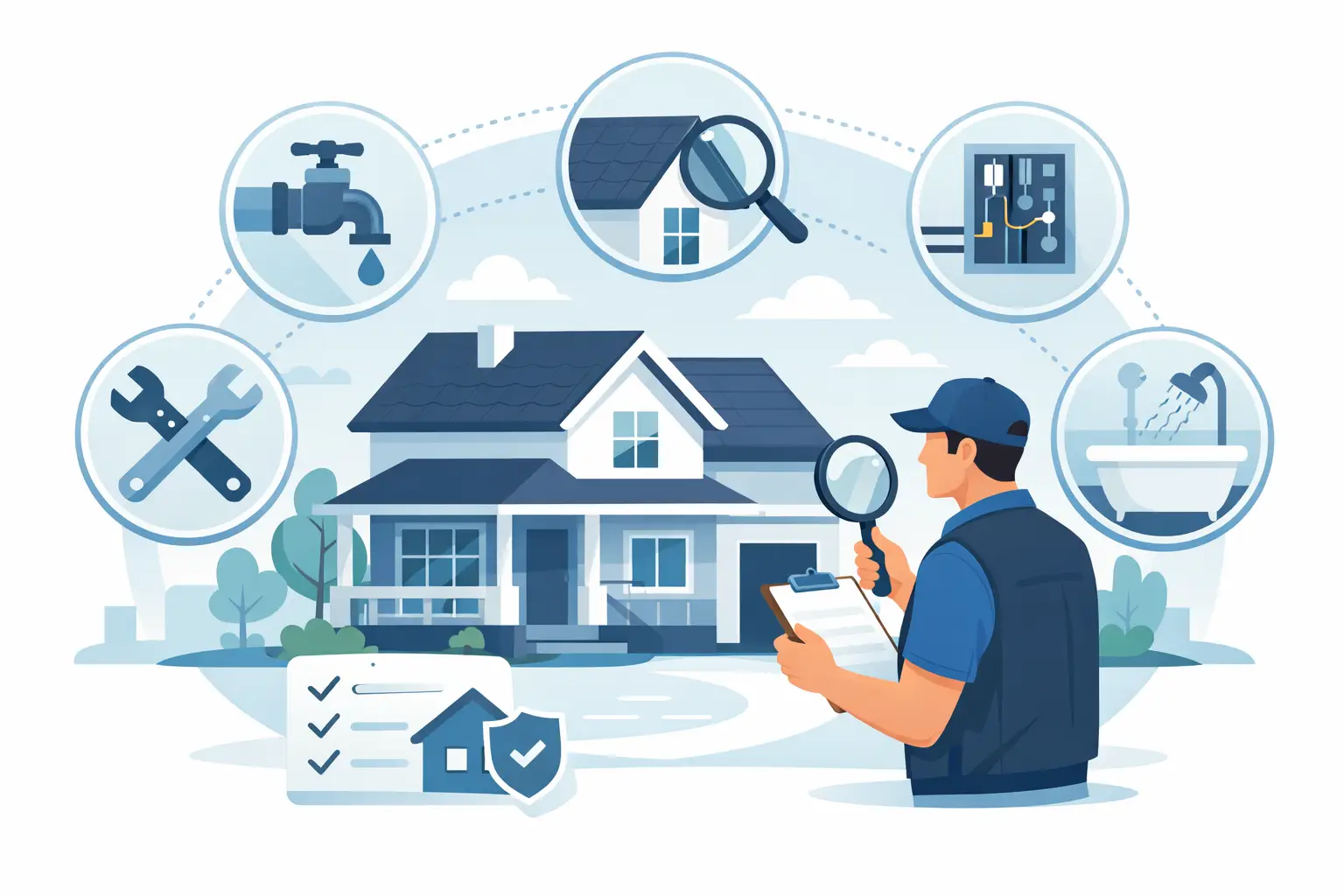
A buyer usually asks what is normally checked in a home inspection right after they realize how much of a house they cannot fully see during a showing. Fresh paint, clean flooring, and staged furniture do not tell you whether the attic has active leaks, the foundation shows movement, or the air conditioner is cooling properly in Southeast Texas heat. A proper inspection is meant to slow the process down and give you a clearer view of the property’s actual condition.
A home inspection is not a cosmetic walkthrough. It is a visual evaluation of the home’s major systems and readily accessible components. The goal is to identify defects, safety concerns, deferred maintenance, and conditions that may need repair, monitoring, or further evaluation before closing.
What is normally checked in a home inspection?
Most standard home inspections cover the structure, roof, exterior, interior, electrical system, plumbing system, heating and cooling equipment, attic, insulation, and visible ventilation. Inspectors also look at windows, doors, built-in appliances, and other accessible components that affect function and safety. The exact scope can vary depending on the property, weather conditions, access limitations, and whether specialty services are added.
That last point matters. A standard inspection is thorough, but it is still limited to what is visible and accessible on the day of the inspection. Septic systems, private wells, pools, spas, irrigation systems, and wood-destroying insect activity may require separate services or reports.
Foundation and structure
In Southeast Texas, foundation performance is never a small issue. Expansive soils, moisture swings, drainage problems, and long-term settlement can all affect how a home moves over time. During an inspection, the foundation is evaluated for visible signs of movement or distress, not just whether a crack exists.
Inspectors look for cracking in brick veneer, interior wall cracks, sloping floors, sticking doors, separated trim, and signs that windows no longer operate correctly. They also pay attention to drainage patterns around the home because poor water control often contributes to foundation movement. In some cases, additional tools such as hydro-static altimeter readings can help document elevation differences and provide more detail on how the structure may be performing.
The framing and structural components are also part of the inspection where accessible. That can include visible framing in the attic or crawlspace, signs of sagging, damaged supports, or evidence of previous modifications that may not have been properly executed.
Roof covering and roof structure
Roof defects can be expensive, and they often show up in more than one area of the house. A roof inspection typically includes the roof covering, flashing, penetrations, gutters, drainage, and visible roof structure from inside the attic when accessible.
The inspector looks for missing or damaged shingles, exposed fasteners, deteriorated flashing, soft spots, ponding concerns on low-slope sections, and evidence of patching or prior repairs. Around vent pipes, chimneys, and roof transitions, details matter because those are common leak points.
Inside the attic, the inspector looks for staining, active moisture intrusion, daylight at improper openings, and structural concerns. A roof may appear serviceable from the ground but still show leak evidence in the attic. That is one reason a complete inspection looks at systems from multiple angles.
Exterior walls, grading, and drainage
The outside of the home often tells you how well water is being managed. Inspectors check siding, trim, soffits, fascia, exterior doors, windows, and the grading around the home. In this region, moisture management is critical because prolonged exposure can lead to wood rot, settlement issues, and conditions favorable to termites and other wood-destroying insects.
Cracked or deteriorated sealant around windows and doors, damaged siding, soil contact with wood components, and poor grading that directs water toward the foundation are common findings. Gutters and downspouts are also reviewed because even a solid roof system can create trouble if roof runoff is not carried away from the house.
Attic, insulation, and ventilation
The attic is one of the most revealing parts of a home inspection. It can show evidence of current leaks, older repairs, structural alterations, ventilation problems, disconnected exhaust ducts, and inadequate insulation.
Inspectors look for water staining, microbial-type growth concerns, compressed or missing insulation, blocked vents, and signs that bathroom or dryer exhaust may be terminating into the attic instead of outside. Poor attic ventilation can shorten roof life and contribute to heat buildup and moisture problems. In a hot and humid climate, those details are not minor.
Electrical system
Electrical defects range from simple corrections to serious safety hazards. A standard home inspection usually includes the service entrance, main panel, subpanels, visible branch wiring, receptacles, switches, and a representative number of installed lighting fixtures.
The inspector checks for issues such as double-tapped breakers, missing panel knockouts, improper bonding or grounding, damaged conductors, overheated components, reverse polarity, missing GFCI protection where required, and unsafe wiring practices. Older homes may have outdated equipment or modifications made over time by multiple owners.
This part of the inspection is especially important because electrical issues are not always obvious in daily use. A light may turn on and a receptacle may work, yet the system can still have conditions that affect safety and reliability.
Plumbing system
Plumbing inspections focus on supply lines, drain and vent systems, fixtures, water heater installation, and functional flow at visible plumbing components. Inspectors look for active leaks, corrosion, improper materials, loose fixtures, slow drains, and signs of past moisture damage under sinks and around tubs or showers.
Water heater evaluation includes the unit’s general condition, visible venting configuration when applicable, temperature and pressure relief valve discharge setup, and signs of leakage or age-related wear. In some homes, the inspection may also reveal older piping materials with a history of failure or reduced life expectancy.
If the property has a septic system or private well, those are usually handled as separate inspection items. That distinction is important for rural properties, where the standard home inspection may only tell part of the story unless those systems are also evaluated.
HVAC equipment
Heating and cooling equipment is checked for basic operation and visible condition. In Southeast Texas, cooling performance gets a lot of attention for obvious reasons. Inspectors typically operate the system using normal controls and observe whether it responds appropriately, cools or heats as intended, and shows visible signs of improper installation, deferred maintenance, or age-related wear.
That includes the thermostat, air handler or furnace, visible ductwork, condensate management, exterior condenser, and accessible filters and registers. Common findings include dirty components, insulation damage on refrigerant lines, rusted drain pans, improper condensate discharge, and duct issues that affect airflow.
A home inspection does not replace a full HVAC service evaluation, especially if performance is marginal or the equipment is near the end of its expected life. But it can identify signs that further review is warranted before purchase.
Interior rooms, windows, and doors
Interior inspection goes beyond checking whether finishes look clean. Inspectors look at walls, ceilings, floors, stairs, railings, doors, and windows for signs of movement, damage, moisture intrusion, or unsafe conditions.
Cracks, uneven flooring, soft spots, damaged trim, fogged insulated windows, and doors that bind or fail to latch properly can all provide useful clues. In bathrooms and kitchens, inspectors pay close attention to areas where water use is frequent. Loose toilets, deteriorated caulk, damaged flooring around tubs, and stains below windows may point to larger issues.
Built-in appliances are generally tested for basic function as part of the standard inspection if they are installed and accessible. That often includes the dishwasher, range, oven, microwave, and garbage disposal. The inspection is not a performance test equal to long-term daily use, but it does help identify obvious operating problems.
Garage and safety items
Garages often contain a surprising number of reportable issues. Inspectors commonly check garage door operation, safety reverse features, firewall separation conditions, exposed wiring, and trip hazards at steps or slab transitions.
They also look for missing self-closing hardware on doors between the garage and house when applicable, because that separation matters for safety. Smoke alarms and carbon monoxide alarms may also be noted depending on the home’s age, layout, and applicable standards.
What is not always included in a standard inspection?
This is where buyers can make expensive assumptions. A standard home inspection does not automatically include termite or wood-destroying insect reports, mold testing, sewer scope inspections, septic inspections, pool and spa inspections, water quality testing, or engineering analysis. Some of those services are optional. Some are highly advisable depending on the property.
In this part of Texas, termite and moisture-related conditions deserve extra attention. If there is wood damage, high moisture, earth-to-wood contact, or suspicious debris, a separate wood-destroying insect report may be the right next step. The same is true for rural properties with private systems that affect livability and repair costs.
Texas Country Inspection, LLC often sees buyers benefit most when they treat the standard inspection as the foundation of their due diligence, then add specialty services that fit the property instead of assuming one report covers every risk.
Why the inspector’s approach matters
Two inspections are not equal just because both produce a report. The real value comes from how carefully the inspector observes the house, how well findings are documented, and whether the inspection reflects local building conditions. A home in Southeast Texas has different risks than a home in a dry climate, especially when it comes to moisture intrusion, foundation performance, drainage, and wood-destroying insects.
The best inspection is not the one with the shortest report or the fewest comments. It is the one that gives you a realistic picture of the home so you can make a sound decision. If you are buying, selling, or evaluating a property, ask not only what is normally checked in a home inspection, but also what deserves closer attention for that specific home. That is usually where the most expensive surprises are found before they become yours.
