
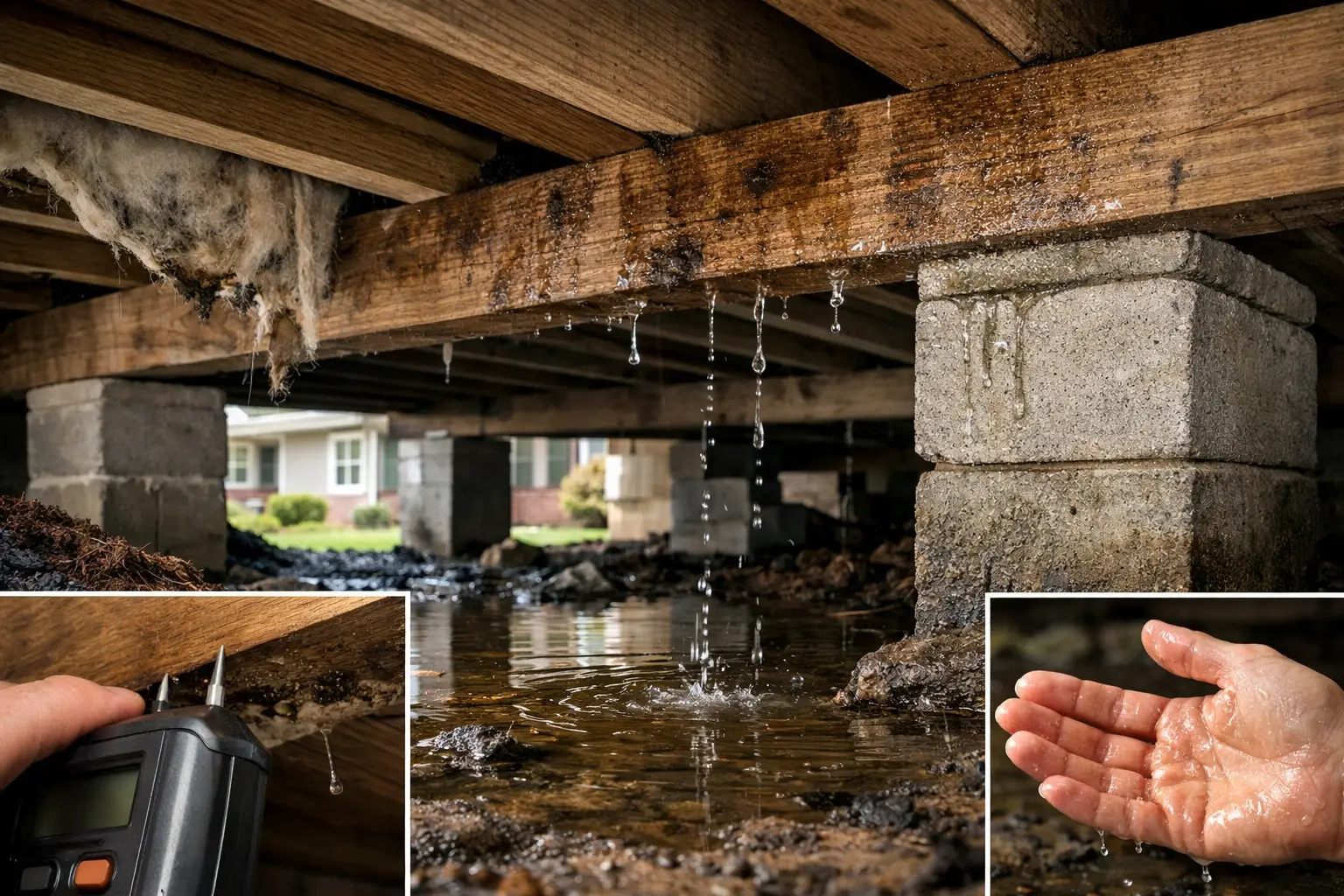
A pier and beam home can look solid from the street and still have serious trouble underneath. In Southeast Texas, pier and beam moisture problems often start in the crawlspace long before a buyer notices uneven floors, musty odors, or sticking doors. By the time those symptoms show up inside, the structure below may already be dealing with rot, fungal growth, termite-conducive conditions, or movement tied to chronic dampness.
This is one reason crawlspace conditions deserve careful attention during a property inspection. Moisture under a house does not stay politely contained in one area. It affects framing, insulation, air quality, and in some cases the long-term performance of the foundation system itself.
Why pier and beam moisture problems are so common in Southeast Texas
Pier and beam construction gives a home a crawlspace, and that crawlspace becomes its own environment. In this region, high humidity, heavy rains, slow drainage, expansive soils, and long cooling seasons create a setting where moisture can collect and linger. Even when there is no active plumbing leak, the space below the home can remain damp enough to cause damage over time.
A low crawlspace is especially vulnerable. When there is limited clearance, ventilation may be poor, inspection visibility may be reduced, and repairs are more likely to be deferred. Add in dense vegetation, improper grading, or roof runoff discharging too close to the perimeter, and the area under the house can stay wet for long periods.
Older homes often have another challenge. They may have been built before current moisture-control practices were common, or they may have gone through patchwork repairs over the years. It is not unusual to find a mix of old and newer materials under one home, with no consistent moisture management strategy tying it all together.
What moisture does to a pier and beam structure
Wood performs well when it stays dry. It performs poorly when exposed to repeated or prolonged moisture. In a pier and beam system, that matters because the framing below the floor is doing the work of supporting the home.
When moisture stays elevated, wood members such as beams, joists, sills, and subflooring can begin to deteriorate. Early on, you may see staining, elevated moisture readings, or minor fungal growth. As conditions persist, wood can soften, split, or lose structural integrity. Metal fasteners and connectors may corrode. Insulation can sag or become ineffective. In some homes, ductwork in the crawlspace is also affected, which can introduce comfort and air-quality problems.
Termites are part of this discussion as well. Subterranean termites do not require rotten wood to attack a structure, but damp conditions under a home are highly conducive to concealed pest activity. When wood-destroying insect risk is paired with chronic moisture, the inspection stakes go up quickly.
Common causes of moisture under pier and beam homes
In the field, the cause is not always just one thing. More often, it is a combination of water entry, poor drainage, and inadequate drying conditions.
Surface drainage problems
Improper grading is one of the biggest contributors. If the soil slopes toward the house, rainwater collects near the perimeter and can move into the crawlspace area. Short downspouts make this worse by dumping roof runoff right beside the foundation. In flat lots, standing water may remain long after a storm.
Plumbing leaks and drain issues
Supply leaks, drain leaks, and plumbing penetrations can all introduce moisture below the home. Some leaks are obvious. Others are slow and hidden, especially around older cast iron drain systems, loose fittings, or damaged branch lines. A small leak over time can create major wood damage.
Ground moisture and missing vapor barriers
Even without visible water intrusion, moisture can rise from the soil and build up under the house. If there is no ground cover, or if the vapor barrier is damaged, incomplete, or poorly installed, that moisture can migrate upward into the crawlspace air and framing.
Poor crawlspace ventilation
Ventilation is not a cure-all, and the right approach can depend on the home, but blocked or insufficient vents often contribute to damp conditions. In some cases, owners close vents to keep out animals or cold air and end up trapping humidity below the floor system.
HVAC and condensation issues
Cold ducts in a humid crawlspace can sweat. Condensate drain problems can also add water below the house. This is easy to underestimate, particularly during hot Southeast Texas weather when the temperature difference between duct surfaces and crawlspace air is significant.
Signs homeowners and buyers should not ignore
Some indications show up inside the home first. Floors may feel soft, bouncy, or out of level. Doors may rub or fail to latch properly. Interior trim may separate at walls and ceilings. A persistent musty smell can be a clue that the crawlspace environment is affecting the living space above.
Other signs are visible at the exterior or in the crawlspace. These include damp soil, standing water, fallen or missing insulation, visible fungal growth, wood staining, rusted metal components, or damaged support members. Efflorescence on masonry piers may indicate chronic moisture exposure. In severe cases, temporary shimming or improvised supports may be present where framing has settled or weakened.
Not every uneven floor means there is active moisture damage. Some older pier and beam homes have long-standing settlement or framing irregularities that are stable. That said, moisture is one of the first conditions that should be ruled in or out, because active dampness changes how a structural concern should be interpreted.
What an inspector looks for with pier and beam moisture problems
A thorough inspection goes beyond spotting a wet area and calling it a day. The goal is to understand both the visible condition and the likely moisture source.
Structural and material conditions
The inspector evaluates beams, joists, subflooring, piers, shims, and visible supports for damage, movement, or improper repairs. Wood may be checked for deterioration, warping, or suspected fungal activity. Where conditions allow, moisture meters and other tools can help confirm whether materials are currently elevated in moisture.
Crawlspace environment
Ventilation, ground cover, drainage patterns, plumbing conditions, insulation, and ductwork all matter. The inspector is looking at how the crawlspace functions as a system, not just whether there is visible water on the day of the inspection. A dry day can hide a wet-house problem if the underlying drainage and ventilation issues are still present.
Evidence of wood-destroying insects
Because moisture and pest risk often overlap, signs of termite activity, wood damage, mud tubes, and conducive conditions should be taken seriously. This is particularly important for buyers using financing that requires wood-destroying insect documentation, or for rural properties where deferred maintenance may be more common.
In many cases, the inspection result is not a one-size-fits-all answer. A home may need a drainage correction, a plumbing repair, a vapor barrier upgrade, and selective framing repairs. Another home may only need improved water management and monitoring. The right recommendation depends on the severity, extent, and apparent cause of the problem.
Repair decisions depend on cause, not just symptoms
The mistake many owners make is fixing the symptom they can feel inside the home without correcting the moisture source below. Re-leveling floors or replacing damaged boards may improve appearance for a while, but the problem usually returns if water continues entering the crawlspace.
A proper repair plan often starts outside the home. Grading may need to be corrected. Downspouts may need extensions. Drainage improvements may be needed to move water away from the foundation area. If plumbing leaks are present, those should be addressed before damaged framing is repaired.
After the source is controlled, damaged materials can be evaluated for repair or replacement. In some homes, this includes joists, beams, subfloor sections, or support adjustments. In others, the most valuable improvement is moisture control through a properly installed ground vapor barrier and better crawlspace management.
Texas Country Inspection, LLC often sees situations where a buyer is told a floor issue is “just an old-house quirk” when the real concern is active moisture below the structure. That is exactly why detailed inspection work matters.
When to be especially cautious before closing
Buyers should pay close attention when a home has strong air fresheners, recently replaced flooring in isolated rooms, fresh paint over lower wall areas, or limited crawlspace access. None of those items prove there is a defect, but they can make it harder to recognize a moisture history.
It is also worth slowing down when the home sits low to grade, has poor site drainage, or shows evidence of past support repairs. If the seller reports prior foundation work, plumbing leaks, or recurring dampness, that history should be taken seriously and compared against current visible conditions.
A pier and beam home can be an excellent property to own. Many perform well for decades. The key is making sure the area underneath is dry, accessible, and not hiding deterioration that will become your problem after closing. A careful inspection cannot stop the rain, but it can give you a clearer picture of what the house is dealing with and what needs attention before small moisture issues become expensive structural ones.
If you are buying, selling, or maintaining a pier and beam property, treat moisture under the home as a condition to understand, not a detail to glance past.
