
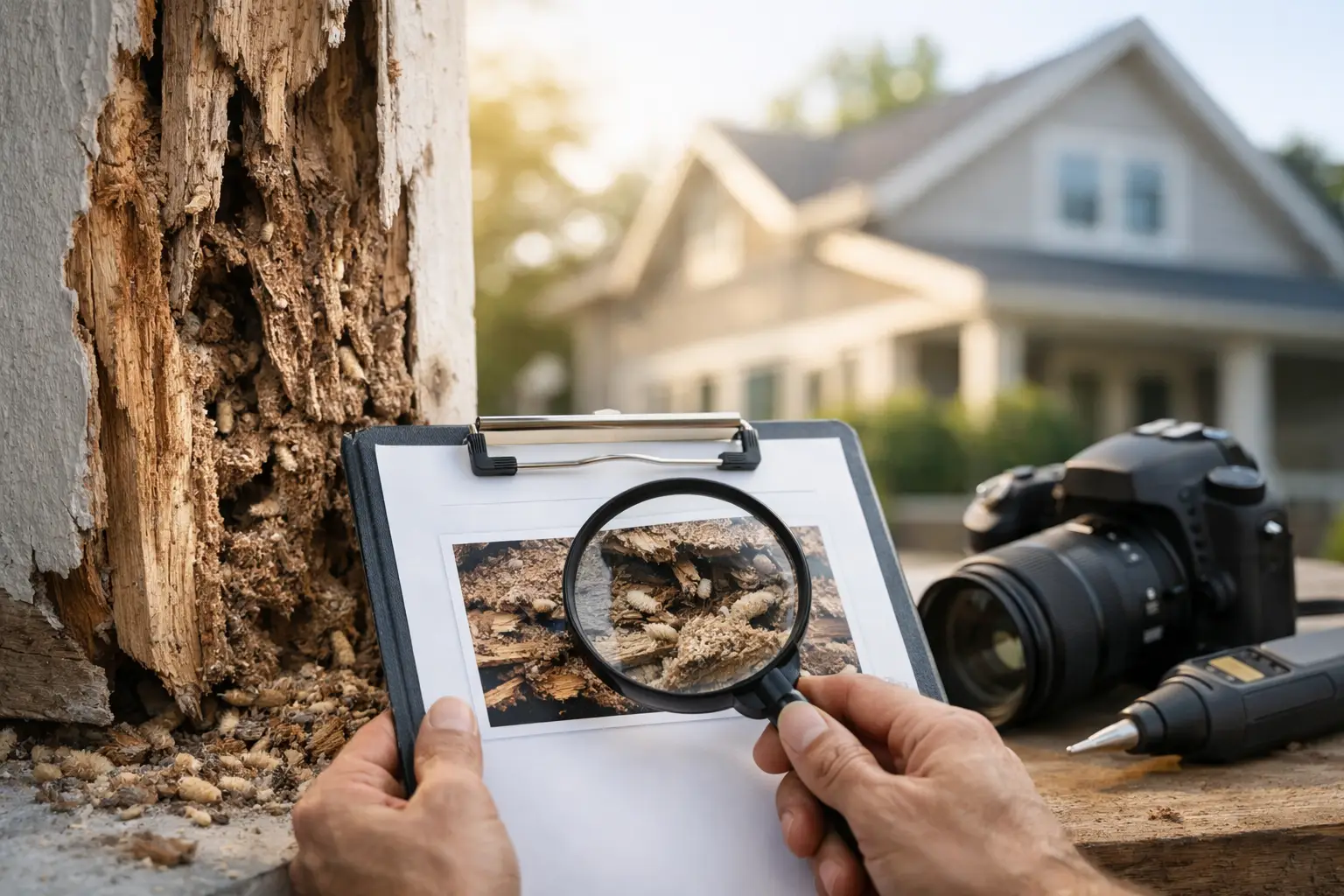
A termite damage report example is most useful when it shows more than a checked box. Buyers need to see where evidence was found, whether activity appears current, which areas could not be inspected, and whether damaged materials may need further evaluation. In Southeast Texas, where warm temperatures, frequent rain, high humidity, and wood-to-soil contact create favorable conditions for subterranean termites, those details can affect negotiations, repairs, financing, and the decision to move forward with a purchase.
A wood-destroying insect report is not a cosmetic walkthrough. It is a targeted inspection for visible evidence of termites and other wood-destroying insects, along with visible damage and conditions that increase the risk of infestation. It should be read alongside the full home inspection report, not in place of one.
What a Termite Damage Report Example Should Show
The report format may vary based on the inspection company, lender requirements, and the applicable Texas form. A well-documented report, however, should clearly identify the property, the accessible areas inspected, the findings, and the inspector’s recommendations. Vague language such as “termite damage observed” without a location or description leaves too many questions unanswered.
Consider this simplified example from a typical raised or pier-and-beam home:
Inspection area: Crawlspace beneath rear bedroom, east-side perimeter beam, and exterior wall framing adjacent to the rear patio.
Finding: Mud shelter tubes consistent with subterranean termite activity were observed on the east-side concrete pier and on the lower portion of the perimeter beam. Tubes were broken open during the inspection. Live termites were observed within the tube material at the concrete pier.
Damage observed: Localized wood deterioration and termite galleries were visible at the lower edge of the perimeter beam near the east rear corner. The full extent of damage could not be determined because insulation and plumbing lines limited visibility. No determination was made regarding the structural adequacy of concealed framing.
Conducive conditions: Soil was in direct contact with untreated wood siding at the rear patio. Moisture staining and elevated moisture conditions were observed below the kitchen plumbing area. Cellulose debris was present in portions of the crawlspace.
Recommendation: Have a licensed pest control company provide treatment recommendations for active subterranean termite activity. After treatment, have a qualified contractor evaluate visible and concealed framing as needed to determine the extent of repairs. Correct wood-to-soil contact, improve drainage where practical, repair moisture sources, and remove accessible wood debris.
That language tells a buyer what was found, where it was found, what could not be verified, and what should happen next. It does not overstate the condition by claiming that the entire structure is damaged, but it does not minimize an active infestation either.
Active Termites, Old Damage, and Risk Conditions
One of the most important distinctions in a termite report is the difference between active evidence, previous evidence, damage, and conducive conditions. These terms are related, but they do not mean the same thing.
Active evidence may include live termites, intact mud tubes with live insects, fresh frass from drywood termites, or other signs that indicate present activity. In Southeast Texas, subterranean termites are the primary concern around foundations, crawlspaces, exterior walls, plumbing penetrations, and slab edges.
Previous evidence means the inspector sees signs of a prior infestation or treatment but cannot confirm current activity at the time of inspection. Broken or weathered shelter tubes, old treatment tags, and repaired wood may point to a history of termites. Previous evidence is not automatically harmless. The buyer should ask whether treatment records are available and whether the area has been adequately repaired and monitored.
Damage refers to visible wood deterioration caused by insects. It may be limited to trim, siding, a sill plate, or a section of framing. It may also be concealed behind wall finishes, insulation, flooring, or stored belongings. A termite inspector can identify visible damage, but determining whether a beam, joist, or wall is structurally adequate may require evaluation by a qualified contractor or engineer.
Conducive conditions are not proof that termites are present. They are conditions that make the property more attractive or easier for termites to access. Common examples include poor drainage, leaking plumbing, wood mulch piled against siding, untreated wood in contact with soil, blocked crawlspace ventilation, and tree limbs or debris against the structure. A clean report can still recommend correcting these issues because prevention is less expensive than widespread repairs.
How to Read the Inspection Limitations
No termite inspection can see through walls, floors, cabinets, insulation, or furniture. This is not an excuse for an incomplete inspection. It is an honest description of the conditions under which a visual inspection is performed.
A useful report should identify inaccessible or limited areas. For example, a crawlspace may be too low for safe entry, a detached garage may be packed with stored items, or insulation may conceal framing. A slab foundation also limits access to areas below finished flooring and within wall cavities. If evidence is found near a concealed area, the report should explain that hidden damage cannot be ruled out.
Buyers should pay special attention when a report notes limited access near bathrooms, exterior doors, patios, utility rooms, or areas with known moisture. Termites often follow moisture sources and concealed pathways. The absence of visible evidence in an inaccessible area is not the same as confirmation that no infestation exists there.
Questions to Ask After a Positive Finding
When a report identifies active termites or visible damage, the next step is not simply to ask, “How much will treatment cost?” Treatment is necessary, but it is only one part of the property-risk decision.
Ask whether live insects were observed or whether the finding is based on old evidence. Ask exactly which building components show visible damage and whether the inspector believes additional concealed damage is possible. Request any available prior treatment documentation, including transferable warranty information if applicable. Then obtain a repair evaluation when framing, flooring, exterior siding, or support members may be affected.
The repair scope can vary substantially. Replacing a small section of exterior trim is different from repairing a damaged sill plate, floor joist, wall framing, or load-bearing beam. The amount of damage is often not fully known until limited removal of finishes, insulation, or deteriorated materials allows the affected area to be exposed.
For a real estate transaction, the buyer and agent should also confirm what the lender requires. VA loans and some other financing programs may require a wood-destroying insect report or have specific expectations when active infestation is reported. The report itself should remain factual. Treatment agreements, repair negotiations, and clearance decisions are separate matters.
Why the Full Home Inspection Still Matters
Termite activity rarely exists in isolation. Moisture problems, drainage deficiencies, plumbing leaks, siding too close to grade, and poorly maintained crawlspaces can contribute to the conditions that allow an infestation to develop. A complete property inspection helps connect those dots.
For example, an inspection may document negative drainage at the rear of the home, moisture intrusion at an exterior door, and wood rot at lower siding. The termite report may then identify shelter tubes in the same general area. The reports are not duplicating each other. Together, they provide a more complete picture of why the issue developed and what should be corrected to reduce recurrence.
Texas Country Inspection approaches these observations with the same practical focus used throughout a property evaluation: document what is visible, identify material concerns, explain limitations, and recommend the appropriate next professional when conditions exceed the scope of a visual inspection.
A Clear Report Helps You Make a Better Decision
The best termite damage report is neither alarmist nor casual. It documents the evidence accurately, distinguishes active conditions from historic ones, and makes clear where further evaluation is warranted. For a buyer, that level of detail creates a basis for informed questions, repair requests, and realistic budgeting before closing.
If a report identifies termites, do not let the word alone decide the outcome. Read the location, activity status, visible damage, access limitations, moisture conditions, treatment recommendation, and likely need for repairs. A manageable issue becomes far more manageable when the facts are documented before the property becomes your responsibility.
