
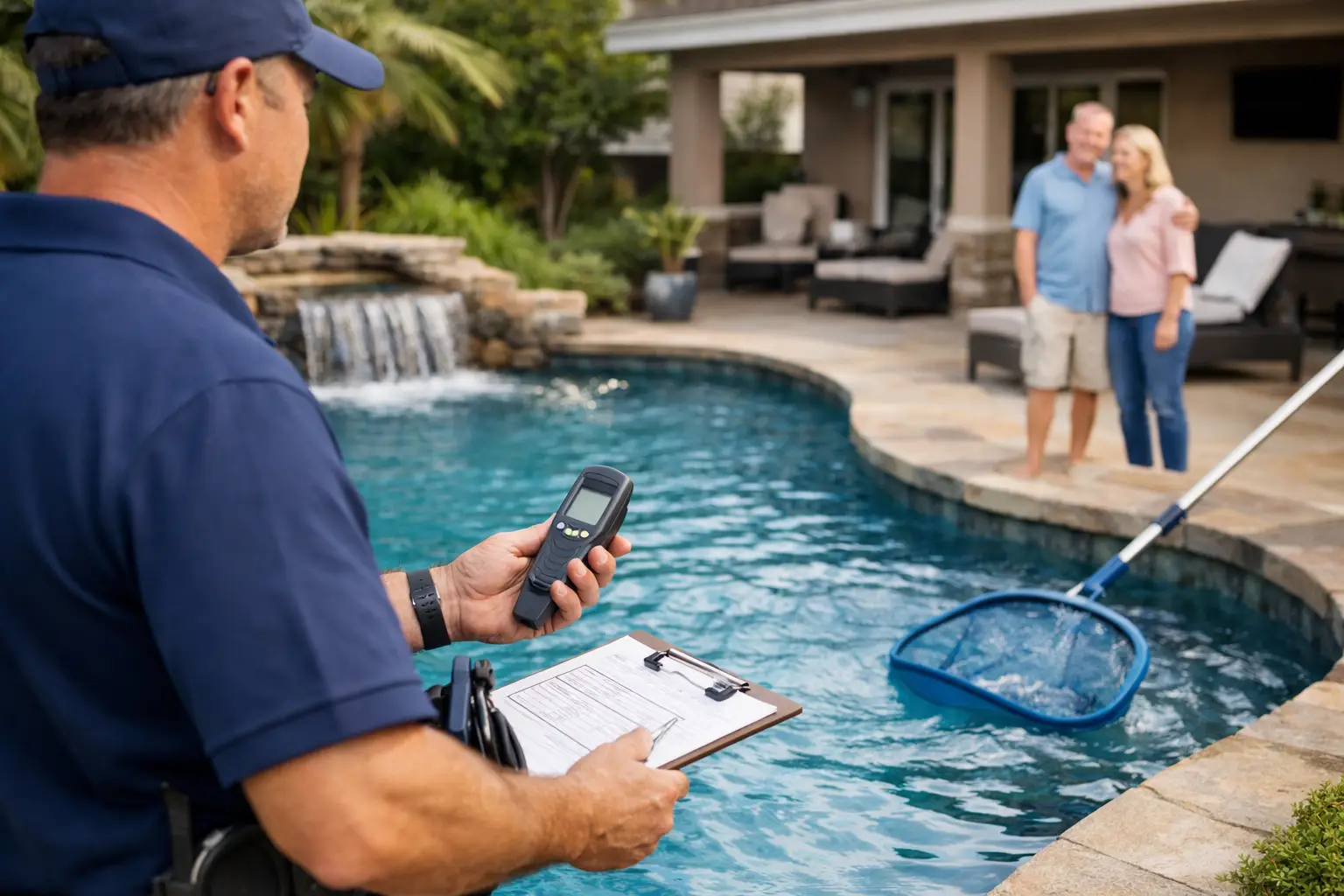
A pool can make a Southeast Texas property more enjoyable, but it can also conceal expensive defects behind clear water and a clean deck. A thorough pool inspection service review should tell a buyer more than whether the pump turns on. It should explain the visible condition of the pool structure, circulation equipment, safety components, and accessible electrical systems so the buyer can make an informed decision before closing.
For buyers, the difference between a useful pool inspection and a quick walk-around is significant. A pool leak, failing heater, deteriorated plaster surface, or unsafe electrical condition can change the real cost of a property shortly after purchase. The report should identify what was observed, what could not be verified, and which concerns warrant repair, further evaluation, or price negotiations.
What a Pool Inspection Service Review Should Cover
A proper pool and spa inspection is a visual, non-invasive evaluation of accessible components at the time of the inspection. It is not a guarantee that every underground pipe, concealed wire, or future equipment failure will be discovered. That limitation matters, especially on older pools, but it does not reduce the value of a careful inspection. It defines where the inspector can provide reliable observations and where a specialist may be needed.
The review should begin with the pool shell and surrounding deck. Inspectors look for visible cracking, deterioration, delamination, displaced coping, damaged tile, and conditions that may allow water to migrate behind the finish or beneath the deck. Not every crack means the pool is structurally failing. Fine surface cracks in plaster can be cosmetic, while wider, displaced, or recurring cracks may point to movement, settlement, or a more significant issue.
In the Golden Triangle and surrounding Southeast Texas communities, wet soils, heavy rainfall, and shifting ground conditions deserve particular attention. Deck settlement may create trip hazards, alter drainage, or place stress on plumbing connections. A pool inspection should distinguish between normal aging and conditions that appear active or require a pool contractor’s opinion.
Pool Equipment and Water Circulation
The equipment pad often provides the clearest evidence of how a pool has been maintained. The inspector should observe the pump, filter, heater if installed, valves, plumbing connections, timers, controls, and visible signs of leakage. Water staining, corrosion, mineral buildup, loose fittings, and makeshift repairs are not automatically deal-breakers, but they should not be dismissed as minor when they affect the system’s ability to circulate or filter water.
A pump may run during the inspection yet still show concerns such as excessive noise, leaking seals, poor mounting, damaged lids, or questionable electrical connections. Filters should be evaluated for their general condition and installation, whether they are cartridge, sand, or diatomaceous earth units. Heaters need careful attention because repair or replacement costs can be substantial, particularly when heat exchangers are corroded or controls do not respond as intended.
The inspector may operate accessible equipment under normal controls when conditions permit. However, weather, water level, equipment condition, or safety concerns can limit operation. A credible report explains those limitations rather than implying that an untested heater or spa jet was fully evaluated.
Safety Findings Matter as Much as Mechanical Defects
Pool safety is not limited to a fence around the yard. A useful pool inspection service review addresses barriers, gates, latches, doors providing direct access to the pool area, handrails, ladders, drains, and visible electrical safety measures. These items are especially important for families with children, rental property buyers, and owners planning to host guests.
Barrier requirements can vary based on the age of the pool, local requirements, and the scope of a real estate inspection. Still, an inspector can identify obvious concerns such as gates that do not self-close, latches placed within a child’s reach, large openings below a fence, or climbing hazards near the barrier. Even where a condition may be grandfathered, buyers should understand the practical safety risk and consider improvements.
Drain covers deserve close attention. Older or damaged suction outlet covers can create a serious entrapment hazard. The report should identify missing, broken, or visibly unsuitable covers and recommend evaluation or replacement by a qualified pool professional when needed. Handrails and ladders should be secure and properly anchored, not loose, corroded, or improvised.
Electrical observations are equally important. Pool equipment combines water, motors, bonding, grounding, and electrical circuits in a concentrated area. Inspectors look for visible damage, unsecured wiring, missing covers, improper receptacles, and conditions suggesting that a licensed electrician should evaluate the installation. Ground-fault circuit-interrupter protection is a key safety feature around pools and spas, but determining whether every component is properly protected can require further electrical evaluation depending on access and panel configuration.
How to Read Pool Inspection Findings
The strongest reports do not treat every observation as equal. A stained filter tank, a cracked skimmer lid, and an inoperative heater may all appear in the same report, but their urgency and cost implications differ. Buyers should focus first on findings involving safety, active leakage, structural concerns, electrical defects, and equipment that cannot perform its intended function.
Ask practical questions when reviewing the report. Is the issue currently affecting operation? Does it create a safety concern? Is it likely to worsen quickly? Does the recommendation call for routine maintenance, repair before closing, or evaluation by a pool contractor? Clear wording helps buyers, agents, and sellers discuss repairs without overstating what a visual inspection can prove.
For example, a report may note that the pool water level was below the skimmer opening. That condition can prevent meaningful testing of the circulation system and may indicate evaporation, a maintenance issue, or a leak. The inspector should not diagnose an underground leak from low water alone. However, the finding gives the buyer a reason to request that the pool be filled, retested, or evaluated through formal leak detection before the option period expires.
What a Pool Inspection Cannot Confirm
A careful inspection has boundaries. Underground plumbing is generally not visible, and hidden leaks may require pressure testing, dye testing, or specialized leak-detection equipment. The same is true for concealed electrical wiring, buried bonding conductors, internal equipment components, and structural conditions behind plaster or decking.
Water chemistry is another separate consideration. Water can look clear while having an imbalance that affects plaster, equipment, and sanitation. If a buyer is concerned about water quality, a separate pool-water analysis may be appropriate. Likewise, a pool inspection is not a warranty on remaining equipment life. A 12-year-old pump may be operating acceptably on inspection day but still be near the end of its expected service life.
These limitations are not a reason to skip the inspection. They are a reason to use the findings correctly. When visible conditions suggest a larger problem, bring in the appropriate specialist before closing rather than hoping a repair will be inexpensive.
Choosing an Inspector for a Texas Pool Property
Experience with the property as a whole is valuable because pool concerns often connect to broader site conditions. Drainage that directs water toward the deck, settlement around a patio, deteriorated exterior receptacles, or a damaged fence can affect both the pool area and the home’s overall risk profile. A pool should not be treated as an isolated backyard feature.
Look for an inspection company that documents observed defects with clear descriptions and photographs, explains limitations, and avoids casual assumptions. Texas Country Inspection, LLC approaches pool and spa inspections with the same field-focused attention applied to the rest of the property: observe accessible conditions carefully, document meaningful concerns, and identify when a qualified specialist should take the next step.
Before the inspection, ask the seller to ensure the pool is reasonably clean, filled to an operable level, and accessible. Pool equipment should be available for normal operation, and remote controls, covers, and heater controls should be provided when applicable. These simple preparations can prevent avoidable limitations in the report.
A pool should add enjoyment to a property, not leave a buyer guessing about hidden repair costs. When the inspection identifies concerns early, the buyer has time to request repairs, obtain contractor estimates, adjust negotiations, or proceed with a clear understanding of the work ahead.
