
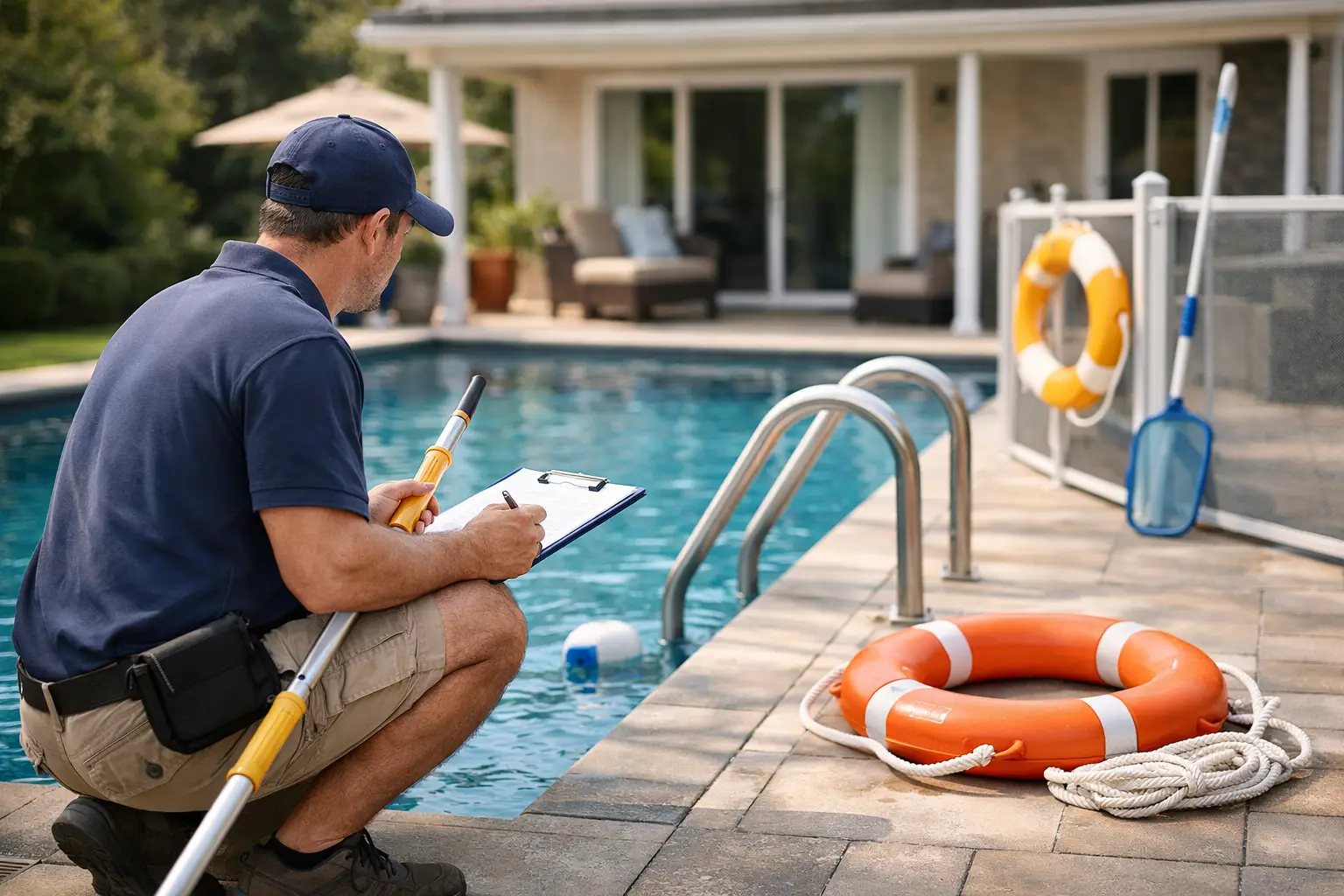
A backyard pool can change the feel of a property in a single showing. It can also change the risk profile just as quickly. That is why pool safety inspection requirements matter so much for buyers, sellers, and property owners. A pool that looks clean and inviting can still have missing barriers, electrical hazards, unsafe drain covers, or equipment defects that create real danger.
For many clients, the biggest mistake is assuming a general home inspection automatically answers every pool-related safety question. It often does not. Pools and spas have their own systems, their own wear patterns, and their own set of safety expectations. In Southeast Texas, where long swim seasons, heavy rain, humidity, and sun exposure all take a toll, those details deserve close attention.
What pool safety inspection requirements usually cover
Pool safety inspection requirements are not just about whether the water is blue and the pump turns on. A proper inspection looks at the physical barriers, visible equipment condition, electrical safety observations, deck conditions, and signs that the pool or spa may not operate safely as installed.
The exact scope can vary based on the property type, local rules, and whether the inspection is part of a real estate transaction, a standalone pool and spa evaluation, or a municipal compliance process. That distinction matters. A code compliance inspection by a local authority is different from a private inspection performed for a buyer or owner who wants to understand condition, defects, and safety concerns before money changes hands.
In practical terms, most private inspections focus on visible and accessible components. That means the inspector is evaluating what can be reasonably observed without invasive testing or dismantling major systems. If safety issues are visible, they should be documented clearly, because those items can affect negotiation, repair decisions, insurance questions, and day-to-day use.
The barrier and gate issues inspectors watch closely
If one area consistently creates serious safety concerns, it is the barrier system. Fencing, gates, and controlled access points are the first line of protection, especially where children or guests may be present.
Inspectors commonly look for whether the pool area is isolated by an adequate barrier, whether gates are self-closing and self-latching where required, and whether gaps or damaged sections reduce effectiveness. A fence that leans, a latch installed too low, or a gate that stays open on its own may seem minor until you view it from a child-safety standpoint. Then it becomes a high-priority defect.
The house itself can also become part of the safety concern. Doors leading directly to the pool area may need alarms or other protective measures depending on the setup and local requirements. This is one of those areas where older pools may not match newer safety expectations. Buyers should not assume an older installation is acceptable simply because it has been there for years.
In Southeast Texas, inspectors also see barrier problems caused by moisture, corrosion, shifting soil, and deferred maintenance. Fence posts loosen. Wooden sections rot near grade. Hardware rusts. Gates sag and stop latching correctly. Those are common field conditions, not rare exceptions.
Equipment and circulation safety checks
Safety is not limited to access control. The equipment pad can reveal a lot about whether a pool has been maintained responsibly.
Inspectors typically observe pumps, filters, heaters, visible piping, valves, and controls for proper apparent installation and signs of leakage or damage. They may note missing covers, exposed wiring, unprotected components, or evidence of repairs that do not appear professionally completed. A leaking pump seal or deteriorated filter housing is not just a maintenance issue. It can signal broader neglect and possible operational problems.
Drain and suction safety also deserve attention. Anti-entrapment protections matter because suction hazards can be severe. Missing, broken, or outdated drain covers should never be brushed aside. If visible components suggest the system may not meet modern safety expectations, that deserves further evaluation.
Water clarity can become a safety issue as well. If the bottom of the pool is not clearly visible, that limits the ability to inspect the interior condition and creates its own hazard. An inspector may not be able to confirm cracks, missing fittings, damaged plaster, or other submerged defects when visibility is poor.
Electrical observations are a major part of pool safety inspection requirements
Electrical defects around pools are among the most serious findings because the consequences can be severe. This is one reason experienced inspectors treat the area with caution and document concerns carefully.
Pool safety inspection requirements often involve observation of visible bonding, grounding, GFCI protection, light fixtures, receptacles, switches, and electrical equipment clearances. Not every defect is obvious to a nonprofessional. A receptacle may be present but improperly protected. A pool light may function but still have installation issues. An equipment disconnect may be missing, damaged, or poorly located.
Bonding is especially important because it helps reduce voltage differences between metal parts and surrounding surfaces. Problems with bonding are not always easy for a buyer to identify during a walkthrough, but they matter. The same goes for damaged conduit, open junction boxes, or improvised wiring repairs near wet locations.
If an inspection raises concerns in this area, further review by a qualified licensed electrician or pool specialist is often the prudent next step. That is not overreaction. It is risk control.
Surface conditions, trip hazards, and visible structural concerns
A safe pool area depends on more than the water and equipment. Decking, coping, and adjacent walking surfaces can create injury risks if they are cracked, uneven, slippery, or deteriorated.
Inspectors often look for settlement, heaving, loose materials, damaged expansion joints, and surface defects that may contribute to trips and falls. In parts of Texas, soil movement can affect surrounding flatwork just like it affects foundations. A deck that has shifted toward the pool edge or developed significant cracking may point to drainage or movement issues that deserve closer review.
Visible structural concerns inside the pool shell also matter. Cracks, separated tile lines, movement at skimmers, or signs of ongoing leakage can indicate more than cosmetic wear. Some cracking is superficial. Some is not. That is where experienced inspection judgment becomes valuable. The right report distinguishes between routine age-related wear and defects that may require specialty repair evaluation.
What buyers and owners often misunderstand
The most common misunderstanding is thinking a pool passed a casual glance, so it must be safe. Appearance is a poor filter. Fresh water, clean decking, and a running pump do not prove compliant barriers, safe electrical conditions, or reliable circulation components.
Another issue is assuming every requirement is the same everywhere and for every age of pool. It depends. Safety standards evolve. Local enforcement can differ. Existing installations may have grandfathered elements while still presenting practical safety concerns a buyer should not ignore. An inspection is valuable because it focuses on actual observed conditions, not assumptions.
Owners also sometimes underestimate how a documented defect can affect liability. If a gate does not self-close, a drain cover is damaged, or electrical protection appears inadequate, that is not just a repair line item. It may affect insurability, guest safety, and the owner’s exposure if someone gets hurt.
Why regional conditions matter in Southeast Texas
Pool systems in Southeast Texas deal with a punishing mix of heat, moisture, storms, and long operating seasons. Those conditions accelerate wear on metal components, fencing hardware, seals, electrical fittings, and surface finishes.
Heavy rainfall can also expose drainage problems around pool decks and equipment pads. Water that ponds near the equipment area may contribute to corrosion and premature failure. High humidity and warm temperatures can speed up deterioration in enclosures, wood barriers, and certain exposed materials. In older properties, these regional conditions often reveal defects that would not be as advanced in drier climates.
That is one reason a locally experienced inspection company can add real value. Texas Country Inspection approaches pool and spa evaluations with the same field-based attention given to the rest of the property, because isolated systems still affect the larger risk picture.
How to prepare for a pool inspection
If you are scheduling an inspection, access and visibility make a difference. Gates should be unlocked, equipment areas accessible, and the pool reasonably clear for observation. If the water is too cloudy to see the bottom, inspection limits should be expected.
It also helps to gather any records on resurfacing, equipment replacement, leak repairs, or previous safety upgrades. Those records do not replace inspection findings, but they help establish age, repair history, and whether recent work appears consistent with what is observed in the field.
For buyers, the best approach is to treat the pool as its own decision point. If major safety defects are found, do not let them get buried under the larger home inspection conversation. Pools can carry significant repair costs, and some hazards should be addressed before regular use begins.
A careful inspection does more than flag defects. It gives you a clearer basis for repair decisions, negotiation, and safe ownership. When a property includes a pool or spa, that level of clarity is not extra. It is part of protecting the people who will use it.
