
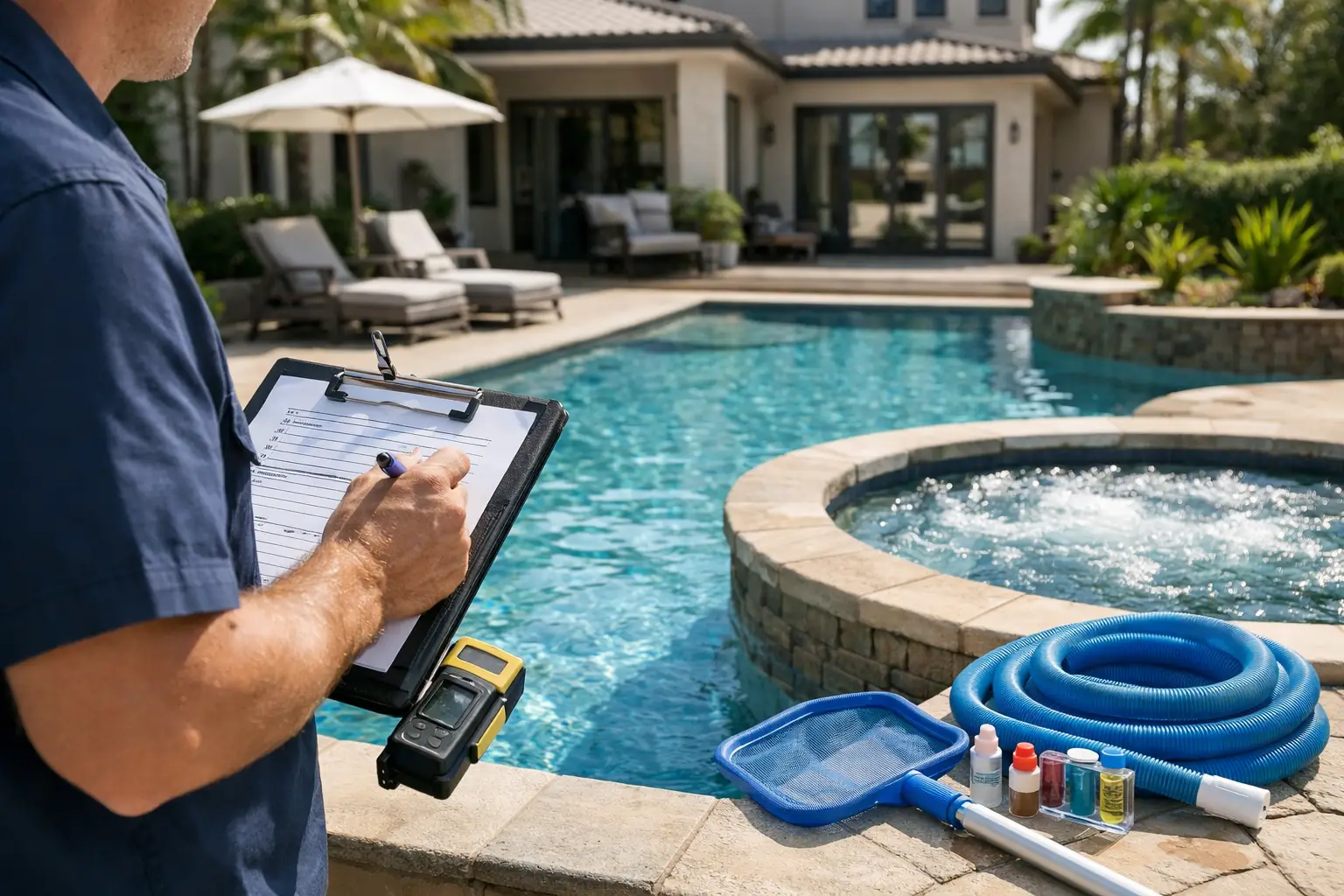
A pool can look clean, blue, and ready for summer while hiding defects that turn into expensive repairs after closing. That is exactly why a pool and spa inspection checklist matters. Buyers in Southeast Texas often focus on the house first, then assume the pool is fine if the pumps come on and the water looks clear. That assumption can cost real money.
A proper inspection is not a quick glance at the deck and a note that the water is circulating. It is a system review. The shell, tile, coping, deck, barriers, pumps, heater, drains, bonding, visible plumbing components, and spa functions all need to be evaluated in a way that reflects how these systems actually fail in the field.
What a pool and spa inspection checklist should cover
The best checklist follows the same logic an experienced inspector uses on site. Start with safety, move to structural conditions, then evaluate equipment operation and visible installation quality. Cosmetic issues matter less than defects that create shock hazards, drowning risks, leaks, or premature equipment failure.
In Southeast Texas, that order matters even more because heat, moisture, expansive soils, heavy rain, and long operating seasons put stress on pool systems. A deck crack may be cosmetic, or it may suggest movement that has affected coping and underground lines. Rust at equipment may be surface level, or it may point to chronic leakage. The checklist has to separate ordinary wear from conditions that deserve repair or further evaluation.
Safety barriers and access control
One of the first sections in any pool and spa inspection checklist should address safety barriers. Fences, gates, self-closing hardware, self-latching devices, and restricted access from the house side all deserve close attention. If a gate drags, fails to self-close, or latches too low for child safety, that is not a minor maintenance note.
Inspectors also look at the condition of barrier components. Loose fence panels, deteriorated wood, bent metal sections, and gaps under gates can reduce the effectiveness of an enclosure. Safety covers, if present, should also be observed for obvious damage or improper fit. Not every property will be required to match current standards if it is older, but safety concerns should still be documented clearly.
Deck, coping, and trip hazards
The walking surface around a pool tells you a lot. Cracked concrete, lifted sections, spalling, poor drainage, and separated joints can create both safety hazards and clues about movement. Around spas, narrow deck areas and wet traffic patterns make surface condition even more important.
Coping should be checked for loose sections, broken edges, failed mortar joints, and separation from the pool beam. In this region, movement and moisture exposure often show up first in these transitions. One cracked tile is not the same as a pattern of displacement running several feet along the beam line. A careful inspection notes that difference.
Structural conditions at the pool and spa shell
The shell is not judged by appearance alone. Surface finish wear, staining, patched areas, tile loss, and visible cracking all need context. Hairline finish cracks may be common in older plaster, but wider cracking, displacement, repeated patching, or signs of leakage deserve a more serious recommendation.
At the waterline, inspectors watch for missing or loose tile and failed grout. These conditions may seem cosmetic, yet they can also reflect movement or long-term water exposure where materials have broken down. Spa dams, spillways, and raised wall sections should be observed closely because they concentrate water movement and often reveal leaks sooner than flatter surfaces.
If the water level is low, the reason matters. Evaporation is common in hot weather, but water loss beyond normal expectations can suggest leakage. An inspector does not usually perform invasive leak detection as part of a standard inspection, but visible evidence should still be documented. Staining, persistent wet soil, algae concentration at cracks, or erosion near plumbing routes can all support that concern.
Interior fittings, drains, and visible components
Main drains, return covers, skimmers, weirs, handrails, ladders, diving board mounts, and light fixtures should all be included in the checklist. Missing or damaged drain covers raise immediate safety concerns. Loose rails and ladders are common defects and should not be brushed off as simple wear.
Pool lights deserve special attention because water and electricity are a bad combination when anything is improperly installed or deteriorated. Inspectors look for visible lens damage, water intrusion, loose fixtures, and issues at accessible controls. Bonding and grounding concerns may also be noted when visible conditions suggest improper or incomplete installation, although some aspects can be limited by accessibility.
Equipment operation is where many expensive issues show up
A pool may appear functional while the equipment pad tells a different story. This part of the inspection often reveals deferred maintenance. Pumps, motors, filters, heaters, timers, automation controls, valves, and visible plumbing connections should be operated when conditions permit and inspected for leakage, corrosion, unusual noise, vibration, and improper support.
Pump operation is basic, but the details matter. A loud motor, leaking seal, air in the pump basket, or weak circulation may suggest a problem that has not yet caused a complete failure. Filters should be checked for condition, leaks, rust, damaged gauges, and signs of poor servicing. Heaters can be costly to repair, so visible rust-through, burner issues, ignition problems, or inoperative status should be documented clearly.
In Southeast Texas, equipment pad placement and weather exposure can shorten service life. Sun, humidity, irrigation overspray, and poor drainage around the pad all take a toll. A checklist should include the condition of equipment mounting, protection from physical damage, and whether electrical disconnects and controls appear appropriately installed and accessible.
Spa-specific functions
Spas need more than a quick bubble check. The inspection should verify circulation, jet function, heating response if tested, air induction features, spillover operation where applicable, and the condition of spa surfaces and fittings. Raised spas often expose leak or movement issues faster than pools because the waterline and wall penetrations are easier to observe.
If a spa shares equipment with the pool, the valves and control settings should switch properly between modes. When they do not, the problem may be a simple actuator issue or a more involved automation defect. Either way, it affects the usefulness of the system and should be reported plainly.
Electrical and bonding concerns should never be minimized
Pool electrical defects are not the place for guesswork. Inspectors should observe accessible components such as panel labeling, disconnects, visible bonding conductors, GFCI protection where applicable, and the condition of receptacles and switches in the pool area. Corrosion, missing covers, open junction boxes, and extension-cord style fixes are all red flags.
Some electrical deficiencies are obvious, while others require a specialist for full evaluation. That distinction matters. A thorough report should identify visible safety concerns and recommend licensed electrical review when the condition warrants it. That protects the client without overstating what can be confirmed during a non-invasive inspection.
Southeast Texas issues that belong on the checklist
A generic checklist misses regional patterns. In this area, expansive soil movement can affect deck alignment, coping, and underground plumbing. High humidity and storm exposure can accelerate corrosion at metal components and electrical connections. Heavy vegetation around the pool can hide drainage problems, root pressure, and barrier deficiencies.
Moisture intrusion at adjacent structures also deserves attention. Pools and spas installed near patios, rear walls, or outdoor kitchens can contribute to drainage and splash-related deterioration. On some inspections, what first appears to be a pool-only issue turns out to be affecting the house as well.
That is one reason Texas Country Inspection approaches these systems as part of the larger property, not as a decorative add-on. A pool interacts with grading, electrical service, hardscape movement, and moisture conditions across the site.
What buyers should take from the inspection
The goal of a pool and spa inspection checklist is not to create alarm over every cracked tile or weathered surface. It is to identify safety hazards, costly defects, and signs of system failure before those problems become your responsibility. Some findings are routine maintenance. Others change the negotiation, the repair list, or even the decision to move forward.
It also helps to understand what an inspection is and is not. A standard inspection is visual and operational within accessible limits. It does not replace invasive leak testing, engineering analysis, or specialty electrical diagnostics when conditions call for them. If the initial findings suggest deeper concerns, the next step should be specific and documented.
A clean-looking pool can still have structural movement, unsafe barriers, aging equipment, or hidden leakage. A careful checklist keeps the evaluation grounded in real conditions instead of curb appeal. Before you take on the cost and liability of a pool or spa, make sure someone has inspected it with the same level of attention you would want applied to the house itself.
