
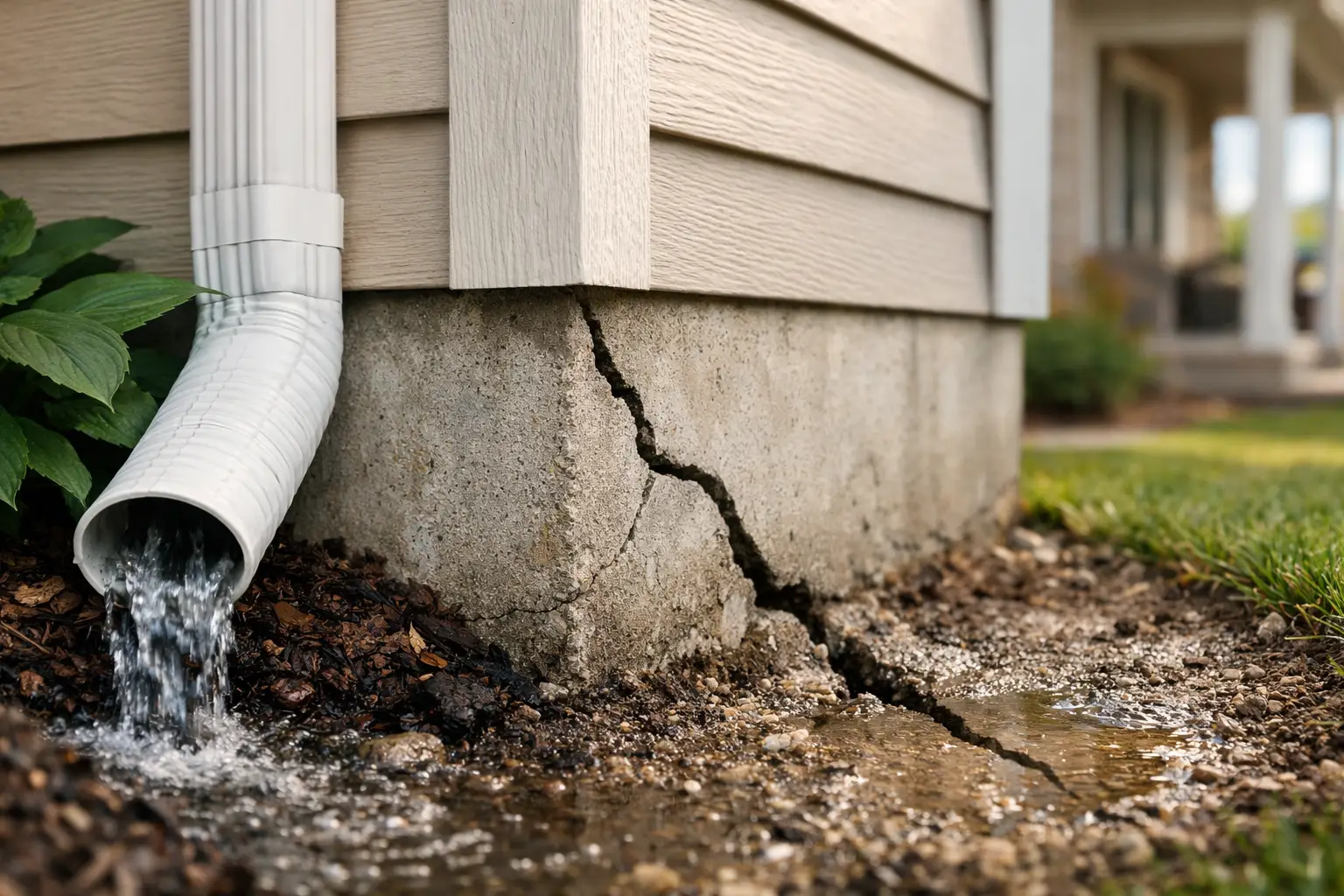
A hairline crack over a doorway may be a cosmetic drywall issue. A widening diagonal crack that appears after repeated ponding beside the house is a different concern. Can drainage cause foundation cracks? Yes. Poor drainage can create the moisture changes in soil that cause portions of a foundation to move at different rates, placing stress on slabs, piers, framing, masonry, and interior finishes.
In Southeast Texas, drainage deserves close attention because heavy rain, high groundwater conditions, flat lots, and moisture-sensitive soils can all affect how a structure performs. Water around a foundation is not automatically proof that the foundation has failed. It is, however, a condition that should be documented and evaluated before it becomes an expensive repair decision.
How drainage can cause foundation cracks
Foundations are designed to transfer building weight into supporting soil. That system depends on reasonably uniform support. When one side of the home stays wet while another side dries out, the soil beneath the structure may not behave uniformly.
Many Texas properties are built on soils containing clay. Clay can expand as it absorbs water and shrink as it dries. If drainage directs roof runoff against one corner of a slab, that area may rise while the rest of the slab remains stable or becomes comparatively dry. During extended dry periods, the reverse can happen: soil can shrink and leave portions of the foundation with reduced support. Repeated wet-dry cycles can contribute to differential movement.
The result may be cracking, but the location and character of the crack matter. Movement can show up as diagonal drywall cracks at door and window corners, separations at trim, sticking doors, gaps between brick veneer and window frames, floor slope changes, or cracks in masonry and exterior flatwork. On pier-and-beam homes, moisture conditions can also affect crawlspace soils, wood framing, and supporting piers.
Drainage is only one possible cause. Tree roots, plumbing leaks, improper fill, inadequate foundation design, settlement, aging materials, nearby construction, and normal minor shrinkage can produce similar symptoms. A thorough evaluation separates the visible symptom from the conditions that may be driving it.
Where water problems usually begin
Foundation drainage issues are often simple in concept but easy to overlook. A roof can shed thousands of gallons of water during a strong Southeast Texas storm. Without functioning gutters, properly connected downspouts, and positive grading, much of that water may land at the foundation perimeter.
Inspectors commonly observe low areas next to the home, downspouts that discharge directly beside the slab, clogged gutters overflowing at roof edges, and splash blocks that are too short to move water away effectively. Patio additions, landscaping borders, and replacement driveways can also change drainage patterns. A yard that once drained away from the structure may now hold water against the exterior wall.
On rural properties, drainage can be more complex. Swales, ditches, culverts, septic components, well equipment, and long rooflines may affect how water moves across the site. A drainage correction that works on a small city lot may not be enough for a home with a broad, flat acreage tract or a property that receives runoff from adjoining land.
Surface water and hidden moisture sources
Visible ponding is a strong clue, but not every moisture issue is obvious after a sunny week. A leaking supply line below a slab, a drain leak, or a poorly sealed penetration can introduce water where it does not belong. On a pier-and-beam structure, chronic moisture in the crawlspace can lead to damp soil, elevated humidity, wood deterioration, fungal growth, and wood-destroying insect concerns.
That is why a foundation review should not stop at measuring cracks. The exterior drainage path, roof runoff, plumbing indicators, interior finishes, exterior cladding, and accessible structural components should be considered together.
Which foundation cracks should concern a buyer or owner?
Not every crack calls for structural repair. Concrete naturally shrinks as it cures, and small cracks in flatwork such as sidewalks or patios are common. The concern increases when a crack is active, wide, displaced, repeated in multiple areas, or accompanied by other signs of movement.
A crack deserves closer review when it is wider at one end, has a vertical offset between sides, continues through masonry, or allows moisture intrusion. Stair-step cracking in brick veneer, especially when paired with gaps at windows or doors, can indicate movement that warrants further evaluation. Interior diagonal cracks that recur after patching, doors that no longer latch, or floors that feel noticeably out of level are also meaningful observations.
The timing matters. A crack that has remained unchanged for years may represent past movement. A crack that has appeared or widened after major storms, drought, drainage changes, or plumbing repairs may be more active. Homeowners should photograph and date concerning cracks rather than relying on memory. A simple reference measurement can help show whether conditions are changing.
What a thorough inspection can identify
A property inspection is not the same as an engineering analysis, and an inspector should not diagnose a structural condition beyond the available evidence and scope of the inspection. What a detailed inspection can do is identify observable indicators, document drainage deficiencies, assess accessible areas, and recommend the appropriate next step when conditions warrant it.
For foundation concerns, the inspection may include observations of slab cracking, brick veneer cracks, interior wall and ceiling cracks, door operation, window operation, floor conditions, drainage slopes, gutter and downspout discharge, standing water, plumbing leak indicators, and accessible crawlspace components. Infrared thermography may help identify temperature differences consistent with possible moisture concerns in some situations, though it does not see through concrete or independently prove a leak.
Foundation elevation readings can add useful context. Hydro-static altimeter readings, when performed under suitable conditions, can help identify relative floor elevation differences across a structure. These measurements do not determine the cause of movement by themselves, but they provide documented data that can support a recommendation for a licensed structural engineer or qualified foundation specialist.
For a buyer, this distinction is especially valuable. A seller may describe a crack as old and repaired, while the property may still have improper roof runoff or ongoing ponding at the same corner. The goal is not to assume the worst. It is to identify unresolved conditions before the buyer accepts the cost and risk of the property.
Correct drainage before assuming the foundation needs repair
When drainage deficiencies are present, correcting them is often a sensible first step. Water should generally be directed away from the foundation through properly maintained gutters, extensions or underground discharge systems where appropriate, and grading that carries surface water away from the structure. The correct method depends on the lot, roof configuration, soil conditions, local drainage path, and whether moving water farther away would create a problem for a neighboring property or a low area in the yard.
Avoid the common mistake of adding soil tightly against exterior siding or brick weep holes just to create slope. That can trap moisture, conceal termite entry routes, or create a wood-to-soil contact concern. Grade changes must preserve required clearances and avoid directing water into wall assemblies.
French drains and surface drains can be useful in the right setting, but they are not automatic answers. A drain that has no suitable outlet, is installed too close to the foundation, or is allowed to clog may not solve the underlying problem. Likewise, watering practices during drought should be approached carefully. Consistency is often more helpful than repeatedly soaking only one area of the foundation, but a property with known movement should be evaluated based on its specific conditions.
When to bring in an engineer or foundation specialist
A licensed structural engineer is typically the best next resource when there are significant cracks, measurable floor elevation differences, displaced masonry, persistent door and window problems, or evidence that movement may be ongoing. An engineer can evaluate structural performance and provide repair recommendations independent of a company selling foundation work.
If a plumbing leak is suspected, a qualified plumbing evaluation may be needed before structural repairs are considered. Repairing a foundation without addressing a continuing leak or major drainage defect can leave the original cause in place.
Texas Country Inspection approaches these observations with the same no-shortcuts mindset used throughout a property inspection: document the conditions that are visible, explain why they matter, and identify when additional evaluation is justified. A clear report gives buyers and owners a better basis for repairs, negotiation, maintenance planning, or monitoring.
Foundation cracks can be unsettling, but they are most manageable when addressed as evidence rather than assumptions. Watch where water goes during the next hard rain. That single observation can reveal more about a property’s risk than a dry-day walk around the exterior.
