
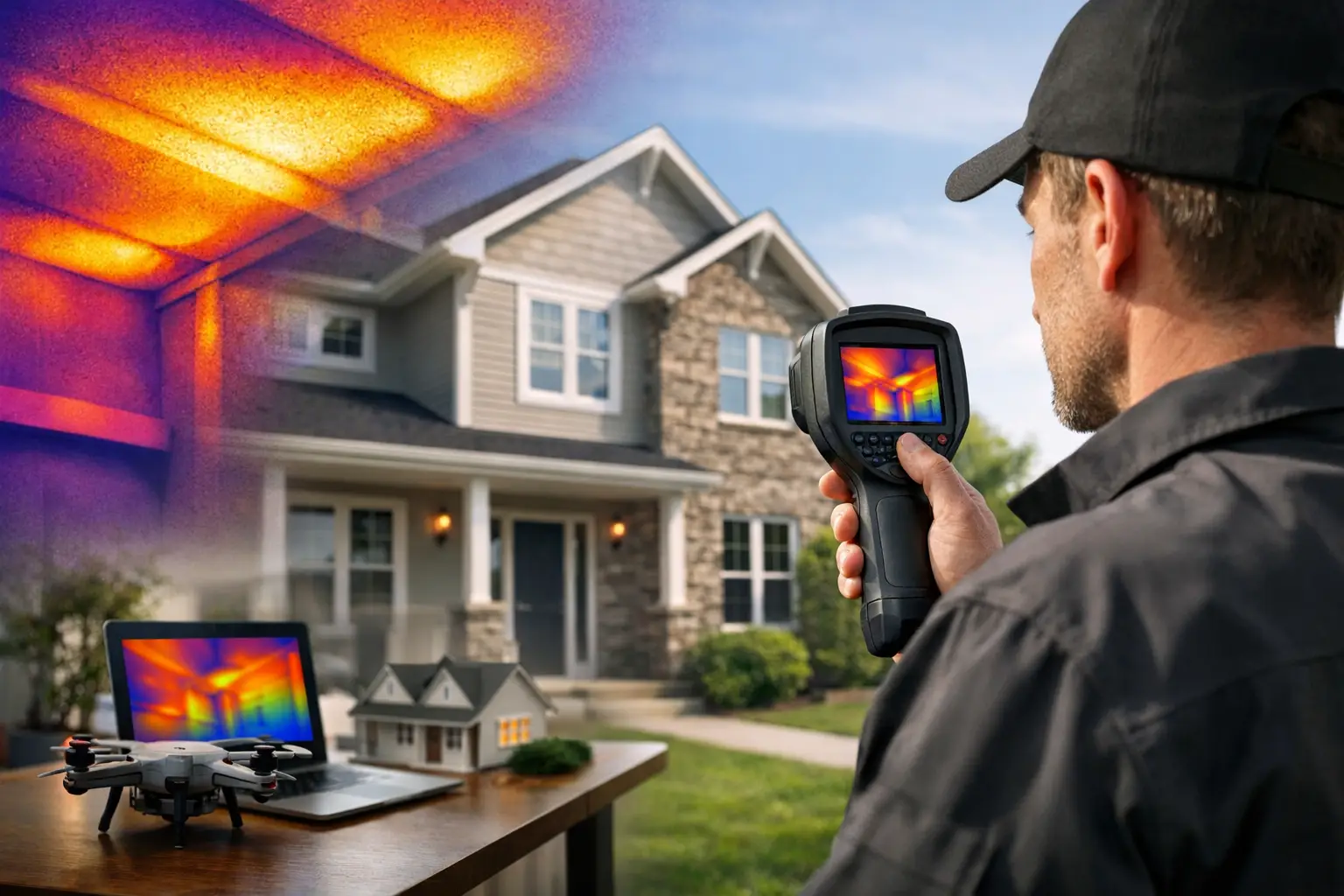
A wall can look freshly painted while an active plumbing leak is wetting the framing behind it. An electrical panel can appear orderly while one overloaded connection is running hotter than the surrounding components. The future of infrared home inspections is not about replacing a careful visual inspection. It is about giving buyers and property owners another way to identify conditions that may otherwise remain hidden until they become expensive repairs.
For Southeast Texas properties, that added perspective matters. High humidity, heavy rain, aging drain lines, slab movement, roof exposure, and termite-prone moisture conditions can create problems that are not always visible on the day of an inspection. Infrared thermography helps an experienced inspector recognize abnormal temperature patterns and determine where closer evaluation is warranted.
Why infrared has become more useful in property inspections
An infrared camera does not see through walls. It measures surface temperatures and displays differences as a thermal image. Those differences can point to areas of concern, including moisture evaporation, missing or compressed insulation, air leakage, overheated electrical components, and some roofing irregularities.
The value is in the comparison. A cool pattern on a ceiling below a bathroom may be consistent with moisture from a leaking drain or supply line. A warm connection in an electrical panel may indicate increased resistance, overloading, or a loose termination. A section of exterior wall that reads differently from surrounding areas may suggest insulation gaps, moisture, or air movement.
These findings do not automatically identify the cause, and they should not be treated as a diagnosis by themselves. Surface temperature can be affected by sunlight, HVAC operation, outdoor conditions, reflective materials, and recent use of plumbing fixtures or appliances. A qualified inspector uses the thermal image alongside visual observations, moisture-meter readings where appropriate, accessible component testing, and knowledge of how the building is constructed.
That distinction protects the client. A colorful image is not a defect report. The useful report explains what was observed, why the pattern may matter, what limitations were present, and what further evaluation or repair may be needed.
The future of infrared home inspections is better evidence
Thermal cameras are becoming more affordable, more sensitive, and easier to document. That does not mean every inspection will suddenly produce a larger list of defects. It means inspectors can gather better evidence when conditions support the use of the technology.
Newer cameras can capture sharper images, measure smaller temperature differences, and pair visible-light and thermal photographs in the same report. This makes it easier for a buyer, seller, contractor, or real estate professional to understand the location of a concern. Instead of reading that an anomaly was found “near the rear bedroom window,” the report can show the affected area in context.
Reporting will also improve. Inspection software increasingly allows images, annotations, moisture readings, and repair recommendations to be organized into a clearer record. For a buyer approaching a closing deadline, a documented thermal concern can help focus the next step: ask for a plumbing evaluation, request an electrician’s review, obtain a roofing opinion, or monitor a condition after repairs.
The best use of these tools remains targeted, not theatrical. An inspector should not scan a house simply to generate dramatic images. The camera is most useful when it helps answer practical questions raised by the property itself, such as whether a ceiling stain is dry or potentially active, whether a suspected insulation issue is widespread, or whether an electrical component warrants prompt attention.
Moisture detection will remain a major application
Moisture is one of the most costly and consequential issues in Southeast Texas homes. It can contribute to wood deterioration, fungal growth, damaged finishes, and conditions attractive to wood-destroying insects. In crawlspaces, around windows, below bathrooms, at exterior penetrations, and near HVAC equipment, a thermal scan may reveal temperature differences associated with moisture that is not yet obvious to the eye.
Still, moisture findings require discipline. A cool wall can result from air conditioning, a shaded exterior surface, or wet materials. A moisture meter, accessible visual evidence, and an understanding of the home’s systems help separate a meaningful concern from a normal temperature variation. When a possible moisture condition is documented, the next recommendation should be proportionate to the risk and evidence available.
Electrical inspections may benefit from clearer screening
Infrared can also help identify unusual heat at accessible electrical components. Loose connections, damaged breakers, overloaded circuits, and deteriorated conductors may generate heat before there is visible damage. This can be especially useful in older homes, properties with additions, and commercial spaces where electrical demand has changed over time.
There are limits. An electrical panel may need to be under load for a thermal pattern to be meaningful, and not every component is accessible or safe to inspect closely. An inspector is not performing a full electrical engineering study. But a documented hot spot can provide a strong reason for timely evaluation by a licensed electrician, particularly when safety is involved.
What technology cannot replace
The future of infrared home inspections will depend as much on inspector judgment as camera capability. A thermal camera cannot inspect a roof covering for every defect, determine the structural adequacy of a foundation, identify all termite activity, or guarantee that a hidden pipe will not leak tomorrow. It also cannot overcome blocked access, furniture, closed wall cavities, or weather conditions that reduce the reliability of a scan.
Field experience remains central. In the Golden Triangle and surrounding Southeast Texas communities, inspectors routinely encounter properties affected by high groundwater, wind-driven rain, expansive soil movement, aging pier-and-beam structures, and moisture-related wood damage. Those regional conditions influence where an experienced inspector looks first and how a thermal finding is interpreted.
Foundation evaluation offers a good example. Infrared may sometimes show temperature differences associated with moisture or HVAC effects near a slab, but it is not a substitute for elevation measurements, observed cracking patterns, door and window operation, drainage review, and other evidence of movement. Technical tools are strongest when they support a complete inspection process rather than compete with it.
What buyers should expect from an infrared-enhanced inspection
Buyers should expect a thorough property inspection first, with infrared used as an added diagnostic tool when appropriate. Ask whether the inspector uses thermal imaging during the inspection, what areas are typically scanned, and how suspected anomalies are verified. Also ask how limitations are documented. Honest limitations are a sign of a careful inspection, not a weak one.
A good report should avoid overstatement. It should distinguish between an observed defect, a thermal anomaly that needs further evaluation, and a maintenance item to monitor. This gives the buyer useful information without pretending that any inspection can eliminate every risk in an existing property.
For a home with a recent repair, a prior leak, an older electrical system, or signs of uneven cooling, thermal imaging can be particularly valuable. It may help establish whether the repair area shows unusual conditions at the time of inspection. It cannot certify that a repair will perform indefinitely, but it can provide useful evidence before a buyer takes ownership.
A more informed decision before closing
As thermal imaging becomes more common, the strongest inspections will not be the ones with the most images. They will be the ones that connect technology to sound building knowledge and practical next steps. Texas Country Inspection uses infrared thermography as part of a detailed, no-shortcuts approach because a concern hidden behind a finished surface may deserve attention before it becomes the buyer’s repair bill.
If a thermal finding is identified, use it to ask a better question, obtain the right specialist evaluation when needed, and make a more informed decision while there is still time to act.
