
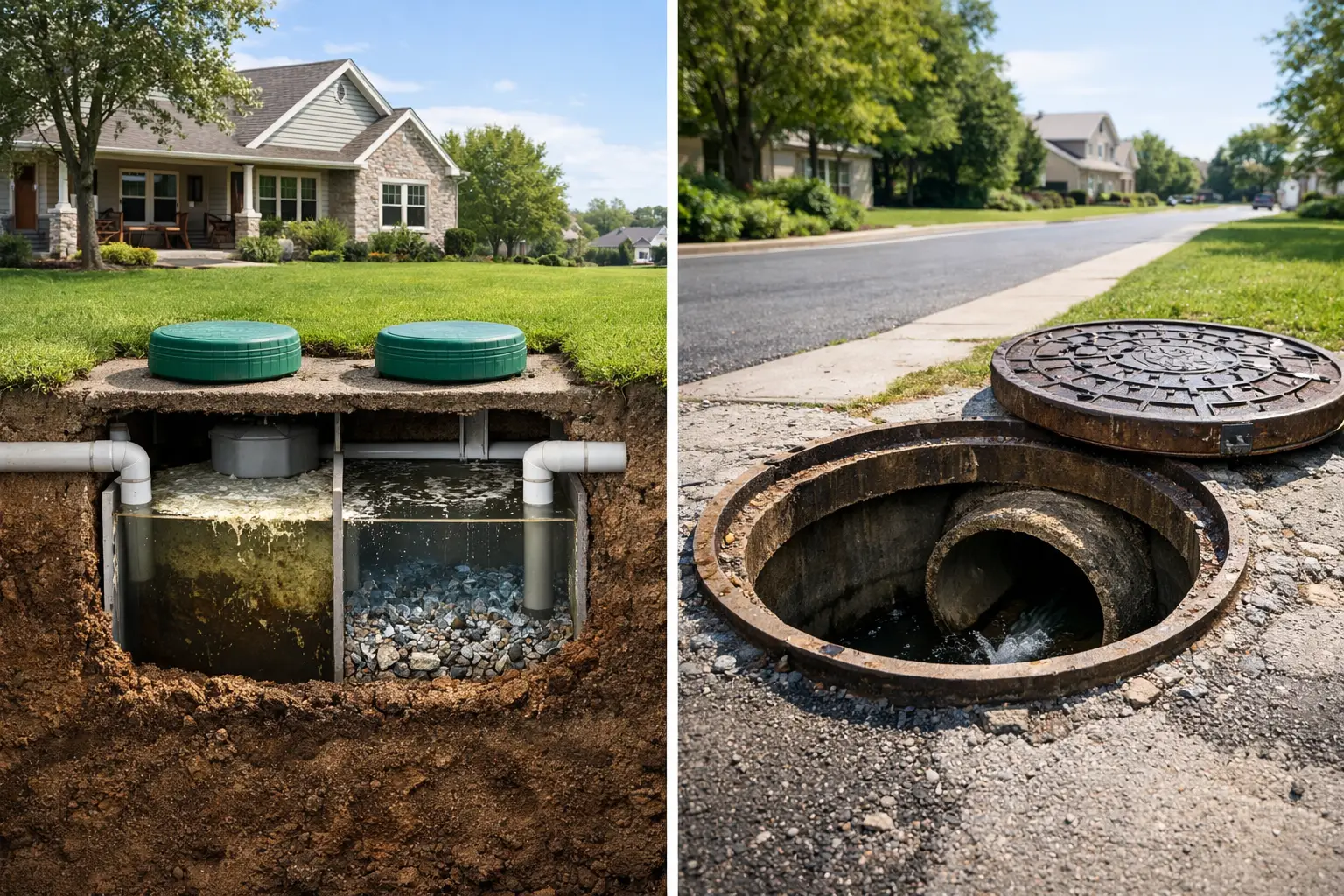
A home can look well maintained from the driveway and still have a wastewater system that creates a major expense after closing. When comparing a septic system vs sewer, buyers need to look beyond convenience. The right choice depends on the property’s location, the system’s condition, site drainage, household use, local utility availability, and the cost of correcting defects that may not be obvious during a showing.
For Southeast Texas buyers, wastewater decisions often come with local complications. High groundwater, heavy rain, flat lots, aging rural systems, and occasional flood exposure can all affect how a septic system performs. Public sewer service eliminates some responsibilities, but it does not eliminate every underground risk.
How a Septic System and Sewer Connection Work
A septic system treats wastewater on the property. Wastewater from toilets, sinks, tubs, showers, and appliances flows into a septic tank, where solids settle and lighter materials float. The partially treated liquid then moves to a drain field or other approved dispersal area, where the soil provides additional treatment.
A public sewer connection sends wastewater from the property through a private building sewer line to a municipal or utility-operated collection system. The utility is generally responsible for the main line in the street and treatment facility. The property owner is still typically responsible for the sewer line between the house and the public connection point.
That ownership boundary matters. A home on public sewer can still have a cracked, offset, root-intruded, or poorly sloped private sewer lateral. Likewise, a septic system can serve a home reliably for many years when it has been properly designed, maintained, and protected from excess water.
Septic System vs Sewer: The Practical Differences
Public sewer is usually viewed as the simpler option because the utility manages wastewater treatment. Owners pay a monthly service charge, and they do not schedule septic pumping or maintain a drain field. In neighborhoods with reliable utility infrastructure, that predictability can be valuable.
However, sewer service may involve connection fees, monthly charges that rise over time, and repair costs for the private lateral. Older homes may have cast iron, clay, Orangeburg, or other aging drain piping that deserves closer evaluation. Large trees, shifting soil, and prior repairs can affect the line before it reaches the municipal main.
A septic system does not carry a monthly sewer bill, but the owner assumes direct responsibility for maintenance. Tanks need periodic pumping, filters may need cleaning, and the drain field must be protected from traffic, structures, and excessive surface water. A replacement drain field can be expensive and may be difficult to install if the lot is small, wet, restricted, or subject to setback requirements.
Neither option is automatically better. A properly maintained septic system on suitable soil may be a sound fit for a rural property. A sewer-connected home can be a practical choice in town, provided the private line and plumbing drainage are in acceptable condition.
What Makes Septic Systems Vulnerable in Southeast Texas
Septic systems are not simply buried tanks. They rely on a combination of tank condition, plumbing flow, soil absorption, drainage, and appropriate use. Problems in any of those areas can affect the entire system.
In the Golden Triangle and surrounding communities, saturated ground conditions deserve particular attention. When groundwater is high or the soil remains wet after heavy rain, the drain field has less ability to accept and treat effluent. Surface ponding, sewage odor, unusually lush vegetation over the disposal area, slow drains, or wastewater backing up into fixtures are conditions that require prompt attention.
Drainage changes can also create problems. A new driveway, patio, French drain discharge, roof runoff, or landscaping change may direct water toward the septic area. Vehicles and heavy equipment can compact soil or damage buried components. Homeowners sometimes cover tanks and cleanouts so thoroughly that access becomes difficult, then postpone needed service because locating the system is inconvenient.
Daily habits matter as well. Excessive water use, leaking toilets, grease, wipes, harsh chemicals, and garbage disposal waste can overload or disrupt a septic system. A system that supported a one- or two-person household may not perform the same way when a larger family moves in.
What a Buyer Should Review Before Closing
A standard property inspection can identify visible conditions and operational concerns, but underground wastewater systems have limits. The tank, drain field, and buried piping are not fully visible, and their performance can change with weather and household use. Buyers should treat the wastewater system as a separate due diligence item, not an afterthought.
For a septic-served property, ask for available installation records, permits, site plans, pumping records, repair invoices, and the location of the tank and drain field. Confirm the system type and its intended capacity. A three-bedroom home may have a system designed around that bedroom count, regardless of whether a bonus room is currently used as a fourth sleeping area.
It is also wise to determine whether the system has an aerobic treatment unit, pumps, alarms, spray heads, filters, or maintenance requirements. These components can be effective, but they add equipment that needs regular service. An alarm that is disconnected, silent, or ignored is not a minor detail.
For a sewer-connected home, buyers should ask about prior backups, sewer line repairs, utility assessments, and whether the home has ever required replacement of the private lateral. If the property is older, has mature trees, has a history of drainage issues, or shows slow fixture drainage, a sewer scope by a qualified provider can be a prudent next step. A camera inspection may reveal conditions that cannot be verified from inside the home.
Inspection Clues That Deserve More Evaluation
During an inspection, the goal is to document meaningful conditions and help the client understand when specialist evaluation is warranted. A few clues can point toward a larger wastewater concern.
Slow or gurgling drains can indicate a localized plumbing issue, a blocked vent, a developing main drain obstruction, or a downstream sewer or septic problem. Multiple affected fixtures are more concerning than a single slow bathroom sink. Sewage odor around the home, especially near a tank, cleanout, or drain field, should not be dismissed as normal.
Visible settlement around a septic tank lid, damaged risers, exposed piping, standing water near the disposal area, and inoperative aerobic-system components all deserve attention. On sewer systems, cleanout damage, signs of past overflow, deteriorated older drain piping, or evidence of repeated drain cleaning may justify further investigation.
The absence of an active backup during an inspection does not prove the system is trouble-free. A vacant house may have limited water use, and dry weather can temporarily hide a drain field problem. Good inspection reporting separates what was observed from what cannot be confirmed without additional testing or records.
Cost Is More Than the Monthly Bill
Buyers often compare only a sewer bill against the cost of septic pumping. That is too narrow. The larger financial question is the condition and expected life of the existing system.
A sewer customer may have predictable monthly charges but face an unexpected private lateral repair. A septic owner may avoid a monthly utility bill but need scheduled pumping and eventual component replacement. The cost of a failing septic system can be especially significant where limited lot space, poor soil conditions, floodplain considerations, or regulatory requirements restrict replacement options.
When reviewing a property, consider the age of the system, maintenance history, accessibility, signs of prior failure, and whether its capacity matches the home’s actual use. A lower purchase price does not necessarily offset an underground system that is near the end of its service life.
Which Option Is Better for Your Property?
For many buyers, public sewer offers convenience and may be preferable in a densely developed area. It can be especially attractive for owners who do not want the maintenance obligations associated with on-site wastewater treatment. Still, convenience should not replace an evaluation of the home’s private sewer line.
A septic system may be the normal and appropriate solution for rural homes in areas such as Jasper, Buna, Warren, or Livingston, where public sewer is not available. It can perform well for decades when the installation is suitable for the site and the owner follows a consistent maintenance plan. The question is not whether septic is inherently risky. The question is whether this specific system is appropriate, documented, and showing signs of proper care.
Texas Country Inspection approaches wastewater observations with the same practical mindset used throughout a property inspection: identify visible conditions, document limitations, and help buyers focus on the issues that could affect their investment. Before your option period expires, obtain the records, ask direct questions, and bring in the appropriate qualified specialist when the evidence calls for it. That work is far easier before closing than after the first backup, odor, or repair invoice arrives.
