
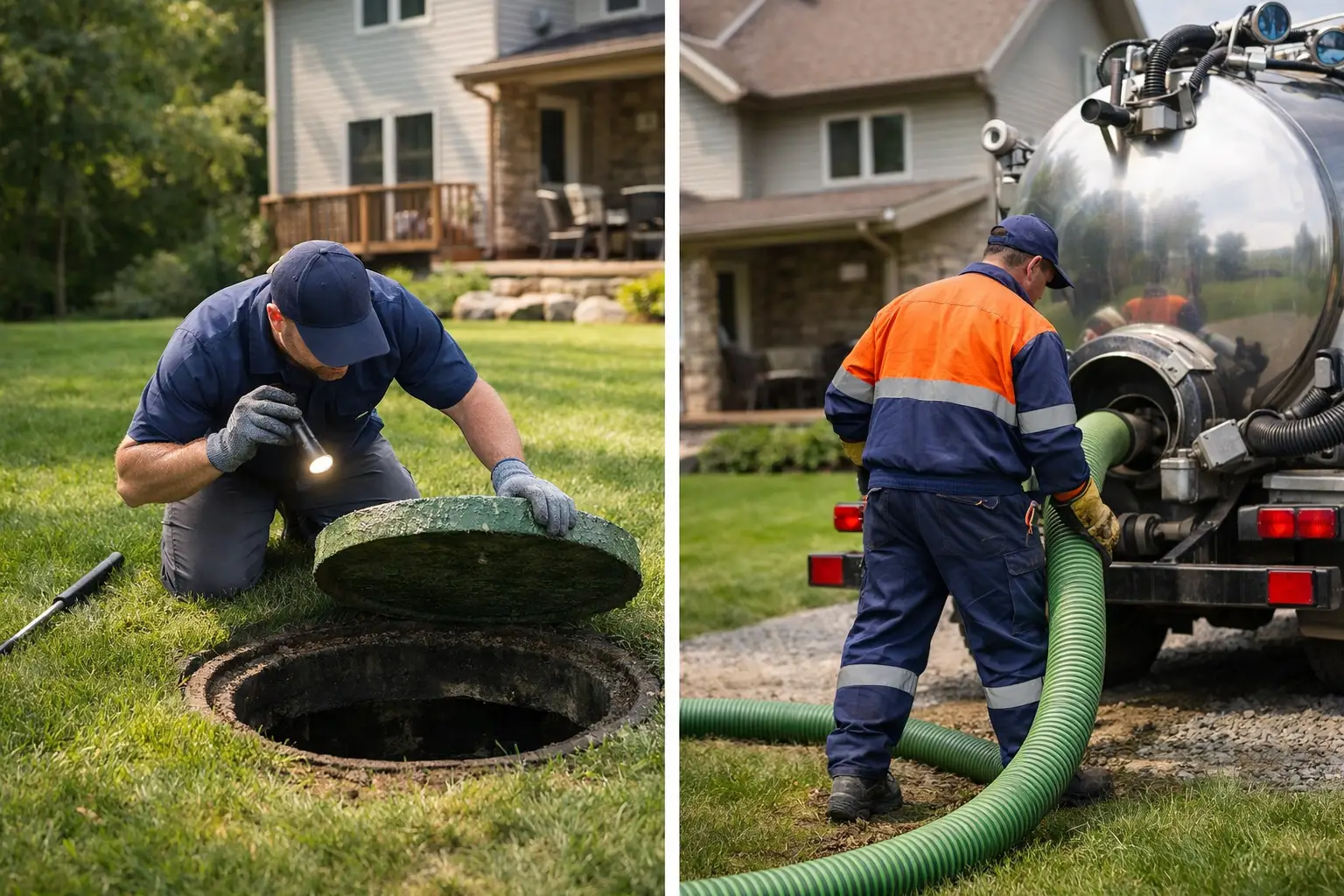
A tank that was pumped last month can still fail inspection this week. That is where many buyers and property owners get tripped up. When people ask about septic inspection vs pumping service, they are often treating them like the same task. They are not. One is maintenance. The other is evaluation. If you are buying property in Southeast Texas, that difference matters.
A pumping service removes accumulated solids and scum from the septic tank so the system can keep operating as designed. A septic inspection is intended to assess the condition and performance of the system components that can be observed, tested, and documented at the time of service. Pumping may be part of getting better access to the tank, but by itself it does not tell you whether the system is properly installed, damaged, near failure, or showing signs of a larger drainage problem.
Septic inspection vs pumping service: the core difference
The easiest way to separate the two is this: pumping is what you do to service the tank, while inspection is what you do to understand the system.
A pumping company is typically focused on removing waste from the tank, measuring sludge and scum levels, and restoring capacity for normal use. That work is necessary. Septic tanks are not set-and-forget equipment. If solids are allowed to build too high, they can move into the drain field and create expensive damage that no homeowner wants to inherit.
An inspection, however, asks broader questions. Are the tank lids accessible and secure? Are there signs of leakage at the tank or risers? Is the effluent level normal? Are baffles present and intact? Is the distribution side functioning as expected? Are there indicators of prior backup, ponding, root intrusion, settlement, or nonstandard repairs? Depending on the system type and site conditions, an inspector may also be looking at alarms, pumps, aeration components, spray heads, drain field conditions, and whether the system appears appropriate for the structure it serves.
That distinction is especially important in real estate transactions. A freshly pumped tank can temporarily hide symptoms that would otherwise raise concern. Pumping is useful maintenance, but it is not a clean bill of health.
What a pumping service usually includes
Pumping is a hands-on maintenance visit. The crew locates and opens the tank, removes liquid and solids, and may note unusual conditions inside the tank. Some providers will tell you if they see broken baffles, excessive grease, roots, or obvious structural damage. That information is valuable, but it is still not the same as a documented inspection.
The goal of pumping is operational upkeep. For a homeowner who already knows the system is functioning and just needs routine service, that may be enough for the moment. In many homes, regular pumping every few years is one of the best ways to extend septic life.
Still, there are limits. A pumping company may not be engaged to test broader performance, inspect site drainage, review installation concerns, document visible defects in inspection format, or evaluate how the system condition affects a pending purchase. Some companies do offer both services, but the scope needs to be clear before anyone assumes one includes the other.
What a septic inspection is meant to uncover
A proper septic inspection is more investigative. It is not just about whether the tank is full. It is about whether the system shows signs of distress, improper function, or conditions that could turn into a major expense.
On rural and semi-rural properties in Southeast Texas, that can involve more than one concern at a time. High groundwater, poor drainage, heavy clay soils, prior additions to the home, and undocumented repairs can all affect septic performance. An inspection looks for clues that the system may be undersized, aging poorly, or reacting to site conditions that a basic pump-out does not address.
For example, an inspector may document sewage odors near the tank area, soft or wet soil over part of the disposal area, an inoperative aerator alarm, damaged access lids, or evidence that wastewater has backed up into the structure. None of those conditions are resolved by simply emptying the tank. They point to a need for repair, further evaluation, or closer review of system records and permitting history.
That is why inspection reports matter to buyers. They create a record of observed conditions and help people make decisions with more than guesswork.
When pumping is enough and when it is not
For an owner maintaining a known, stable system with no warning signs, pumping on schedule may be the right move. If sinks are draining normally, the yard is dry over the disposal area, there are no sewage odors, and prior service history is consistent, routine maintenance may be all that is needed at that time.
But there are situations where pumping alone is not enough. A home purchase is the most obvious one. If you are buying a property with a septic system, you need more than a receipt showing the tank was recently emptied. You need to know whether the system appears functional and whether visible components show deterioration or red flags.
The same applies when a property has had past backups, unexplained wet spots in the yard, persistent odors, slow drainage, alarm issues, or a long period with unknown maintenance history. In those cases, pumping may still be needed, but it should not be treated as the full answer.
A common mistake is assuming a seller-provided pump receipt proves the system is fine. It proves the tank was serviced. That is all.
Why the difference matters in Southeast Texas
Septic issues do not happen in a vacuum. Local conditions matter. In Southeast Texas, moisture, soil movement, storm runoff, and high water tables can complicate septic performance in ways that are not always obvious on a casual walkaround.
A disposal area that appears acceptable in dry weather may show stress after a period of rain. Soil saturation can reduce the system’s ability to accept effluent. Surface drainage toward tank openings can introduce problems of its own. If a home has experienced settlement or grading changes, septic components may also be affected.
This is where experienced inspection work adds value. The right evaluator is not just looking at a tank. They are looking at the property as a system. Drainage patterns, site grading, structural additions, occupancy load, and evidence of moisture-related issues all help tell the story.
That kind of context matters to first-time buyers who need clarity, but it also matters to seasoned property owners who know that hidden defects are often the costly ones.
Septic inspection vs pumping service in a real estate transaction
In a transaction, the question is not whether pumping is useful. It is whether pumping answers the buyer’s risk questions. Usually, it does not.
Buyers need to know what was observed, what was accessible, what signs of failure or deferred maintenance were present, and what limitations affected the evaluation. Lenders, agents, and property owners may all be working from different assumptions, so clear documentation becomes essential.
An inspection can also help frame next steps. Sometimes the result is reassuring. The system may show normal operating conditions with no significant visible concerns at the time of service. Other times, the findings may support negotiating repairs, seeking specialist repair estimates, or planning for replacement costs.
Texas Country Inspection, LLC approaches septic evaluations the same way it approaches the rest of the property – with an emphasis on thorough observation, documentation, and practical reporting that helps clients understand where risk may be developing.
Questions to ask before scheduling either service
Before you book anything, ask what is actually included. Does the provider perform maintenance only, or are they documenting condition and function? Will lids be opened? Will accessible components be evaluated? Will you receive a written report? If pumping is recommended during the process, is that a separate service or part of the scope?
Also ask about limitations. Some systems are partially buried, altered, or difficult to access. Weather, recent pumping, occupancy patterns, and site conditions can affect what can be observed. A good inspection is not about pretending every hidden component can be verified. It is about being honest, careful, and specific about what was found and what remains uncertain.
That level of clarity protects everyone involved.
If you remember one thing, make it this: pumping helps maintain a septic system, but inspection helps you understand it. When money, property condition, and future repairs are on the line, that is a difference worth taking seriously.
