
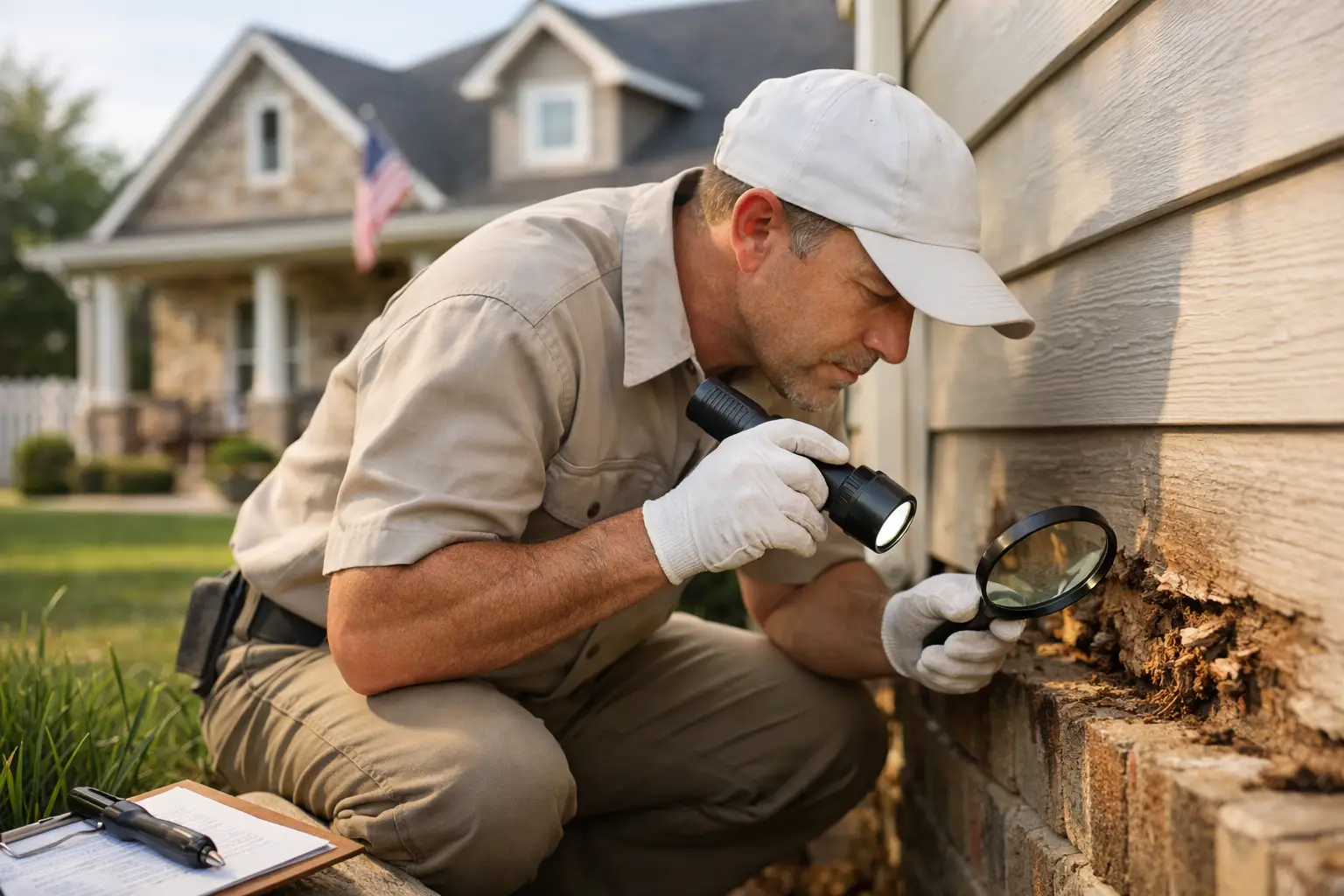
A house can look clean at showing time and still have active wood-destroying insect activity hidden behind siding, under pier areas, or inside damp framing. That is why a va loan termite inspection matters so much, especially in Southeast Texas where moisture, warm temperatures, and soil conditions create a favorable environment for termites and other wood-destroying insects.
For VA buyers, this is not just another box to check before closing. The wood-destroying insect report can affect whether the lender will clear the file, whether treatment is needed before funding, and whether you are buying a home with concealed structural risk. If you are purchasing in a region where termite pressure is high, a careful inspection can save you from inheriting damage that may not be obvious during a walk-through.
What a VA loan termite inspection is really for
A VA loan termite inspection is typically a wood-destroying insect inspection completed on the standard reporting form used for lending transactions. The purpose is not to perform a full structural engineering analysis or a general home inspection. It is to determine whether there is evidence of active infestation, past infestation, damage, or conditions that are conducive to infestation.
That distinction matters. A home can technically pass a general showing and still raise concerns on a WDI report. Likewise, a termite report may identify activity or damage in a limited area, while the broader home inspection reveals related moisture entry, drainage defects, or wood deterioration elsewhere. Buyers get the best protection when they understand that these inspections serve different functions.
In practical terms, the WDI report helps the lender and buyer answer a few key questions. Is there visible evidence of termites or other wood-destroying insects? Is there visible damage that should be addressed? Are there site conditions that increase the risk of infestation, such as earth-to-wood contact, heavy moisture, leaking plumbing, poor ventilation, or inaccessible crawlspace areas?
Is a va loan termite inspection always required?
It depends on the property location and the transaction details. VA loan requirements can vary by state and by current lender interpretation of VA guidance. In many markets with known termite activity, the lender will require a wood-destroying insect inspection before closing. In other cases, the requirement may depend on an appraiser notation, visible evidence of infestation, or local lending practice.
In Texas, buyers should not assume the report will be waived just because the home looks well maintained. Southeast Texas properties in particular face elevated termite and moisture-related risk. Older homes, pier-and-beam construction, heavy vegetation near foundations, and prior plumbing leaks all raise the stakes.
The safest approach is to ask early in the contract period whether your lender requires a WDI report for the specific property. Waiting until the last few days before closing can create avoidable delays if treatment, repair documentation, or reinspection becomes necessary.
Who pays for the termite inspection on a VA loan?
This is one of the most common questions, and the answer is not always as simple as buyers expect. VA rules and lender practices can affect who is allowed to pay for certain fees. In some transactions, the seller pays. In others, the buyer may be allowed to pay depending on current guidelines and local practice.
Because fee rules can change, buyers should confirm this point with their lender and agent at the beginning of the transaction, not after the inspection has already been ordered. If the contract is silent and the lender has restrictions, that can create unnecessary friction late in the process.
From a negotiation standpoint, termite findings also influence who pays for treatment or repairs. A seller may agree to cover treatment but not structural repairs. Another seller may agree to treatment and provide a clearance report, while asking the buyer to accept older damage that appears inactive. These details need to be documented clearly, because vague promises at closing are rarely good protection for a buyer.
What inspectors look for during a VA loan termite inspection
A proper wood-destroying insect inspection is visual and condition-based. The inspector is looking for signs of subterranean termites, drywood termites where applicable, carpenter ants, wood-boring beetles, and other wood-destroying organisms depending on the scope of the report and the region.
In Southeast Texas, subterranean termites are usually the main concern. Inspectors often look for mud tubes on foundation walls, piers, and penetrations; damaged or hollow-sounding wood; blistered trim surfaces; moisture intrusion around bathrooms, kitchens, and exterior walls; and conditions that allow termites easier access to framing.
They also assess conducive conditions. This is where experienced inspection work makes a difference. Wood siding or trim buried in soil, mulch piled against exterior walls, leaking hose bibs, unsealed utility penetrations, poor crawlspace ventilation, and standing water near the foundation can all increase termite risk even if active infestation is not visible on the day of the inspection.
Accessibility is another major issue. If the crawlspace is too tight, blocked by debris, or unsafe to enter, the report may note limitations. If heavy storage prevents viewing garage walls or attic framing, that limitation may also be documented. A clean report is only as meaningful as the areas that were actually visible.
Why Southeast Texas homes need a more careful eye
Not every region presents the same termite conditions. In Southeast Texas, warm weather, humidity, and frequent moisture exposure create a setting where wood-destroying insects and moisture damage often overlap. That overlap is where buyers can get misled.
A baseboard may look like simple water staining but actually conceal termite damage. A pier-and-beam home may have older repairs that hide inaccessible framing concerns. A slab home may show no obvious movement at first glance, while exterior grading keeps water against the structure and supports both wood decay and insect activity around trim and wall penetrations.
This is one reason buyers benefit from working with inspection professionals who understand the region, not just the form. A report is more useful when the inspector recognizes the difference between cosmetic wear and a site condition that points to a larger pattern of moisture and pest exposure.
What happens if the termite report finds problems?
Not every finding kills the deal. Some findings are straightforward and manageable. Active infestation may require treatment by a licensed pest control company. Visible damage may call for repair, further evaluation, or both. In some cases, the damage is old, repaired, and inactive. In others, the extent of damage cannot be fully determined without invasive access.
This is where buyers need to slow down and read carefully. A report that says there is evidence of infestation is not the same as a report that says the infestation is active today. A note about damaged trim is not the same as a statement that structural framing has failed. The language matters, and so do the recommended next steps.
If findings are significant, the lender may require treatment completion, a clearance report, or documentation that repairs have been made. A home inspection can also help determine whether the issue appears isolated or connected to broader moisture, drainage, or structural concerns.
VA loan termite inspection vs. home inspection
These two services work best together, but they are not interchangeable. A termite inspection is focused on wood-destroying insects, evidence of activity, visible damage, and infestation conditions. A home inspection evaluates the larger property systems, including roofing, structure, electrical, HVAC, plumbing, drainage, and visible moisture concerns.
For example, a WDI report may identify termite evidence at an exterior wall. The home inspection may then provide context by noting missing kick-out flashing, high moisture readings, wood rot, and settlement cracking in the same area. That broader picture helps a buyer understand whether the pest issue is isolated or part of a larger failure pattern.
Texas Country Inspection, LLC approaches these situations with that wider field perspective. When termite concerns appear alongside moisture intrusion, drainage defects, or movement-related conditions, buyers need documentation that explains the real-world significance of what is being seen.
How buyers can avoid closing delays
The easiest way to avoid last-minute problems is to order the WDI inspection early and coordinate it with the home inspection period. That gives everyone time to review findings, request treatment or repairs, and obtain any follow-up documentation the lender needs.
Buyers should also ask a few practical questions upfront. Is the report required by the lender for this specific property? Who is paying for it under current rules and contract terms? If the property has a history of treatment, are prior service records available? Are there inaccessible areas that may limit the inspection?
These questions are not overcautious. They are part of doing proper due diligence on a property that may become your financial responsibility the day you close.
A VA loan offers meaningful advantages, but the termite inspection piece deserves serious attention, especially in Southeast Texas. If a report shows active infestation, visible damage, or conditions that invite future trouble, that is useful information, not bad news. It gives you a chance to address the problem before the house becomes yours.
