
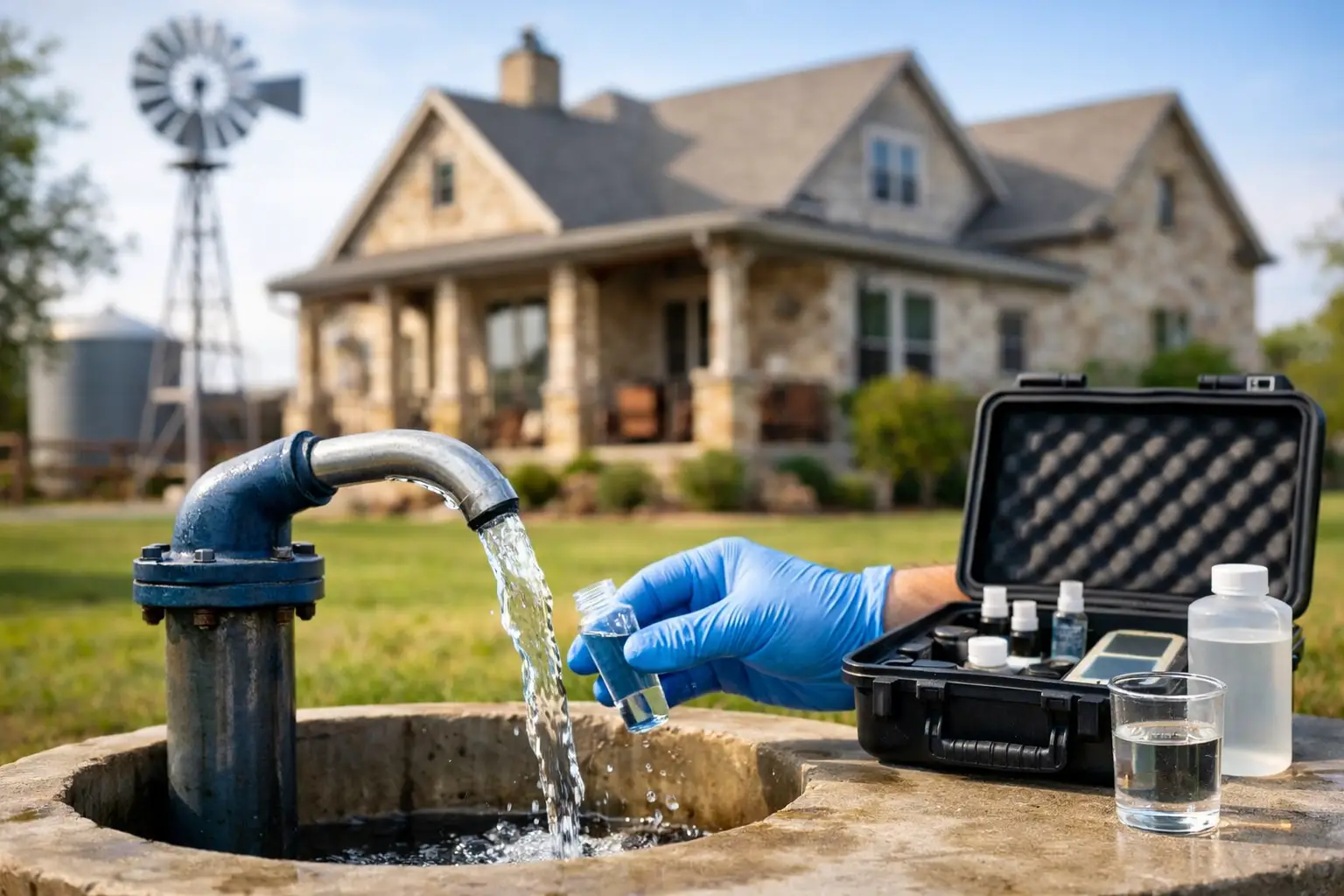
A private well can look fine at the surface and still produce water with bacteria, nitrates, sediment, or chemistry issues that change the risk profile of a property. That is why water well testing requirements matter so much during a purchase, refinance, or routine ownership review, especially in Southeast Texas where rural properties often rely on private systems that do not receive municipal treatment.
For buyers, the question is usually straightforward: what has to be tested, who is asking for it, and what happens if the sample does not pass. For owners, the better question is whether the well is producing water that is safe, dependable, and appropriate for the property use. Those are not always the same issue. A lender may require one set of items. A careful due diligence process may call for more.
What water well testing requirements usually mean
When people refer to water well testing requirements, they are often combining three separate concerns into one phrase. The first is lender or loan-program requirements. The second is local or transaction-related expectations, such as a buyer wanting documentation before closing. The third is practical health and system evaluation, which may go beyond the minimum paperwork.
For a private residential well, the water test itself commonly focuses on potability concerns. That usually includes total coliform bacteria and E. coli, and in many cases nitrate or nitrite. Depending on the property, additional lab analysis may be appropriate for pH, total dissolved solids, hardness, iron, manganese, chlorides, sulfates, lead, arsenic, or other constituents. If the property has a history of treatment equipment, unusual taste or odor, agricultural exposure, or older plumbing materials, the scope should be adjusted instead of relying on a one-size-fits-all panel.
The key point is simple: there is no single universal private-well test that covers every property risk. Requirements depend on the transaction, the loan type, the location, and the condition of the well system.
Texas water well testing requirements and the reality on the ground
In Texas, private wells are not regulated in the same way as public water systems. That often surprises first-time buyers. A house can be sold with a private well, and the burden of due diligence falls heavily on the parties involved in the transaction.
That does not mean testing is optional in a practical sense. If a lender requires a potable water report, then the deal may depend on it. If the property is rural and the buyer will rely entirely on the well, skipping testing is simply taking on avoidable risk. A clear water sample matters, but clear water does not prove that it is bacteriologically safe or chemically acceptable.
In Southeast Texas, local conditions also matter. Heavy rainfall, drainage issues, nearby livestock activity, older well components, and deferred maintenance can all affect water quality or reliability. A well near a septic system, flood-prone area, or agricultural use deserves closer attention. The same is true for properties that have been vacant, because stagnant water and inactive equipment can change sample results and system performance.
Lender-driven requirements
Some loan programs or underwriting conditions require evidence that the water supply is safe and adequate. The exact scope can vary. One lender may ask only for a bacteriological test. Another may want additional analysis, flow information, or confirmation that the system is operational and serving the property properly.
That is why buyers should not assume that one standard package will satisfy every closing file. Before ordering testing, confirm what the lender, underwriter, or closing parties actually need. The wrong test panel can waste time, and timing matters because many reports have a validity window tied to the transaction.
Health-driven recommendations
Even when a lender requires very little, a broader test can still be the smarter move. Bacteria testing addresses one important category of risk, but it does not tell you everything about mineral content, corrosiveness, nuisance staining, or certain contaminants tied to land use. If a family will drink, cook, bathe, and wash with that water every day, the testing scope should reflect real use, not just minimum approval language.
What a proper well water test should account for
A useful test starts with the sample being taken correctly. That sounds basic, but it is where mistakes happen. If the sample is collected from a contaminated faucet, from a line with treatment equipment affecting results, or after poor flushing procedures, the report may not represent the well water accurately.
The collection point should be chosen carefully based on the purpose of testing. If the goal is to understand raw well water quality, the sample may need to be taken before certain treatment components. If the goal is to document the water being delivered to the home, the collection point may differ. Chain of custody, sterile containers, hold times, and prompt delivery to the lab also matter. Bacteria samples are especially time-sensitive.
A solid testing process also considers the well system itself. Water quality is only part of the picture. Buyers should want to know whether the well appears functional, whether pressure is stable, whether equipment shows signs of deferred maintenance, and whether there are visible concerns at the wellhead or related components. A water test can pass while the pressure tank, controls, wiring, or protective features still show problems.
Common issues that change the testing scope
Not every property needs the same level of analysis, but some conditions should raise the bar.
If the property is near cropland, pasture, or areas with fertilizer use, nitrate testing becomes more important. If there are sulfur odors, staining, or heavy scale, additional mineral and chemistry analysis may be warranted. If the home has older plumbing, testing for metals can make sense. If there has been flooding, long vacancy, or evidence of poor drainage around the wellhead, bacteria concerns deserve extra attention.
Homes with treatment systems also require careful interpretation. A softener, filtration system, chlorination setup, or reverse osmosis unit may improve delivered water quality, but those systems also create maintenance obligations. Buyers should know what the untreated water looks like, what the equipment is correcting, and whether the treatment system has been serviced properly.
What happens if the well water does not pass
A failed sample is not always a reason to walk away from a property, but it is a reason to slow down and understand the cause. Bacteria results may point to a contaminated sample procedure, a temporary issue, or a real sanitary defect at the well or system. Nitrate or chemical findings may indicate a more persistent condition that requires treatment, monitoring, or additional investigation.
The next step usually depends on the result. Sometimes the response is disinfecting the system and retesting. Sometimes it is inspecting the wellhead, casing, cap, grading, or nearby sources of contamination. In other cases, the right answer is to evaluate treatment options and long-term maintenance cost before closing.
That is where experienced coordination matters. The report should not just land in your inbox without context. You need to know whether the issue appears minor, whether it may affect financing, and whether it suggests broader concerns about the property.
Why timing matters in a real estate transaction
Well testing should be scheduled early enough to leave room for lab turnaround, interpretation, and retesting if necessary. Waiting until the end of the option period or just before closing creates pressure that works against careful decision-making.
In active transactions, delays usually come from three places: unclear lender instructions, missed sample handling requirements, and failed results that require follow-up. All three are manageable if testing is treated as a due diligence item rather than a last-minute checkbox.
For rural buyers in this region, well testing works best when it is coordinated alongside the broader inspection process. Water quality, septic conditions, drainage patterns, moisture exposure, and site grading often tell a connected story. A well does not operate in isolation from the rest of the property.
Choosing the right level of testing
Minimum testing may satisfy a file. It may not satisfy a careful buyer. That distinction matters.
If the property is newer, occupied, and has a documented maintenance history, a standard panel may be enough unless lender conditions say otherwise. If the property is older, vacant, heavily rural, recently flooded, or tied to agricultural activity, a more expanded review is often worth the added cost. The price difference between limited and meaningful due diligence is usually small compared with the cost of water treatment, well repairs, or post-closing surprises.
At Texas Country Inspection, LLC, the goal is not just to help a transaction move forward. It is to help clients understand what they are taking ownership of and where the real risks are.
When a property depends on a private well, clean paperwork is good. Clear answers are better. Test early, test correctly, and make sure the scope matches the property instead of the minimum someone hopes will be enough.
