
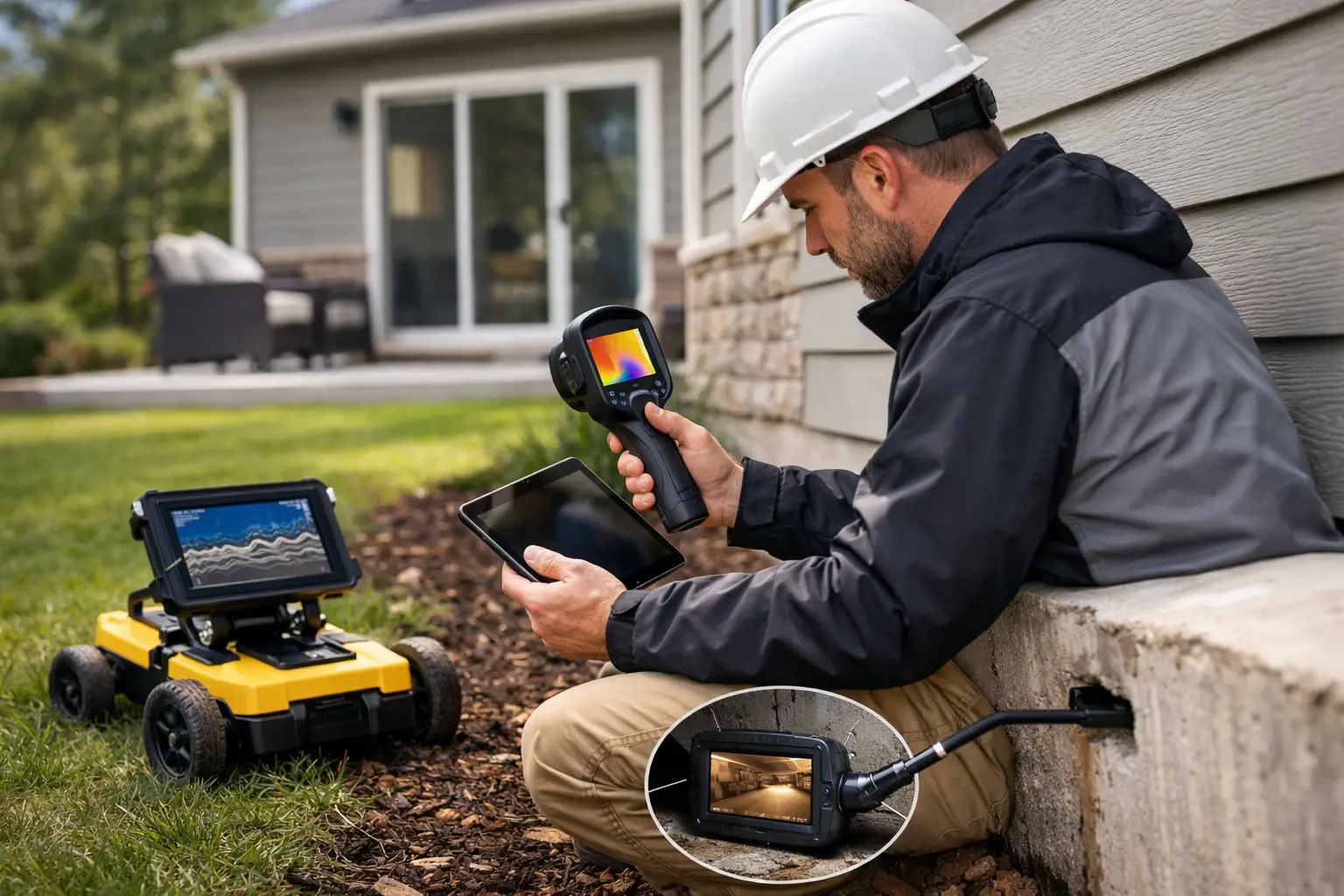
A foundation can look fine from the curb and still be telling a very different story at floor level. In Southeast Texas, that matters. Expansive soils, drainage problems, plumbing leaks, tree roots, and long periods of moisture followed by dry weather can all affect movement patterns. That is why foundation inspection technology trends are getting more attention from buyers, property owners, and real estate professionals who want more than a quick visual opinion.
The biggest shift is not that inspectors are replacing experience with gadgets. It is that good inspectors are using better tools to document what they already know to look for. Technology helps confirm patterns, measure conditions more precisely, and explain findings in a way clients can actually use.
Why foundation inspection technology trends matter in Southeast Texas
In this region, foundation concerns are rarely isolated. Differential settlement can show up alongside moisture intrusion, poor grading, plumbing issues under or near the slab, or wood-destroying insect damage that complicates the larger picture. A crack by itself does not always mean structural failure. A sticking door by itself does not always mean foundation movement. The real work is connecting symptoms, site conditions, and measured data.
That is where newer methods help. Instead of relying only on visible cracks and subjective floor feel, inspectors can compare elevations, identify temperature differences that suggest hidden moisture, and produce clearer documentation. For a buyer deciding whether to proceed, negotiate, or bring in a structural engineer, better data reduces guesswork.
The move from visual-only inspections to measured evidence
A visual inspection is still the starting point. Experienced inspectors watch for brick veneer cracks, drywall separation, sloping floors, out-of-square door frames, window operation issues, and signs of exterior drainage trouble. They also pay attention to landscaping, gutter discharge, negative grading, and areas where water may collect near the structure.
What has changed is the expectation that these observations can be supported by instruments. Clients increasingly want measurable information, not just broad statements like minor movement observed. They want to know where movement appears to be occurring, how pronounced it is, and what other conditions may be contributing.
That is one of the most useful foundation inspection technology trends because it improves communication. A report with elevation readings, thermal images where appropriate, and defect photos gives buyers and owners a more practical basis for decisions.
Hydro-static altimeter readings and floor elevation mapping
One of the most valuable tools in foundation work is elevation measurement. Hydro-static altimeter readings can help identify variations in floor height across the home or building. When used properly, they create a map of relative elevation differences that may support concerns about differential movement.
This matters because some homes have cosmetic cracking with little meaningful elevation change, while others have subtle finish symptoms but more noticeable floor variation. Measuring helps separate casual assumptions from actual patterns.
There are trade-offs. Elevation readings are not a diagnosis by themselves. Furniture placement, floor coverings, remodeling changes, and access limitations can affect how much of the structure can be measured. Readings also show current conditions, not the exact timeline of movement. Still, when paired with a careful visual inspection, they are one of the clearest examples of technology adding real value.
Infrared thermography is becoming more useful, not less
Infrared cameras are often misunderstood. They do not see through walls, and they do not prove structural defects on their own. What they do well is reveal temperature differences that may point to hidden moisture, missing insulation, air leakage, or areas that deserve closer investigation.
For foundation-related concerns, moisture is often the key connection. A plumbing leak below a slab, chronic exterior water intrusion, or wet soil conditions near part of the structure can influence movement patterns. Infrared can sometimes help identify suspicious areas that line up with visible symptoms, especially when combined with moisture meter verification and direct inspection.
In Southeast Texas, where humidity and water management issues are common, this is a practical trend rather than a flashy one. The tool is most effective in trained hands. Used carelessly, it can create false confidence. Used correctly, it helps narrow down where a problem may be developing and where more invasive evaluation may be justified.
Better moisture detection is shaping foundation assessments
Moisture meters, thermal imaging, and improved reporting of site drainage conditions are working together more often. That makes sense because foundation performance and moisture management are tightly connected. If one side of a home stays wet while another side dries out, soil expansion and contraction can become uneven.
Modern inspection practice is putting more emphasis on this cause-and-effect relationship. Instead of treating foundation cracks as a separate issue, inspectors are documenting how grading, gutter discharge, irrigation, vegetation, and plumbing concerns may be feeding the problem.
This trend is especially useful for homeowners. If movement appears limited and active structural repair is not clearly indicated at the time of inspection, correcting drainage and moisture conditions may be the more urgent and cost-effective next step. That depends on the structure, the severity of symptoms, and whether the movement appears ongoing.
Drones and roof-to-foundation context
Drones are not foundation tools in the narrow sense, but they are influencing how inspectors understand whole-building conditions. Roof drainage problems, damaged gutters, missing downspout extensions, and poor water control at upper elevations often contribute to what happens below.
On larger homes, commercial properties, or buildings with difficult roof access, drone imagery can provide documentation that supports the foundation discussion. If water is not being collected and moved away from the structure properly, that is not just a roof maintenance note. It can be part of the larger pattern affecting the foundation.
The trade-off is simple. Drone images are useful, but they do not replace on-foot exterior inspection or interior measurement. They add context. They should not be treated as a shortcut.
Reporting software is changing what clients can understand
One of the less obvious foundation inspection technology trends is better reporting. Clearer photo labeling, annotated diagrams, grouped observations, and easier-to-read summaries help clients understand what they are seeing without watering down the seriousness of the issue.
This matters during real estate transactions. Buyers are often reviewing multiple concerns at once, from electrical defects to HVAC performance to termite evidence. If foundation findings are buried in vague language, important details can get lost. Strong reporting helps clients distinguish between cosmetic cracking, suspected movement, active moisture concerns, and conditions that merit structural engineering review.
Good reporting also helps agents, lenders, and contractors work from the same page. It does not eliminate the need for follow-up, but it reduces confusion about what was observed and where.
What technology still cannot do
For all the progress, no tool replaces judgment. A camera cannot tell whether a crack is old or newly active without context. An elevation reading cannot explain every cause of variation. An app cannot evaluate workmanship quality the way an experienced field inspector can.
That is why the best approach is still layered. Start with a thorough visual inspection. Add measurement where it helps. Use infrared and moisture tools when site conditions support it. Document carefully. Recommend further evaluation when the evidence points beyond the scope of a general inspection.
This is especially important for older homes, remodeled properties, pier-and-beam structures, and buildings with partial repairs. Technology can improve the picture, but complicated structures still require careful interpretation.
What buyers and owners should ask for
If you are concerned about a slab or support system, ask whether the inspection includes floor elevation measurements, moisture evaluation where indicated, and detailed documentation of visible symptoms. Ask how drainage, plumbing concerns, and exterior grading will be considered as part of the foundation assessment.
You should also ask what the findings can and cannot tell you. That is a sign of a careful inspector. A dependable inspection does not promise certainty where certainty is not possible. It gives you a grounded opinion based on observed conditions, available access, and useful measurements.
For many clients in this region, that is the real value of modern inspection practice. Texas Country Inspection, LLC uses technology to strengthen field-based judgment, not replace it. When the tools and the inspection process work together, clients get a clearer understanding of risk, not just more pictures.
The most useful trend is not a new device. It is the shift toward documented, evidence-based foundation evaluation that respects both the limits of technology and the cost of getting it wrong. If a property is showing signs of movement, the right inspection should leave you better informed about what is visible, what may be contributing, and what deserves the next level of attention before the problem grows more expensive.
