
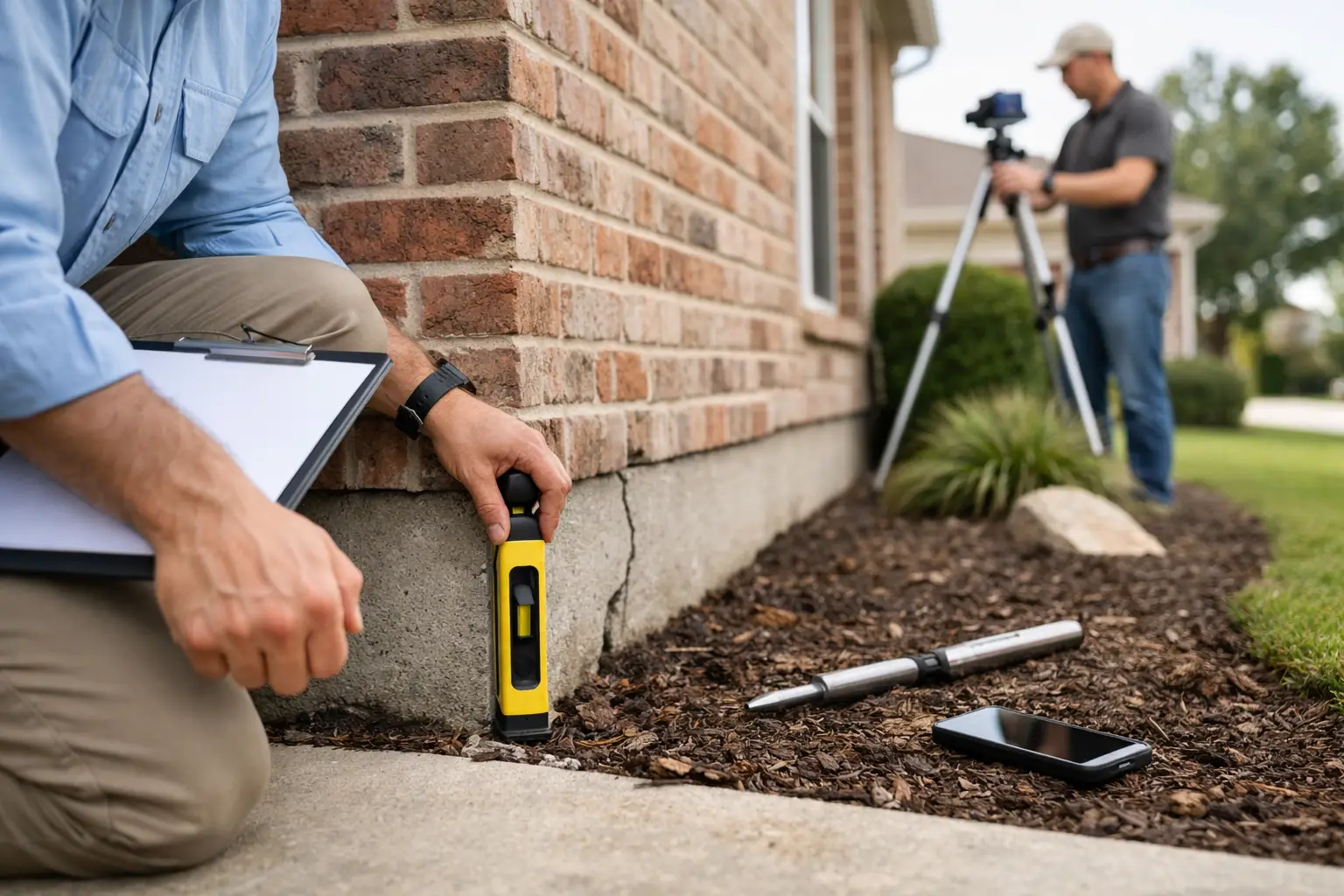
A house in Southeast Texas can look perfectly acceptable at first glance and still be telling a different story at floor level. A sticking bedroom door, a stair-step brick crack near the garage, or a floor that feels slightly off underfoot can all point to the need for a foundation movement inspection Texas buyers and owners should take seriously before closing or before small defects turn into larger repair costs.
In this region, foundation concerns are not rare edge cases. Expansive soils, prolonged dry spells, intense rain events, poor drainage, plumbing leaks, and years of gradual settlement can all affect how a structure performs. The question is not whether a home has a cosmetic crack somewhere. The real question is whether the observed conditions suggest normal age-related movement, ongoing differential movement, or a level of displacement that deserves further engineering or repair evaluation.
What a foundation movement inspection in Texas is really checking
A proper inspection is not just a quick look at a few cracks. It should connect visible symptoms with measurable conditions and site influences. That means looking at the structure itself, the grading around it, the moisture conditions that may be affecting the soil, and the interior signs that often show up before major distress is obvious from the curb.
In practical terms, the inspection may include floor elevation readings, visual review of interior and exterior cracking, door and window operation, trim separation, slab edge exposure, drainage patterns, and moisture-related clues around the perimeter. In many cases, hydro-static altimeter readings help establish whether floor elevations show patterns consistent with foundation movement rather than isolated finish defects.
That distinction matters. A drywall crack over a doorway may be minor and stable. The same crack, combined with measurable elevation change, brick displacement, and poor runoff control, carries a different meaning.
Why foundation movement is common in Southeast Texas
Southeast Texas homes deal with a difficult mix of environmental and construction factors. Clay-rich soils expand when they absorb moisture and shrink when they dry out. That cycle puts stress on slab-on-grade foundations, especially where moisture levels vary sharply from one side of the home to the other.
For example, one side of a house may stay wet due to poor drainage or a leaking irrigation line while the opposite side dries out near large trees. That uneven soil behavior can cause differential movement. Instead of the entire foundation settling uniformly, one area rises, drops, or rotates more than another.
This is also why broad statements can be misleading. Not every crack means structural failure, and not every level variation means a home needs foundation repair. Some movement is common in Texas construction. The important part is documenting the pattern, the probable causes, and the severity of the observed symptoms.
Common signs found during a foundation movement inspection Texas clients request
Most clients call because they have noticed one symptom, but foundations usually tell their story through several related clues. Inside the home, inspectors often find diagonal drywall cracking at corners of doors and windows, crown molding gaps, tile cracking, sloping or out-of-level floors, and doors that no longer latch properly.
Outside, the signs may include brick veneer cracks, separation at expansion joints, displacement at the slab edge, gaps at window lintels, and trim or siding distortion. Drainage problems often show up at the same time, such as negative grading, ponding water, downspouts discharging too close to the house, or moisture concentration near one portion of the perimeter.
Plumbing issues can complicate the picture. An underslab leak may contribute to localized soil expansion, while long-term moisture loss around certain areas may have the opposite effect. That is why a careful inspector does not isolate the foundation from the rest of the property. Site conditions and building systems matter.
Why measurements matter more than guesses
Clients are often told some version of, “All houses in Texas move.” That can be true, but it is not enough to make a buying decision. A useful inspection replaces vague reassurance with documented observations.
Elevation readings help identify highs, lows, and directional slope patterns across the slab surface. They do not, by themselves, diagnose every cause or replace engineering design analysis. What they do provide is objective field data that can support or challenge what the visible symptoms appear to suggest.
That is especially helpful in real estate transactions. Buyers need more than a casual opinion. They need a report that explains what was observed, where it was observed, and whether the overall pattern indicates monitoring, corrective drainage work, plumbing review, or further structural evaluation. Texas Country Inspection, LLC uses hydro-static altimeter readings as part of that more technical approach because visual clues alone do not always tell the full story.
What an inspection can and cannot tell you
A good foundation movement inspection gives clients a clearer risk picture. It can document distress, identify likely contributing factors, and note whether movement appears minor, moderate, or significant based on field conditions. It can also point out when the evidence suggests the need for a licensed engineer or a qualified foundation repair contractor for additional analysis.
What it cannot do is promise that a foundation will never move again. Soil conditions change. Weather changes. Drainage conditions around a house can improve or worsen over time. Even a repaired foundation may continue to show cosmetic cracking if the moisture conditions around it remain inconsistent.
That is why the best inspections are practical rather than dramatic. The goal is not to alarm the client or dismiss the issue. The goal is to describe the present condition as accurately as possible and explain the next step that fits the evidence.
When buyers should schedule a foundation movement inspection in Texas
The right time is usually before the end of an option period or during any due diligence window when decisions can still be made without unnecessary pressure. If a home already shows cracking, sloping, or door operation problems, waiting until after closing creates avoidable risk.
For homeowners, timing also matters. If new symptoms appear after a long drought, after heavy rainfall, or following plumbing concerns, an inspection can help determine whether the changes are isolated cosmetic issues or part of a broader movement pattern. The same applies before listing a property. Understanding the condition early often leads to better documentation and fewer surprises during negotiations.
Commercial buyers should take the same issues seriously, but with added attention to load paths, flatwork conditions, wall displacement, and how movement may affect occupancy, tenant improvements, or future maintenance planning.
What to expect from the report
A useful report should be specific. It should describe the visible signs of movement, note where they occur, and explain any patterns that repeat across multiple areas of the structure. If elevation readings are taken, the findings should be organized in a way that makes the floor performance understandable to a buyer or property owner rather than buried in technical shorthand.
The report should also address probable contributing factors such as poor drainage, vegetation too close to the structure, moisture concentration, or other site-related concerns. Just as important, it should separate observed facts from recommendations. Some homes need monitoring and moisture management. Others justify prompt structural follow-up. Those are very different outcomes, and clients deserve clarity.
The practical value of catching movement early
Small foundation-related symptoms often become more expensive when ignored. A minor drainage issue can continue feeding soil instability. A persistent plumbing leak can keep changing the soil profile below the slab. Interior cracks may widen, exterior veneer may continue to separate, and doors or windows may become harder to operate.
Early inspection does not always lead to major repair. In many cases, it leads to better maintenance decisions – correcting drainage, managing moisture more consistently, or documenting current conditions so future changes can be compared against a baseline. That kind of information is valuable whether you are buying, selling, or simply protecting a property you already own.
If you are seeing cracks, uneven floors, sticking doors, or other signs that do not look quite right, the most useful next step is not guesswork. It is getting the condition documented by an inspector who understands how Texas soils, moisture changes, and real-world building performance come together at the foundation level.
