
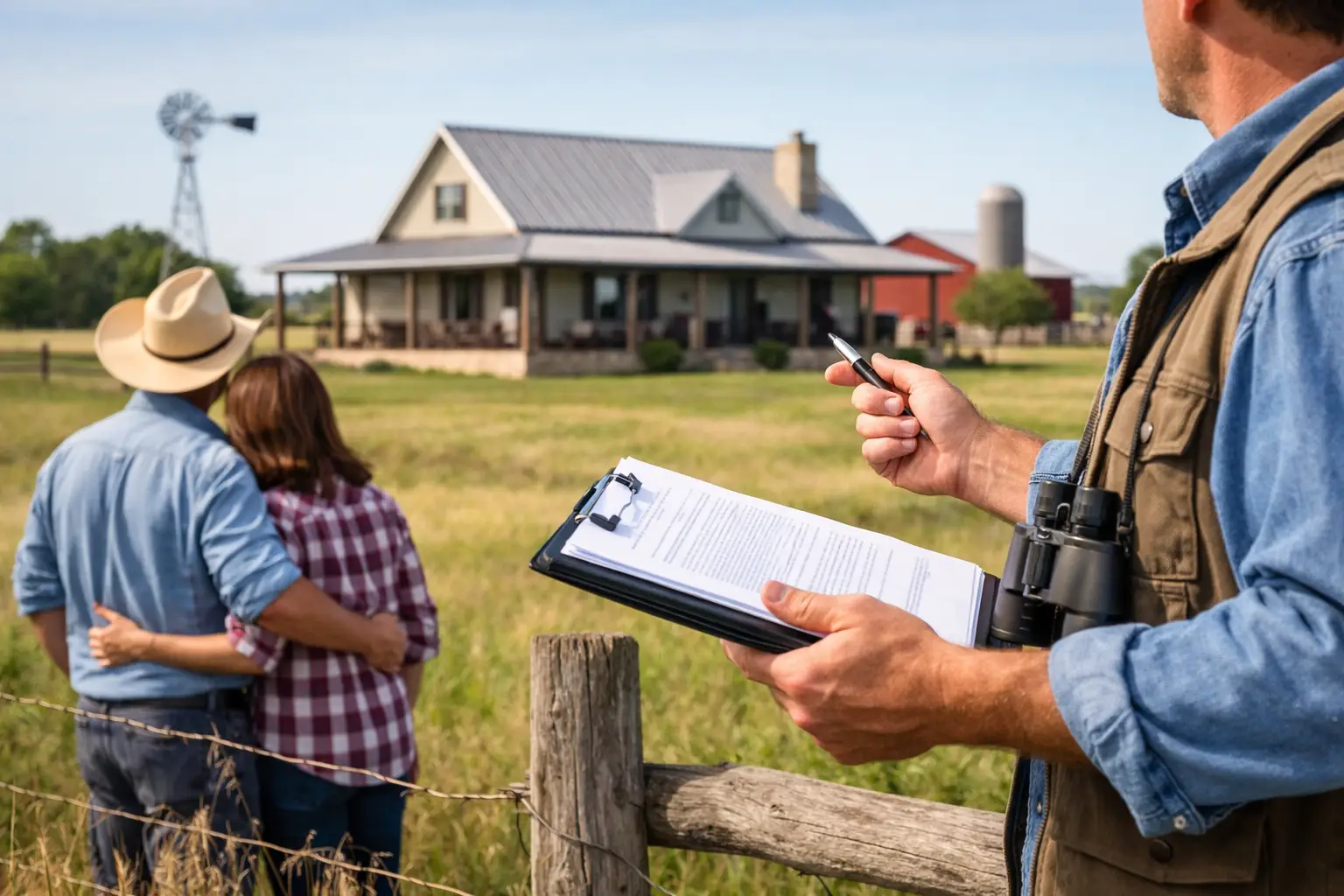
A rural home can look move-in ready from the county road and still carry expensive problems beyond the front door. This rural property inspection guide is designed for buyers who need to evaluate the house, land, utilities, and outbuildings as one working property. In Southeast Texas, that means looking closely at moisture, drainage, wood-destroying insects, private septic systems, water wells, access, and foundation performance.
A standard home inspection is a critical starting point, but acreage often introduces systems and conditions that do not exist in a typical subdivision. The goal is not to make every older country property look new. The goal is to identify material defects, understand likely repair costs, and avoid accepting risks you did not intend to buy.
Start With the Property, Not Just the House
On rural land, the condition of the site affects the condition of the building. Water that is not managed properly can contribute to foundation movement, crawlspace moisture, rot, termite activity, standing water around septic components, and premature deterioration of siding and exterior trim.
Walk the property after a rain if possible. Look for low areas that hold water, ditches that do not drain, erosion near driveways, downspouts discharging beside the foundation, and grading that slopes toward the home. In the Golden Triangle and other humid parts of Southeast Texas, heavy rainfall and persistently wet soils can expose weaknesses that are easy to miss during a dry showing.
Also consider whether the property is practical to use. A narrow easement, soft driveway, washed-out culvert, or bridge in poor condition can affect daily access, emergency access, deliveries, and future repair work. An inspector can observe visible site conditions, but boundary lines, easement rights, flood status, and legal access should be verified through the appropriate records and professionals.
Inspect the House for Rural Moisture and Movement Risks
Country homes may be built on slab foundations, pier-and-beam systems, or a combination of additions completed over many years. Each arrangement needs a careful evaluation. Visible cracking does not automatically mean structural failure, but crack patterns, uneven floors, sticking doors, displaced trim, and out-of-level measurements can point to movement worth further review.
Foundation concerns need context. Seasonal soil movement, drainage problems, plumbing leaks, poor gutter discharge, and tree roots can all contribute to changes around a structure. Where conditions warrant, hydro-static altimeter readings can provide useful data on elevation differences across accessible interior floor areas. These readings do not replace an engineer’s evaluation, but they can help document whether the floor plane shows measurable variation.
Under a pier-and-beam home, accessible crawlspace areas should be examined for damaged framing, inadequate support, standing water, moisture staining, fungal growth, plumbing leaks, and damaged insulation. A damp crawlspace is not a minor cosmetic issue. It can create conditions favorable to wood deterioration and wood-destroying insects.
Infrared thermography can add another layer of observation when used correctly. Thermal imaging may help identify temperature anomalies associated with moisture, missing insulation, or electrical concerns. It is a screening tool, not X-ray vision, and suspected issues may still require moisture-meter readings or evaluation by a qualified specialist.
Septic Systems Need More Than a Quick Look
A rural septic system is one of the most consequential items in a purchase. Replacing or substantially repairing a system can be costly, disruptive, and dependent on site conditions and local requirements. The visible plumbing may appear to drain normally during an inspection, yet the tank, distribution equipment, drain field, or aerobic components may still have defects.
A thorough septic inspection should address the type of system, accessible tank condition, risers and lids, pumps and alarms where present, evidence of backup or leakage, and visible conditions around the disposal area. Buyers should ask for maintenance records, pump-out history, installation information, permits when available, and service documentation for aerobic systems.
Be cautious about accepting a seller’s statement that a septic system has “always worked fine.” That statement may be true, but it does not establish tank condition, remaining service life, or whether the system is appropriate for the home’s current use. A system serving a full household can behave differently than one used by a single occupant.
Treat the Water Well as a Separate Due-Diligence Item
Private well water is not municipal water. The buyer is responsible for the well, pump, pressure tank, controls, plumbing components, and water quality after closing. During an inspection, visible equipment can be evaluated for apparent deficiencies such as leaks, damaged wiring, unsecured components, pressure concerns, or improper installation conditions. The well itself and its production capacity may require separate testing.
Water quality should not be judged by appearance or taste alone. Clear water can still contain bacteria, elevated minerals, or other contaminants. Water lab testing coordination can help buyers obtain samples for the conditions most relevant to the property and their intended use. If a filtration or softener system is installed, inspect the equipment but do not assume it proves the untreated water is acceptable.
Ask whether the well serves only the home or also irrigation, livestock areas, guest quarters, or another dwelling. High demand can reveal limitations that are not obvious during a short inspection period.
Do Not Overlook Termites and Wood-Destroying Insects
Termite risk is a routine part of rural ownership in Texas, particularly where moisture, untreated wood, heavy vegetation, and older construction come together. A wood-destroying insect report is often required for VA loans and may be requested for other financing or transaction purposes. Even when it is not required, it is a valuable part of the buyer’s due diligence.
The inspection should look for evidence of active infestation, prior treatment, damaged wood, conducive conditions, and areas that cannot be inspected because of construction or storage. Common concerns include wood-to-soil contact, earth-filled porches, excessive mulch at the foundation, leaking exterior faucets, poor crawlspace ventilation, and dense vegetation against the structure.
No inspection can see through finished walls or beneath every inaccessible area. That is why visible termite evidence, moisture sources, and inaccessible conditions should be taken seriously rather than dismissed. Texas Country Inspection, LLC combines property inspection experience with pest-control expertise, giving buyers a stronger technical perspective when wood-destroying insect conditions are part of the concern.
Evaluate Outbuildings Based on Their Real Purpose
Barns, shops, detached garages, guest houses, livestock shelters, and storage buildings can add substantial value, but they can also create substantial repair exposure. Their importance depends on how you plan to use them. A leaning pole barn used for equipment storage is a different concern from a shop with electrical service, plumbing, insulation, and a finished office.
Inspect visible roof coverings, framing, posts, slabs, siding, doors, electrical panels, receptacles, lighting, and signs of water intrusion. Older agricultural buildings often have improvised wiring, inadequate grounding, open junction boxes, overloaded circuits, or extension cords serving as permanent wiring. These are safety concerns, not simply appearance issues.
If a detached structure is represented as living space, verify whether it has safe electrical service, functional plumbing, proper heating and cooling, and appropriate permits or approvals. A building may be useful without meeting the standards expected of a dwelling.
Confirm Utilities, Fuel, and Equipment Before Closing
Rural properties may rely on propane, private wells, septic systems, generators, water treatment equipment, gates, pumps, and specialized electrical equipment. Buyers should determine what is owned, leased, or excluded from the sale. A leased propane tank or solar equipment agreement, for example, may transfer differently than a seller-owned component.
Pay attention to electrical capacity. A home with a well pump, electric water heater, HVAC equipment, shop tools, pool equipment, and an RV connection can place significant demands on an older electrical system. Visible panel deficiencies, improper breaker sizing, missing covers, and unsafe wiring should be documented and addressed by qualified contractors.
For homes with pools or spas, a separate inspection can identify concerns involving barriers, bonding, equipment operation, visible leaks, and safety-related electrical conditions. On a country property, pool equipment may be located far from the main home or supplied by older wiring, making a dedicated evaluation particularly useful.
Use Inspection Findings to Make Better Decisions
The most useful inspection report does more than create a repair list. It helps you separate safety issues, active damage, likely major expenses, maintenance needs, and conditions requiring specialty evaluation. A cracked window, for example, is not equivalent to an active plumbing leak below a slab or evidence of termite damage in a structural beam.
Before the option period ends, review significant findings with your inspector and ask practical questions. Which issue needs immediate attention? Which condition should be evaluated by a licensed specialist? What additional records should the seller provide? Are there areas that were inaccessible and need to be opened, cleared, or reinspected?
A rural purchase can be an excellent investment and a rewarding place to live, but land and independence come with systems that require attention. Take the time to inspect the full property carefully, obtain the right specialty evaluations, and make your purchase decision with the facts in front of you.
