
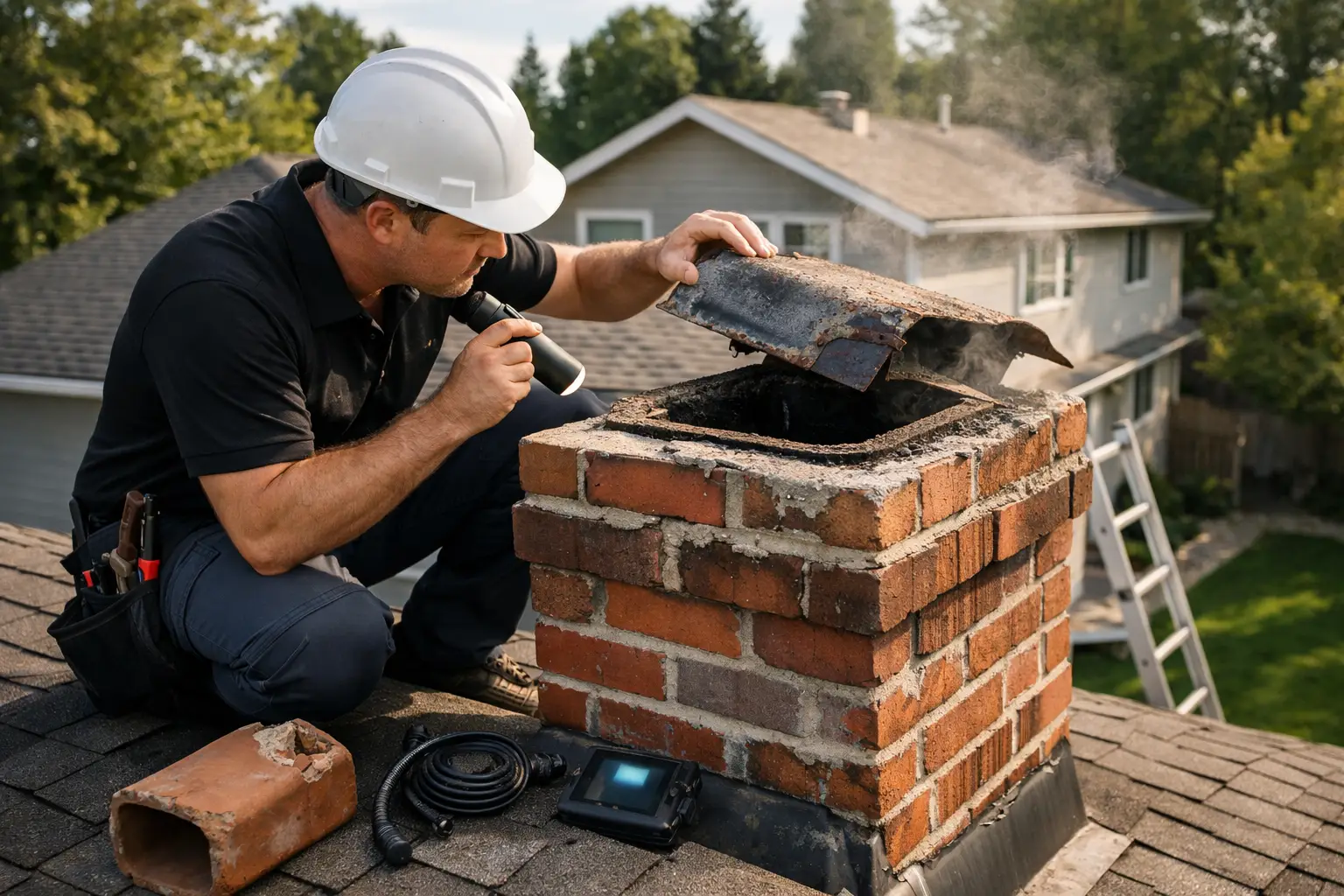
A fireplace can make a house feel solid and well-built, but a neglected flue system can turn into a hidden liability fast. A proper chimney inspection is not just about glancing up the firebox and calling it good. It is about identifying fire hazards, moisture damage, venting defects, and structural problems that may affect both safety and the cost of ownership.
For buyers in Southeast Texas, that matters more than many people realize. Even in areas where fireplaces are used only a few weeks each year, chimneys still take weather exposure year-round. Moisture intrusion, cracked masonry, damaged caps, poor flashing, and animal entry are common issues. If the chimney serves a gas appliance instead of a wood-burning fireplace, the concern shifts, but it does not disappear. Venting still has to perform correctly.
What a chimney inspection is actually checking
At a basic level, a chimney inspection evaluates visible and reasonably accessible portions of the chimney structure and venting system. That includes the firebox, damper, smoke chamber when visible, flue opening, exterior masonry or chase, crown, cap, flashing, and clearances where observable. The goal is to determine whether the system appears functional and whether there are signs of safety concerns or defects that warrant further evaluation.
In a real estate inspection setting, the scope depends on access, visibility, and the type of chimney. A traditional masonry chimney presents different risks than a factory-built fireplace with a metal vent. A gas log setup may look simple to a buyer, but an inspector still needs to watch for improper installation, combustible materials too close to the unit, damaged vent connectors, and signs of backdrafting or heat distress.
A careful inspector is not there to guess. The job is to document conditions that matter and explain what they may mean in practical terms.
Why chimney inspection matters before closing
A chimney can hide expensive defects in plain sight. Buyers often notice cosmetic items first – a stained surround, a rusted damper, loose brick at the top – but those visible clues may point to larger problems inside the flue or at the roof penetration.
One common issue is water entry. When flashing is improperly installed or the crown is cracked, moisture can work its way into masonry and framing. In Southeast Texas, where humidity and heavy rain are regular factors, that moisture can accelerate deterioration. Mortar joints break down, metal components rust, and nearby wood framing can be affected over time.
There is also the fire-safety side of the equation. Creosote buildup, damaged flue liners, open mortar joints, or heat-damaged firebox materials can create unsafe operating conditions. With gas appliances, venting defects can contribute to exhaust problems and performance issues. Even if the current owner says the fireplace is rarely used, that does not remove the hazard. Deferred maintenance has a way of sitting quietly until the next owner decides to use the system.
Common defects found during a chimney inspection
Some chimney defects are obvious from the yard. Others show up only when an inspector slows down and looks at the system as a whole.
Cracked or spalled brick is a frequent finding on older masonry chimneys. Water enters the masonry, then repeated wetting and drying weakens the surface. Loose mortar joints can follow. If deterioration advances far enough, the chimney may need repairs beyond simple tuckpointing.
The chimney crown is another trouble spot. A crown with visible cracking can allow water into the structure below. That often gets overlooked because buyers are focused on the roof covering, not the concrete or mortar wash at the top of the chimney.
Flashing defects are also common. If the roof-to-chimney connection is not properly sealed and integrated, leaks can develop around the chase or masonry base. Interior staining near the fireplace wall or ceiling may trace back to that area.
Inside the fireplace, inspectors may find damaged refractory panels, a rusted or missing damper, excessive soot or creosote, or signs that repairs were made without proper materials. In prefabricated units, manufacturers’ labels and listed components matter. Substituting parts or altering clearances can create a safety issue.
Animal entry is another practical concern. Missing caps let birds, squirrels, and other pests into flues and chases. Once inside, they can create blockages, odors, and contamination. That issue is especially relevant in wooded and semi-rural properties where exterior openings tend to attract activity.
Chimney inspection for wood-burning vs. gas systems
Not every chimney is built for the same purpose, and inspection findings need to be interpreted in context.
A wood-burning fireplace brings concerns about creosote accumulation, flue liner damage, firebox wear, and combustion byproducts. The inspector is looking for signs that heat and smoke have been handled safely over time. Burn patterns, staining, cracked components, and debris can all tell part of that story.
A gas fireplace or gas log set shifts the focus toward venting, burner condition, proper log placement if applicable, ignition response, and evidence of improper combustion. Gas systems are often treated casually by sellers because they appear cleaner than wood-burning units. That can be misleading. A clean firebox does not guarantee correct draft, proper vent configuration, or safe appliance setup.
This is where experience matters. The right inspection is not just a checklist. It is understanding how the system is supposed to perform and recognizing when field conditions do not match that expectation.
What a home inspector can see – and what may require more
A standard property inspection can identify many chimney defects, but there are limits. If the flue interior is not fully visible, if there are signs of liner damage, or if heavy creosote or blockage is suspected, further evaluation by a qualified chimney specialist may be recommended.
That is not overcalling a defect. It is part of being accurate. Some conditions cannot be responsibly cleared from a visual-only review. The safer path is to document the concern and advise the next step.
This matters for buyers because a chimney issue can affect negotiations, repair requests, insurance questions, and move-in planning. It is better to understand the condition before closing than to discover after the first cold front that the fireplace is unsafe to use.
Chimney inspection and moisture risk in Southeast Texas
In this region, moisture changes the conversation. A chimney that might hold up reasonably well in a drier climate can deteriorate faster when exposed to high humidity, wind-driven rain, and long periods of damp conditions.
That is why exterior details matter so much. A missing cap, separated flashing, deteriorated crown, or open masonry joint is not a small item just because the fireplace is used occasionally. Water intrusion tends to spread damage beyond the chimney itself. Ceiling stains, wall damage, wood rot, and microbial growth can all start with a leak path around the chimney structure.
On homes with broader moisture concerns, chimney defects may also line up with other findings. For example, roof aging, attic staining, elevated moisture readings, or visible deterioration around penetrations can support the case that the chimney area needs prompt correction. Texas Country Inspection, LLC often sees how one exterior defect connects to larger building performance issues. That broader view helps clients understand what deserves immediate attention.
When to schedule a chimney inspection
The best time is before a purchase is finalized, but that is not the only useful moment. A chimney inspection also makes sense when a home has sat vacant, when there are signs of leakage around the fireplace, after a severe storm, before using an older fireplace for the season, or when sellers cannot provide a clear maintenance history.
If you notice a strong odor from the fireplace, staining on the surround, rust on metal components, loose brick, drafting problems, or debris falling into the firebox, those are all reasons to have the system looked at. Waiting rarely makes chimney problems cheaper.
For homeowners, there is also value in documenting condition before small defects turn into reconstruction work. A modest repair at the cap, crown, or flashing is very different from rebuilding a deteriorated chimney stack or opening walls to address concealed moisture damage.
What buyers should ask after a chimney inspection
Once the inspection is done, the right question is not just, “Does it work?” A better question is, “What defects were observed, what risk do they create, and what kind of follow-up is appropriate?”
Some findings point to routine maintenance. Others suggest a potential fire hazard, water entry point, or specialized repair need. Buyers should understand that difference. A cracked crown and a missing cap may sound minor, but depending on the age and condition of the rest of the system, they can signal a pattern of neglect.
Clear reporting matters here. Inspection notes should explain the condition, where it was observed, and why it matters. That gives buyers something useful to take into negotiations or to a chimney professional for further evaluation.
A chimney does not need to be used every weekend to deserve serious attention. If it is attached to the house, penetrates the roof, and serves a heating or decorative appliance, it deserves the same careful review as any other major component. A good chimney inspection protects more than a fireplace – it helps protect the structure around it, the people inside it, and the decisions you make before taking ownership.
