
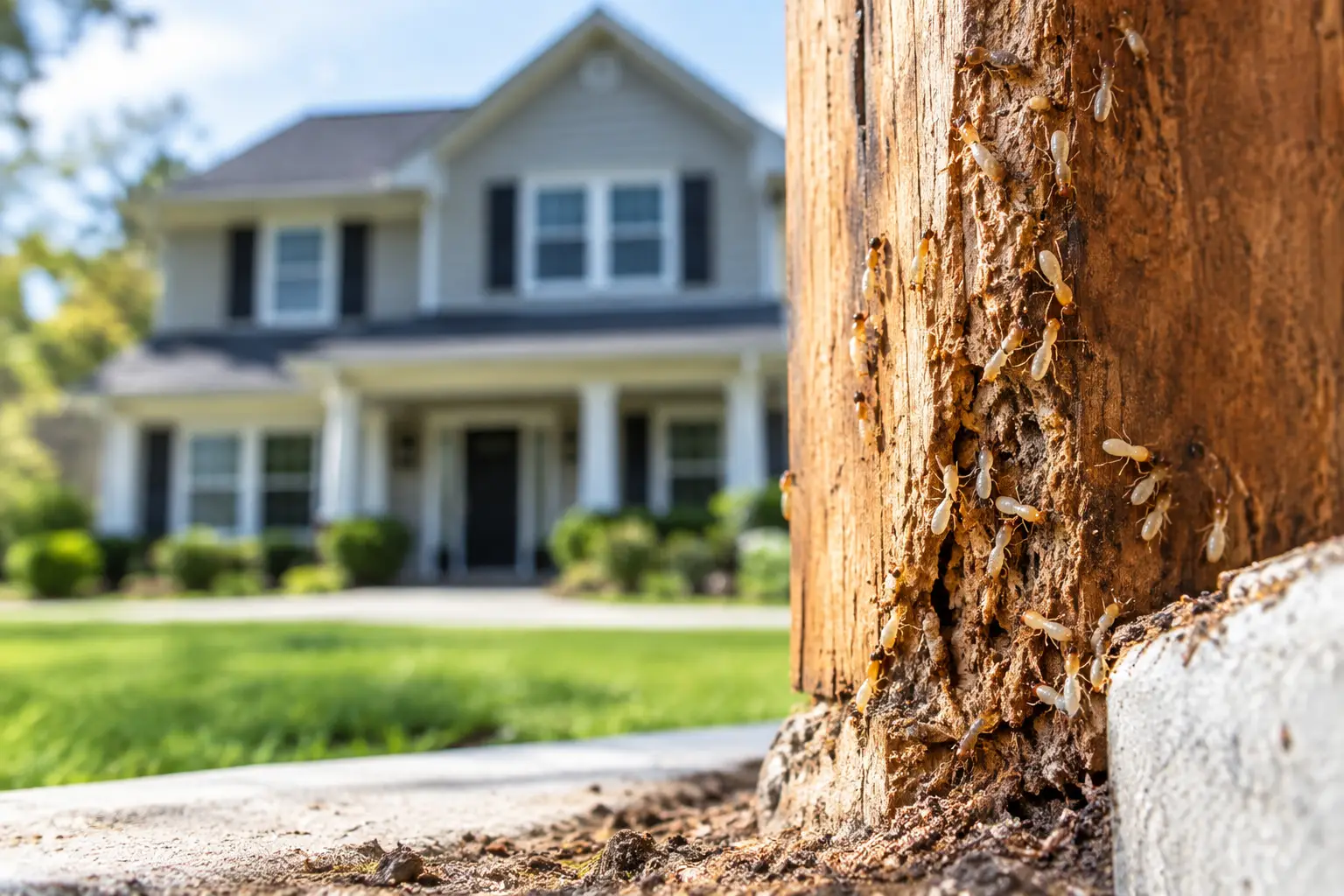
A VA buyer can be days from closing when a termite tube is found at the base of a garage wall, beneath a crawlspace beam, or behind stored items in a utility room. Can termites affect VA loans? Yes. They can affect the appraisal, repair negotiations, lender conditions, and the timing of closing. But evidence of termites does not automatically mean a VA loan will be denied.
The key question is not simply whether termites have ever been present. The issue is whether wood-destroying insect activity or damage creates a current property condition concern that must be evaluated, treated, or repaired before the loan can close.
How termites can affect VA loans
VA-backed loans are intended to finance homes that meet VA minimum property requirements. Those requirements focus on whether the property is safe, structurally sound, and sanitary. Active termite activity, substantial wood damage, or moisture conditions that support recurring infestation can raise legitimate concerns in each of those areas.
A VA appraiser is not a termite inspector. However, the appraiser may observe signs such as mud tubes, damaged framing, wood-to-soil contact, excessive moisture in a crawlspace, or visible deterioration around a porch, garage, or exterior wall. If the appraiser identifies a concern, the lender may require additional documentation before closing. That documentation can include a wood-destroying insect, or WDI, report from a properly qualified inspector.
A WDI report may also be required by the lender, requested by the buyer, required by local lending practice, or called for because of a specific condition found during the appraisal or home inspection. Requirements can vary by lender and transaction, so buyers should confirm early what their lender needs rather than waiting until the final week before closing.
In Southeast Texas, termite concerns deserve close attention because warm temperatures, high humidity, frequent rainfall, and moisture-prone construction details create favorable conditions for subterranean termites. A house can appear well maintained from the street while concealed activity is developing below grade, behind brick veneer, at an exterior door frame, or in a damp crawlspace.
A termite finding is not always a loan stopper
There is a major difference between old evidence, an inactive condition, active infestation, and structural damage. A careful WDI inspection documents those distinctions.
For example, old mud tubes may be present after a prior treatment, but the tubes alone do not prove there is current activity. A property with a documented treatment history and no active infestation may need little more than a clear report or a treatment verification, depending on the lender’s requirements. On the other hand, live termites found in accessible framing or fresh mud tubes leading into the structure indicate an active concern that normally requires prompt action.
Damage also has to be evaluated in context. Minor surface damage to a fence, landscape timber, or detached storage item is not the same as deterioration in a floor joist, sill plate, wall framing, or structural beam. When damage affects structural wood, the lender or appraiser may require repair documentation from an appropriately qualified contractor before the property is accepted for closing.
Treatment addresses the insects. Repair addresses the material they damaged. Those are related but separate issues, and overlooking that distinction can cause delays.
What a WDI report looks for
A wood-destroying insect inspection is not a substitute for a full home inspection, and a home inspection is not a substitute for a WDI report. Each inspection has a different purpose.
A WDI inspection focuses on visible and accessible evidence of termites and other wood-destroying insects, along with conditions that are conducive to infestation. Inspectors look for active insects, mud tubes, damaged wood, previous treatment indicators, wood debris under the home, earth-to-wood contact, inadequate clearance between soil and siding, plumbing leaks, poor drainage, and excessive moisture.
In a typical Southeast Texas inspection, the most significant conditions are often not dramatic termite damage visible in a living room. They are details such as mulch piled above the weep holes, soil built up against siding, a leaking hose bib wetting the foundation perimeter, a crawlspace with standing water, or a disconnected downspout dumping water beside the home. These conditions can provide termites protected access and keep structural wood damp.
An inspector reports visible conditions at the time of the inspection. Concealed areas behind finished walls, stored belongings, insulation, cabinetry, or inaccessible crawlspace sections cannot be fully evaluated. That limitation matters when buyers are deciding whether an apparently minor finding should be investigated further.
Why a clear report still matters
A clear WDI report gives the buyer and lender documented information about the property at the time of inspection. It does not guarantee that termites will never appear later. Termite activity can develop after closing, especially when moisture control and exterior maintenance are neglected.
For a buyer using VA financing, obtaining the report early can prevent a last-minute surprise. It also gives the buyer time to review any treatment proposal, repair estimate, or prior pest-control documentation before making final decisions.
Common VA loan delays after termite evidence is found
The delay is usually caused by incomplete follow-through, not by the first termite finding itself. A seller may arrange treatment but fail to provide a completed treatment report. Damage may be called out without a clear repair scope. An appraiser may require evidence that repairs are complete, but the buyer, seller, contractor, and lender may all be working from different information.
The cleanest path is to establish exactly what was found, whether activity is current, what treatment is recommended, whether structural repair is needed, and what documents the lender wants after the work is complete. Buyers should provide the lender with reports promptly and avoid assuming that a verbal statement from a contractor will satisfy an underwriting condition.
A practical file may include the WDI report, treatment invoice or completion certificate, transferable warranty information if available, repair invoices, contractor statements describing completed work, and photographs of repairs when appropriate. The lender determines what is sufficient for its loan file, and the appraiser may need to confirm completion of appraisal-required repairs.
Who pays for termite treatment and repairs?
The purchase contract and local custom generally drive the negotiation. In many transactions, the seller pays for treatment of an active infestation and repairs conditions discovered before closing. That is not automatic. A buyer may accept the property as-is, request a seller credit where permitted, negotiate a price adjustment, or walk away if the contract terms allow and the findings are unacceptable.
VA financing can add a layer of complexity because certain fees and costs may be restricted or allocated differently under VA rules and lender policy. Buyers should not make assumptions about who can pay for a pest inspection, treatment, or repair. The lender and real estate professionals should clarify the allowable structure before an agreement is finalized.
The lowest treatment quote is not always the best answer. If the property has moisture intrusion, poor grading, blocked weep holes, or untreated wood-to-soil contact, treating the infestation without correcting the underlying condition may only postpone the next problem.
Steps VA buyers should take before closing
When a home inspection, appraisal, or seller disclosure raises a termite question, act early. First, ask the lender whether a WDI report is required and what documentation it expects. Next, obtain a qualified inspection rather than relying on assumptions based on a stained board or a few insects near the exterior.
If treatment is recommended, determine whether the report identifies active infestation, previous infestation, conducive conditions, or visible damage. Then separate pest-control work from construction repairs. A pest-control professional may treat active termites, but a qualified repair contractor should evaluate framing or structural components when damage is present.
Finally, make sure completed work is documented before the closing package is due. This is especially important when repairs are located in a crawlspace, attic, or other area that is difficult for a buyer to verify. Clear records protect everyone involved and reduce the chance that a preventable condition becomes a financing delay.
Can termites affect VA loans in Texas differently?
The basic VA property standard does not change because a property is in Texas, but the risk profile does. In the Lumberton, Beaumont, Orange, and surrounding Golden Triangle areas, moisture management is a central part of termite prevention. Heavy rain, high groundwater, drainage deficiencies, aging plumbing leaks, and dense landscaping can create conditions that deserve more attention than a quick walk around the exterior.
Texas Country Inspection approaches WDI concerns as part of the larger property condition picture. A termite tube may be the visible clue, but the more useful question is how termites gained access and whether moisture, drainage, foundation detailing, or damaged wood is contributing to the risk.
A termite finding should prompt careful evaluation, not panic. For a VA buyer, the goal is to identify active conditions early, document treatment and repairs correctly, and make sure the home is not carrying an avoidable problem into closing or into the first years of ownership.
