
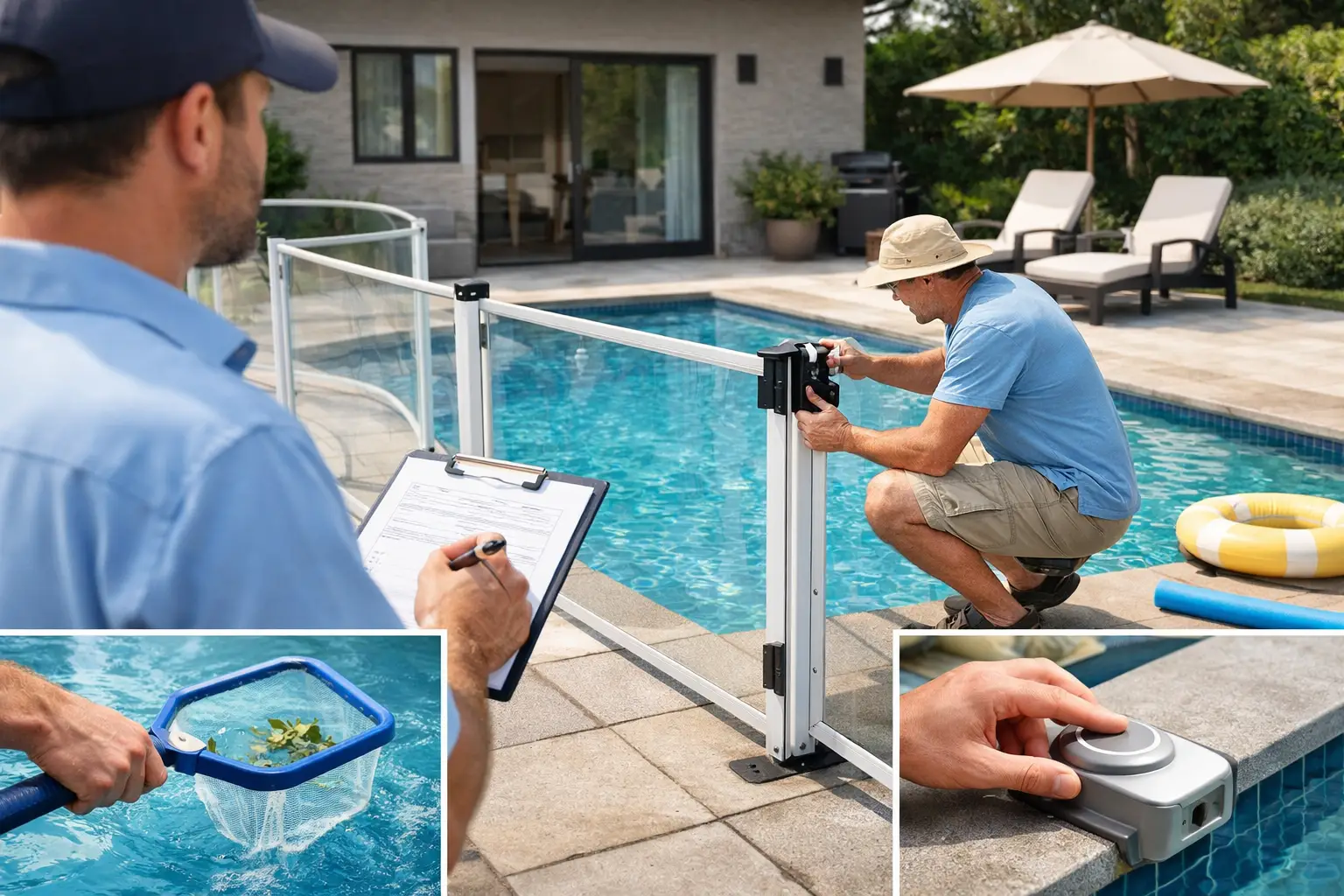
A pool can look clean, clear, and ready for summer while still hiding defects that create real safety risk. The best pool safety inspection tips start with one mindset shift – appearance is never the same thing as safe operation. For buyers, homeowners, and property investors in Southeast Texas, that distinction matters because water, electrical equipment, decking, barriers, and drainage all have to work together to reduce the chance of injury.
Why pool safety problems get missed
Many pool hazards are easy to overlook during a showing or casual walk-around. A gate may appear to latch, but not self-close from every position. Decking may seem solid, yet have settlement that creates trip edges after heavy moisture cycles. Pool lights may function, but the electrical protection may be incomplete or outdated.
That is why a safety-focused inspection needs to go beyond whether the pump turns on and the water looks balanced. A careful review looks at how a person actually uses the pool area, where failures tend to occur, and what conditions could put children, guests, or service personnel at risk.
Best pool safety inspection tips for buyers and owners
Start with the barrier, not the water
The first safety feature to inspect is the perimeter barrier. Fencing, gates, and access control are the first line of defense, especially where children may be present. A pool can have modern equipment and still be unsafe if the barrier allows unsupervised entry.
Look closely at fence height, damaged sections, gaps at the bottom, and climbable features nearby. Gates should open and close properly, self-close reliably, and latch in a way that reduces easy access from the outside. If a gate only works when pushed hard or slams shut unevenly, that is not a small cosmetic issue. It is a functional defect that can defeat the purpose of the barrier.
In Southeast Texas, wood fencing can deteriorate faster than many owners expect because of moisture exposure, ground contact, and insect activity. A barrier inspection should include checking for loose pickets, rot, movement at posts, and hardware corrosion.
Check deck surfaces for slip and trip hazards
Pool decking takes constant abuse from water, sun, chemicals, and foot traffic. Hairline cracking may be cosmetic, but displacement, spalling, slick coatings, and settled sections are safety concerns. The risk is not limited to dramatic damage. A small vertical offset can be enough to cause a fall when someone is barefoot and moving quickly.
Pay special attention to the deck slope and drainage pattern. Water should move away appropriately rather than ponding near walking areas or the equipment pad. Standing water contributes to slip risk and can accelerate surface breakdown. In some properties, poor drainage can also direct moisture toward adjacent structures, creating a broader property issue.
Inspect drains and suction points carefully
One of the most serious pool safety concerns involves suction entrapment hazards. Main drains, drain covers, and suction fittings should be present, properly secured, and in serviceable condition. A missing, broken, or improperly installed drain cover is not a minor repair item.
This is an area where homeowners often assume that if the system is running, it is fine. That assumption can be dangerous. Components that look intact from a distance may be cracked, loose, or mismatched. A proper pool inspection pays close attention to what is installed and whether visible conditions suggest increased risk.
It also helps to remember that not every pool has the same plumbing design. Older pools may have configurations that warrant closer scrutiny, and some upgraded systems are safer than others. The details matter.
Do not treat electrical issues as secondary
Water and electricity are a high-risk combination, so electrical inspection is a core safety issue, not an add-on. Pool lights, pumps, heaters, automation components, bonding, grounding, and protective devices all deserve careful review.
Visible signs of concern can include damaged conduit, open junction boxes, rusted fittings, missing covers, loose disconnects, and nonprofessional wiring modifications. GFCI protection is another major point. If the required protection is missing or nonfunctional, the hazard is immediate.
A thorough inspector does not stop at whether equipment powers up. The question is whether it appears installed and protected in a way that reduces shock risk. In older properties, especially those that have had repairs or equipment replacements over time, mixed-age components can signal incomplete upgrades.
Safety inspection tips that homeowners often underestimate
Test gates and doors more than once
One of the best pool safety inspection tips is also one of the simplest – test access points repeatedly. A self-closing gate that works once is not enough. It should close and latch from different open positions and without being manually assisted.
The same logic applies to doors from the house when they open directly into the pool area. Depending on the setup, alarms or other protective features may be part of the safety picture. What matters is whether the access control performs consistently under normal use.
This is where real-world inspection experience helps. A marginal gate can pass a casual glance but fail under ordinary conditions like slight slope, worn hinges, or latch misalignment.
Review the equipment pad as a safety zone
The pool equipment area is often treated as a mechanical space only, but it is also a safety concern. Exposed wiring, leaking components, unstable mounting, inadequate clearance, and poor drainage around the pad can all create risk.
Leaks matter for more than system efficiency. Water around electrical equipment increases hazard potential and may also signal pressure issues, deteriorated seals, or deferred maintenance. Loud equipment operation, excessive vibration, and visible corrosion should not be ignored either. They may point to conditions that affect safe long-term performance.
Look at lighting and visibility around the pool
A pool may be reasonably safe in daylight and hazardous at dusk. Exterior lighting around walking paths, steps, gate areas, and the water perimeter affects how safely the space can be used. Burned-out fixtures, poor placement, or inadequate coverage can increase the chance of falls and delayed hazard recognition.
Visibility inside the pool matters too. Cloudy water is not just a maintenance issue. If the bottom is not clearly visible, a person in distress may be harder to see, and surface defects may go unnoticed.
Regional concerns in Southeast Texas
In this part of Texas, moisture, heat, storm exposure, and shifting soils can change pool conditions over time. Deck movement, fence deterioration, equipment corrosion, and drainage-related wear are common realities. A pool that looked fine a year ago may have developed settlement or access-control issues after a season of heavy rain and heat.
That regional context is one reason buyers should be cautious about relying on a seller’s general statements about pool condition. Service history helps, but it is not a substitute for a current inspection. Field experience with Southeast Texas properties often reveals patterns that are easy to miss if you do not regularly inspect pools in this environment.
When a pool looks usable but still needs attention
Not every safety issue means the pool is unusable, and not every defect carries the same urgency. Some items are maintenance-related, while others justify prompt repair before normal use continues. The challenge is knowing the difference.
For example, minor surface wear on a deck may be monitored, while a non-latching gate, damaged drain cover, or questionable electrical condition deserves immediate attention. This is where detailed documentation matters. A good inspection does more than identify defects. It helps clients understand significance, likely next steps, and where specialist evaluation may be warranted.
Texas Country Inspection, LLC approaches pool and spa inspections with that practical focus – identifying meaningful defects, documenting observed conditions clearly, and helping clients reduce risk before a hazard becomes a costly problem.
What to ask for in a pool inspection report
A useful pool inspection report should clearly address barriers, gates, decking, visible structural concerns, circulation equipment, electrical safety observations, and drainage-related conditions. It should distinguish between ordinary wear and conditions that affect safe use.
Photos are especially valuable because they show defect location and condition at the time of inspection. Plain language matters too. Buyers and owners should not have to guess whether an issue is a repair item for later or a safety concern that needs immediate action.
If you are buying a property, the best time to learn about pool risk is before closing. If you already own the home, the best time is before the next busy weekend, family gathering, or tenant turnover. Pool safety is not a one-time box to check. It is an area where small defects can have serious consequences, and careful inspection is one of the smartest ways to stay ahead of them.
A safe pool starts with attention to details most people never think to test until something goes wrong.
