
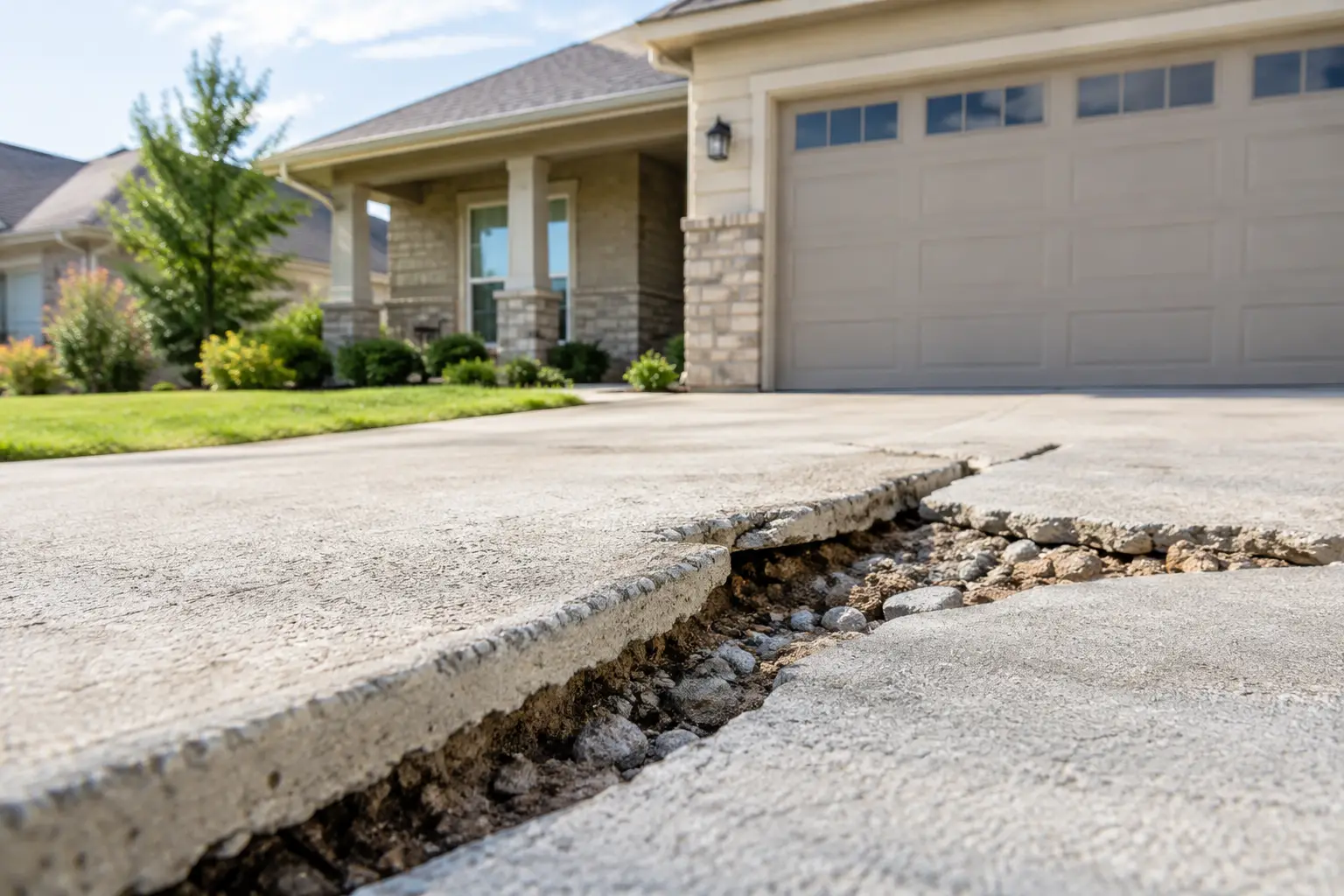
A floor that rises in the middle of a room is not a cosmetic concern to brush aside. Beaumont slab heave can place stress on wall finishes, flooring, doors, plumbing connections, and the structure built above the slab. For a buyer, the question is not simply whether a crack exists. The question is whether the home shows a pattern of upward foundation movement, what may be driving it, and what additional evaluation is warranted before closing.
What Slab Heave Means
Slab heave occurs when a portion of a concrete foundation moves upward. In Southeast Texas, this movement is often associated with moisture-sensitive clay soils. When certain clays absorb water, they expand. If moisture conditions beneath one area of the slab change more than conditions beneath another, the foundation can lift unevenly.
Heave is different from settlement. Settlement occurs when a foundation moves downward, while heave is upward movement. Both can produce cracks, sticking doors, uneven floors, and separation at trim or wall joints. The direction and pattern of movement matter because they help determine which conditions should be investigated.
A house can also experience more than one movement pattern over its life. A slab may have settled in one area years ago and later show localized upward movement elsewhere. That is why a proper evaluation looks at the entire structure rather than relying on one crack or one door that does not latch.
Common Causes of Beaumont Slab Heave
The Beaumont area has humid conditions, periods of heavy rainfall, high groundwater in some locations, and soils that can react significantly to changing moisture. Those regional conditions do not mean every cracked slab is failing, but they do make moisture management an essential part of evaluating foundation performance.
Plumbing leaks beneath or near the slab
A leaking water line, drain line, or sewer line can introduce moisture below the foundation for an extended period. A supply-line leak may create relatively constant wet conditions. A drain leak may be more intermittent but still affect soils beneath the slab over time. In either case, moisture can contribute to expansive soil movement.
Signs that may justify further plumbing evaluation include an unexplained water bill increase, warm spots on finished flooring, persistent dampness, reduced water pressure, sewer odors, or a concentration of interior symptoms near bathrooms, kitchens, or utility areas. These clues do not prove a leak, but they should not be ignored when they appear alongside foundation movement indicators.
Poor drainage and roof runoff
Roof water that discharges immediately beside the foundation can saturate soils at the perimeter. Missing extensions, damaged gutters, negative grading, and low areas that hold water can all create uneven moisture conditions. A home may have no gutters at all, yet still need a carefully graded drainage plan to move roof runoff away from the slab.
Drainage corrections are often among the most practical first steps, but they are not a substitute for determining whether active structural movement or plumbing leakage is present. Correcting surface drainage may help stabilize future conditions, while existing damage still requires separate evaluation.
Trees and uneven soil moisture
Large trees close to a slab can complicate soil moisture conditions. Tree roots generally do not push a slab upward merely by touching it. More commonly, roots remove moisture from soil during dry periods, contributing to shrinkage around portions of a foundation. Then heavy rainfall or landscape watering can change conditions again.
The result can be a cycle of movement rather than one simple cause. Removing a mature tree is not automatically the right answer. Tree removal changes drainage, shade, and soil moisture patterns, so it should be considered carefully with input from qualified professionals when foundation concerns are significant.
Construction and site conditions
Foundation performance is also influenced by original site preparation, fill placement, drainage design, landscaping changes, and repairs made over the years. Added patios, planters, buried drainage lines, swimming pools, and changed grading can redirect water toward or away from the house.
A property history can be useful. Ask about prior foundation work, plumbing repairs, past flooding, drainage improvements, and whether cracks have been patched repeatedly. Fresh paint or newly installed flooring does not necessarily mean a problem exists, but it can make it harder to see the age and progression of visible symptoms.
Signs Inspectors Look for When Slab Heave Is Suspected
No single symptom confirms slab heave. Thorough inspection involves documenting the location, direction, and relationship of multiple observations. A crack that is isolated and stable may have a very different significance than cracking that aligns with floor elevation changes, displaced finishes, and door operation concerns.
Inside the home, an inspector may observe cracks in drywall, especially at door corners and ceiling-to-wall intersections; separated baseboards; tile cracking or tenting; uneven flooring; doors that bind or swing open; gaps around windows; and countertops or cabinets that no longer appear level. In a heave pattern, flooring or finishes may appear raised in a localized area, though floor coverings can conceal the slab itself.
Outside, observations may include cracks in brick veneer, separation at trim, shifted patios, drainage concerns, displaced walkways, or changes where garage slabs, porches, and additions meet the main structure. Brick cracking deserves careful attention, but it must be evaluated in context. Veneer, mortar, lintels, framing, and soil conditions can all influence crack patterns.
Texas Country Inspection may use hydro-static altimeter readings as part of a foundation movement assessment. These measurements can help document relative floor elevation differences across accessible areas of a structure. They are useful evidence, particularly when combined with visible conditions, but they are not an engineering diagnosis and do not identify the cause of movement by themselves.
What an Inspection Can and Cannot Tell You
A detailed property inspection can identify visible symptoms consistent with foundation movement, document drainage and moisture concerns, note potential plumbing-related indicators, and recommend appropriate further evaluation. Infrared thermography may also help identify certain temperature anomalies that warrant additional investigation, although thermal imaging cannot confirm a below-slab plumbing leak without further testing.
An inspection cannot determine the soil’s bearing capacity, design a foundation repair, or certify that a slab will not move in the future. Those tasks may require a licensed professional engineer, a qualified foundation specialist, or a leak detection and plumbing professional, depending on the findings.
For buyers, timing matters. If the inspection reveals a concerning pattern before the option period ends, obtain the additional evaluations promptly. Waiting until after closing can limit leverage, delay repairs, and make it harder to establish the condition of the property at the time of purchase.
When to Call an Engineer or Leak Detection Specialist
Further evaluation is generally prudent when multiple movement indicators are present, when elevation readings show notable differences, when cracks appear recent or actively worsening, or when there is evidence of ongoing moisture intrusion. A structural engineer can evaluate the movement pattern and provide repair recommendations when warranted. A plumbing or leak detection specialist can investigate suspected underground supply or drain leaks.
It is wise to keep these evaluations independent. A foundation repair contractor can provide valuable practical information and a repair proposal, but an engineer’s assessment may offer a separate opinion on whether repairs are necessary, where they should be located, and whether drainage or plumbing issues need correction first.
Repair decisions involve trade-offs. Underpinning can address certain settlement-related conditions, but not every crack requires piers. Moisture management may be necessary even after structural repair. Conversely, spending money on drainage improvements alone may not resolve an active below-slab leak or a structural condition that has already progressed. The right scope depends on documented conditions, not a one-size-fits-all solution.
Practical Steps for Homeowners and Buyers
If you are concerned about possible slab movement, avoid immediately caulking and repainting every crack. Take clear photos, note dates, and document doors, floors, and exterior areas that appear affected. Monitor whether changes progress after major rainfall, drought, plumbing repairs, or drainage modifications.
Keep roof runoff directed away from the foundation, repair obvious plumbing leaks promptly, and avoid allowing standing water to remain near the slab. At the same time, do not make major excavation, drainage, or tree-removal decisions based solely on a visual impression. Those actions can alter site moisture conditions and may create new issues if poorly planned.
For a home purchase in Beaumont or surrounding Southeast Texas communities, a carefully documented inspection gives you a practical starting point: visible conditions, measurements where appropriate, and recommendations matched to the evidence. A small crack may be routine. A repeated pattern of upward movement, moisture concerns, and finish damage deserves a closer look before it becomes your responsibility.

One Comment