
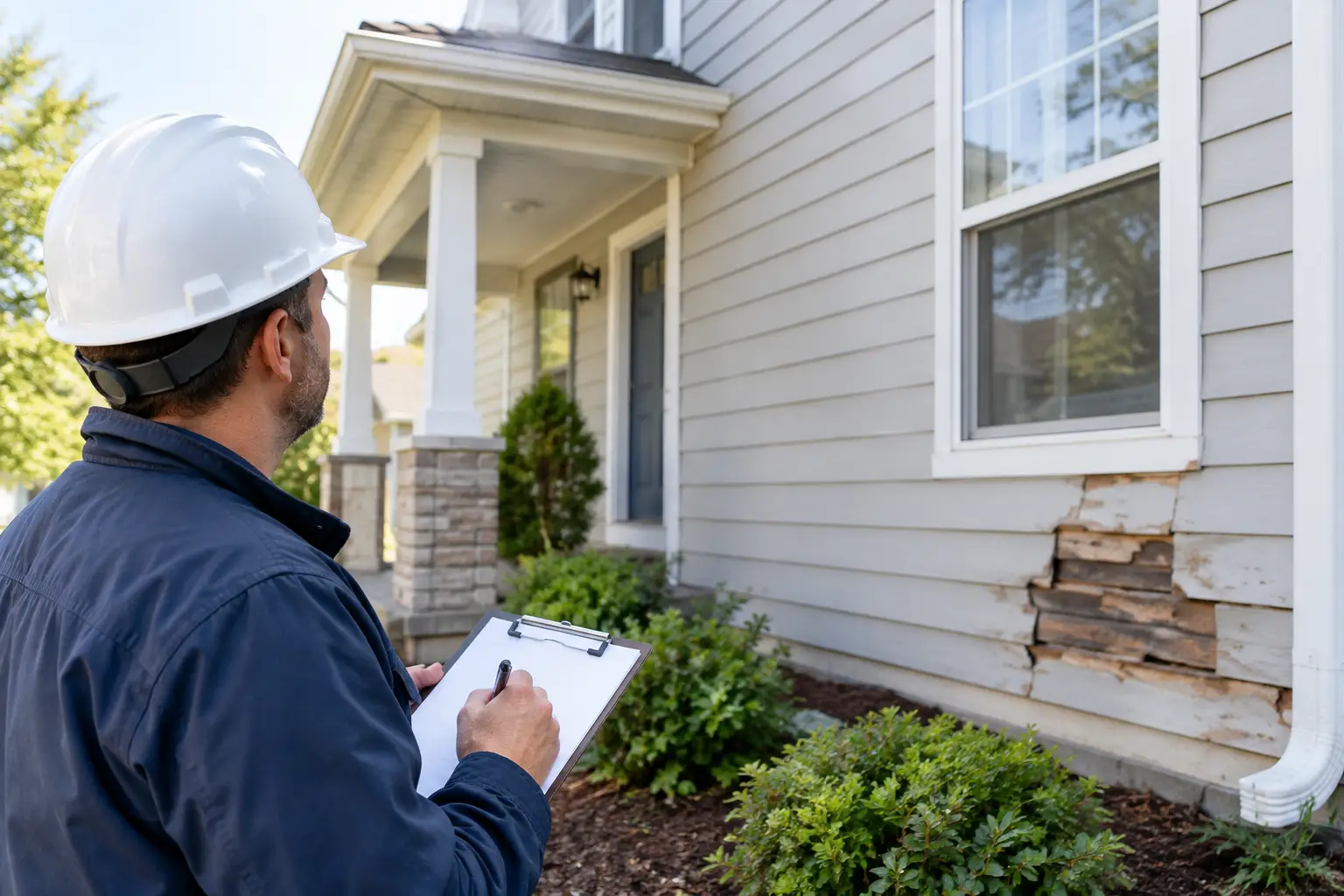
A home inspection does not usually produce a literal pass or fail grade. What fails a home inspection, in practical terms, is any condition serious enough to affect safety, structural performance, financing, insurability, or the buyer’s willingness to proceed. The inspection report identifies defects and documents their significance. The buyer, seller, lender, insurer, and sometimes an appraiser decide what must be addressed before closing.
In Southeast Texas, the most consequential findings often involve moisture, wood-destroying insects, foundation movement, aging roofs, drainage, and systems that have been modified without proper installation practices. A long report is not automatically a bad report. A detailed inspector records conditions so the client can distinguish routine maintenance from a costly or time-sensitive concern.
What Fails a Home Inspection for Most Buyers
The findings most likely to disrupt a transaction are not cosmetic issues such as worn carpet, peeling interior paint, or an outdated light fixture. They are conditions that create a credible risk of injury, major repair expense, or continued property damage.
Foundation movement and structural concerns
Minor cracks are common in concrete slabs and masonry, particularly in areas with expansive soils, changing moisture levels, and prolonged rainfall. A crack alone does not prove structural failure. Inspectors look at its location, width, direction, displacement, and whether related symptoms appear elsewhere in the structure.
More concerning patterns include doors that no longer latch, separated trim, uneven floors, cracks extending through brick veneer, sloping surfaces, and apparent movement at framing connections. In a house with visible indicators, elevation readings may help document floor-level variations and identify areas that warrant further evaluation. A foundation repair recommendation should be based on the overall evidence, not on one small crack photographed in isolation.
Roof leaks, failed coverings, and unsafe roof conditions
An older roof does not necessarily fail an inspection, but active leakage, widespread damaged shingles, deteriorated flashing, missing components, or a roof at the end of its serviceable life can affect negotiations and insurance decisions. Roof problems are especially significant when water has reached decking, ceilings, wall cavities, or electrical components.
Inspectors also evaluate visible roof penetrations, chimney flashing, drip edge, gutters, and drainage paths. A roof that appears acceptable from the street can still have concealed moisture staining in the attic or deteriorated materials around plumbing vents. Infrared thermography may help identify suspicious temperature differences, but those findings still require confirmation with visible evidence and moisture evaluation where conditions allow.
Electrical hazards
Electrical issues become deal-breaking when they create shock, fire, or overheating risks. Common examples include exposed conductors, open junction boxes, double-tapped breakers where not permitted, damaged service equipment, improper grounding and bonding, overheated wiring, and missing GFCI protection in required areas.
Older homes may contain electrical components that were common when installed but do not meet current safety expectations. That does not mean every older component must be replaced immediately. However, active defects, unsafe alterations, and equipment showing deterioration deserve prompt assessment by a qualified electrician. A buyer should not accept a vague statement that an electrical issue is “probably fine” when the panel or wiring shows a documented safety concern.
Plumbing leaks and water damage
A slow leak can be more expensive than a visible supply-line break because it may go undetected for months. Inspection findings that commonly concern buyers include leaking drain piping, corroded supply connections, failed water-heater relief valves, unsafe water-heater installations, poor fixture drainage, and evidence of leaks beneath sinks or at toilets.
Water damage needs context. A past stain that is dry and stable may be a repair-history item. Staining accompanied by active moisture, fungal growth, decayed framing, or soft flooring is a different level of concern. In humid Texas conditions, moisture problems can accelerate wood deterioration and create favorable conditions for termites and other wood-destroying organisms.
Termites and other wood-destroying insects
Active termite activity, visible damage, mud tubes, damaged wood, or conditions conducive to infestation can change the terms of a real estate transaction quickly. A general home inspection may identify visible signs, but a separate wood-destroying insect report is often needed for loan requirements or a more formal pest-related evaluation.
Not every damaged board means an active infestation. Damage may be old, inaccessible, or caused by another source. Still, buyers should take documented evidence seriously, particularly where moisture-damaged wood, earth-to-wood contact, poor crawlspace ventilation, or plumbing leaks are present. Those conditions can invite future problems even if no live insects are seen during the inspection.
HVAC systems that do not operate properly
A heating and cooling system can be old yet functional. It becomes a major concern when it fails to respond, cannot maintain a reasonable temperature differential under test conditions, leaks refrigerant, has damaged components, or presents a safety hazard.
Inspectors observe accessible equipment, distribution components, condensate drainage, and basic operation when conditions permit. They do not dismantle sealed equipment or perform a full HVAC engineering analysis. If the system is not cooling adequately, has rusted components, drains improperly into the attic, or shows signs of a compromised heat exchanger, a licensed HVAC contractor should provide a repair or replacement assessment before the buyer removes contingencies.
Issues That Can Affect Loans or Insurance
A condition does not need to be a safety emergency to delay closing. Lenders and insurers may have their own property-condition standards, especially for roofs, electrical panels, peeling exterior paint on certain older homes, handrails, and visible damage.
VA and some rural or agricultural loan transactions may require a wood-destroying insect report. The lender may also require repairs for conditions that affect basic safety, security, or habitability. Insurance carriers may be particularly focused on roof age and condition, prior water losses, electrical equipment, and properties with unrepaired storm damage.
This is why buyers should read the entire report early rather than waiting until the final days of the option period. A repair that seems straightforward can take longer when contractor availability, insurance underwriting, permits, or specialty evaluations are involved.
Septic, Wells, Drainage, and Rural Property Risks
On rural and semi-rural properties, the house itself is only part of the inspection picture. A septic system, private well, outbuildings, site drainage, and access conditions can carry substantial risk.
A septic system may appear to function during a brief inspection but still have a damaged tank, saturated drain field, poor maintenance history, or improper components. Signs such as sewage odors, wet areas near the system, slow fixtures, or backups require further investigation. Septic evaluations should be performed by a qualified provider using methods appropriate to the system and site.
Private wells require attention to both equipment and water quality. A pump may run while the water still has bacterial, mineral, or chemical concerns. Water testing and well-system evaluation provide information that a standard visual home inspection cannot establish.
Drainage is equally important along the Gulf Coast and in the Golden Triangle area. Standing water near the foundation, gutters discharging at the slab, low grading, and poor site drainage can contribute to foundation movement, moisture intrusion, and pest activity. Drainage corrections may be modest, but they should not be dismissed when water is already reaching the structure.
What Is Usually Not a Home Inspection Failure
Buyers should expect some maintenance findings in nearly every property, including newer construction. Caulk may need renewal. Filters may be dirty. A door may rub slightly. Window screens may be damaged. Appliances may be dated but operational.
The key question is whether the finding is a normal ownership responsibility, a condition needing repair soon, or a defect that changes the property’s value or safety profile. Inspection reports are most useful when they give clients enough detail to make that distinction and obtain informed contractor opinions when needed.
How Buyers Should Respond to Major Findings
Start by separating urgent safety defects from negotiable maintenance items. Then request estimates from qualified contractors for the conditions that materially affect your decision. A seller credit may be appropriate in some cases, but direct repairs can be preferable when a lender or insurer requires correction before closing. It depends on the scope of work, the quality of the proposed repair, and whether the buyer wants control over the contractor selection.
Do not rely only on verbal assurances, seller disclosures, or a contractor’s quick opinion from a single photograph. Ask for the relevant areas to be evaluated, obtain written recommendations, and preserve the inspection documentation. For termite evidence, septic concerns, foundation movement, or concealed moisture, the right specialist evaluation can prevent a small question from becoming an expensive surprise after closing.
A careful inspection is not meant to frighten a buyer away from every imperfect home. It is meant to put the condition of the property in plain view, so the investment is made with clear expectations and the right repairs are addressed before they become someone else’s problem.
