
A failing wastewater system can turn an otherwise promising rural home into a major expense after closing. In a septic versus aerobic comparison, the right answer is not simply which system is newer or more expensive. It depends on the property’s soil, lot size, drainage, water table, maintenance history, and the way the system has been installed and operated.
For buyers in Southeast Texas, that distinction matters. Our heavy rain, clay soils, low-lying areas, and shallow groundwater conditions can place real demands on any onsite sewage facility. A careful evaluation should look beyond the location of a tank lid or a green patch of grass and focus on the system type, visible condition, available records, and signs that wastewater may not be moving or treating properly.
Septic Versus Aerobic: The Basic Difference
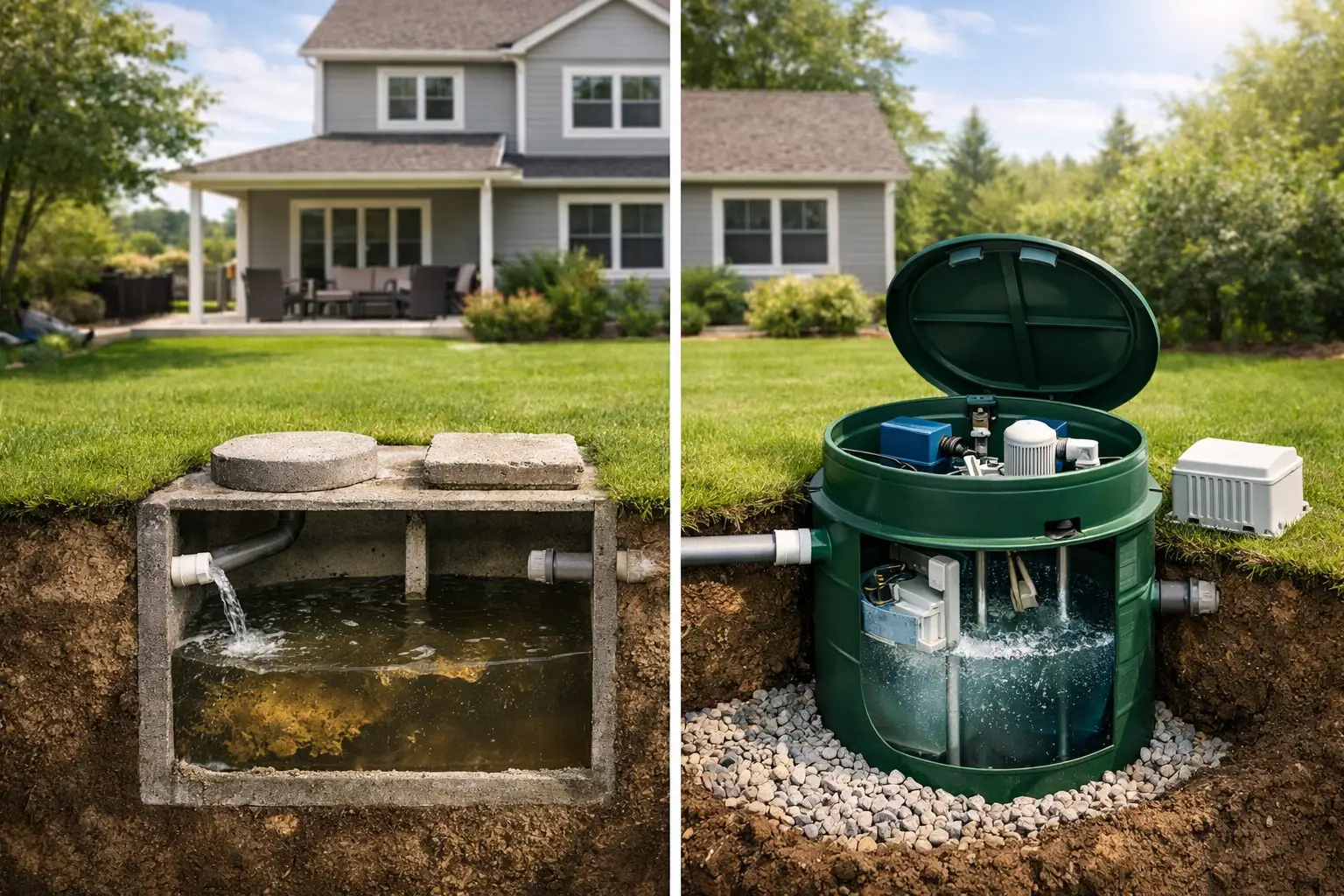
A conventional septic system generally uses a watertight septic tank and a soil absorption area, commonly called a drainfield or leach field. Wastewater enters the tank, where solids settle and naturally occurring anaerobic bacteria begin breaking down waste. Liquid wastewater then flows to the drainfield, where the surrounding soil performs much of the final treatment.
An aerobic treatment unit, often called an aerobic system or ATU, adds oxygen to the treatment process. An air pump supplies oxygen to a treatment chamber, supporting aerobic bacteria that treat wastewater more aggressively than the bacteria in a conventional septic tank. Many aerobic systems then send treated effluent through spray heads, drip lines, or another approved dispersal method.
The practical difference is significant. A conventional system relies heavily on suitable soil and a properly functioning drainfield. An aerobic system provides a higher level of treatment before disposal, which can make it an option for properties where a conventional drainfield is not suitable or where site requirements call for aerobic treatment. That added treatment equipment also brings more mechanical parts, electrical components, and maintenance responsibilities.
When a Conventional Septic System Makes Sense
A conventional septic system can be a dependable, relatively straightforward solution when the site has adequate soil conditions and enough room for a properly designed absorption field. Fewer mechanical components usually means fewer items requiring routine service. There is no aerator motor running continuously, no control panel to monitor, and no sprinkler heads to maintain on a typical gravity-fed system.
That does not mean conventional septic systems are maintenance-free. Every septic tank needs periodic pumping based on household use, tank size, and the amount of solids present. Flushing wipes, grease, feminine hygiene products, excessive food waste, or harsh chemicals can create blockages or interfere with treatment. Driving over tanks or drainfields can crack components and compact the soil that the system needs to absorb wastewater.
The biggest limitation is site suitability. If soil does not drain as required, if seasonal groundwater is too close to the surface, or if the lot does not have sufficient usable area, a conventional system may not be approved. Southeast Texas properties can have clay-heavy soils that retain water, along with drainage patterns that change after grading, construction, or prolonged rainfall. A drainfield that appears dry during a quick showing may still struggle during wet periods.
Why Homes Use Aerobic Systems
Aerobic systems are common on properties where the lot, soil evaluation, or local permitting requirements call for a higher level of wastewater treatment. They are also frequently found on newer rural subdivisions with smaller lots, where there may not be enough suitable space for a conventional drainfield.
Because the system uses an aerator and control equipment, it requires electricity and routine attention. A typical setup may include a pretreatment tank, aeration chamber, pump tank, alarm panel, spray pump, and spray distribution components. If the aerator stops operating, a breaker trips, a float switch fails, or a pump quits, the system may continue receiving wastewater while treatment performance declines.
Spray heads deserve particular attention. They should be positioned and operating in a manner that keeps treated effluent away from structures, driveways, wells, neighboring properties, and areas where people regularly gather. Broken heads, blocked nozzles, overspray, standing water, or spray patterns directed toward the house are not cosmetic concerns. They can indicate maintenance needs, improper adjustments, or a larger performance issue.
Cost Is More Than the Installation Price
The upfront installation cost often leads buyers toward a quick decision, but the operating cost over time is just as relevant. A conventional septic system may cost less to operate because it has fewer powered components. Its long-term expense can rise sharply, however, if the drainfield is damaged or fails. Drainfield repairs or replacement can require soil work, permits, landscaping disruption, and a substantial investment.
An aerobic system usually has ongoing costs for electricity, inspections, service visits, replacement filters, pumps, or aerator repairs. In Texas, maintenance requirements and service arrangements may apply depending on the system and local regulatory authority. Buyers should request the service agreement, recent maintenance reports, installation documents, permits, and any repair invoices before closing.
A low service cost is not automatically a good sign. An aerobic unit that has gone years without documented maintenance may have deferred problems. Conversely, records showing regular service and prompt repairs can indicate that the owner has taken the system seriously.
What an Inspection Can and Cannot Confirm
A property inspection can identify visible conditions and operational concerns, but no visual inspection can guarantee the future performance of an underground wastewater system. Tanks, supply lines, drainfields, and dispersal piping are largely concealed. A system can appear normal on the day of inspection while still having a limited remaining service life or a condition that becomes apparent only under heavy use or wet-weather conditions.
During a septic or aerobic system evaluation, meaningful observations may include visible tank access, riser and lid condition, alarm-panel status, evidence of power to the system, apparent aerator operation, pump operation when accessible, spray-head condition, drainage around components, sewage odors, wet or unusually lush areas, and visible damage from vehicles or mowing equipment. The inspector should also look for obvious concerns such as exposed wiring, unsecured electrical panels, missing lids, broken risers, or wastewater surfacing on the property.
Documentation is often as valuable as a visual review. A buyer should ask when the tank was last pumped, who services the system, whether alarms have activated, whether repairs have been performed, and whether there have been backups or wet areas after rain. If those answers are vague, a licensed onsite sewage facility professional may need to perform a more detailed evaluation before the end of the option period.
Common Red Flags for Buyers
No single symptom proves a system has failed, but several conditions warrant further investigation. Sewage odors near tanks or spray areas, soft or saturated soil, slow drains inside the home, backup history, alarm warnings, and unexplained ponding near wastewater components should never be dismissed as routine country-property conditions.
Also watch for site changes. A new patio, detached garage, driveway expansion, swimming pool, drainage ditch, or added bedroom can affect an existing system. Structures and pavement can interfere with access or dispersal areas. Additional bedrooms can increase the design wastewater load beyond what the original system was intended to handle. On a home purchase, the system should be evaluated in light of the home’s current use, not only its original construction plans.
For homes with private wells, separation distances and drainage conditions deserve extra attention. Wastewater components, well equipment, and surface runoff should be reviewed as part of the overall property-risk picture. This is especially relevant on rural acreage, where the well and onsite sewage system are both essential to daily use.
Choosing Between Septic and Aerobic Systems
If you are building, the decision should begin with a site evaluation and local permitting guidance, not a preference for one label over another. Soil characteristics, groundwater conditions, available land area, home size, and the approved design will determine what can be installed legally and safely.
If you are buying an existing home, do not treat aerobic as automatically better or conventional septic as automatically outdated. A properly installed and maintained conventional system can serve a home well for many years. A properly serviced aerobic system can also be an excellent fit for a challenging site. The concern is not the name on the system – it is whether the system is appropriate for the property, maintained as required, and showing evidence of sound operation.
Before closing, make the wastewater system part of your due diligence rather than an afterthought. A detailed inspection, complete service records, and timely specialist follow-up can give you a clearer picture of a system that will remain underground long after the rest of the home inspection is complete.
