
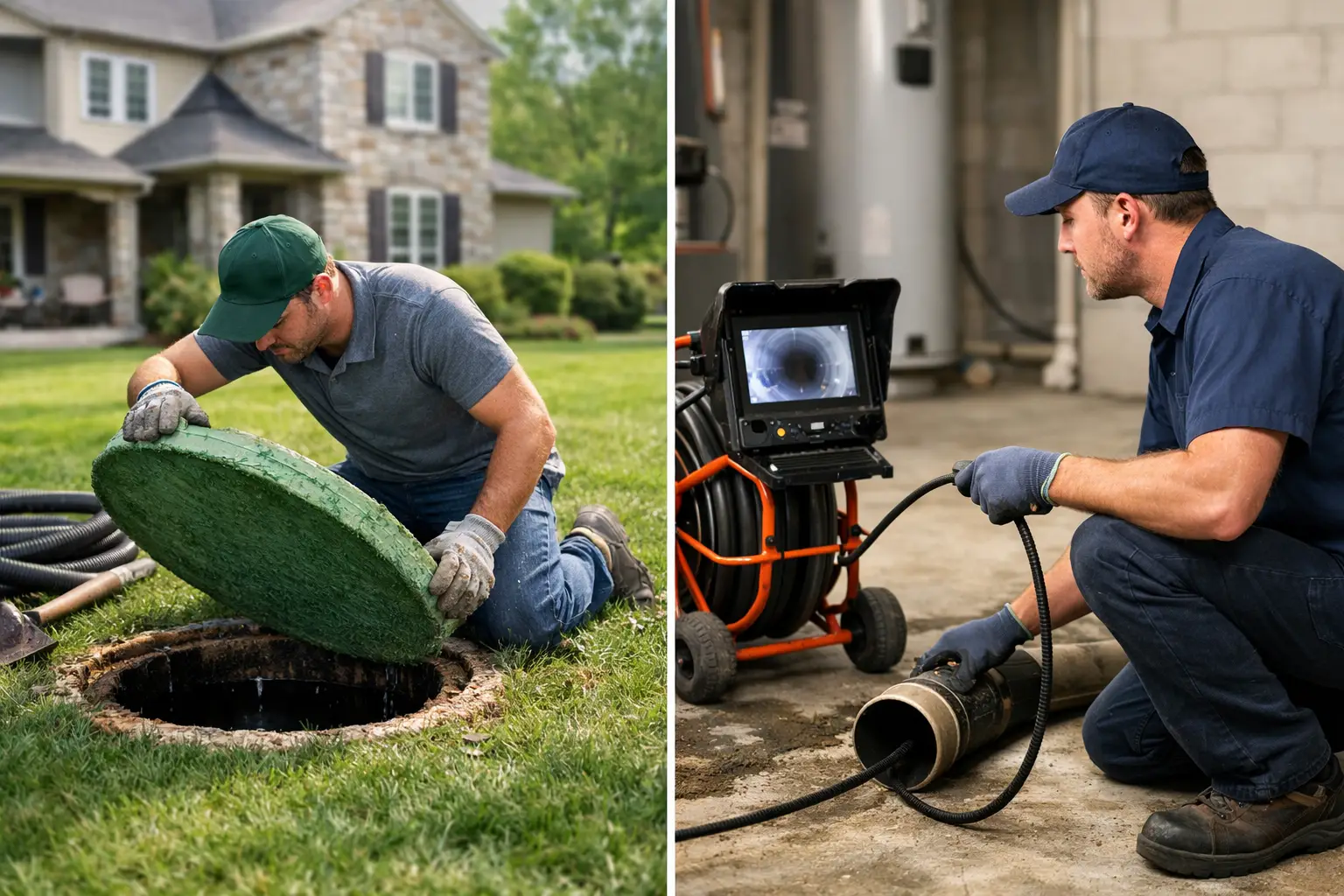
A drain can run clear during a showing and still conceal a costly problem below grade. That is why the choice between a septic inspection vs sewer scope should be based on how the property handles wastewater, not on which service sounds more comprehensive. They examine different systems, reveal different risks, and one cannot substitute for the other.
For buyers in Southeast Texas, the distinction can be especially significant. Heavy rainfall, high groundwater, expansive soils, mature trees, and long private service lines can all affect buried wastewater components. Before the option period expires, confirm whether the home uses an on-site septic system or connects to a public sewer system. Then order the inspection that matches the property.
What a Septic Inspection Evaluates
A septic inspection focuses on an on-site sewage facility, commonly called a septic system. This system typically includes the building sewer line, septic tank, inlet and outlet baffles, access risers, distribution components, and a drainfield or leach field. Some properties also have pumps, alarms, aerobic treatment units, spray heads, or other mechanical equipment.
The goal is not merely to determine whether toilets flush. A system can move wastewater from the house while still having a full tank, damaged baffle, failed pump, leaking tank, clogged distribution line, or saturated drainfield. Those conditions may lead to sewage backups, standing water, odors, unsafe discharge, or a repair bill that changes the economics of a purchase.
A thorough septic evaluation generally begins with identifying the system type and locating available records, permits, tank lids, and components. The inspector evaluates accessible tank conditions, liquid levels, baffles, visible signs of deterioration, and evidence that the system is receiving and dispersing wastewater as intended. Depending on the system and site conditions, the inspection may also include operational checks of pumps, alarms, control panels, aerators, and spray equipment.
Drainfields require more than a quick look
The drainfield is where many expensive septic concerns develop. An inspector looks for sewage odors, wet or unusually lush areas, surfacing effluent, ponding water, damaged piping, and drainage patterns that could overload the field. A wet area is not automatically a failed drainfield – Southeast Texas storms and naturally wet ground can complicate the picture – but it is a condition that deserves careful documentation and, when needed, further evaluation.
A septic inspection also has practical limits. Tank access may be buried, components may be concealed, and a drainfield’s performance can change with weather, household water use, and groundwater levels. An inspection is a condition assessment, not a guarantee of future performance. Still, obtaining the right evaluation before closing is far more useful than discovering a buried defect after moving in.
What a Sewer Scope Evaluates
A sewer scope uses a specialized camera to inspect the interior of a sewer lateral – the underground pipe that carries wastewater from the building to a municipal sewer connection or, in some cases, toward a septic tank. The camera is typically inserted through an accessible cleanout, then advanced through the line while the technician records observed conditions.
This service is most appropriate for a property served by public sewer. It can reveal conditions that a standard home inspection cannot see, including root intrusion, cracked or broken pipe, separated joints, offsets, corrosion, buildup, obstructions, bellies that hold water, and improper connections. Older homes may have cast iron, clay, Orangeburg, or other aging pipe materials that deserve closer attention.
The camera can also help identify where a problem is located. That matters when a line passes beneath a slab, driveway, patio, landscaping, or street-side connection. A visible obstruction is one concern; a defect located under a concrete foundation is another. The report should clearly state what portions of the line were viewed, what limited access, and whether further cleaning, locating, repair, or replacement is recommended.
A sewer scope is not a septic inspection
A camera may travel from the home to the septic tank if the line is accessible, but that does not evaluate the tank’s condition, its baffles, pump equipment, or the drainfield’s ability to handle effluent. Likewise, opening a septic tank does not show the interior condition of every buried pipe between the house and the tank.
This is the central difference in septic inspection vs sewer scope decisions: a septic inspection assesses the on-site treatment and disposal system, while a sewer scope assesses the inside of a buried wastewater pipe. There can be overlap at the building sewer line, but the services answer different questions.
Which Service Does Your Property Need?
Start with the property’s wastewater connection. If it is connected to city sewer, a sewer scope is usually the relevant specialized inspection. If it relies on an on-site septic system, a septic inspection should be the priority. Do not assume a neighborhood has public sewer simply because nearby homes do. Rural and semi-rural areas often have mixed utility arrangements, and annexed areas can contain older homes that still use septic systems.
Some properties need both services. A home on septic may have a long, older, or suspect building sewer line between the house and the tank. In that case, a camera inspection can supplement the septic evaluation if access allows. A property connected to public sewer may also have a private grinder pump, lift station, or unusual drainage arrangement that requires additional review beyond a routine camera scope.
If the seller cannot identify the system, look for clues such as utility bills, a sewer cleanout near the house, septic risers or lids, spray heads, a control panel, or permit records. These clues are helpful, but they are not a substitute for confirmation. Asking early gives you time to schedule the proper service before contract deadlines become a problem.
Conditions That Should Raise the Priority
Certain findings make a specialized wastewater inspection more urgent. Slow drains, recurring clogs, sewage odors, wet ground near a suspected drainfield, an old or unknown septic system, visible cleanout damage, mature trees over a service line, and unexplained plumbing backups all warrant closer review.
Age is also a factor, but it is not the only one. A newer sewer line can be poorly installed, and an older line can remain serviceable with proper slope and maintenance. The useful question is not simply, “How old is it?” Ask what material is present, what the inspection can verify, whether defects were observed, and what repair path is likely if a defect is confirmed.
For a buyer, the report should translate observations into practical next steps. A minor buildup issue may call for cleaning and a follow-up scope. Significant root intrusion, a separated line, a damaged septic tank, or evidence of drainfield failure may justify obtaining repair estimates, requesting further specialist evaluation, or revisiting the purchase terms.
What to Ask Before Scheduling
Before scheduling either service, ask whether the provider can access the required components. A sewer scope generally needs a usable cleanout or another appropriate entry point. A septic inspection may require tank lids to be located and uncovered. If the seller believes the tank was recently pumped, ask for the service record, but do not treat a receipt as proof that the system is currently sound.
Also ask what the inspection includes and what it cannot determine. Will the sewer camera recording be provided? Will the technician identify pipe material and visible defects? For septic systems, will accessible tank components, pumps, alarms, and drainfield conditions be evaluated? Clear scope of work prevents a buyer from assuming a limited visual review covered equipment or underground conditions that were never accessible.
Texas Country Inspection approaches these questions with the same no-shortcuts mindset used throughout a property evaluation: identify the system, inspect what can be verified, document meaningful conditions, and make limitations clear. That documentation gives buyers something concrete to discuss with sellers, contractors, lenders, and agents.
The right wastewater inspection does more than add another report to the transaction file. It helps you make a purchase decision with a clearer view of the components that are most expensive to access after the sale – the ones buried in the ground.
