
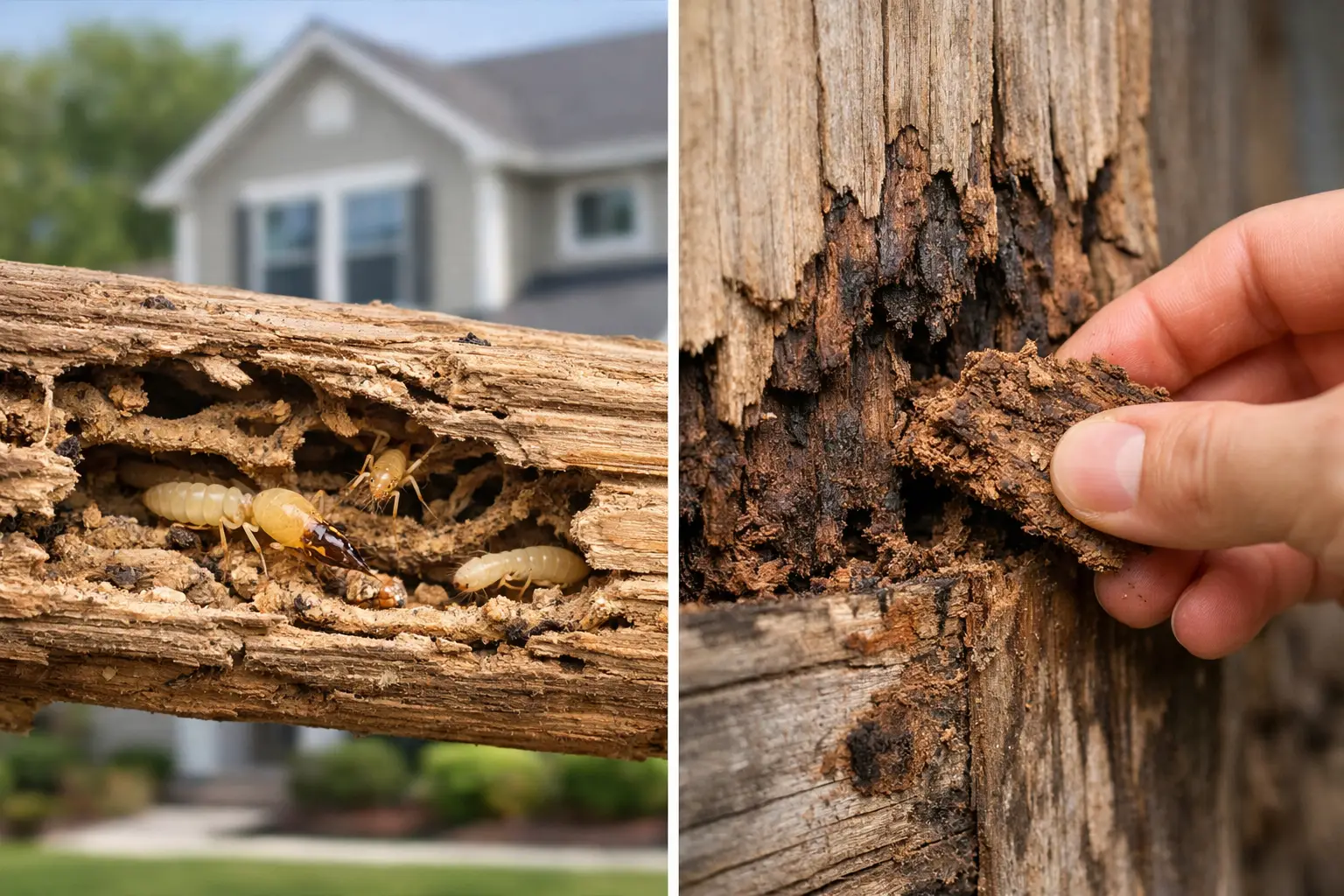
A soft porch post, stained baseboard, or damaged floor framing can raise an expensive question during an inspection: is it termite damage, wood rot, or both? The distinction matters. Termite damage vs wood rot is not simply a cosmetic issue. Each condition points to a different cause, requires a different correction, and may affect the property’s structure, financing, or negotiation position.
In Southeast Texas, heat, heavy rain, humidity, and wood-destroying insects create conditions where moisture-related deterioration and insect activity can occur in the same areas. A proper evaluation looks beyond the damaged board to identify what allowed the damage to develop in the first place.
Termite Damage vs Wood Rot: What Causes Each Condition?
Termite damage is caused by wood-destroying insects feeding on cellulose in wood and other paper-based materials. Subterranean termites are the primary concern in much of Texas. They live in the soil and typically travel into a structure through concealed pathways, often where wood is close to the ground, where plumbing penetrations occur, or where cracks and joints provide access.
Wood rot is fungal decay caused by moisture. Wood must remain wet long enough for decay fungi to become active. A leaking roof, plumbing leak, poor drainage, missing flashing, failed exterior caulking, or an unventilated crawlspace can all create the conditions necessary for rot.
The two conditions can overlap. Wet or chronically damp wood is more attractive and accessible to termites, while termite activity can expose wood and make it easier for moisture to enter. Finding one issue does not automatically prove the other, but it should prompt a closer look.
How the Damage Usually Looks
The appearance and location of deterioration provide useful clues, although field conditions are not always clear-cut. Paint, flooring, insulation, trim, and previous repairs can hide the true extent of a problem.
Signs more consistent with termite activity
Termites often consume the softer wood between the grain, leaving thin outer surfaces or paint intact. A member may look sound from the room side but feel hollow, crush easily, or reveal internal galleries when probed. Damage may have a layered, tunneled appearance rather than a uniformly decayed texture.
Inspectors also look for mud tubes. These pencil-sized earthen shelter tubes may be visible on foundation walls, piers, plumbing penetrations, garage walls, or framing in accessible crawlspaces. Termites use these protected routes to travel between the ground and their food source. Broken or abandoned tubes can indicate prior activity, while intact tubes may suggest active or recently active conditions, but activity must be evaluated carefully.
Other clues include termite swarmers, discarded wings near windows or doors, and localized damage at door frames, baseboards, or wall areas near plumbing. A visible hole in the wood is not required. Termites frequently work behind finishes where occupants cannot see them.
Signs more consistent with wood rot
Rotten wood often feels soft, spongy, crumbly, or flaky when gently probed. Depending on the type of fungal decay, the wood may darken, crack into cube-like pieces, split along the grain, or lose its ability to hold fasteners. Exterior trim that has been repeatedly painted may appear intact until a probe reaches softened material beneath the paint film.
Water staining is a common companion to rot. Look for peeling paint, swollen trim, rusted fasteners, warped siding, fungal growth, deteriorated window sills, or moisture staining on ceilings and walls. In crawlspaces, rot may appear at band joists, subflooring, beams, posts, and areas below bathrooms, kitchens, or exterior doors.
Unlike termites, rot does not create mud tubes or insect galleries. It generally follows a moisture path. If decay is found beneath a roof valley, around a chimney, below a window, or beside a leaking shower, the water source is often the first issue to investigate.
Why a Surface Check Is Not Enough
A buyer may see a dark area of trim and assume it is a minor paint repair. The concern changes when probing reveals damaged framing, when moisture readings identify an active source, or when similar deterioration is found at multiple elevations of the building.
Likewise, a small termite tube should not be dismissed because the exposed wood appears solid. A tube can be evidence of a route into the structure, not a measurement of the total damage. Termite activity may be limited, old, or concealed. Determining its significance requires inspection of accessible areas and, when warranted, a wood-destroying insect evaluation.
Texas Country Inspection approaches these findings as conditions that need to be documented, not guessed at. The inspection process may include visual review of accessible framing and exterior components, probing of suspect wood, evaluation of drainage and moisture conditions, and identification of evidence consistent with wood-destroying insects. Infrared thermography can also help identify temperature patterns that may support further moisture investigation, although it does not see through walls or diagnose termites by itself.
Where Problems Commonly Appear in Southeast Texas Properties
The Golden Triangle and surrounding Southeast Texas communities face long periods of high humidity and intense rainfall. Properties with poor grading, clogged gutters, short downspout discharge, or low exterior clearances are more likely to retain moisture around the foundation and exterior walls.
On pier-and-beam homes, crawlspace conditions deserve close attention. Standing water, inadequate ventilation, wet soil, plumbing leaks, damaged vapor barriers, and wood-to-soil contact can create an environment favorable to both fungal decay and termites. Floor framing may be concealed by insulation, ductwork, or limited access, making a complete understanding dependent on what can safely be observed at the time of inspection.
Slab-on-grade homes are not immune. Termites can enter through slab joints, utility penetrations, cracks, and areas where landscaping, mulch, siding, or trim create concealed access near the foundation. Rot is frequently found at exterior doors, garage trim, windows, roof edges, and wall areas affected by flashing or drainage failures.
Commercial buildings can present the same concerns on a larger scale. Flat-roof drainage issues, exterior wall penetrations, neglected sealants, and poorly maintained loading areas can allow moisture into structural or finish materials. The repair scope depends on whether the affected components are decorative, load-bearing, or part of a larger concealed system.
What Repairs Should Address
The correct repair is rarely just replacing the visibly damaged board. With rot, the moisture source must be corrected first. That may involve roof repair, plumbing repair, improved drainage, flashing correction, ventilation changes, or replacement of failed exterior sealants. Replacing wet wood without resolving the water entry path often leads to repeat damage.
With termites, treatment decisions should be made by a qualified pest control professional after evaluating the evidence and the structure. Repairs may be needed where wood has lost strength or where finishes must be opened to determine the extent of damage. If active termites are confirmed, cosmetic repair before treatment can conceal evidence and complicate the evaluation.
When significant framing damage is present, a qualified contractor or structural professional may need to determine the repair method. An inspection report can identify visible concerns and recommend further evaluation, but it does not replace engineering analysis or destructive investigation behind finished surfaces.
What Buyers and Owners Should Do Next
For a real estate transaction, do not rely on a verbal assurance that a stain is “old” or that a prior termite treatment solved every concern. Ask for documentation of prior treatments, repair invoices, transferable warranties when available, and a current wood-destroying insect report when appropriate. VA loans and some other transaction types may specifically require WDI documentation.
If an inspector identifies suspected decay or termite evidence, obtain estimates that separate the source correction, pest treatment if needed, and wood repair. These are different scopes of work. A drainage repair may be modest while hidden framing repair is substantial, or visible damage may be limited even when the moisture condition needs immediate attention.
The most useful next step is to preserve the evidence, correct active moisture conditions promptly, and have the affected area evaluated before it is covered with new paint, trim, flooring, or insulation. Clear documentation now gives buyers and property owners a stronger basis for repair decisions and helps prevent a small concealed issue from becoming a larger structural expense.
