
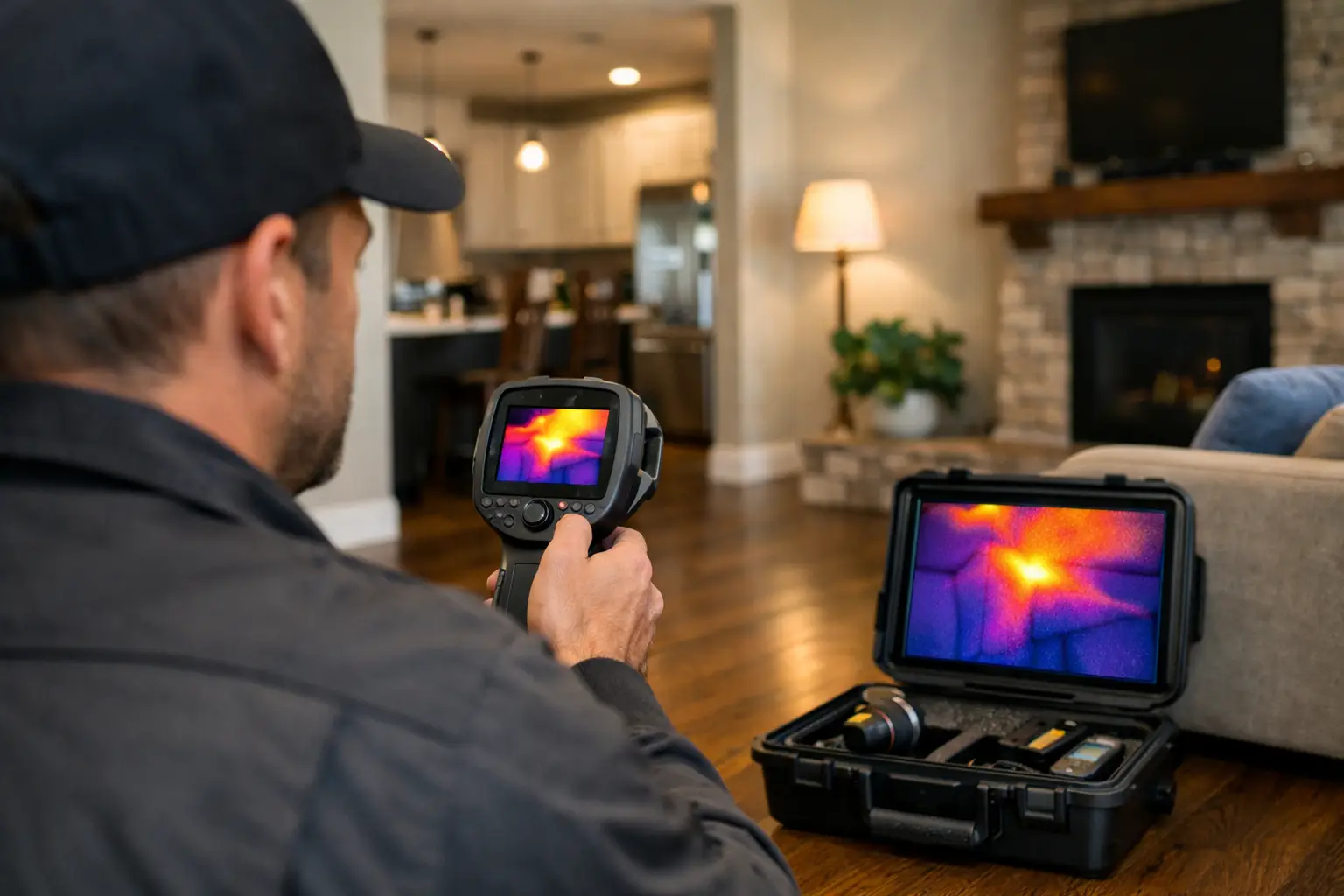
A wall can look clean, a ceiling can feel dry, and an electrical panel can appear orderly while a developing problem sits behind the finished surface. An infrared home inspection review helps identify temperature differences that may point to hidden moisture, missing insulation, active electrical concerns, or air leakage. It gives the inspector another way to evaluate conditions that are not always visible during a standard visual inspection.
For buyers and owners in Southeast Texas, that added perspective can be especially useful. High humidity, heavy rain, aging plumbing, expansive soils, and long cooling seasons all create conditions where moisture and building-performance issues can develop quietly. Thermal imaging does not replace a complete property inspection. Used correctly, it helps direct attention to areas that deserve closer evaluation, moisture-meter testing, or repair by a qualified contractor.
What an Infrared Home Inspection Review Actually Shows
An infrared camera records variations in surface temperature. It does not see through walls, locate every defect, or produce a diagnosis by itself. Instead, it displays thermal patterns that can be compared with surrounding materials and expected conditions.
For example, a cooler area on a ceiling during a hot Texas afternoon may be caused by missing attic insulation, conditioned-air leakage, damp drywall, or a change in framing material. The thermal image tells the inspector that the temperature pattern is different. The inspector then uses building knowledge, visual observations, moisture readings, and the location of plumbing or HVAC equipment to determine the most likely reason.
This distinction matters. A quality inspection report should not present every color variation as a defect. Sun exposure, recently operated appliances, reflective surfaces, and differences in material density can all affect thermal readings. The value comes from having an experienced inspector interpret the image in context.
Where Thermal Imaging Adds Real Value
Infrared thermography is most useful when a suspected condition may be concealed by finished surfaces. It can support a more detailed evaluation of roofing, plumbing, electrical, HVAC, insulation, and exterior wall systems.
Moisture Intrusion and Plumbing Leaks
Water often changes the temperature of a surface. A leak beneath a bathroom floor, around a shower enclosure, below a kitchen sink, or at a roof penetration may create a cooler or warmer thermal signature than the dry materials around it. In a humid climate, the pattern must be evaluated carefully because condensation and outdoor humidity can create similar conditions.
When an unusual pattern is found, the next step may include a moisture meter reading, inspection of accessible plumbing, review of the attic or crawlspace, or recommendation for a licensed plumber or roofing contractor. The goal is not to make a dramatic claim from one image. It is to identify a credible concern before it causes more concealed damage, microbial growth, damaged finishes, or wood deterioration.
Insulation Gaps and Air Leakage
Homes with uneven room temperatures or high cooling costs often have deficiencies in attic insulation, wall insulation, duct insulation, or air sealing. Thermal imaging may reveal areas where attic insulation is thin, displaced, or absent. It can also help locate warmer wall or ceiling areas where hot exterior air is affecting the conditioned space.
This is particularly relevant in properties with additions, converted garages, remodeled rooms, or older HVAC systems. A room that never seems to cool properly is not always an equipment problem. It may have inadequate insulation, an undersized or disconnected duct, a poorly sealed attic access opening, or solar heat gain through windows.
Electrical Hot Spots
An overloaded connection, loose terminal, failing breaker, or damaged electrical component can generate excess heat. During an inspection, thermal imaging may identify an unusual hot spot in an accessible electrical panel, disconnect, receptacle, or equipment connection.
Electrical findings require caution. Temperature readings can be affected by electrical load at the time of the inspection. A circuit that is lightly loaded may not show an issue, while a warm component may be operating normally under a substantial load. When a pattern appears abnormal, the proper recommendation is further evaluation and repair by a qualified electrician, not an assumption about the exact cause.
HVAC and Duct Performance
Infrared imaging can help identify air-temperature irregularities at supply registers, accessible duct runs, equipment cabinets, and ceilings below attic ductwork. It may reveal a disconnected duct, insufficient duct insulation, air leakage, or a register delivering noticeably different air than nearby registers.
The camera does not replace a full HVAC performance analysis. Refrigerant levels, static pressure, airflow, and equipment condition require specialized testing beyond a typical home inspection. Still, thermal observations can provide useful evidence when the system is not cooling consistently or when an accessible duct concern is suspected.
Why Conditions Matter During the Inspection
Thermal imaging works best when there is enough temperature difference between building materials and their surroundings. This is called thermal contrast. A roof leak, insulation gap, or duct issue may be easier to detect after the home has been air-conditioned for several hours while outdoor temperatures are significantly warmer.
That means results can vary with the weather, the time of day, recent rainfall, HVAC operation, occupancy, and whether appliances are running. A home inspected during mild weather may not display the same thermal patterns seen during a July heat spell or after a hard rain.
This is one reason no inspector should promise that infrared technology will find every hidden defect. A careful review documents conditions visible and accessible at the time of inspection. If a buyer has a specific concern – such as a past roof leak, a room with chronic moisture, or an unexplained electric bill – raising it before the inspection allows that area to receive added attention.
What Infrared Cannot Replace
A thermal camera is a valuable tool, but it cannot replace the fundamentals of a thorough inspection. The inspector still needs to evaluate the roof covering where accessible, attic structure, foundation, drainage, electrical system, plumbing fixtures, HVAC operation, windows, doors, and visible interior and exterior components.
It also cannot replace specialty evaluations when the evidence calls for them. Termite activity and wood-destroying insect damage require a proper WDI inspection. A septic system needs its own assessment process. Foundation movement should be evaluated using visible indicators and appropriate measurements, including hydro-static altimeter readings where warranted. Water well performance and water quality require separate testing and coordination.
Thermal imaging is also limited by access. Cabinets full of belongings, blocked walls, thick rugs, finished ceilings, locked rooms, and inaccessible crawlspaces prevent a complete scan. Even a clear thermal image does not prove that a concealed assembly is free of defects.
How Findings Should Appear in the Report
A useful infrared finding should be connected to a specific location and an observed condition. Rather than simply stating that a wall was “cold,” a well-written report explains what was seen, why it may matter, and what next step is reasonable.
For instance, the report may note an irregular cool pattern at the ceiling below an upstairs bathroom, elevated moisture readings at the affected area, and a recommendation for further evaluation by a qualified plumbing professional. Or it may identify heat loss around an attic hatch and recommend air sealing and insulation improvements.
Photos matter as well. Standard photographs establish the physical location and visible condition. Thermal images show the temperature variation. Together, they give a buyer, seller, agent, or repair professional a clearer basis for discussion.
When Buyers Should Request Thermal Imaging
Infrared imaging is worth considering for most home purchases, but it is especially practical when a property has a history of leaks, recent repairs, an older roof, uneven cooling, signs of staining, prior plumbing work, or an addition that may not match the original construction. It can also add useful context in homes with complex rooflines, large attic areas, or multiple HVAC systems.
For rural properties, the inspection scope may need to extend beyond the house itself. Detached buildings, well equipment, septic components, and outbuildings can have their own moisture, electrical, and insulation concerns. The right inspection plan depends on the property and the questions that need answers before closing.
Texas Country Inspection uses infrared observations as part of a detailed, field-based evaluation rather than as a standalone sales feature. The purpose is straightforward: identify meaningful concerns, document what can be supported by evidence, and help clients decide where further investigation is justified.
Before the inspection begins, tell the inspector about any rooms that feel damp, hot, difficult to cool, or affected by past leaks. A specific concern can turn a general thermal scan into a more targeted review of the areas that may matter most to your investment.
