
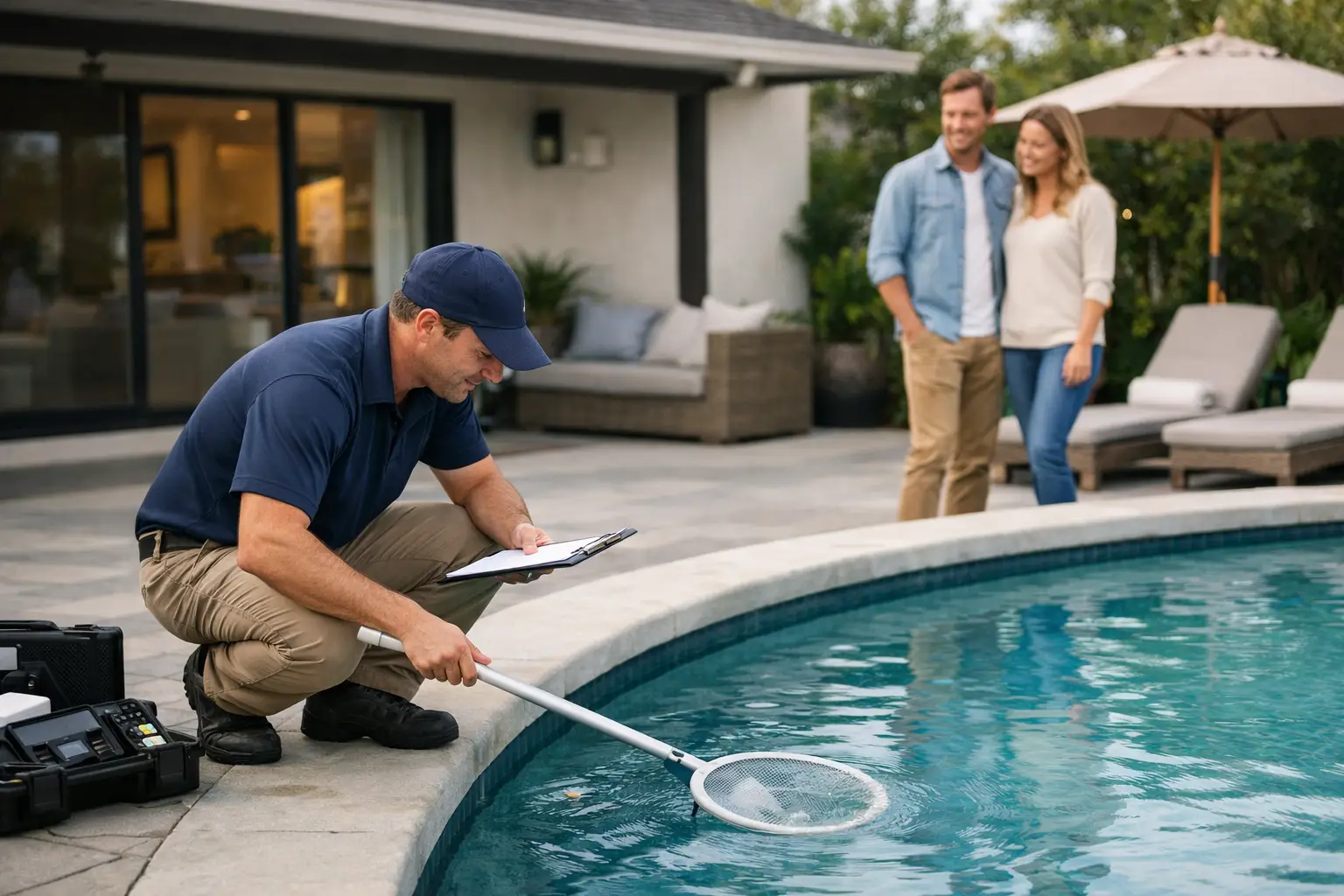
A backyard pool can be the feature that makes a house feel like home. It can also be the most expensive system on the property to repair after closing. A pool inspection before buying gives the buyer a clearer picture of the pool’s condition, operating safety, and likely repair exposure while there is still time to request repairs, negotiate price, or reconsider the purchase.
In Southeast Texas, heat, heavy rain, high humidity, shifting soils, and long pool seasons place real demands on pool shells, decks, plumbing, electrical components, and equipment. Clear water does not prove that a pool is sound. A pool may look clean on a showing day while hiding a circulation problem, a deteriorated light niche, failing equipment, or cracking associated with movement in the surrounding structure.
Why a Pool Inspection Before Buying Matters
A general home inspection may identify visible safety concerns around a pool, but a dedicated pool and spa inspection focuses on components that are easy to overlook during a walkthrough. Pools have their own structure, plumbing, electrical system, circulation equipment, controls, drains, barriers, and water-treatment equipment. Each component can affect safety, use, and cost.
The buyer should understand that a pool inspection is not a guarantee that no future repair will be needed. Pumps, heaters, automation panels, and salt systems are mechanical equipment. They can operate during an inspection and fail later, especially when near the end of their expected service life. The purpose is to identify observable defects, material concerns, unsafe conditions, and evidence that further evaluation or repair is warranted before the buyer takes ownership.
This distinction matters in a real estate transaction. A report that documents a non-operational heater, damaged electrical bonding, active leakage, or substantial plaster deterioration gives the buyer facts to discuss with the seller. Waiting until after closing can turn those same issues into an unexpected personal expense.
What a Thorough Pool Inspection Evaluates
A proper inspection starts with the pool as a whole, then follows the systems that make it usable. Conditions vary by pool type, age, accessibility, and whether the equipment is operational at the time of inspection. Still, several areas deserve close attention.
Pool shell, interior finish, and coping
The pool shell is not inspected the same way as a house foundation, but visible cracking, displacement, separation, or deteriorated finishes can provide meaningful clues. Inspectors look for cracks in plaster, tile, coping, and the adjacent deck; hollow or loose coping; exposed aggregate; staining; delamination; and areas where the finish is worn enough to affect use or maintenance.
Not every crack means the pool is failing. Hairline plaster cracks may be cosmetic, while wider cracks, repeated cracking patterns, separation at fittings, or deck movement may justify further review by a qualified pool contractor or structural specialist. In areas with expansive soils and changing moisture conditions, the relationship between the pool, deck, drainage, and nearby home deserves careful consideration.
Decks, drainage, and trip hazards
The deck should shed water away from the home and avoid creating standing-water areas around the pool. Poor drainage contributes to slippery walking surfaces, erosion, soil movement, and moisture exposure at nearby walls or foundations. Inspectors also watch for uneven deck sections, broken concrete, loose pavers, sharp edges, and conditions that present a trip hazard.
A deck crack is not automatically a deal-breaker. However, a deck that has noticeably settled, heaved, or pulled away from the coping can be more than a cosmetic concern. It may require repair and may point to drainage or soil-related issues that should not be ignored.
Pumps, filters, heaters, and circulation equipment
The equipment pad is where many costly problems become visible. A pool inspection should assess the observable condition and operation of the pump, filter, valves, pressure gauge, piping, skimmer system, timer or automation controls, and heater when present and safely testable.
Common findings include leaking pump seals, corroded equipment connections, deteriorated plumbing fittings, noisy pumps, inadequate filter pressure readings, missing gauge components, and equipment that does not respond properly to controls. A small drip at a pump may appear minor, but it can indicate a failing seal or fitting. A leaking valve or cracked pipe can worsen quickly when the system is under normal operating pressure.
Heaters deserve particular attention because replacement costs can be significant. If the heater cannot be operated due to a shut-off gas supply, an empty propane tank, a locked control panel, or a safety concern, the report should clearly state that limitation. Buyers should not assume an untested heater is functional.
Electrical safety and bonding
Pool electrical issues require a careful, safety-first approach. Water and electricity are a hazardous combination. The inspection should consider visible condition of electrical equipment, service disconnects, receptacles, grounding and bonding components where accessible, lighting, and required ground-fault protection.
Missing or damaged bonding connections, improper receptacles near the pool, exposed wiring, non-operational lights, and electrical equipment exposed to water intrusion are not minor observations. They should be corrected by a qualified licensed electrician or qualified pool professional. Older pools may not reflect every current construction standard, but clearly unsafe conditions should still be identified.
Barriers, gates, and safety features
A pool barrier is a life-safety feature, not decoration. Fences, gates, latches, self-closing hinges, door alarms, and access controls should be evaluated for visible deficiencies. A gate that does not self-close or latch reliably can create a serious risk, particularly for families with young children or visitors.
Texas buyers should also consider how the home opens to the pool area. Doors with direct pool access, pet doors, low fencing, climbable objects near barriers, and gaps beneath gates can all affect safety. Local requirements and jurisdictional enforcement can differ, especially when purchasing an older property, but buyers should not treat a deficient barrier as optional work.
Spa systems and water features
Spas, waterfalls, slides, bubblers, and other water features add appeal, but they add systems to maintain. A spa may have separate pumps, heaters, air controls, drains, and plumbing lines. Water features can conceal leaks or create drainage concerns when they are not operating correctly.
If a spa is empty, winterized, covered, or otherwise unavailable for operation, that limits the inspection. The buyer may need a follow-up evaluation before the end of the option period or a contractual agreement addressing the system’s condition.
What an Inspection Cannot Confirm
No visual inspection can see every underground pipe, confirm the full history of repairs, or predict the remaining life of every component. Leak detection, pressure testing, camera inspection of plumbing, and specialized structural analysis are separate services that may be recommended when conditions warrant them.
For example, an unexplained water-loss issue, persistently low water level, damp soil near plumbing, air entering the pump basket, or a pool that needs frequent filling may justify dedicated leak detection. Likewise, cloudy water can result from neglected chemistry, a filtration issue, poor circulation, or several combined causes. Testing equipment operation helps, but it does not replace a full water-quality evaluation or ongoing maintenance assessment.
Buyers should also ask the seller for service records, renovation invoices, equipment manuals, warranty information, and documentation of any resurfacing, replastering, leak repair, or heater replacement. Records do not replace an inspection, but they can help establish age, maintenance history, and whether a contractor has already addressed a recurring issue.
Using Findings Before Closing
Once inspection findings are available, prioritize them by safety, active damage, necessary repair, and future budgeting. An unsecured gate, electrical concern, active plumbing leak, or non-functioning circulation system deserves more attention than a cosmetic stain or aging but operational equipment.
Avoid asking for vague promises such as “pool to be serviced.” A service visit can mean little more than chemical treatment and debris removal. When repairs are needed, request that the work be performed by an appropriately qualified professional and obtain documentation describing what was repaired. For larger concerns, it may be wiser to obtain an estimate and negotiate a credit, allowing the buyer to select the contractor after closing.
Texas Country Inspection, LLC approaches pool and spa observations with the same practical mindset used for the rest of the property: identify meaningful conditions, document what is visible, and help the buyer understand where a specialist or repair decision is needed. A pool should add enjoyment to a property purchase, not uncertainty. Before the option period ends, make sure its condition has been evaluated with the same care you would give the roof, foundation, and electrical system.
