
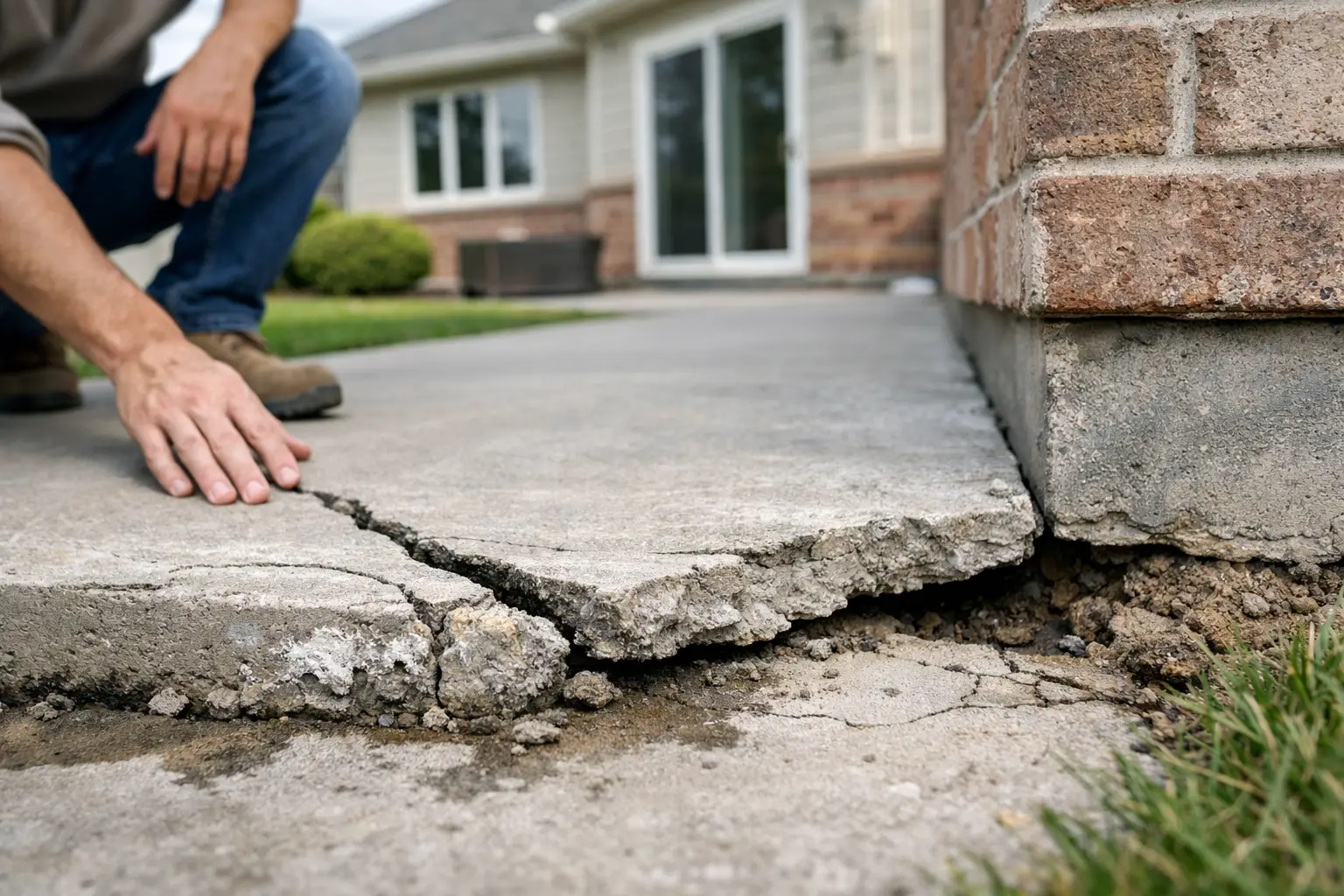
A crack in the tile, a sticking back door, and a gap opening above a window do not always mean a house is failing – but they are exactly the kinds of clues that can point to slab on grade defects. In Southeast Texas, where expansive soils, heavy rainfall, drainage issues, and seasonal moisture swings all work against foundations, those clues deserve a closer look.
A slab-on-grade foundation is common in this region because it is practical and cost-effective. The concrete slab is poured directly on prepared soil, often with thickened areas or beams to support load-bearing walls. When conditions are right, it performs well. When construction details, site drainage, soil preparation, or moisture control are lacking, problems can develop slowly and show up in ways many buyers and owners do not expect.
What slab on grade defects really mean
The term slab on grade defects covers more than obvious foundation failure. It can include settlement, heaving, cracking, moisture intrusion, slab edge deterioration, poor reinforcement placement, inadequate site preparation, or drainage conditions that cause differential movement. Some defects are cosmetic. Others affect structural performance, interior finishes, door and window operation, and long-term repair costs.
That distinction matters during a property inspection. Not every crack is a structural emergency, and not every smooth-looking floor is sound. A careful evaluation looks at the whole pattern – floor performance, wall cracks, exterior grading, moisture conditions, and signs of movement over time – rather than one isolated symptom.
Why slab problems are common in Southeast Texas
In this part of Texas, clay-rich soils are a major factor. Expansive soils swell when they absorb water and shrink when they dry out. If moisture conditions are not consistent beneath the slab, one section of the foundation can move differently than another. That differential movement is often what creates visible distress.
Poor drainage makes the problem worse. If roof runoff discharges next to the house, if the lot slopes toward the structure, or if water stands near the foundation after rain, soil moisture can become uneven. Plumbing leaks below the slab can also introduce localized moisture and movement. During dry periods, trees and large shrubs may pull moisture from soil near one side of the home, creating another imbalance.
Construction quality also plays a role. If fill soil was not properly compacted before the slab was poured, settlement may occur later. If reinforcing steel was poorly placed or concrete curing was not controlled well, the slab may be more vulnerable to cracking. These are not always visible without a trained inspection and, in some cases, further specialist evaluation.
Common signs of slab on grade defects
Many buyers first notice interior finish damage rather than the slab itself. Cracks in drywall above doors and windows are common indicators. Doors that rub, latch poorly, or swing open on their own can suggest movement. Window frames that become difficult to operate may tell the same story.
Flooring often reveals the issue early. Cracked tile, separated grout joints, uneven flooring transitions, or laminate that begins to gap or peak can all reflect movement below. In some homes, you may feel a slope or dip as you walk across the floor, though subtle elevation changes are not always obvious without measurement tools.
Outside, inspectors look for brick veneer cracks, mortar separation, stair-step cracking, gaps around trim, and grading conditions that hold water near the slab edge. These exterior clues are important because they help determine whether the symptoms inside are isolated cosmetic issues or part of a broader movement pattern.
Not all cracks mean the same thing
One of the most common misconceptions is that any concrete crack means major structural trouble. Concrete shrinks as it cures, and minor cracking can occur even in a serviceable slab. The real question is the nature of the crack and what else is happening around it.
Hairline shrinkage cracks may be less concerning if there is no vertical displacement, no recurring interior distress, and no related signs of movement. Wider cracks, cracks with offset surfaces, or cracks that align with multiple symptoms in the house deserve more attention. A crack by itself rarely tells the full story. Its location, width, direction, and progression matter.
This is where an experienced inspection has value. The goal is not to alarm a buyer with every visible flaw. The goal is to identify patterns, document meaningful concerns, and recommend next steps when conditions suggest that foundation performance may be compromised.
Moisture and drainage are often the hidden drivers
Many slab issues begin outside the home. If the grade is flat or negative toward the structure, water can collect at the foundation perimeter. Downspouts that discharge too close to the house can saturate one area repeatedly. Missing gutters in the wrong location can have the same effect.
Moisture can also move upward through the slab or affect finish materials at the perimeter. Flooring damage, musty odors, baseboard staining, and elevated moisture readings may point to conditions that deserve closer review. In some cases, the foundation itself is not the only problem. The site drainage problem that contributed to movement may also be increasing the risk of wood rot, interior moisture damage, or termite activity.
That overlap is one reason thorough inspections matter. A foundation concern rarely exists in isolation. It often connects to drainage, grading, plumbing, or moisture management.
How inspectors evaluate slab movement
A competent foundation evaluation during a property inspection involves more than spotting cracks. Inspectors observe symptom patterns inside and outside, check operation of doors and windows, review visible drainage conditions, and assess the structure for indications of differential movement.
In some cases, additional tools improve the assessment. Texas Country Inspection, LLC uses hydro-static altimeter readings for foundation movement assessment when appropriate, which can help document elevation differences across the slab. Infrared thermography can also assist in identifying moisture-related anomalies that may be affecting flooring or interior finishes. These tools do not replace sound inspection judgment, but they can add useful data.
There is still a limit to what a general property inspection can determine. Inspectors do not typically perform destructive testing or certify structural design. If the observed conditions indicate significant movement, active distress, or possible plumbing-related undermining, referral to a qualified foundation specialist or structural engineer may be warranted.
Repair questions buyers should ask
When slab concerns show up during a transaction, the next step is not always straightforward. Some homes have old movement that has stabilized. Others have active conditions that are likely to continue if the underlying cause is not corrected. A repaired foundation can perform acceptably, but the quality of the repair, drainage control, and post-repair monitoring all matter.
Buyers should ask whether movement appears ongoing, what symptoms support that opinion, whether drainage corrections are needed, and whether further evaluation is recommended before closing. If prior foundation work was done, documentation is important. Repair records, transferable warranties, and evidence of proper drainage improvements help clarify risk.
It also helps to keep expectations realistic. A house with prior slab repair may still have cosmetic imperfections. That does not automatically mean the repair failed. At the same time, fresh cracking after a reported repair deserves scrutiny.
Prevention matters more than many owners realize
Not every slab problem can be prevented, especially in active Texas soils, but many can be reduced by controlling moisture around the home. Consistent watering practices during dry periods, functional gutters, proper downspout discharge, and positive drainage away from the slab all help limit uneven soil expansion and shrinkage.
Tree placement matters too. Large roots do not always physically lift a foundation, but moisture extraction by mature trees can contribute to differential drying. Plumbing leaks under or near the slab should be addressed promptly because they can change soil conditions quickly.
For homeowners, the practical takeaway is simple: small symptoms should not be ignored. Early signs often give you time to correct drainage, investigate leaks, or document movement before damage spreads.
When slab on grade defects deserve immediate attention
Some conditions justify faster action. Large or rapidly growing cracks, obvious floor slope changes, repeated door and window binding throughout the home, or signs of plumbing leakage below the slab should move the issue higher on the list. The same goes for standing water near the foundation after normal rain events or interior damage that keeps returning after cosmetic repair.
A careful inspection helps separate ordinary aging from conditions that may affect value, safety, or future repair cost. That is especially important before closing on a home, before the end of a builder warranty period, or when a property has a history of drainage and moisture issues.
Foundation concerns can feel intimidating, but the right approach is not guesswork and it is not panic. It is careful observation, good documentation, and a willingness to address causes instead of just patching symptoms. When you understand what slab movement looks like and why it happens, you are in a much better position to protect the property and the investment behind it.
