
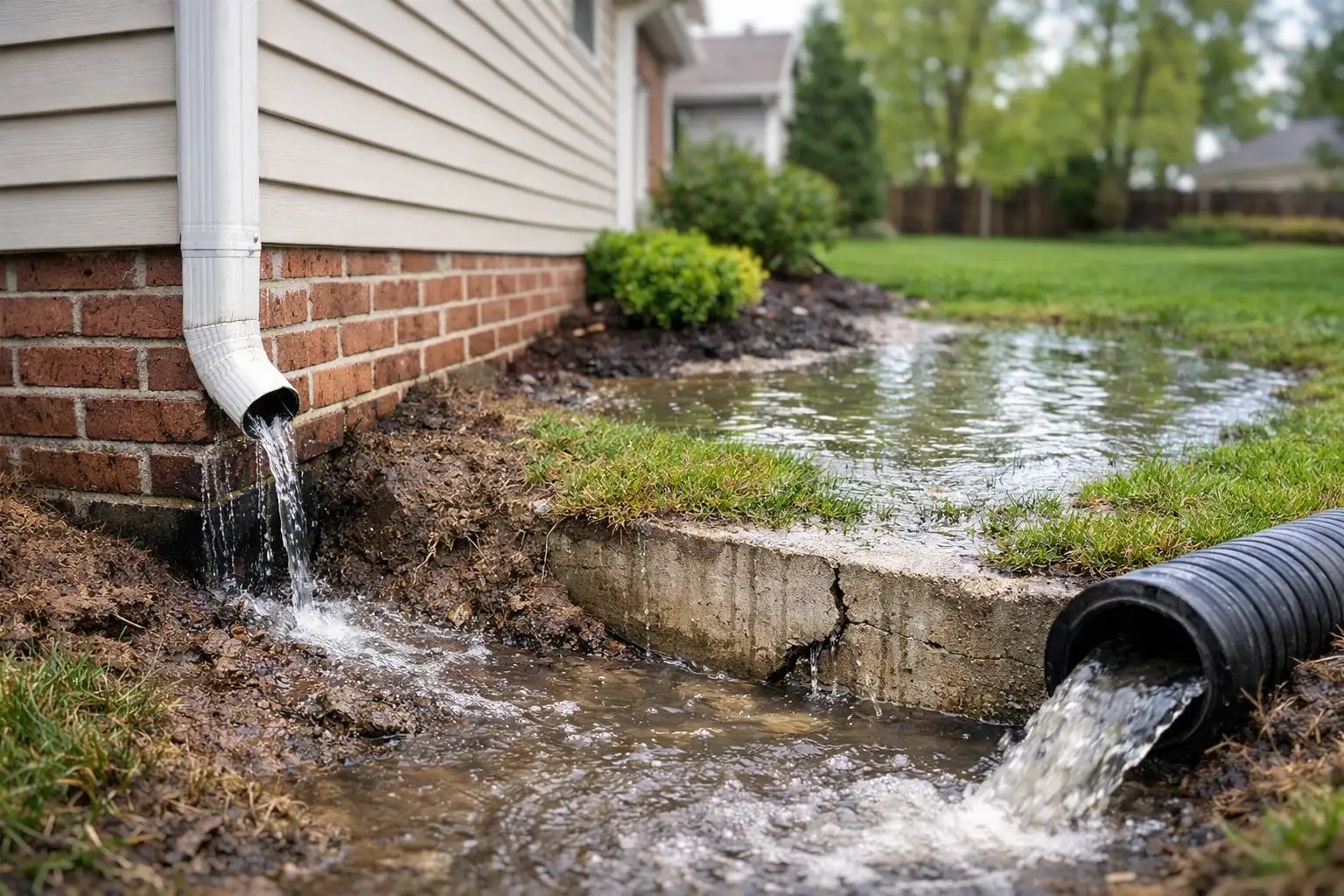
A house can have a newer roof, decent finishes, and a clean seller disclosure, yet still show trouble where many buyers never think to look first – at the soil line around the structure. In Southeast Texas, drainage issues around foundation areas are one of the most common conditions that can turn a manageable home into an expensive one.
When water is allowed to collect, flow back toward the house, or remain trapped against the perimeter, the foundation does not experience a steady environment. It gets cycles of saturation and drying. In our region, where expansive soils, heavy rains, long dry periods, and flat lots often work against the structure, those moisture swings matter. They can contribute to movement, moisture intrusion, cosmetic cracking, and in some cases more significant structural concerns.
Why drainage issues around foundation areas matter
Foundations perform best when the supporting soil stays reasonably consistent in moisture content. That is the simple version. The complicated version is what happens when one side of the home stays wet from poor grading while another side dries out from sun exposure, tree roots, or missing gutters.
That imbalance can produce differential movement. One section may settle, another may heave, and interior finishes begin to tell the story. An inspector may see cracks at corners of doors and windows, separation at trim, sloping floors, sticking doors, or gaps at exterior brick veneer joints. Not every crack means major structural failure, but drainage patterns are often part of the explanation.
There is also the moisture side of the problem. Water that ponds near the perimeter can enter crawlspaces, seep through slab edges, affect flooring materials, and raise humidity inside the home. Persistent damp conditions can also support wood decay and create a friendlier environment for termites and other wood-destroying insects. That overlap matters in this market because buyers are often trying to evaluate more than one risk at the same time.
What causes poor drainage at the foundation
In many cases, the problem is not one dramatic defect. It is several smaller conditions working together.
Negative grading is a common example. Instead of the soil falling away from the house, the grade slopes toward it. Sometimes that was original construction. Sometimes landscaping, mulch beds, and years of added soil changed the slope. On older properties, the yard may have simply settled in all the wrong places.
Roof runoff is another frequent issue. Gutters that are missing, clogged, undersized, or discharging too close to the structure can dump a concentrated volume of water right at the foundation edge. Even where gutters are installed, downspout extensions may be absent or disconnected. During a heavy Texas rain, that matters quickly.
Flatwork can also make things worse. Patios, sidewalks, and driveway sections may tilt toward the home instead of away from it. That can funnel water to the slab edge or into expansion joints near entry points. On some homes, decorative borders, planter boxes, or hardscape additions unintentionally trap runoff against the exterior walls.
Then there are site conditions that are harder to correct. Low lots, neighboring runoff, high water tables, dense clay soils, and limited storm drainage can all contribute. The important point is that poor drainage is not always a simple maintenance item. Sometimes it is a site design problem with a practical fix, and sometimes it is a persistent condition that needs active management.
Signs an inspector looks for
A thorough inspection does not stop at noting a crack in the sheetrock. The bigger question is why the crack may be there.
Outside, inspectors look at grading, swales, gutter performance, downspout discharge points, erosion, ponding evidence, vegetation placement, and whether the soil line is too high against siding or brick veneer. They may also note hardscape slope and conditions where water can collect near entry doors, garage walls, or rear patio areas.
Inside, the clues are often indirect. Cracks above openings, separated caulking at trim, out-of-square doors, floor unevenness, and moisture staining can all support a broader pattern. In homes with active or suspected movement, added tools such as hydro-static altimeter readings can help document elevation differences and give buyers a more informed picture of what may be happening.
That does not mean every drainage concern equals foundation failure. It means drainage is one of the first conditions to evaluate when movement or moisture symptoms are present. The trade-off is that visual inspections can identify patterns and risk factors, but they do not replace engineering analysis when structural distress is pronounced.
Southeast Texas factors that make drainage more serious
This topic hits differently in Southeast Texas than it does in drier or rockier regions. Our area commonly deals with expansive clay soils that swell when wet and shrink when dry. That movement places ongoing stress on slab foundations and other structural components.
Rainfall can also arrive in short, intense bursts. A yard that appears acceptable in dry weather may perform poorly during a strong storm. Water may overflow gutters, bypass shallow swales, and collect in low spots near the home. If that condition repeats, the soil near the foundation sees repeated saturation.
Long hot periods add the opposite pressure. Soil pulls away from the slab, moisture content drops, and differential drying can occur around the perimeter. When a property already has inconsistent drainage, these seasonal cycles can amplify the effect. Shade patterns, large trees, irrigation overspray, and roof drainage all influence which portions of the foundation stay wet or dry.
That is why a localized inspection matters. A generic recommendation to just add gutters or regrade the yard is not always enough. The right correction depends on lot slope, soil behavior, roof design, nearby drainage paths, and the signs already visible in the structure.
Typical corrections and where owners get it wrong
Some drainage improvements are straightforward. Extending downspouts, restoring positive grading, cleaning gutters, and adjusting sprinkler patterns can make a real difference. In other cases, owners may need swales, catch basins, area drains, French drains, or flatwork repairs to redirect runoff away from the home.
The mistake is assuming one fix solves every problem. A French drain will not compensate for a roof that dumps large volumes of water at the same corner. Fresh topsoil piled against the slab may hide low grading for a while but can create new moisture and clearance issues. Splash blocks help in some situations, but on a flat lot they may only spread water around instead of carrying it away.
There is also timing to consider. If foundation movement has been ongoing for years, correcting drainage is still important, but it may not reverse existing structural changes. It helps manage future risk. Buyers should understand that distinction so expectations stay realistic.
Why this matters during a real estate transaction
For buyers, drainage concerns are not cosmetic footnotes. They can affect repair budgets, future maintenance, insurance discussions, and the need for further evaluation before closing. A home may show only minor interior cracking today, but the exterior drainage pattern may suggest a more active cause behind it.
For sellers, drainage defects can also complicate negotiations because they tend to raise bigger questions. Once buyers see ponding at the foundation edge or obvious negative grading, they begin asking what else moisture may have affected. That can lead to additional requests for structural review, moisture evaluation, or wood-destroying insect documentation.
A careful inspection helps separate ordinary maintenance from conditions that deserve deeper attention. Texas Country Inspection, LLC approaches these issues the same way the rest of the property should be approached – by documenting what is present, explaining why it matters, and identifying when specialist input may be warranted.
When drainage issues around foundation conditions need faster action
Some conditions should move to the front of the list. Water entering the structure, chronic ponding that remains long after rainfall, visible soil separation at the slab edge, repeated sticking doors, widening cracks, or evidence of wood damage near wet areas all justify prompt attention.
The same is true when several indicators appear together. One hairline crack may not say much by itself. A hairline crack plus negative grading, missing downspout extensions, elevated moisture readings, and differential floor elevation tells a different story.
The goal is not to alarm buyers or owners. It is to keep small site and moisture problems from becoming major structural or material damage issues. Water management around a building is basic, but it is never minor.
If you are evaluating a property in Southeast Texas, pay close attention to how the house handles water before the next storm answers the question for you.

4 Comments