
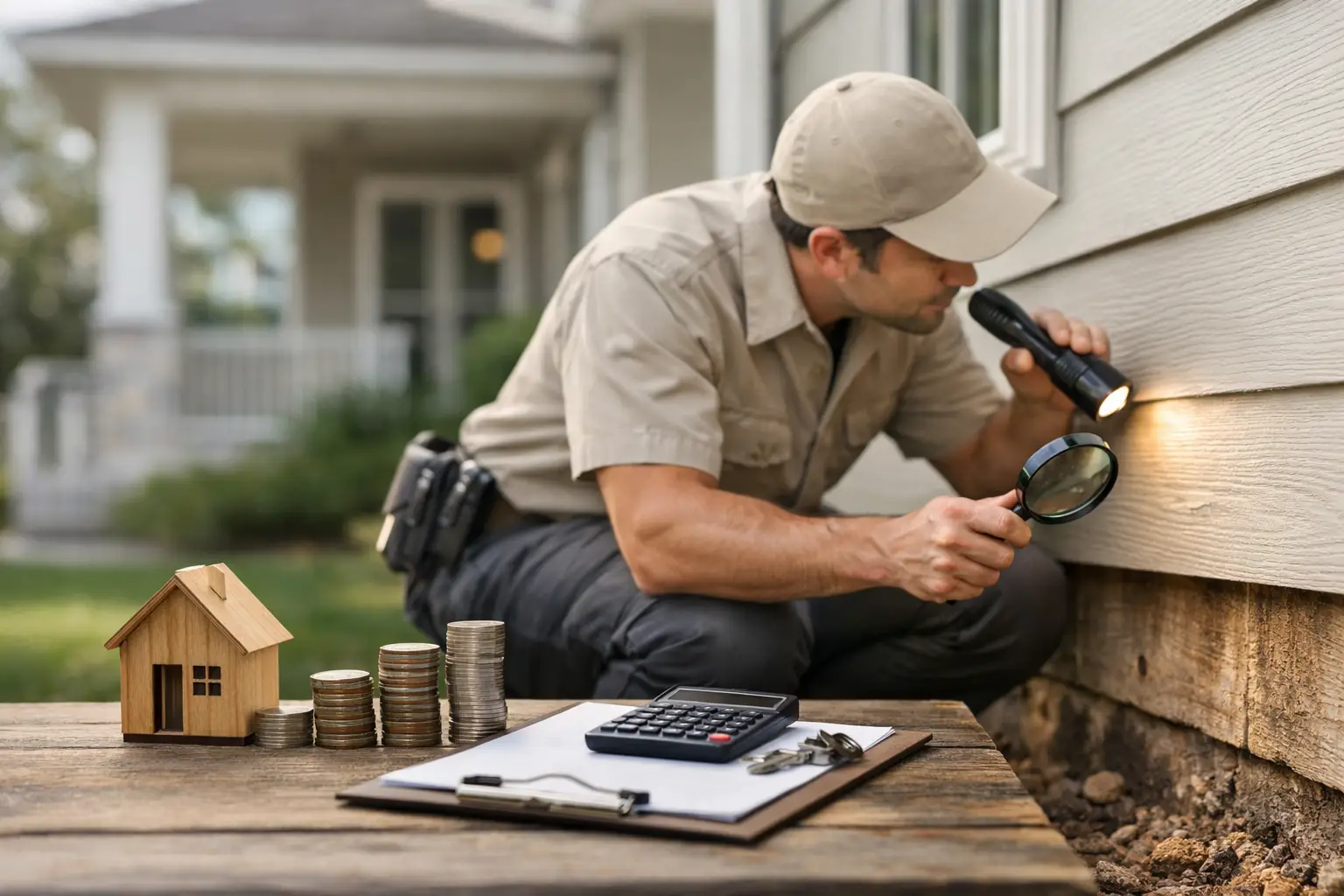
A low quote can look appealing right up until termite damage shows up in a wall, sill plate, or pier area after closing. That is why termite inspection cost should be judged by more than the number on the invoice. In Southeast Texas, pricing often reflects the size of the property, the accessibility of critical areas, the type of report needed, and how thoroughly the inspection is actually performed.
For buyers, sellers, and property owners, the real question is not simply, “How much does it cost?” It is, “What am I getting for that cost, and will it help me avoid a much larger repair bill later?” A properly performed wood-destroying insect inspection is a risk-management service. If the inspection is rushed, limited, or poorly documented, a lower fee can become expensive in a hurry.
What termite inspection cost usually covers
In most cases, termite inspection cost covers a visual inspection for evidence of termites and other wood-destroying insects, along with visible damage, conditions conducive to infestation, and accessible areas where activity is commonly found. Depending on the assignment, the service may also include a formal wood-destroying insect report required for a real estate transaction, financing, or another third-party purpose.
That sounds straightforward, but not every inspection is the same. A stand-alone termite inspection for a small home is different from a transaction-related WDI report on a larger rural property with detached structures, heavy vegetation, and limited crawlspace clearance. The scope changes, and pricing should change with it.
A careful inspector is looking beyond live insects. They are evaluating moisture-prone areas, wood-to-soil contact, shelter tubes, previous treatment evidence, damaged framing, exterior grading concerns, and other conditions that can support infestation. In this region, where humidity, rainfall, and moisture intrusion are routine concerns, those details matter.
What drives termite inspection cost in Southeast Texas
The first factor is property size. Larger homes and commercial buildings simply take more time to inspect. There are more linear feet of foundation, more interior rooms, more exterior wall areas, and often more attic or crawlspace exposure to review.
Accessibility also has a major impact. If the structure has a tight crawlspace, obstructed attic access, heavy storage against walls, dense landscaping, or detached buildings, the work becomes more involved. An inspector cannot responsibly price a difficult inspection the same way as an open, easy-to-access property.
The type of construction matters too. Slab-on-grade homes present different inspection challenges than pier-and-beam homes. Older homes may have previous repairs, additions, or concealed conditions that require closer attention. Rural properties often include barns, workshops, fences, or wood elements near the main structure that increase the overall exposure to wood-destroying insects.
Then there is the purpose of the inspection. If you need a simple informational check as a homeowner, pricing may differ from a formal report prepared for a buyer, lender, or VA-related transaction. When a report must meet transaction requirements, documentation standards become more important, and the inspector is taking on a more defined reporting role.
Cheap inspections can leave expensive blind spots
There is nothing wrong with wanting fair pricing. The problem comes when the fee is so low that there is no time built in for a serious inspection. Termite issues are often found in places that require patience, good lighting, and a willingness to follow evidence patterns instead of making a quick walk around the house.
For example, an inspector may find mud tubes at the slab edge, staining at baseboards, damaged trim in a bathroom wall, or elevated moisture conditions near an exterior door. On their own, each clue may look minor. Taken together, they can point to active infestation or prior hidden damage. That kind of pattern recognition usually comes from field experience, not speed.
A bargain inspection may also skip the broader conditions that support infestation. Drainage defects, plumbing leaks, poor ventilation, and earth-to-wood contact are not small details. They help explain why a property is at risk. If those conditions are not identified, the client may not understand how to reduce the chance of future damage even if no active infestation is seen that day.
What to expect from a thorough termite inspection
A thorough inspection should include a careful review of the accessible interior and exterior of the structure, with attention to areas where termites and other wood-destroying insects commonly appear. That includes foundation perimeters, garage framing, window and door trim, plumbing penetrations, attic framing when accessible, crawlspaces if present, and wood components near grade.
The inspector should also distinguish between active infestation, past infestation, visible damage, and conducive conditions. Those are not interchangeable findings. A client needs to know whether insects are currently present, whether damage appears old or ongoing, and whether moisture or construction details are increasing risk.
Clear reporting matters just as much as the fieldwork. If evidence is found, the client should understand where it was observed, what type of issue was noted, how significant it appears from visible conditions, and whether treatment, repair, or further evaluation is recommended. Vague language does not help a buyer negotiating repairs or a property owner planning next steps.
When termite inspection cost is bundled with a home inspection
Bundled pricing can be a good value if the termite inspection is still being performed thoroughly. In many transactions, buyers order a general home inspection and a separate WDI report at the same time. Because the inspector is already onsite, the additional cost for the termite component may be lower than booking it as a separate visit.
That can be especially practical when the inspection company understands both building defects and pest-related conditions. Moisture intrusion, foundation movement, exterior drainage, siding clearance, and plumbing leaks often intersect with termite risk. Looking at the property through both lenses can produce a more useful report for the client.
Texas Country Inspection, LLC approaches these issues with both property inspection and pest-related field experience in mind, which can be particularly useful when a client needs the bigger picture rather than a narrow checklist.
Why local conditions affect pricing and findings
Southeast Texas is hard on buildings. High humidity, frequent rain, warm temperatures, and shifting soils create conditions that can support termite activity and moisture-related deterioration. Homes in this region often show a combination of settlement movement, drainage concerns, wood rot, and insect exposure.
That means the inspection is not just about spotting bugs. It is about understanding how local construction patterns and environmental conditions contribute to risk. A house with minimal siding clearance, poor drainage at the perimeter, and visible moisture staining at interior finishes deserves a more careful look than a quick pass-through.
This is also why local experience matters when comparing termite inspection cost. Inspectors who work this region regularly tend to know where problems hide and which defects deserve extra attention. That knowledge adds value, even if the price is not the lowest option on paper.
How to compare termite inspection cost the right way
When you compare pricing, ask what type of report is included, whether detached structures are part of the inspection, and what areas will be inspected if accessible. Ask whether the service is for informational purposes only or whether it satisfies a lender or transaction requirement.
It is also reasonable to ask how findings are documented. A professional report should clearly identify observed evidence, damaged areas, and conditions conducive to infestation. If you are buying a property, that documentation can matter during negotiations and repair discussions.
If one quote is dramatically lower than the others, ask why. Sometimes there is a legitimate reason, such as a limited scope or a bundled service. Other times, the price reflects a rushed process with less time onsite and less detailed reporting. That difference is not always obvious until a problem is missed.
Is a termite inspection worth the cost?
In most cases, yes. Compared with structural repairs, finish repairs, treatment costs, or a delayed closing, the inspection fee is usually small. Even when no active infestation is found, the inspection can identify risk factors that help you protect the property.
It also gives buyers and owners a clearer basis for decision-making. You may learn that visible damage appears old and treated, or you may learn that current conditions suggest a need for prompt action. Either way, you are making decisions with better information.
The best way to think about termite inspection cost is as the price of clarity. On a property in Southeast Texas, clarity has real value, especially when moisture, wood exposure, and hidden damage can turn a minor-looking issue into a major repair project. A careful inspection does not eliminate every risk, but it gives you a much stronger chance of catching the issues that matter before they grow legs and walk into your budget.
