
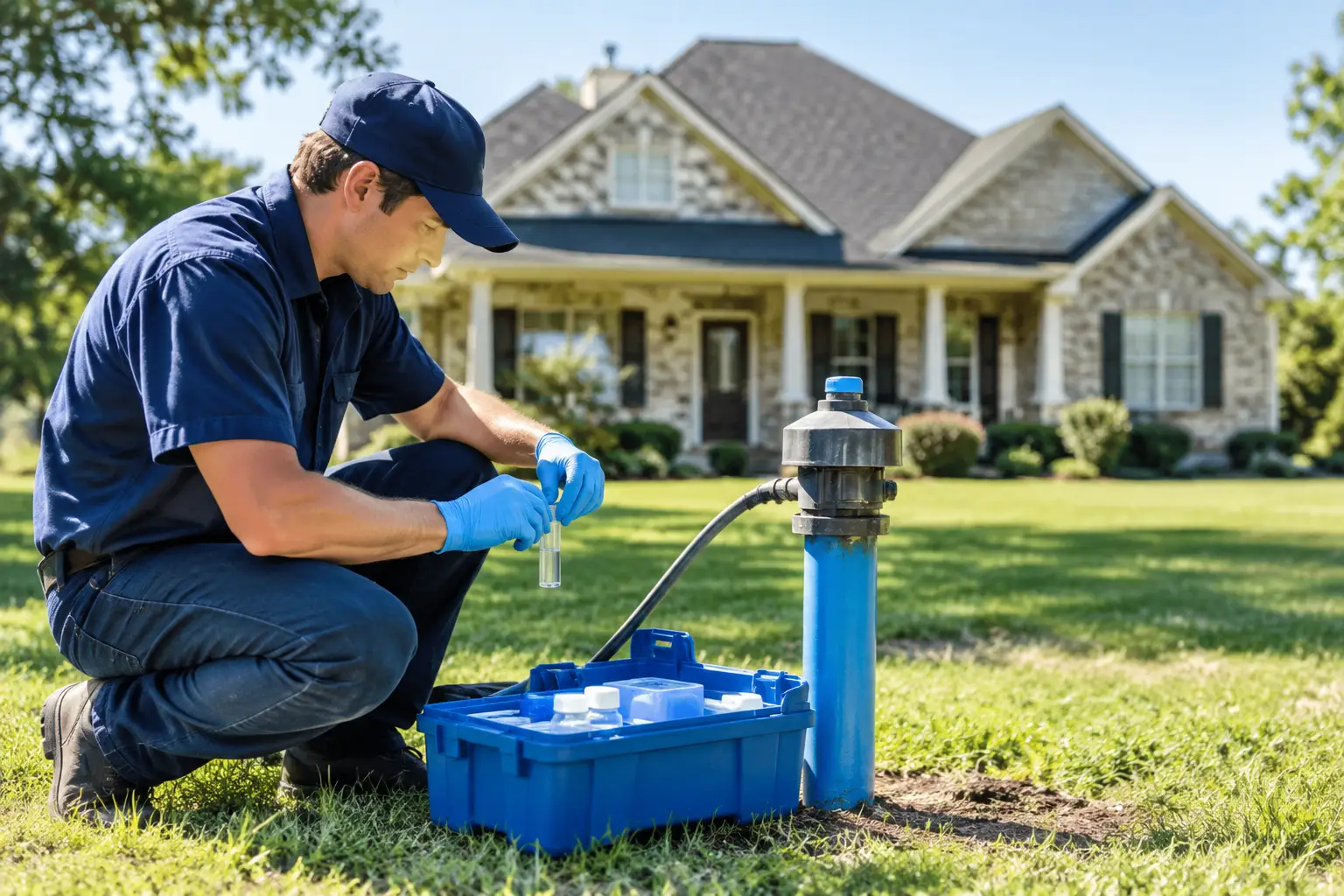
A private well can be a dependable water source, but it does not receive the routine oversight applied to a public water system. For a buyer, well testing is not a minor add-on to the property inspection. It is a practical way to learn whether the water entering the home may carry bacteria, excessive minerals, or other concerns that could affect health, plumbing, appliances, and the cost of ownership.
Across Southeast Texas, rural and edge-of-town properties often rely on private wells. The well may have served a household for years without a visible problem, yet water quality can change with heavy rainfall, flooding, nearby land use, aging equipment, or a damaged well cap. Clear water can still contain contaminants. A clean-looking sink, good water pressure, and no unusual odor do not replace a laboratory result.
What Well Testing Can Tell a Property Buyer
Water testing starts with a properly collected sample and a laboratory analysis. The specific panel should match the property, the lending requirements, and the concerns identified during the inspection. A typical real estate water test often addresses total coliform bacteria, E. coli, nitrates or nitrites, and other basic indicators. Depending on the well location and local conditions, testing may also include minerals, metals, pH, hardness, chlorides, sulfates, or other constituents.
Bacteria results are often among the most time-sensitive findings. Total coliform bacteria can indicate that the well system, sampling point, or water supply has been exposed to contamination. E. coli is a more serious indicator because it may point to fecal contamination. A positive result does not automatically identify the exact source, but it does call for prompt follow-up before a family relies on the supply.
Nitrates and nitrites deserve careful attention, particularly near agricultural activity, livestock areas, septic systems, or shallow groundwater conditions. Elevated nitrate levels can create health risks, with infants and pregnant individuals requiring particular caution. The source may be related to fertilizer, waste, septic discharge, or natural conditions. The laboratory report identifies the level; determining the cause may require additional investigation.
Mineral-related findings affect the property differently. Hard water, iron, manganese, sulfur odors, high chlorides, or low pH may not always create an immediate health concern, but they can leave staining, corrode components, shorten water-heater life, clog fixtures, and require treatment equipment. Buyers should understand the difference between a water-quality result that needs immediate correction and one that signals a maintenance or budgeting issue.
Why Southeast Texas Wells Need a Property-Specific Review
Ground conditions in Southeast Texas are not uniform from one community to the next, or even from one tract to the next. High rainfall, periodic flooding, shallow groundwater, sandy soils, clay soils, septic systems, and rural land uses can all influence a well supply. A well located near a drainage path or low-lying area may face different exposure risks than a well on higher ground.
Recent weather matters. After a significant rain event or flood, surface water can affect a poorly protected wellhead. Cracked casing, an unsecured cap, improper grading around the well, and missing seals can allow contaminants a path toward the system. If a property has been vacant, it may also be necessary to consider how long water has sat in plumbing lines and whether the system has been maintained.
The inspection should consider more than the laboratory sample. A field review may identify visible conditions such as a damaged well cap, exposed wiring, leaking pressure-tank fittings, poor drainage at the wellhead, unprotected equipment, or a lack of clear access for service. These observations do not replace a licensed well contractor’s evaluation, but they help buyers understand where further review is warranted.
How Well Testing Fits Into the Inspection Timeline
Well testing should be scheduled early enough to allow for laboratory turnaround, follow-up testing, and repair negotiations before the option period or closing deadline expires. Waiting until the final days of a transaction can put a buyer in a difficult position if bacteria or another concern appears in the report.
The collection process matters. Samples are generally collected from an appropriate interior point after following the laboratory’s instructions for flushing, aerator removal when required, and sanitation of the faucet. The sample must be placed in the correct container, preserved as directed, and delivered within the laboratory’s required hold time. An improperly collected sample can create questionable results and unnecessary delays.
If a result is outside the applicable standard or raises a concern, do not assume that a filter installed under one sink solves the property-wide issue. The next step depends on the finding. Bacteria may require disinfection of the well and plumbing system, followed by a retest. Nitrate concerns may call for source investigation and a treatment system designed for that contaminant. Corrosive water, hardness, or iron may require equipment selection based on the actual chemistry rather than a one-size-fits-all sales recommendation.
A failed test can also be a negotiation issue, but it should first be treated as a property condition issue. Buyers need documentation of the result, clarity about what corrective work was performed, and a post-repair test when appropriate. A seller’s statement that the system was treated is not the same as a satisfactory follow-up laboratory report.
Lending Requirements May Set the Minimum, Not the Full Scope
Certain loan programs and lenders may require a water-quality report for private wells. VA, FHA, agricultural, and other lending situations can have their own requirements regarding sampling, laboratory standards, and acceptable results. Those requirements should be confirmed early with the lender because they may affect who collects the sample, which tests are ordered, and how recently the sample must be taken.
However, a lender-required panel is often a baseline. It may not address every condition relevant to a particular property. For example, a buyer concerned about staining, metallic taste, salt-related corrosion, or a nearby industrial or agricultural influence may benefit from a broader discussion with a qualified laboratory, well professional, or water-treatment specialist. The right scope depends on the site and the buyer’s concerns.
What a Water Test Does Not Answer
Laboratory testing provides a snapshot of water quality at the time of collection. It does not prove that results will remain unchanged after a storm, seasonal groundwater shift, equipment failure, or change in nearby land use. For that reason, private-well owners should establish a regular testing schedule after purchase, especially for bacteria and any constituents that have previously caused concern.
A water test also does not confirm the production capacity of the well. A house may have acceptable laboratory results but insufficient yield during high-demand periods. Likewise, a functional pump and pressure tank at the time of inspection do not establish the age, depth, construction quality, or remaining service life of every buried component. Questions about capacity, pump performance, casing condition, or repairs may require a qualified well contractor.
Treatment equipment should be evaluated with the same caution. A softener, filter, ultraviolet unit, or reverse-osmosis system may be present, but buyers should verify what it is designed to treat, whether it has been maintained, and whether replacement filters, salt, bulbs, or media are current. Equipment can mask a water issue without correcting the underlying source or wellhead condition.
Questions Worth Asking Before You Close
Ask the seller for available well records, past laboratory reports, treatment-system service records, and invoices for pump or pressure-tank work. Find out whether the well has ever flooded, been disinfected, run dry, produced sediment, or required recurring treatment. Also ask where the septic system, livestock areas, drainage features, and any old wells are located in relation to the active well.
For buyers in the Lumberton, Beaumont, Orange, Jasper, and surrounding Southeast Texas market, the goal is not to assume every private well is a problem. Many provide reliable service for decades. The goal is to document the condition of the water supply before it becomes your responsibility.
Texas Country Inspection can coordinate water well and laboratory testing as part of a broader property evaluation, helping buyers identify the questions that need answers before closing. A careful test now gives you something more useful than reassurance: documented information for a decision that involves your health, your home, and your long-term budget.
