
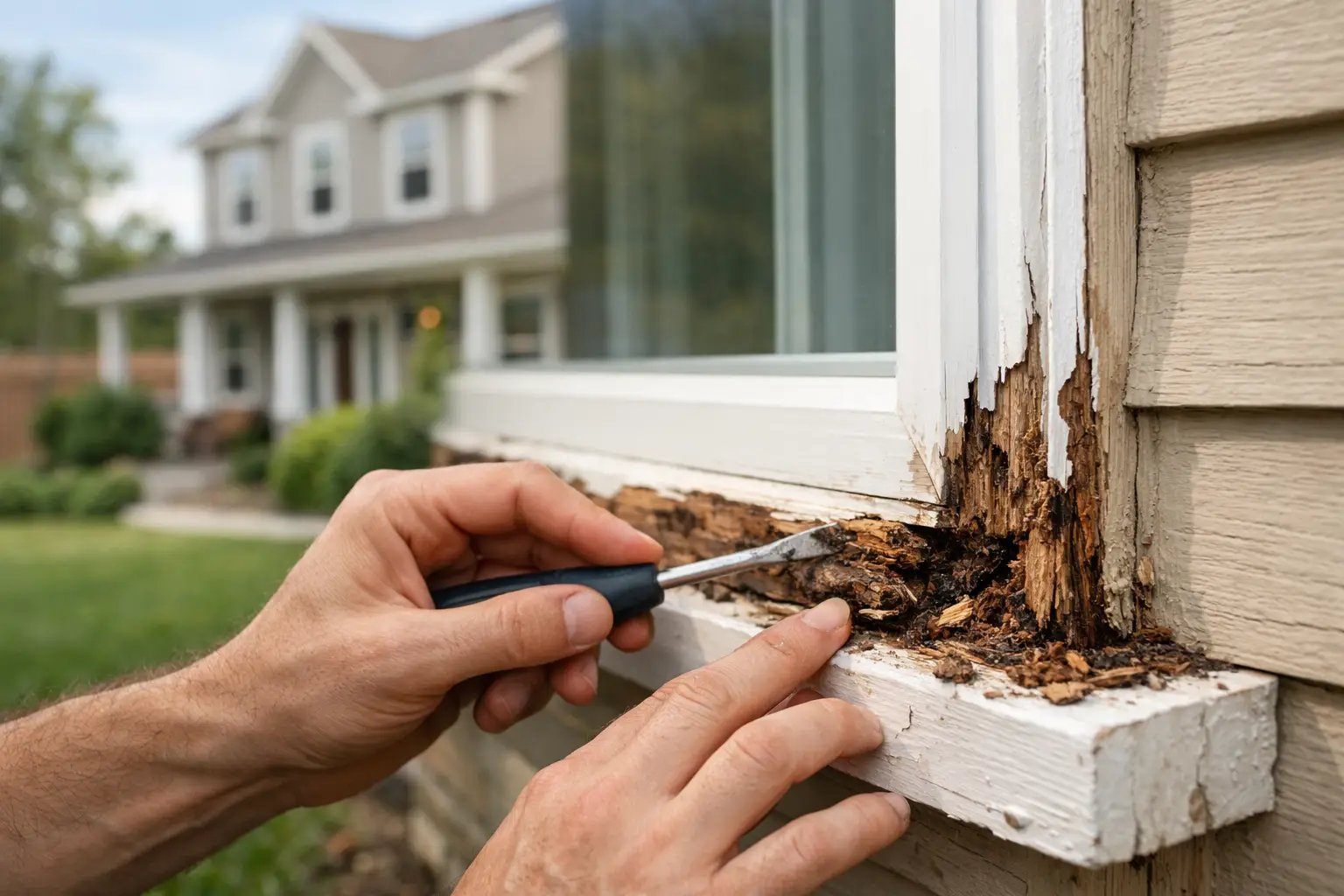
A soft spot at the bottom of an exterior door frame can look like a minor paint issue. In Southeast Texas, it may be evidence of a long-running moisture problem behind the siding, beneath the threshold, or at the wall framing. Recognizing the top signs of wood rot helps buyers and property owners understand when a cosmetic defect deserves a closer look.
Wood rot is not simply old wood. It is deterioration caused by fungi that need moisture, oxygen, and a suitable wood source. Our humid climate, heavy rainfall, storm exposure, plumbing leaks, and poor drainage can create favorable conditions around homes, outbuildings, decks, and commercial structures. The visible damage may be small, while the affected area behind a wall, under a floor, or at a roof edge is much more extensive.
Top Signs of Wood Rot to Watch For
Soft, spongy, or crumbling wood
Sound framing and trim should feel firm when carefully probed. Wood that gives under light pressure, flakes apart, crumbles at the surface, or can be penetrated easily with a screwdriver may be decayed. This is especially concerning at window and door trim, fascia boards, porch posts, deck components, sill plates, and areas near plumbing fixtures.
Not every soft material is rot. Some exterior trim products are engineered wood or composite materials that deteriorate differently, and old paint can create a misleading surface condition. Still, softness warrants investigation because the source of moisture matters as much as the damaged board itself.
Dark staining, discoloration, or unusual wood texture
Rot often changes the appearance of wood before it becomes visibly hollow. Look for darkened areas, black or brown staining, streaks below windows, raised grain, splitting, or a weathered appearance confined to one location. A water stain on an interior ceiling, baseboard, or wall may point to roof leakage, plumbing leakage, condensation, or an exterior drainage issue.
Outside, paint that repeatedly peels in the same area is not always a paint-preparation problem. Moisture moving through the wood or wall assembly can push paint loose from beneath. Fresh paint can conceal this condition temporarily, which is one reason a careful inspection looks beyond color and surface appearance.
Cracked, split, or distorted trim and siding
Wood absorbs and releases moisture as conditions change. Excessive or repeated wetting can cause trim, siding, fascia, and decking to swell, split, cup, or pull away from fasteners. These defects do not prove fungal decay on their own, but they create openings where more water can enter.
Pay close attention where different materials meet: roof-to-wall intersections, chimney trim, windows, doors, exterior light fixtures, ledger boards, and horizontal trim bands. Caulking failure, missing flashing, and open joints in these locations frequently allow water into concealed wood.
A musty odor or persistent dampness
A musty smell in a crawlspace, utility room, closet, attic, or beneath a sink can indicate elevated moisture and possible microbial growth. The odor does not identify rot by itself, but it is a useful clue when combined with stained materials, damaged wood, or high humidity.
In homes with crawlspaces, moisture conditions below the floor can affect joists, beams, subflooring, and sill areas. Standing water, inadequate drainage, missing or damaged vapor barriers, plumbing leaks, and poor ventilation can all contribute. A dry day does not rule out a recurring wet-condition problem, particularly after periods of heavy Texas rain.
Sagging floors, loose railings, or movement at structural components
A floor that feels uneven or bouncy may result from settlement, framing design, prior alteration, or deteriorated floor components. Where wood rot is present, joists, beams, subflooring, and support posts can lose strength. Doors that no longer latch, railings that move, or porch steps that feel unstable also deserve prompt attention.
Structural symptoms should not be diagnosed from appearance alone. Foundation movement is common in many Texas properties and can create cracks or operational issues that resemble moisture-related damage. A thorough evaluation separates what can be observed from what requires further review by a qualified contractor or structural professional.
Damaged fascia, soffits, and roof edges
Fascia boards and soffits are routinely exposed to rainwater, roof runoff, and wind-driven moisture. Damaged shingles, missing drip edge, clogged gutters, leaking gutters, or improperly installed flashing can keep these areas wet. Deteriorated fascia may be visible from the ground as peeling paint, dark edges, open joints, or sagging gutter sections.
The repair decision should not stop at replacing the damaged trim. If the water source remains, new wood may deteriorate quickly. The roof covering, drainage system, flashing details, and adjacent wall surfaces should be considered together.
Where Rot Is Often Hidden
The most costly decay is frequently concealed. Inspectors commonly look at accessible framing and finishes around bathrooms, kitchens, laundry areas, water heaters, exterior doors, windows, decks, roof penetrations, and crawlspaces. These are locations where water has a path into the building or where a leak can continue unnoticed.
Bathrooms can conceal deterioration at toilet flanges, tub surrounds, shower walls, and under-sink plumbing. A loose toilet, stained flooring, or swollen baseboard may be a sign of a leak at the supply line, drain connection, wax ring, or shower enclosure. In older homes, repair history and remodeling work can also conceal damaged subflooring behind new finishes.
Exterior wood close to soil is another common concern. Wood siding, trim, steps, lattice, or structural members that contact soil can wick moisture and invite decay. Wood-to-ground contact can also increase the risk of wood-destroying insect activity. Proper clearance, drainage, and maintenance are not cosmetic details. They affect how long the materials can perform.
Wood Rot, Termites, and Water Damage Are Not the Same
These conditions are often found together, but they require different conclusions. Rot is fungal decay driven by moisture. Termites and other wood-destroying insects damage wood through feeding or nesting activity. Water damage is a broader description that may include staining, swelling, corrosion, or finish damage without confirmed fungal decay.
Termites may be attracted to damp or decayed wood, but termites do not cause wood rot. Conversely, a rotted area may have no insect activity at all. A professional inspection should document the visible evidence and identify conditions conducive to each issue rather than assuming one problem explains every defect.
For buyers using VA, FHA, agricultural, or other financing programs, a separate wood-destroying insect report may be required. That report serves a different purpose than a general home inspection, even when moisture damage or decayed wood is observed during both evaluations.
What to Do When You Find Possible Rot
Avoid covering the area with caulk, paint, or a patch until the moisture source is understood. Covering damaged wood can make the defect less visible while allowing decay to continue behind the repair. If the area is structural, supports a deck or railing, is near electrical equipment, or affects a walking surface, limit use until it can be evaluated.
The next step depends on location and severity. A localized section of exterior trim may need replacement after a flashing or caulking defect is corrected. Deteriorated deck framing, subflooring, wall framing, or roof sheathing may require a more extensive repair plan. The key is to correct both the damaged material and the condition that kept it wet.
During a property inspection, accessible areas are evaluated for visible damage, moisture indicators, drainage concerns, and conditions that may contribute to deterioration. Tools such as moisture meters and infrared thermography can help identify areas that deserve closer review, but they do not see through every finish or confirm every concealed condition. Destructive testing is outside the scope of a standard inspection unless specifically arranged.
A detailed inspection report gives buyers a practical record of observed conditions before closing, while current owners can use the same information to prioritize repairs. Texas Country Inspection approaches visible decay as more than a trim issue: it is a reason to trace the path of water, assess the affected materials, and help protect the investment behind the wall.
