
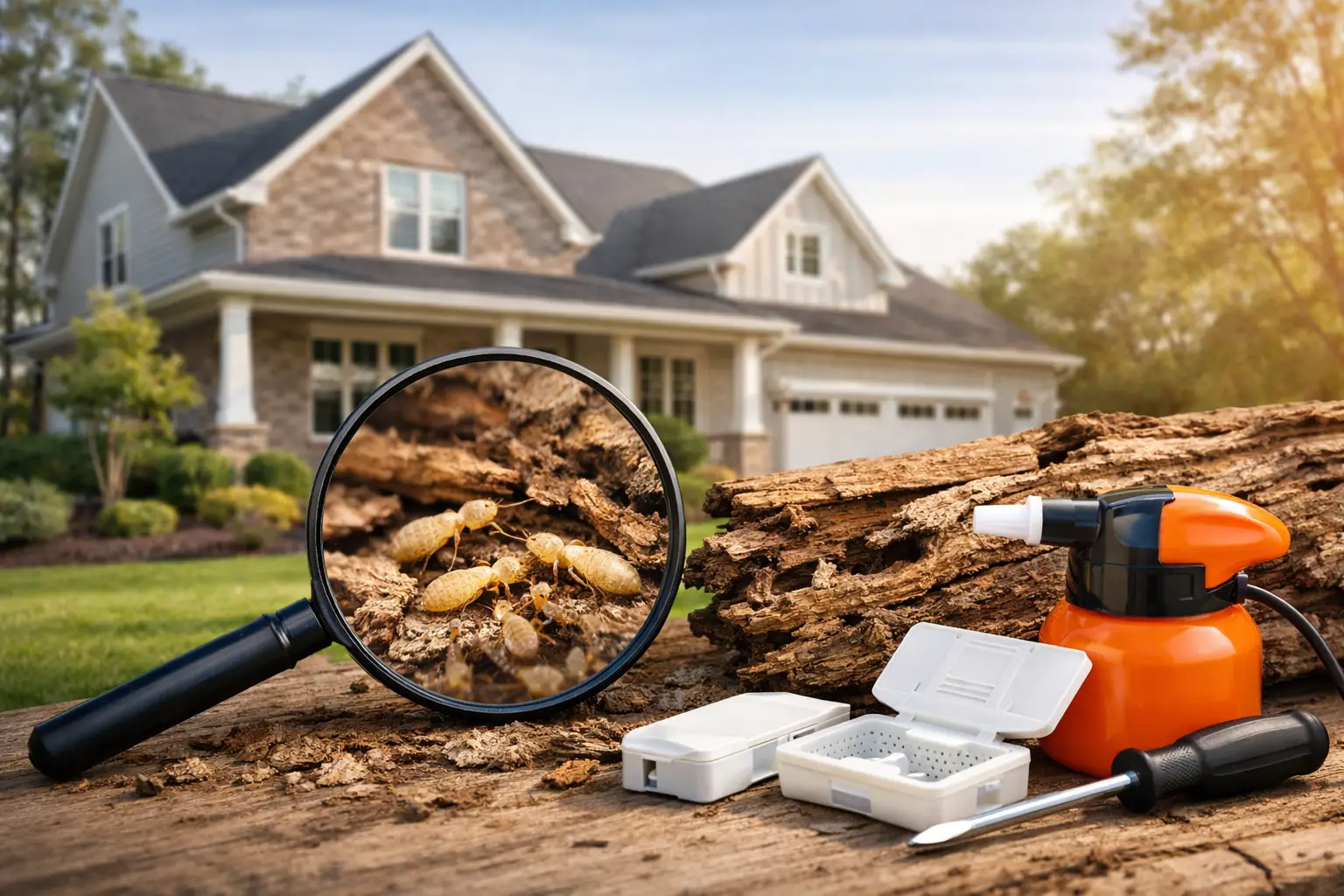
A termite problem in Southeast Texas rarely starts with an obvious hole in a wall. More often, it begins below the surface: a leaking exterior faucet, mulch piled too high against brick, a shaded crawlspace that stays damp, or a fence that provides a concealed route from soil to the house. This southeast texas termite prevention guide focuses on the conditions that inspectors routinely look for because correcting those conditions can reduce the opportunity for termites to reach structural wood.
Termite prevention is not a one-time chore. Our long warm season, frequent rainfall, high humidity, and wooded lots create favorable conditions for subterranean termites. In many homes, the best defense is a combination of moisture control, clear inspection access, routine maintenance, and prompt evaluation when evidence is found.
Why Southeast Texas Homes Need a Different Prevention Plan
Most termite concerns in this area involve subterranean termites. These insects live in the soil and need moisture to survive. They can travel through concealed pathways, including cracks at the foundation, plumbing penetrations, expansion joints, and wood-to-soil contact points. Their mud tubes help maintain a protected, moist travel route between the ground and a food source.
A brick exterior does not make a home termite-proof. Brick veneer has a cavity behind it, and termites can enter through weep holes, foundation gaps, or concealed areas where framing is close to grade. Slab homes, pier-and-beam homes, additions, porches, and detached structures each present different access points. A prevention plan should account for the construction rather than rely on a single rule of thumb.
Properties near timber, drainage ditches, bayous, or heavily landscaped areas may require closer attention, but a clean suburban lot is not immune. Termites are looking for moisture, shelter, and cellulose material. Cardboard, lumber scraps, old landscape timbers, tree stumps, and structural framing can all become part of the equation.
Start With Moisture Control Around the Foundation
Moisture is one of the most common contributing conditions found during a wood-destroying insect inspection. It does not cause termites by itself, but persistent dampness makes a structure and its surrounding soil more attractive to moisture-dependent insects.
Begin by watching where roof water goes during a hard rain. Gutters should be kept clear, downspouts should discharge away from the foundation, and extensions should not direct water into a flower bed that holds moisture against the house. On homes without gutters, valleys and roof edges can create concentrated washout areas that deserve attention.
The grade should generally move water away from the structure. Low areas along exterior walls, soil that has settled below patios, and landscaping borders that trap water can all keep perimeter soil wet longer than it should be. Correcting drainage may involve regrading, extending downspouts, repairing a broken drain line, or changing irrigation patterns. The right repair depends on the property, so avoid simply adding soil against siding or brick to hide a low spot.
Plumbing leaks matter as well. A slow leak at an exterior hose bib, condensate drain, water heater pan line, irrigation connection, or under-slab plumbing system may be easy to overlook. In a crawlspace, leaking supply lines and poorly insulated sweating pipes can create long-term damp conditions. If a moisture source is recurring, identify and repair the source rather than treating the visible symptom.
Keep HVAC Condensate From Becoming a Termite Condition
Air-conditioning systems in Southeast Texas generate substantial condensate during much of the year. The drain should terminate where water can disperse without saturating the foundation perimeter. A blocked primary drain, a frequently discharging secondary line, or a drain outlet located directly beside the slab deserves evaluation. Standing water near the condenser pad or foundation can also indicate a drainage concern.
Maintain a Clear Inspection Zone
Termite evidence is easier to find when exterior walls and foundation areas remain visible. This is not only helpful for an inspector. It gives a homeowner a better chance of noticing changes between professional inspections.
Keep soil, mulch, pine straw, and decorative rock below the bottom edge of siding and below brick weep holes. A commonly observed defect is landscaping that has been built up over time until it covers weep holes or reaches wood trim. This can conceal termite entry, allow moisture to remain trapped against the wall, and create a bridge over portions of the foundation that should remain visible.
Wood siding, door casings, porch posts, and structural trim should not contact soil. Where a wood member is close to grade, the concern may be direct termite access as well as decay from repeated wetting. Replacing damaged material without correcting the grade or drainage issue can lead to the same problem again.
Avoid storing firewood, cardboard boxes, lumber, or discarded building material against the house. Firewood should be stored off the ground and away from the structure when practical. A small stack near a detached shed is not automatically a termite infestation, but storing wood directly against the exterior wall removes a valuable inspection area and adds a potential food source near the home.
Inspect the Exterior Details That Create Hidden Entry Points
A useful southeast Texas termite prevention guide has to address more than the foundation. Termites take advantage of construction details that allow concealed access, especially where additions and exterior features meet the home.
Check deck framing, porch steps, attached planters, pergola posts, and fences that connect to the structure. Wood components should have appropriate separation from soil and should not conceal the foundation wall. Attached planters can be particularly troublesome when they hold damp soil against brick veneer or block weep holes for years.
Pay attention to areas around garages and service doors. Door trim that stays wet from splashback, damaged weatherstripping, or poor drainage can deteriorate and become more vulnerable. Wood rot and termite damage can look similar at first glance, and both can occur in the same area. A damaged trim board does not confirm termite activity, but it does warrant a closer look at moisture exposure and the adjacent framing.
Crawlspace homes need adequate access and ventilation as designed for the structure. Debris, fallen insulation, standing water, and inadequate clearance make termite evaluation more difficult. In some cases, excessive ventilation can introduce humid air while a closed or restricted crawlspace may retain moisture for a different reason. The proper approach depends on the building design and condition, not a universal recommendation to open or close every vent.
Know What Termite Evidence Can and Cannot Tell You
Mud tubes on foundation walls, piers, plumbing penetrations, or interior framing are a common sign of subterranean termite activity. However, a tube may be old, abandoned, or partially damaged. Breaking a tube open and finding no termites does not prove the structure is free of activity. Termites can use multiple concealed pathways, and active insects may not be present at the exact point checked.
Other warning signs include blistered or hollow-sounding wood, unexplained paint distortion, soft baseboards, damaged window or door trim, and swarmers or discarded wings indoors. Swarmers are reproductive termites looking to establish a new colony. They may emerge from the ground outside, but finding them inside can justify prompt professional evaluation.
Do not confuse flying termites with flying ants. Termites typically have straight antennae, a broad waist, and four wings of similar length. Ants generally have elbowed antennae, a pinched waist, and wings of unequal length. A clear photograph or collected specimen can help a qualified professional identify what you are seeing.
Use Professional Inspections as Part of Prevention
A professional WDI inspection is a visual assessment of accessible areas for evidence of termites and other wood-destroying insects, as well as conditions conducive to infestation. It is not a guarantee that no insects exist in concealed areas behind finished walls, beneath flooring, or inside inaccessible framing. That limitation is one reason routine maintenance and clear access remain valuable after an inspection.
For a real estate transaction, a WDI report may be requested by a lender, particularly for certain VA and rural loan situations. Buyers should understand that the report and the general home inspection answer different questions. The WDI evaluation focuses on wood-destroying insect evidence and related conditions, while the home inspection evaluates broader visible building systems and components.
Homeowners should also consider an inspection when they purchase a previously untreated property, complete major drainage or landscaping work, discover moisture damage, or notice possible termite evidence. Annual inspections are common in high-risk areas, although the appropriate interval can depend on prior treatment history, construction type, landscaping, and the property’s moisture conditions.
If evidence of active termites is found, treatment decisions should be made with a licensed pest-control professional. The method, warranty terms, treatment area, and preparation requirements should be explained clearly. Prevention work such as improving drainage and removing wood-to-soil contact remains worthwhile even when a treatment is performed, because chemical protection does not repair the conditions that made concealed entry easier.
A termite inspection is most valuable when it leads to practical corrections. Keep the perimeter visible, move water away from the structure, repair leaks promptly, and treat new signs of damage as a reason to investigate rather than wait. Those habits protect more than a real estate transaction – they help preserve the structure you rely on every day.
