
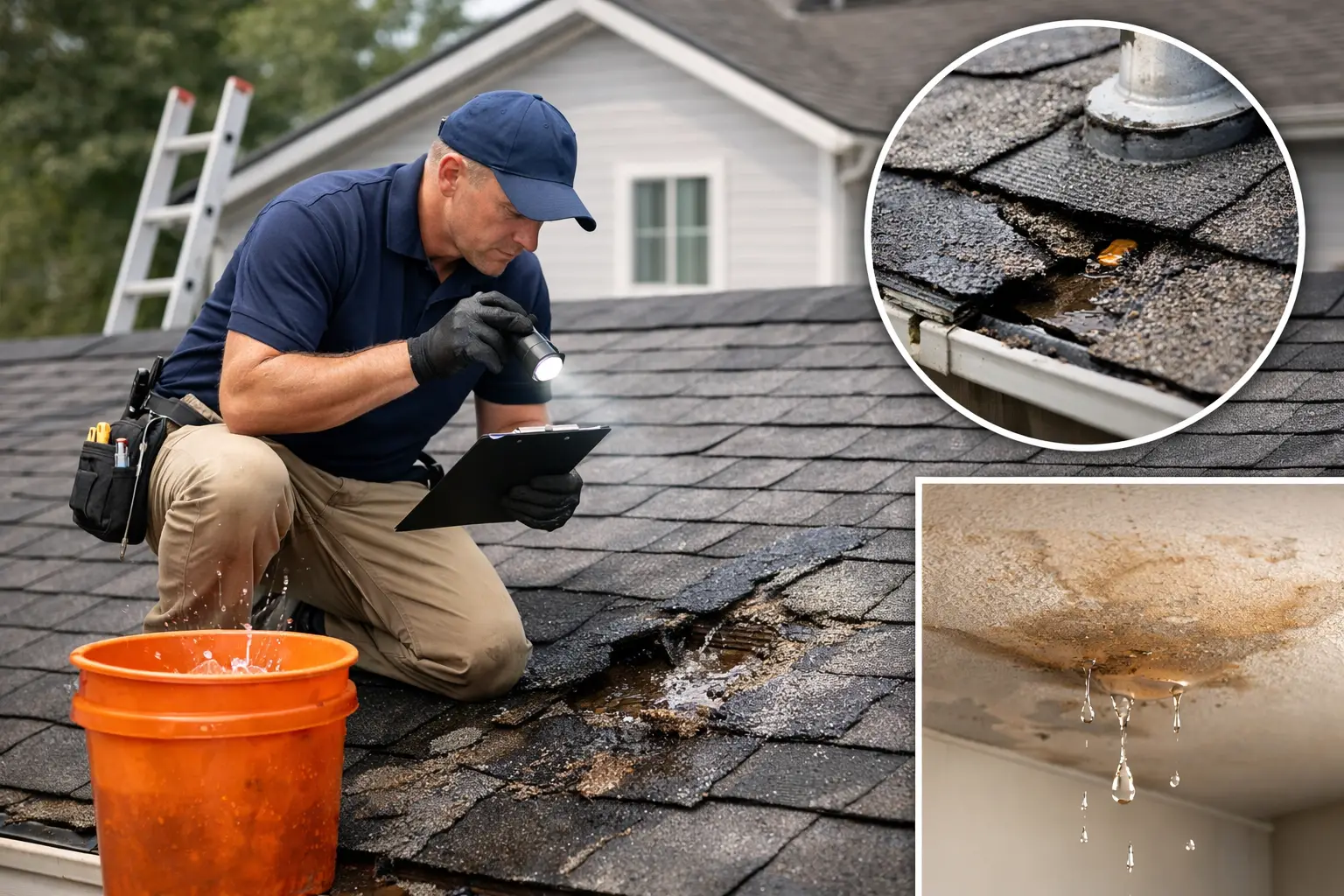
A water stain on a ceiling rarely starts at the ceiling. By the time it shows up indoors, several roof leak inspection signs may already be present above the drywall, around flashing, or inside the attic. For buyers and property owners in Southeast Texas, that matters because wind-driven rain, high humidity, aging sealants, and storm exposure can turn a small roofing defect into sheathing damage, insulation loss, and hidden microbial growth.
Why roof leak inspection signs matter before closing
A roof leak is not always a major roof failure. Sometimes the defect is limited to a pipe boot, a lifted shingle, or deteriorated sealant at a vent or flashing transition. But the cost and risk change quickly when moisture has been entering for months instead of days. What looks minor from the yard can involve wet decking, stained rafters, damaged soffits, or moisture migration into wall cavities.
That is one reason a roof evaluation should not stop at the surface covering alone. A careful inspection considers the roof coverings, penetrations, drainage patterns, attic conditions, and the interior areas below likely leak paths. In real estate transactions, this broader view helps buyers understand whether they are looking at a maintenance item, an active leak, or evidence of prior leakage that may still need confirmation.
Roof leak inspection signs seen on the roof surface
The most obvious clues are often found at the roof itself, but they are not always dramatic. A missing shingle gets attention right away. More often, the problem is subtler – a shingle tab lifted by wind, exposed fasteners, cracking around vent flashings, or sealant that has dried out and separated.
Damaged or displaced roofing materials
Asphalt shingles that are creased, torn, curled, or missing granules can allow water intrusion, especially when heavy rain is pushed sideways by coastal weather patterns. Metal roof systems can develop loose fasteners, failed washers, or separation at seams. On older roofs, patching in one area can also suggest a history of leakage, and those repairs should be checked for workmanship and remaining service life.
Not every worn roof is actively leaking. A roof can show age and still be performing adequately at the moment of inspection. On the other hand, localized damage on a relatively young roof can be enough to create a leak path. That is why condition matters more than age alone.
Flashing problems at penetrations and transitions
A large share of roof leaks start where the roof has been interrupted. Plumbing vents, furnace vents, chimneys, skylights, valleys, and wall-to-roof intersections are common trouble spots. Flashing should direct water away from the opening and back onto the roof covering. When it is bent, corroded, improperly lapped, or heavily reliant on caulk, the risk goes up.
In Southeast Texas inspections, deteriorated flashing around vent boots and wall transitions is a recurring concern. Sealant may look acceptable from the ground but fail on closer review. If the flashing design is poor to begin with, adding more sealant is often only a short-term measure.
Drainage issues that keep water in place
Roofs are built to shed water. When debris, sagging sections, or poor drainage slow that process, the roof covering stays wet longer and weak points are exposed. On low-slope sections, standing water can accelerate deterioration. At the eaves, backed-up gutters can force water under edge materials or into fascia and soffit components.
A clogged gutter is not automatically a roof leak, but it can contribute to one. The inspection question is whether water is being directed away as intended or allowed to collect near vulnerable edges and penetrations.
Roof leak inspection signs found in the attic
Some of the best evidence is inside the attic, where active and past moisture intrusion often leaves a record. This is also where the difference between a roof leak and a ventilation-related moisture issue needs careful interpretation.
Water staining on decking or framing
Darkened decking, drip marks, stained rafters, and rusted nail tips can indicate moisture entry from above. The location matters. Staining near a roof penetration often points toward flashing or boot failure. Staining downslope from a valley or roof-to-wall transition may suggest a defect higher up that is allowing water to travel.
Fresh leaks and older leaks can look very different. Recent intrusion may appear as dark, damp areas, while older staining may be dry and weathered. Dry staining does not mean the issue is resolved. It means the timing of the leak is unclear without additional context.
Wet or compressed insulation
Insulation that is matted down, discolored, or damp should not be ignored. Even when the roof decking stain seems minor, insulation can hold moisture longer and reduce energy performance. In humid climates, that can add another layer of concern because prolonged moisture supports deterioration and possible biological growth.
This is also where experience matters. Attic moisture can come from roof leakage, but it can also result from poor ventilation, disconnected ducts, or bath fans terminating in the attic. The signs may overlap, so the source has to be evaluated rather than assumed.
Daylight where it should not be visible
Visible daylight around penetrations, at ridge areas, or near transitions can indicate gaps that allow water entry under the right conditions. Not every visible gap is equally serious, and some vented assemblies are designed to allow light at certain locations. Still, unexpected openings deserve attention because wind-driven rain can exploit small defects.
Interior signs that support a roof leak finding
Interior evidence should be considered with caution because water can travel before it becomes visible. A stain in one room does not always mean the roof defect is directly overhead.
Ceiling stains, peeling paint, swollen trim, and bubbling drywall are common signs. Around windows and exterior walls, however, those same symptoms could relate to wall penetration, failed sealant, or flashing defects not strictly limited to the roof. In upper-floor rooms, the attic and roof areas above should be considered first, but a thorough inspection keeps other pathways in play.
Odors can also be revealing. A musty smell in an upper room or attic may point to chronic moisture, even when staining is limited. That does not confirm a current roof leak by itself, but it supports the need for closer evaluation.
When roof leak inspection signs are easy to miss
The hardest leaks to identify are often intermittent. They may occur only during wind-driven rain, only after prolonged storms, or only when water backs up in one area. A roof can appear dry on inspection day and still have a history of leakage.
Recent repairs can complicate the picture as well. New sealant, replaced shingles, patched decking, or fresh paint on a ceiling may be appropriate repairs, or they may be attempts to mask an unresolved condition. Neither should be assumed without looking at workmanship, adjacent materials, and any remaining signs in the attic or interior.
This comes up often after severe weather. In areas from Beaumont to Galveston, a roof may take storm-related damage that is not obvious from the street. One displaced component or one failed flashing joint can be enough to create interior damage later.
What a thorough inspector is actually looking for
A useful roof leak inspection is not just a hunt for wet spots. It is an evaluation of how the roofing system is performing and where it is vulnerable. That includes the condition of coverings, penetrations, flashing details, drainage, visible sheathing, attic insulation, and interior finishes in areas affected by moisture.
Where conditions allow, infrared thermography may help identify temperature differences consistent with moisture intrusion, though it is not a stand-alone confirmation in every case. It works best as part of a broader inspection process, not as a shortcut. The same is true for prior repair evidence. Good inspectors document what is visible, explain likely implications, and note when specialist roofing repair or further evaluation is warranted.
For buyers, that documentation can shape repair negotiations and help separate cosmetic concerns from meaningful risk. For current owners, it can help address a manageable defect before it becomes structural or widespread.
When to act on roof leak inspection signs
If there are multiple indicators – roof damage, attic staining, wet insulation, and interior finish defects – it is reasonable to treat the condition as more than routine aging. Even one isolated sign may justify action if it is tied to an active penetration point or visible moisture entry.
The practical question is not whether every stain means replacement. Often it does not. The better question is whether the defect is active, whether hidden damage is likely, and whether repair is localized or part of a larger roofing issue. A careful inspection should help answer that before you commit to a purchase or postpone repairs through another storm season.
When moisture is involved, waiting rarely makes the diagnosis easier. It usually just gives water more time to spread into places that cost more to fix.
