
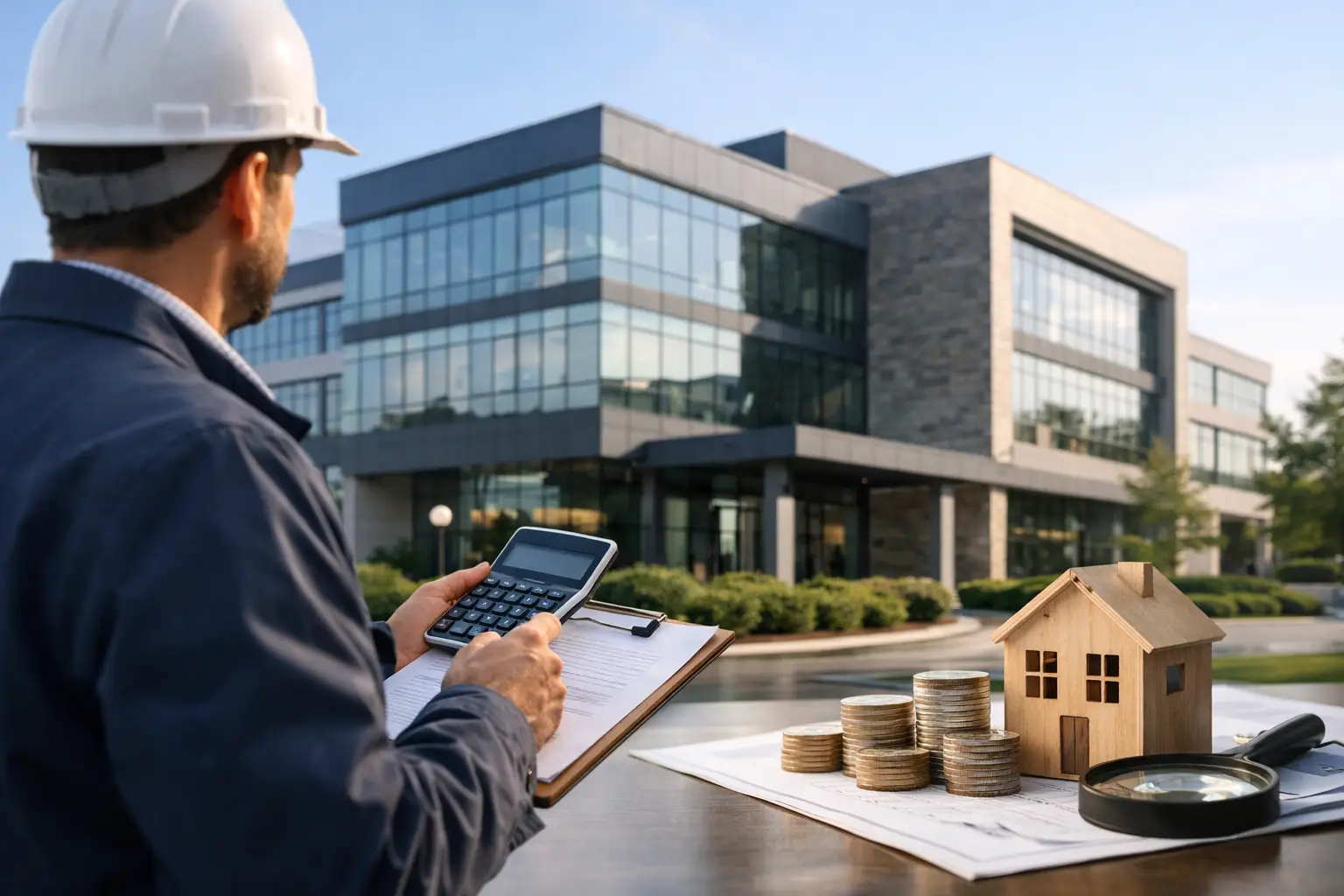
A low inspection quote can look good right up until the report misses a failing roof section, active moisture intrusion, or signs of movement in a slab-on-grade building. That is why commercial property inspection cost should be judged against scope, experience, and risk exposure – not just the number on the estimate.
Commercial buildings are not priced for inspection the way most homes are. A small office condo, a metal warehouse, and a multi-tenant retail strip center may all need very different levels of review. The size of the structure matters, but so do the age of the building, the number of systems present, roof access, occupancy conditions, and whether specialty concerns such as wood-destroying insects, drainage problems, or foundation movement need closer evaluation.
What drives commercial property inspection cost
The biggest factor is usually the time required on site and the complexity of the building. A straightforward one-story office with accessible mechanical systems takes less time to inspect than a mixed-use property with multiple electrical panels, rooftop units, patched roof coverings, and deferred maintenance in several tenant spaces.
Square footage affects price, but it is not the whole story. Two buildings with the same footprint can have very different inspection demands. One may have clear access, newer systems, and good maintenance records. The other may have locked rooms, older HVAC equipment, signs of prior leaks, questionable repairs, and limited visibility at key components. That second property typically requires more field time, more documentation, and more judgment.
Age is another cost driver because older commercial properties tend to present layered issues. An inspector may be sorting through additions, system upgrades, older materials, settlement patterns, moisture staining, or signs that past repairs addressed symptoms rather than root causes. In Southeast Texas, older properties can also show the effects of prolonged humidity, heavy rain, expansive soil movement, and long-term wood-destroying insect exposure.
Roof design also changes the equation. Flat and low-slope roofs common in commercial buildings often need careful attention because ponding, patching, membrane failure, flashing defects, and drainage limitations may not be obvious from the ground. If the roof is difficult to access or if multiple roof sections exist, inspection time increases.
Mechanical and electrical complexity matters as well. A small retail suite with one package unit is very different from a larger property with multiple rooftop units, split systems, extensive duct runs, several subpanels, service equipment upgrades, and signs of amateur repairs. More systems mean more opportunities for defects and more time spent documenting them.
Typical price ranges and why they vary
There is no single universal fee schedule for commercial work, but many smaller commercial inspections start in the high hundreds and move into the low thousands quickly as size and complexity increase. Larger or more involved properties can cost several thousand dollars, especially when multiple structures, tenant spaces, or specialty services are involved.
That range can frustrate buyers who want a simple answer, but commercial work is not a one-price-fits-all service. A quote should reflect the actual property rather than a generic rate. If a company gives a very low number without asking about square footage, occupancy type, age, roof style, number of HVAC systems, or known concerns, that is usually a sign the scope may be thin.
For buyers in Southeast Texas, regional conditions should also influence value. Moisture intrusion, drainage concerns, differential foundation movement, termite history, and weather-related wear can all affect a building’s serviceability and repair budget. A thorough inspection that recognizes those local patterns is often worth more than a cheaper report built around a basic checklist.
What should be included in the cost
A commercial inspection fee should cover more than time walking the property. It should include a defined scope, on-site observation of major systems, photo documentation, written reporting, and a clear explanation of material issues. The report should help a buyer, owner, or lender understand condition, not just confirm that the inspector visited the site.
In most cases, the inspection includes the visible and readily accessible portions of structural components, roofing, exterior elements, interior areas, electrical systems, plumbing systems, and heating and cooling equipment. Common areas, representative tenant areas, and service spaces may all be part of the review depending on access and the agreement.
Where buyers get into trouble is assuming every concern is automatically included. Specialty items may be separate. Termite and wood-destroying insect reports, septic evaluations, pool inspections, water well testing coordination, infrared scanning, or foundation movement measurements often require added time, equipment, training, or licensing. Those services can raise the total cost, but they may also uncover issues that a general visual inspection alone will not fully define.
When a higher commercial property inspection cost makes sense
A higher fee is often justified when the building presents real risk. If the property has visible cracking, uneven floors, leak history, patched ceilings, aged rooftop equipment, poor drainage, or evidence of insect activity, a bargain inspection may become expensive later.
The same is true when the transaction itself carries more pressure. Investors, owner-users, and lenders may all be relying on the report to make decisions about repairs, reserves, pricing, or whether to proceed at all. In that setting, the quality of the inspection matters more than shaving a small amount off the due diligence budget.
For example, if an inspector has the ability to use infrared thermography where appropriate, that can help identify temperature anomalies linked to moisture intrusion, insulation gaps, or overloaded electrical components. If foundation movement is a concern, more advanced measurement methods may provide better context than casual visual observation alone. These are not bells and whistles for the sake of appearance. They can be useful tools when conditions warrant them.
How to compare quotes without missing the real issue
The best way to compare pricing is to compare scope first. Ask what systems will be inspected, how long the inspector expects to be on site, whether roof access is included, how many units or spaces are covered, and what exclusions apply. Then ask how findings are documented and whether the report is designed to support negotiation and repair planning.
It also helps to ask who is performing the inspection. Commercial buildings require judgment developed in the field. An inspector should be comfortable identifying not only obvious defects but also patterns that suggest broader trouble, such as repeated patching at a parapet wall, moisture staining around roof penetrations, improper drainage at the perimeter, or electrical modifications that deserve further review by a licensed contractor.
Turnaround time matters, but speed should not come at the cost of accuracy. A rushed report with weak documentation may not help much when you are trying to justify repairs or understand future capital needs. A careful report that clearly shows conditions, limitations, and recommendations usually provides better value.
Commercial property inspection cost in Southeast Texas
Local conditions affect inspection value in practical ways. In Southeast Texas, buildings take a beating from heat, humidity, wind-driven rain, and soil movement. That means inspectors need to pay close attention to moisture pathways, sealant failure, exterior cladding gaps, grading and drainage, roof performance, and signs of shifting that may affect walls, openings, and slab behavior.
Wood-destroying insect risk is another local concern that should not be treated casually. In some transactions, buyers need a separate report. In others, they simply need a clear understanding of whether conditions conducive to infestation are present. Either way, regional experience matters because insect damage and moisture problems often overlap.
This is where a thorough, field-driven approach makes a difference. A company such as Texas Country Inspection, LLC understands that a commercial report in this region needs to do more than note surface defects. It should help clients see where water is getting in, where movement may be occurring, and where hidden costs are likely to develop after closing.
The cheapest inspection can be the most expensive decision
Commercial buyers usually do not regret paying for a careful inspection. They regret finding out too late that a roof was near the end of its service life, several HVAC units were operating beyond normal expectancy, drainage was directing water toward the building, or evidence of past repairs pointed to a larger unresolved issue.
Inspection cost should be viewed as part of due diligence, not an administrative fee. If the report gives you leverage in negotiations, helps you budget accurately, or prevents you from taking on a property with hidden defects, the service has done its job.
If you are comparing quotes, focus on who will inspect the property, what they will inspect, and how well the final report will support your decision. The right inspection does not just tell you what is wrong with a building. It helps you understand what that building may demand from you next.
