
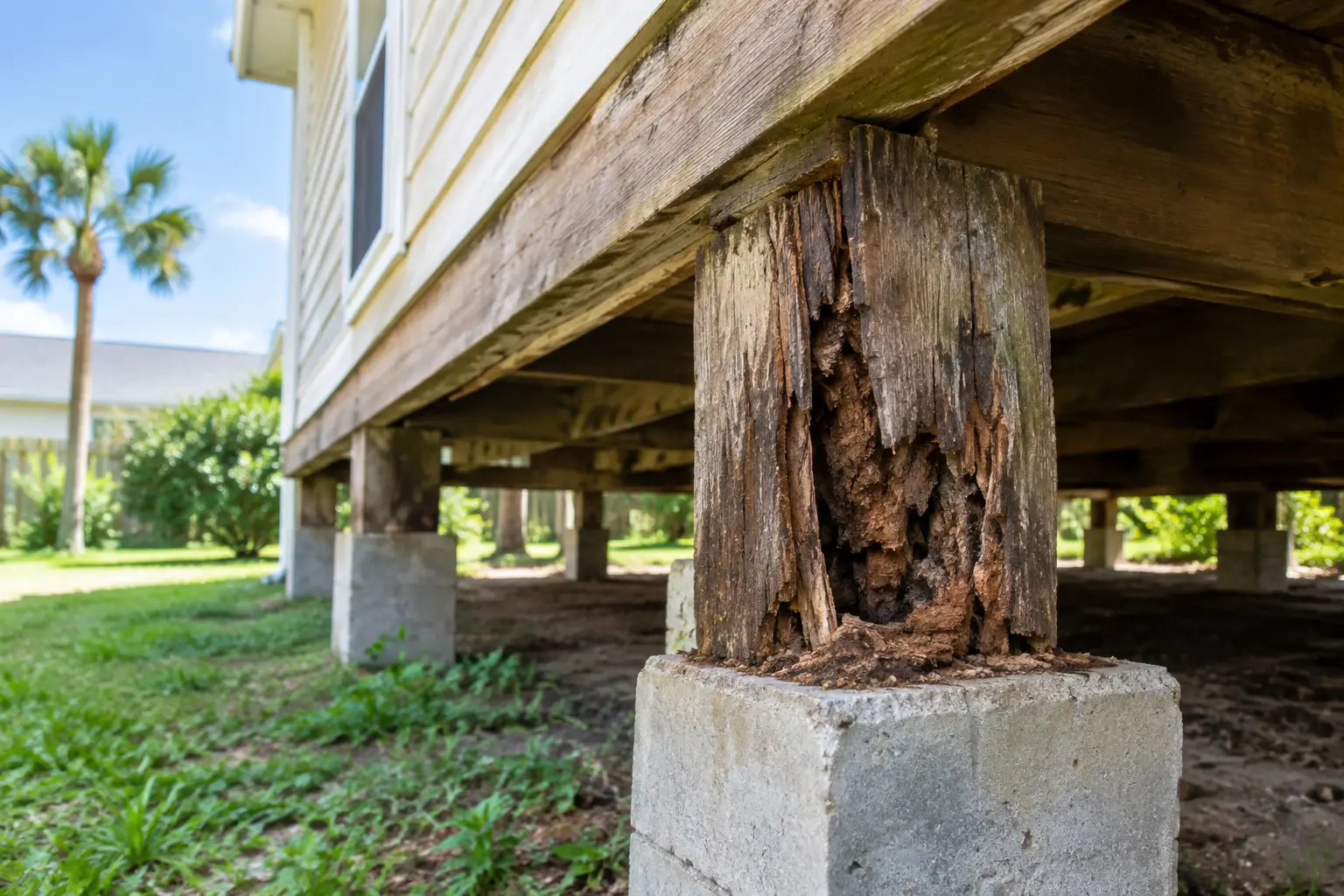
A soft floor near the center of an older home is not always a flooring problem. In many crawlspace foundations, it is an early clue to why pier beams rot: wood has stayed wet long enough for fungi, insects, or both to break down the framing that carries the house. In Southeast Texas, where humid air, heavy rain, high groundwater, and termite activity are routine concerns, that process can move faster than many owners expect.
Pier-and-beam homes can perform well for generations when moisture is controlled and the crawlspace remains accessible for maintenance. Problems begin when water is allowed to collect below the house, moisture vapor is trapped, or damaged wood is left in place. A careful inspection separates cosmetic age from active deterioration and identifies the conditions that caused it.
Why Pier Beams Rot: Moisture Is the Starting Point
Wood decay requires moisture, oxygen, and temperatures that support fungal growth. A crawlspace naturally has oxygen and, in Texas, usually has plenty of warmth. The factor an owner can most often manage is moisture.
A beam does not have to sit in standing water to decay. Repeated wetting from a plumbing leak, rainwater entering through poor grading, condensation on cold pipes, or moisture wicking up from wet soil can keep the wood moisture content high enough for decay fungi to become active. Over time, a beam may darken, soften, crack along the grain, or lose material when probed.
This is why repairing only the visibly damaged wood is rarely a complete repair. If the moisture source remains, replacement lumber can be exposed to the same conditions. The structural repair and the moisture correction need to be planned together.
Drainage problems below and around the house
Poor exterior drainage is one of the most common contributors to crawlspace moisture. Gutters that discharge near the foundation, downspouts without extensions, negative grading, low areas beside the home, and blocked swales can direct thousands of gallons of rainwater toward the crawlspace over a season.
In the Golden Triangle and other low-lying Southeast Texas areas, the site itself may hold water after significant rain. That does not automatically mean the foundation is failing, but it does mean drainage details deserve closer attention. Standing water, muddy soil, water staining on piers, or damp earth long after rainfall are conditions that should not be dismissed.
Plumbing leaks that remain hidden
Small supply-line leaks, drain leaks, failed shower pans, leaking water heaters, and condensation from uninsulated lines can create a very localized rot pattern. An inspector may find deterioration concentrated beneath a bathroom, kitchen, laundry area, or HVAC equipment even when the rest of the crawlspace appears dry.
A slow leak is often more damaging than a sudden one because it can continue unnoticed for months. In addition to decayed beams, inspectors may find wet insulation, rusted metal connectors, fungal growth, and damaged subflooring. The repair may require a plumber, then a foundation contractor or qualified carpenter, depending on the affected structural components.
Ventilation, Encapsulation, and the Texas Humidity Question
Crawlspace ventilation is not as simple as adding more vents. Traditional vented crawlspaces rely on outside air movement to reduce moisture, but in hot, humid weather, outside air can bring substantial water vapor into a cooler crawlspace. When that air cools, it can raise relative humidity and contribute to condensation.
On the other hand, closing vents without a complete moisture-control strategy can trap moisture already present below the house. The right approach depends on the home, the site, insulation arrangement, drainage conditions, mechanical equipment, and whether the crawlspace is being converted to a controlled or encapsulated space.
A properly designed closed crawlspace typically includes a sealed ground vapor barrier, attention to wall and penetration sealing, drainage management, and humidity control. Simply laying a thin sheet of plastic over wet soil or covering vents is not the same thing. Improvised changes can conceal conditions from view while allowing decay to continue.
Termites and Rot Often Appear Together
Termites do not cause wood rot, and wood-decay fungi do not require termites. Still, the two issues commonly occur in the same crawlspace because both favor moisture-prone conditions and accessible wood.
Subterranean termites need moisture and travel through soil or sheltered pathways. Damp beams, untreated wood close to soil, leaking plumbing, and debris in the crawlspace can increase the risk of termite activity. Termite damage can leave wood hollowed along the grain, while fungal decay may make it soft, stringy, cubically cracked, or brittle. In real conditions, the damage can overlap enough that a trained inspection is needed to determine what is present and what remediation is warranted.
For buyers, this distinction matters. A wood-destroying insect report may identify evidence of termite activity or conditions conducive to infestation, while a home inspection evaluates accessible structural concerns. Both can be valuable when a pier-and-beam home shows moisture or wood deterioration.
Warning Signs Owners Can See From Above
Many beam problems begin below the floor, but the house may provide clues. Floors that slope, bounce, or feel soft can indicate deterioration, inadequate support, foundation movement, or a combination of these issues. Doors that stick, new drywall cracks, gaps at trim, and uneven floors deserve evaluation, especially when they appear with plumbing leaks or known drainage problems.
These symptoms are not proof that beams are rotten. Seasonal movement in expansive soils, settlement at individual piers, undersized or altered framing, and prior repairs can produce similar symptoms. That is why an inspection should focus on the entire load path: soil and drainage, piers, beams, joists, subflooring, supports, connections, and the observable effects inside the structure.
What a Thorough Crawlspace Inspection Should Evaluate
A meaningful evaluation goes beyond looking through the access opening with a flashlight. Where accessible and safe, the inspector should observe the condition of beams and joists, look for moisture staining and active leaks, identify earth-to-wood contact, assess visible pier support conditions, and document fungal growth or wood-destroying insect evidence.
Attention should also be given to prior repairs. Supplemental posts, stacked blocks, shims, temporary supports, and patched beam sections are not automatically defective, but their material, installation, support bearing, and apparent function matter. A repair that transfers a load to loose soil or an improperly sized pad may create a new problem while masking the original one.
Texas Country Inspection uses detailed field observations to help clients understand which findings are visible at the time of inspection and when further evaluation is appropriate. If extensive damage, active movement, or uncertain load support is observed, a structural engineer or qualified foundation specialist may be needed to design the repair. That added step can protect a buyer from accepting a vague recommendation or a repair scope that addresses only the symptom.
Correcting the Cause Before Replacing the Beam
The right repair sequence usually starts with stopping water. Repair active plumbing leaks, correct roof and gutter discharge, improve drainage away from the home, and address standing water or persistently wet soil. If termite activity is confirmed, treatment and removal of conducive conditions should be coordinated before enclosed structural areas are rebuilt.
After moisture control is addressed, damaged structural members can be evaluated for repair or replacement. The scope depends on how much sound wood remains, the loads carried by the beam, the condition of nearby joists and subflooring, and whether the supporting piers are stable. Minor localized decay is different from a beam that has lost significant bearing capacity over several feet.
Avoid treating soft wood with a surface coating as a structural repair. Also be cautious about lifting a house or installing new supports without understanding why the original system moved or deteriorated. Raising one area can affect doors, finishes, plumbing connections, and other parts of the structure. Good repairs are deliberate, documented, and tied to the actual cause of damage.
For Buyers, Timing Matters
A pier-and-beam house with rotten beams is not automatically a deal breaker. Some homes have localized, repairable damage with a clear moisture source. Others have widespread deterioration, chronic water entry, active termites, and floor movement that point to a much larger project.
Before closing, obtain enough information to understand the repair scope, likely contributors, and whether further specialist review is needed. Ask for accessible areas to be documented clearly, and do not let a fresh coat of paint, new flooring, or a recently installed vapor barrier substitute for a careful look below the structure. The most useful next step is the one that identifies where the water is coming from and prevents the next beam from becoming the next repair.
