
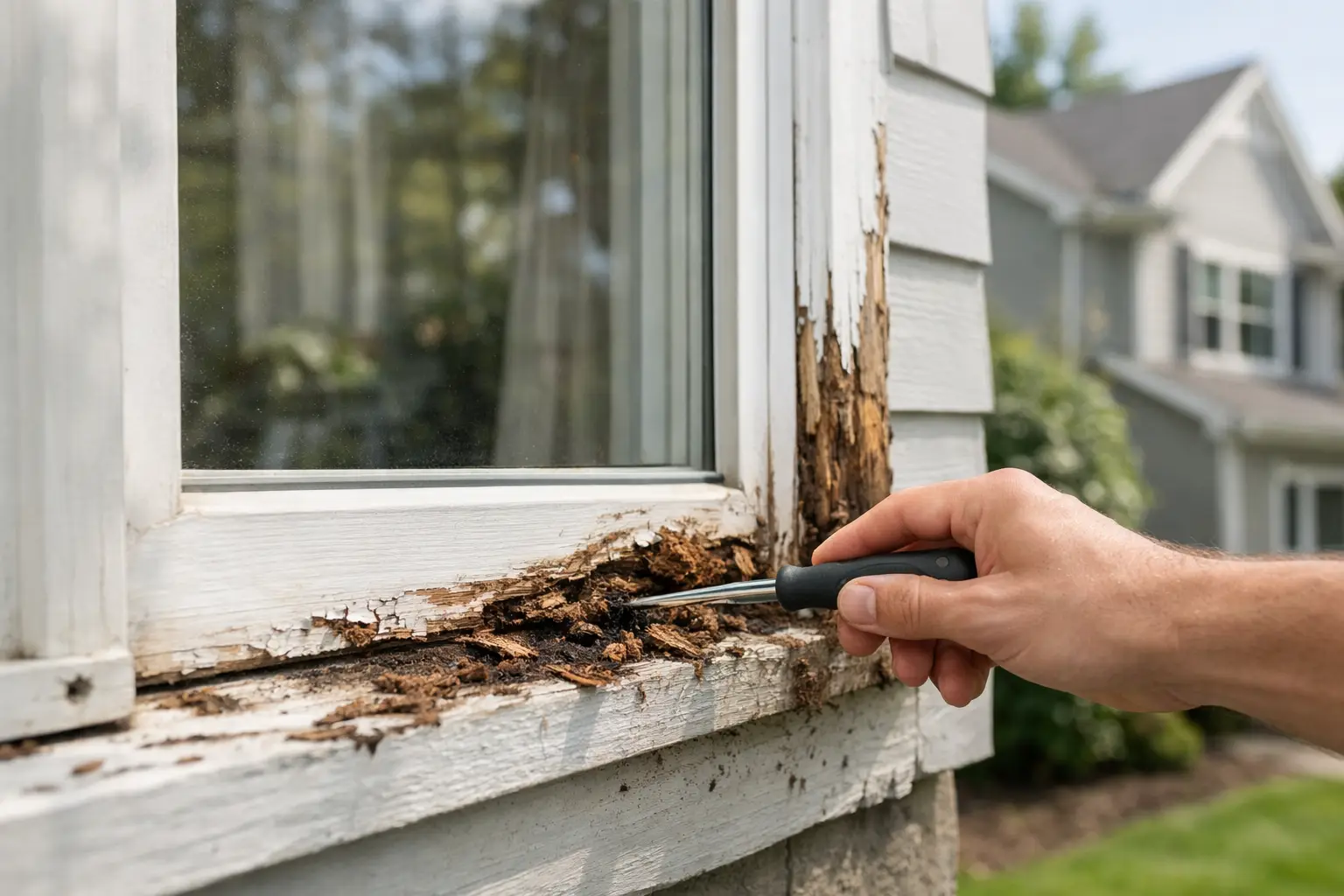
A soft window sill is rarely just a cosmetic issue. Wood rot around windows usually means moisture has been reaching framing, trim, or siding long enough for wood-decay fungi to become active. In Southeast Texas, where heavy rain, wind-driven storms, high humidity, and intense sun work on exterior materials year-round, a small failed seal can become a much larger repair if it is ignored.
For a buyer, the concern is not simply whether a piece of trim needs paint. The real question is where the water is coming from, how far it has traveled, and whether concealed framing or wood-destroying insects may also be involved. A thorough inspection helps separate a localized maintenance item from a condition that warrants further evaluation before closing.
Why Wood Rot Around Windows Develops
Wood rot requires a moisture source and wood that stays wet long enough to support fungal decay. Window openings are especially vulnerable because they interrupt the exterior wall system. Siding, flashing, sealant, trim, weather-resistive barriers, and the window itself must work together to move water away from the opening.
When any part of that system fails, water can enter behind the visible trim. Common sources include deteriorated caulk at the window perimeter, failed glazing or weatherstripping, missing or improperly installed flashing, cracks in stucco or exterior cladding, roof runoff striking the wall, and gutters that overflow near windows. On older homes, repeated repainting can conceal deteriorated wood for years.
Moisture does not always enter from outside. Condensation can also wet window components, particularly when older single-pane windows are used in air-conditioned homes. A leaking plumbing line within a wall is less common, but it should remain on the list when the damage pattern does not match exterior exposure.
What an Inspector Looks for at Window Openings
Visible deterioration is only one part of the evaluation. During a property inspection, window conditions are assessed in the context of the exterior wall, roof drainage, and interior finishes. The goal is to document observable evidence and identify conditions that may need repair, monitoring, or further investigation.
Exterior signs of moisture damage
At the exterior, an inspector may find cracked or separated caulk, peeling paint, swollen trim, open joints at mitered corners, staining below the sill, or siding that is soft when carefully probed. Wood can look intact at first and still be compromised beneath a thick paint layer. A screwdriver or probe may sink into decayed wood with little pressure, which is a clear indication that the material has lost structural integrity.
The lowest corners of a window are frequent problem areas because water naturally collects there. Windows located below roof valleys, near clogged gutters, on highly exposed elevations, or behind landscaping that holds moisture against the wall deserve added attention.
Interior clues that may be connected
Inside the home, related evidence can include stained drywall, bubbling paint, softened baseboards, a musty odor, swollen flooring near an exterior wall, or a window that no longer operates smoothly. These findings do not prove the exact path of water intrusion by themselves. They do, however, help establish whether the problem may extend beyond exterior trim.
An infrared camera can sometimes identify temperature differences consistent with elevated moisture or missing insulation around a window opening. Thermography is a useful screening tool, not an automatic diagnosis. Readings are affected by weather, sun exposure, HVAC operation, and building materials, so any suspicious pattern should be considered alongside visible conditions and, when appropriate, moisture-meter testing or evaluation by a qualified repair professional.
Rot versus termite damage
Wood rot and termite damage can look similar from a distance, but they are not the same problem. Rot is caused by moisture and fungi. Termites consume or damage wood, often leaving thin painted surfaces that appear solid until probed. Both conditions can occur in the same area because termites are attracted to favorable moisture conditions.
In the Golden Triangle and other humid areas of Southeast Texas, deteriorated window trim should prompt a careful look for termite shelter tubes, insect damage, conducive moisture conditions, and adjacent wood-to-soil contact. If there is evidence of wood-destroying insects or a transaction requires it, a separate wood-destroying insect report may be appropriate. A home inspection can identify visible concerns, but it does not replace repairs by a qualified contractor or treatment recommendations from a licensed pest-control professional.
How Serious Is the Damage?
The repair scope depends on the source, location, and extent of deterioration. A small section of exterior trim with failed caulk may be a straightforward repair if the surrounding materials are dry and sound. The contractor can remove the damaged trim, correct the water-management issue, install properly detailed replacement material, and seal or finish it as needed.
The concern increases when decay reaches the window sill, sheathing, wall framing, or structural header. In those cases, simply covering the area with new trim may hide active damage without fixing it. The window may need to be removed so the rough opening, flashing, sheathing, and framing can be evaluated and repaired correctly.
Be particularly cautious when multiple windows show similar deterioration. Repeated defects on one elevation can indicate a broader flashing, siding, gutter, or installation problem. Damage at windows throughout the house can also suggest that deferred exterior maintenance has allowed several moisture pathways to develop over time.
For commercial properties, the same principle applies, though the assemblies may be more complex. Storefront systems, masonry veneer, EIFS, stucco, and multi-story drainage details can conceal water movement well beyond the visible stain or deteriorated trim. The visible defect should be treated as an investigation point, not assumed to be the full extent of the issue.
What Buyers Should Do Before Closing
A buyer should avoid accepting vague language such as “minor wood rot” without understanding the location and the likely repair approach. Ask whether the damage appears limited to trim or whether the inspector observed signs that concealed components may be affected. Review the condition in person during the option period if possible, especially when windows are near roof runoff, decks, masonry transitions, or areas with known drainage issues.
If the damage is more than superficial, obtain an evaluation from a qualified window contractor, carpenter, siding contractor, or building-envelope specialist. The right professional depends on the wall type and suspected cause. Request that the scope address both the deteriorated wood and the water entry point. Replacing wood without correcting failed flashing, drainage, or sealant often leads to the same damage again.
A repair estimate should distinguish between a localized trim repair and exploratory work that may reveal additional concealed damage. That distinction matters during negotiations. It is reasonable for a buyer to seek documentation of completed repairs, including photographs of opened wall areas when framing or sheathing was involved.
Maintenance That Helps Prevent Repeat Damage
Most window-related rot starts as a maintenance issue before it becomes a reconstruction project. Homeowners should inspect exterior caulk joints, painted wood trim, sill edges, and siding transitions at least once each year and after major storms. Keep gutters clean, direct downspouts away from walls, and trim vegetation back so exterior surfaces can dry.
Caulk should not be treated as the only defense against water intrusion. Sealant has a service life and will eventually crack or separate. Sound flashing and proper drainage are more dependable than repeatedly applying caulk over a failed window detail. Paint also protects wood only when the substrate is dry, sound, and properly prepared.
For homes in Beaumont, Lumberton, Orange, and nearby communities, periodic exterior checks are especially worthwhile after prolonged rain events or tropical weather. Early attention to a loose piece of trim or a failed sill joint is far less expensive than discovering decayed framing during a window replacement.
A careful inspection report should give you more than a note about damaged wood. It should help you understand the evidence, the possible moisture path, and the next decision needed to protect the property. When a window shows rot, address the cause as carefully as the visible damage.
