
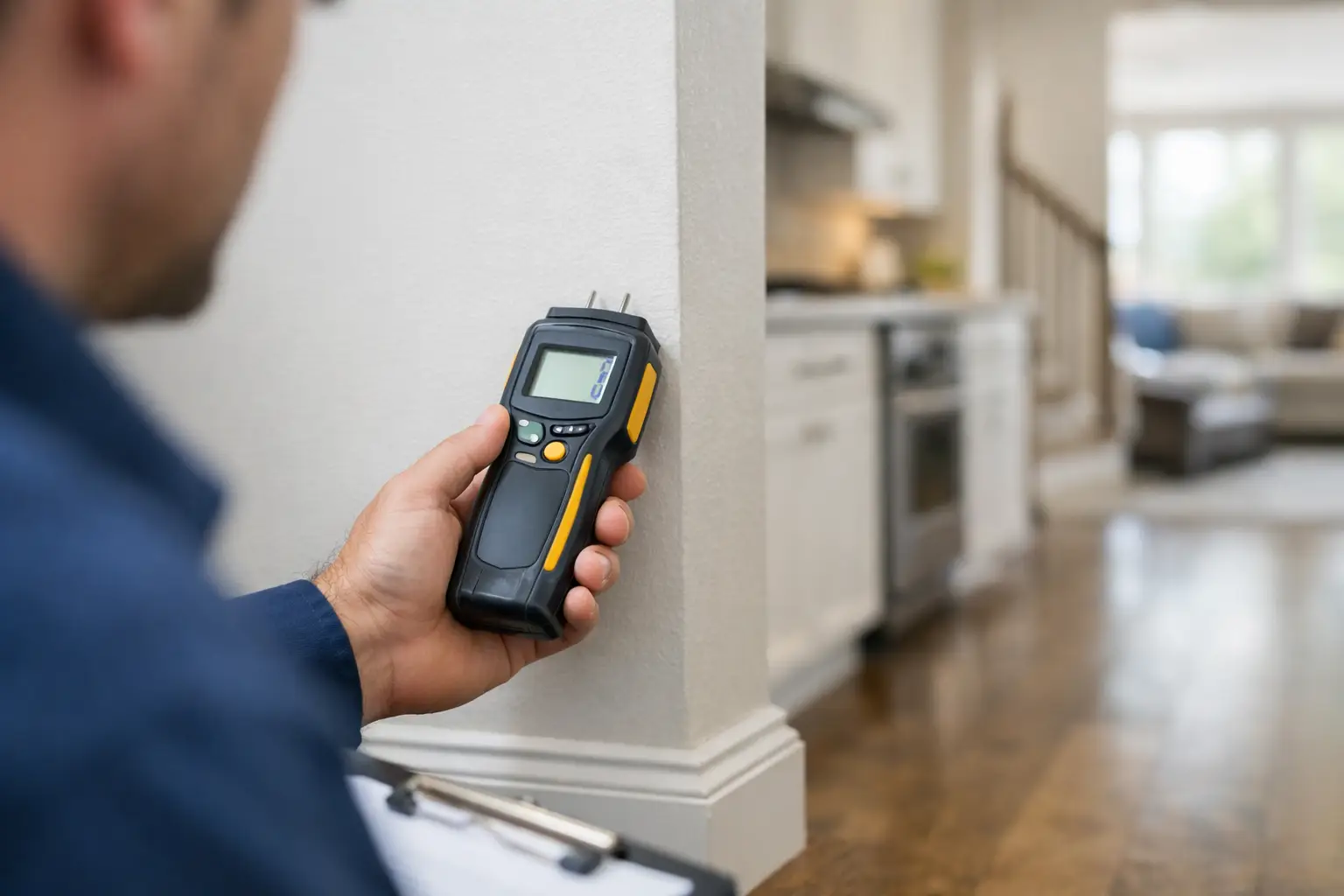
A stained baseboard, a soft window sill, and a ceiling patch that looks a shade too fresh – those are the moments when a moisture meter review for inspectors stops being theoretical. In Southeast Texas, moisture intrusion is not a side issue. It is often the hidden driver behind wood rot, microbial growth, flooring damage, swollen trim, and termite-conducive conditions. A moisture meter does not replace experience, but it does help an inspector move from suspicion to documented evidence.
For property inspections, the best meter is not simply the one with the longest feature list. It is the one that gives repeatable readings, works efficiently in occupied homes, and helps support findings without overstating what the instrument can prove. That distinction matters. Clients rely on inspection reports to make expensive decisions, and moisture findings need to be accurate, understandable, and properly framed.
What a moisture meter should do on a real inspection
A moisture meter is a diagnostic support tool. It helps verify whether building materials are holding elevated moisture at the time of inspection. That may sound basic, but in the field, it answers practical questions. Is the stained drywall below a second-floor bath actively wet or simply cosmetically repaired? Is the wood trim at an exterior door just weathered, or is it still taking on moisture? Is a garage wall adjacent to a shower showing a pattern consistent with leakage?
Good inspectors do not use meters to chase every surface in a house. They use them where conditions justify it – around plumbing fixtures, below roof penetrations, at suspect wall and ceiling areas, near exterior door assemblies, around windows, and anywhere visual clues suggest water entry. In homes with prior repairs, recent paint, musty odors, or visible material distortion, a meter becomes especially useful.
In this respect, a moisture meter review for inspectors needs to start with restraint. A meter can confirm elevated moisture. It cannot, by itself, identify the exact source, tell you how long the condition has existed, or determine the full extent of concealed damage behind every finish surface. Those limits are not weaknesses. They are part of using the tool honestly.
Moisture meter review for inspectors: pin vs pinless
The main choice is still pin or pinless, and each type has advantages in inspection work.
Pin meters
Pin meters measure moisture by driving two probes into the material and reading electrical resistance. They are often preferred when an inspector wants a more direct reading in wood or needs to compare moisture content at specific points. They can be very useful on exposed framing, window trim, fascia, subfloor edges, and other accessible wood components.
Their trade-off is obvious. They are invasive. Even small probe holes may not be appropriate on finished surfaces, especially in occupied homes or commercial settings. Pin readings can also be affected by material density, temperature, chemical treatment, and whether the probes are placed shallow or deep enough to capture the wettest area.
Pinless meters
Pinless meters scan below the surface without penetrating the material. For inspectors, that speed matters. A pinless meter is often the better fit for finished walls, ceilings, flooring, and broad comparative scanning over large areas. If a ceiling stain is dry at one edge and elevated at another, the inspector can map the pattern quickly.
The trade-off is that pinless meters can be influenced by material thickness, hidden metal, foil-backed insulation, uneven substrates, or nearby wiring. They are excellent screening tools, but readings must be interpreted in context. A high scan result is not a diagnosis by itself.
For many inspectors, the best setup is not choosing one over the other. It is carrying both. A pinless meter helps screen efficiently, and a pin meter helps verify or refine the finding where conditions allow.
What separates a dependable meter from a disappointing one
Accuracy matters, but field usefulness matters just as much. A moisture meter used during a property inspection needs to be readable, fast, and durable enough for repeated use in attics, crawlspaces, garages, and exterior conditions.
A dependable meter should have a clear display, quick response time, and settings appropriate for common building materials. It should also hold calibration well. If the meter drifts, gives inconsistent readings on the same area, or becomes unreliable after routine transport, it loses value quickly.
Inspectors should also pay attention to ergonomics. That sounds minor until you have used a tool all day. A meter that is awkward to hold on ladder work, difficult to operate one-handed, or hard to read in low light slows the inspection process. Good tools help the inspector stay focused on the building, not the device.
Durability is another practical concern. Inspection equipment gets carried from truck to attic to wet exterior wall conditions and back again. A moisture meter that feels precise on a showroom counter but cannot handle regular field use is not a good buy.
Field conditions in Southeast Texas change the equation
Regional conditions matter, and this is where generic product talk often misses the point. In Southeast Texas, high humidity, frequent storm exposure, wind-driven rain, heavy HVAC use, and shifting moisture conditions around slab foundations all affect how and where moisture problems develop.
That means inspectors are often using moisture meters in homes with marginal ventilation, older window assemblies, past roof leak repairs, wet wall cavities near tub and shower areas, and exterior penetrations that have seen years of sealant failure. In rural properties, well houses, utility spaces, detached structures, and outbuildings can present additional concerns.
Moisture readings also need to be interpreted alongside other evidence. Elevated moisture at base trim may relate to an exterior drainage issue, an active plumbing leak, air-conditioning condensate problems, or previous flood-related repairs. The meter reading is a piece of the picture, not the whole picture. Experienced inspectors combine meter use with visual evidence, thermal imaging where appropriate, and a practical understanding of how buildings in this region fail.
Common mistakes when using a moisture meter
The most common mistake is treating a moisture meter like a yes-or-no machine. Buildings are not that simple. A reading must be tied to material type, location, pattern, and visible conditions.
Another mistake is failing to establish a baseline. On many inspections, the most useful reading is comparative. If one section of drywall scans significantly higher than adjacent areas under similar conditions, that contrast means more than the number alone.
Inspectors can also get into trouble by testing only the obvious stain and stopping there. Moisture often migrates. The visible discoloration may not be the wettest point. Scanning the surrounding area can help define the extent of concern.
Finally, some inspectors overreport what the instrument means. Clients need clear language. Elevated readings indicate moisture was detected in the tested material at the time of inspection. They do not automatically confirm hidden mold, structural decay, or the full size of a concealed leak. Those conditions may exist, but they require careful wording and, at times, further evaluation.
How moisture meter findings should show up in a report
A good report does more than state a number. It identifies the material tested, the general area, the observed symptoms, and why the finding matters. If a bathroom wall adjacent to a shower enclosure shows elevated moisture, the report should connect that to the risk of concealed damage and recommend appropriate corrective action or further evaluation.
Photos help. So does a plain explanation of the limitation. If access was restricted by finishes, furnishings, or stored items, that should be stated. If the area was tested because of visible staining, active leakage, or suspected prior repair, that context strengthens the report.
At Texas Country Inspection, LLC, that disciplined approach matters because moisture issues often overlap with other inspection concerns – wood-destroying insect activity, damaged trim, compromised finishes, or conditions that can affect financing and negotiation. A meter reading is useful when it supports a careful observation, not when it is used as a shortcut.
So what is the best moisture meter for inspectors?
The honest answer is that it depends on the inspector’s workflow. If your inspections are heavy on finished residential interiors, a quality pinless meter may provide the most day-to-day value. If you regularly inspect exposed framing, outbuildings, and areas where direct wood readings are practical, a pin meter may earn its keep quickly. If you want the most complete setup, a dual-tool approach is often the most defensible.
What matters most is not branding hype or feature overload. It is whether the meter helps you detect suspicious conditions efficiently, verify what you are seeing, and communicate findings without exaggeration. That is the standard that serves clients well.
A good moisture meter will never replace trained judgment. It simply gives that judgment better evidence – and on the right inspection, that can make the difference between a vague concern and a clearly documented defect.
