
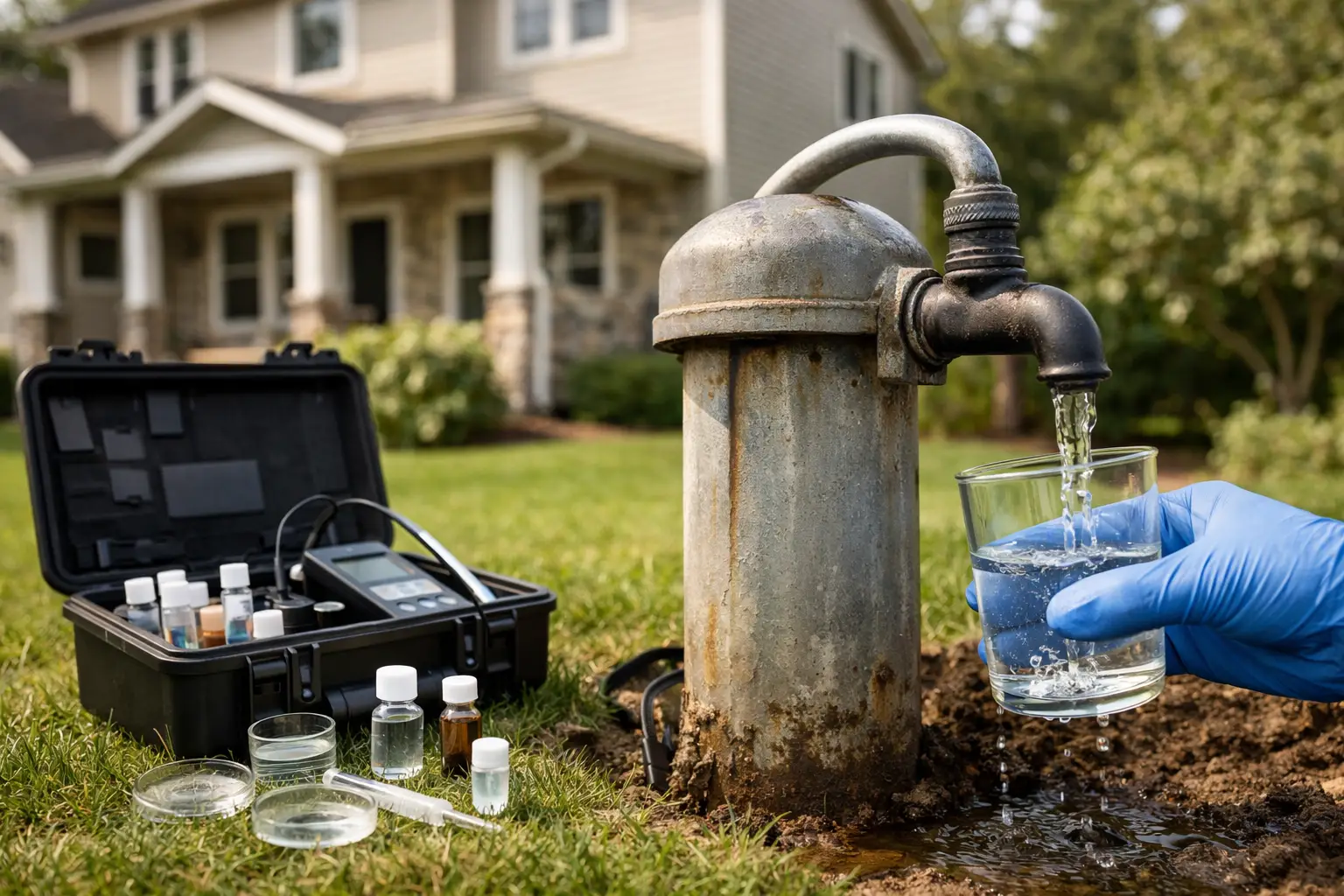
A well can look perfectly fine at the surface and still produce water with serious quality problems. If you are asking, do wells need water testing, the practical answer is yes – especially in Southeast Texas, where groundwater conditions, nearby land use, aging equipment, and weather patterns can all affect water quality.
For buyers, this is not a small side issue. A private well is part of the property’s utility system, just like the electrical service, septic system, and roof. If the water is contaminated or the well system is not performing properly, the repair path can involve treatment equipment, disinfection, plumbing corrections, or in some cases major well work. That is exactly why water testing belongs in the due diligence process.
Do wells need water testing before a purchase?
In most cases, yes. A private well is not monitored the way a municipal water system is. There is no city treatment plant sampling it on a schedule, and there is no public utility sending annual water quality reports. The property owner carries that responsibility.
From an inspection standpoint, a well can appear functional because water flows at the fixtures, pressure seems acceptable, and the pump cycles normally. None of that confirms the water is safe to drink. Good pressure does not rule out bacteria. Clear water does not rule out nitrates, metals, or sulfur-related issues. No odor at one visit does not mean the water stays consistent year-round.
That difference matters during a real estate transaction. Buyers often focus on whether the well “works,” but the better question is whether the well is producing water that is both adequate and suitable for household use. Testing helps answer that second part.
What water testing actually checks
The right panel depends on the property, the loan program, and the site conditions. A basic sample often includes bacteria testing, especially total coliform and E. coli, because bacterial contamination can indicate surface intrusion or unsanitary conditions at the wellhead or distribution system.
Beyond bacteria, many private well evaluations also look at factors such as nitrates, nitrites, pH, total dissolved solids, hardness, iron, manganese, and sulfur-related conditions. In some settings, additional testing may be appropriate for arsenic, lead, pesticides, or other region-specific contaminants.
This is where a one-size-fits-all answer falls short. A rural property near agricultural activity may raise concern for nitrates or chemical runoff. An older property with outdated plumbing components may justify closer attention to metals. A home with staining, odor complaints, or fixture buildup may point toward mineral content or corrosive water. The test should fit the property, not just a generic checklist.
Why private wells can change over time
Some owners assume a well only needs to be tested once, usually when the home was built or when the pump was installed. That is a risky assumption. Well water quality can change over time, even if the well itself has served the property for years.
Heavy rains can introduce surface contamination. Flooding can affect shallow groundwater conditions. A damaged well cap, poor grading, nearby septic issues, or cracked components in the system can create a pathway for contaminants. Even changes in surrounding land use can alter the risk profile.
Southeast Texas properties deal with intense rain events, high groundwater concerns in some areas, and a mix of rural and semi-rural conditions where wells, septic systems, drainage patterns, and outbuildings all interact. That is one reason water testing should be treated as current-condition verification, not old paperwork.
Do wells need water testing if the water looks and tastes normal?
Yes. Sight and taste are not reliable screening tools.
Some of the most concerning contaminants have no obvious taste, color, or smell. Bacteria can be present in water that appears clean. Nitrates are another example. By contrast, some water quality problems that are obvious, like sulfur odor or iron staining, may be unpleasant but not always the most serious health issue.
That is why inspection experience matters. We often see buyers reassured by clear running water, but clear water can still fail a lab test. A field observation can identify visible concerns with the well equipment or plumbing setup. It cannot replace a proper sample and lab analysis.
When well water testing is especially important
Every private well should be tested at reasonable intervals, but some situations raise the priority.
A home purchase is the most obvious one because the buyer is inheriting the system and any hidden problems that come with it. Testing is also important if the property has been vacant, if the well has not been used regularly, if repairs were recently made, or if the home has had flooding near the well area.
It also makes sense when there are signs such as sediment, cloudy water, odors, fixture staining, recurring plumbing scale, gastrointestinal illness concerns, or sudden changes in water taste. Those symptoms do not always identify the cause, but they do justify a closer look.
Annual testing is often recommended for bacteria and other core indicators, especially for occupied homes using private wells as their primary drinking water source. More extensive testing may be warranted on a periodic basis or when conditions change.
The difference between a well inspection and water testing
These are related, but they are not the same service.
A well inspection may include visual review of accessible components, evaluation of the pressure tank and controls, observation of the wellhead area, and performance checks such as pressure behavior or functional flow during the inspection. That work helps identify mechanical or installation concerns.
Water testing addresses water quality. It involves collecting a sample correctly, handling it within required time limits, and submitting it to a qualified lab for analysis. A poor sample method can produce unreliable results, so procedure matters.
This distinction is important during real estate transactions because clients sometimes believe that if the well system passed a functional check, then the water itself is automatically acceptable. That is not how risk should be evaluated.
What happens if a well water test finds a problem?
It depends on the result.
A bacteria finding may call for disinfecting the system, inspecting the well cap and sanitary protections, checking for pathway issues, and then retesting. High nitrates may require treatment, a deeper evaluation of contamination sources, or restrictions on use for infants and vulnerable occupants until the issue is addressed. Hard water, iron, or sulfur may be managed with treatment equipment, but the correct solution depends on the chemistry and on whether the issue is aesthetic, mechanical, or health-related.
This is where buyers should slow down and avoid quick assumptions. Some water problems are straightforward to correct. Others point to broader site concerns, such as well construction deficiencies, drainage problems, or nearby septic influence. The test result is the starting point for decision-making, not the full diagnosis by itself.
Why testing matters in rural Texas transactions
In rural and semi-rural property sales, a private well often carries the same practical weight as the house itself because it directly affects habitability. If water quality is poor, the buyer is not just negotiating over a fixture or cosmetic issue. They may be facing added cost, health concerns, lender complications, or delays before move-in.
That is one reason Texas Country Inspection coordinates water well and water lab testing as part of a broader property evaluation mindset. On rural properties, systems work together. Drainage affects foundations, moisture affects structures, septic affects sanitation, and the well affects daily use of the home. A careful inspection process looks at those relationships instead of treating each issue in isolation.
Do wells need water testing after closing?
Yes, because ownership transfers the responsibility to you.
After closing, a private well should be treated as an ongoing maintenance item. If the property relies on the well full time, routine testing helps establish a baseline and gives you something to compare against if water conditions change later. It also helps you catch a problem before it turns into a health issue or a larger system repair.
For homeowners, the smartest approach is simple. Test during the transaction, keep records, and continue testing on a reasonable schedule afterward. If the property has a history of flooding, older well components, prior bacteria findings, or changing water characteristics, be more proactive, not less.
A private well can serve a property well for many years, but trust should come from current evidence, not assumptions. When the water supply is private, testing is how you confirm what is actually coming out of the tap and whether the property is giving you one less problem to worry about, or one more.
