
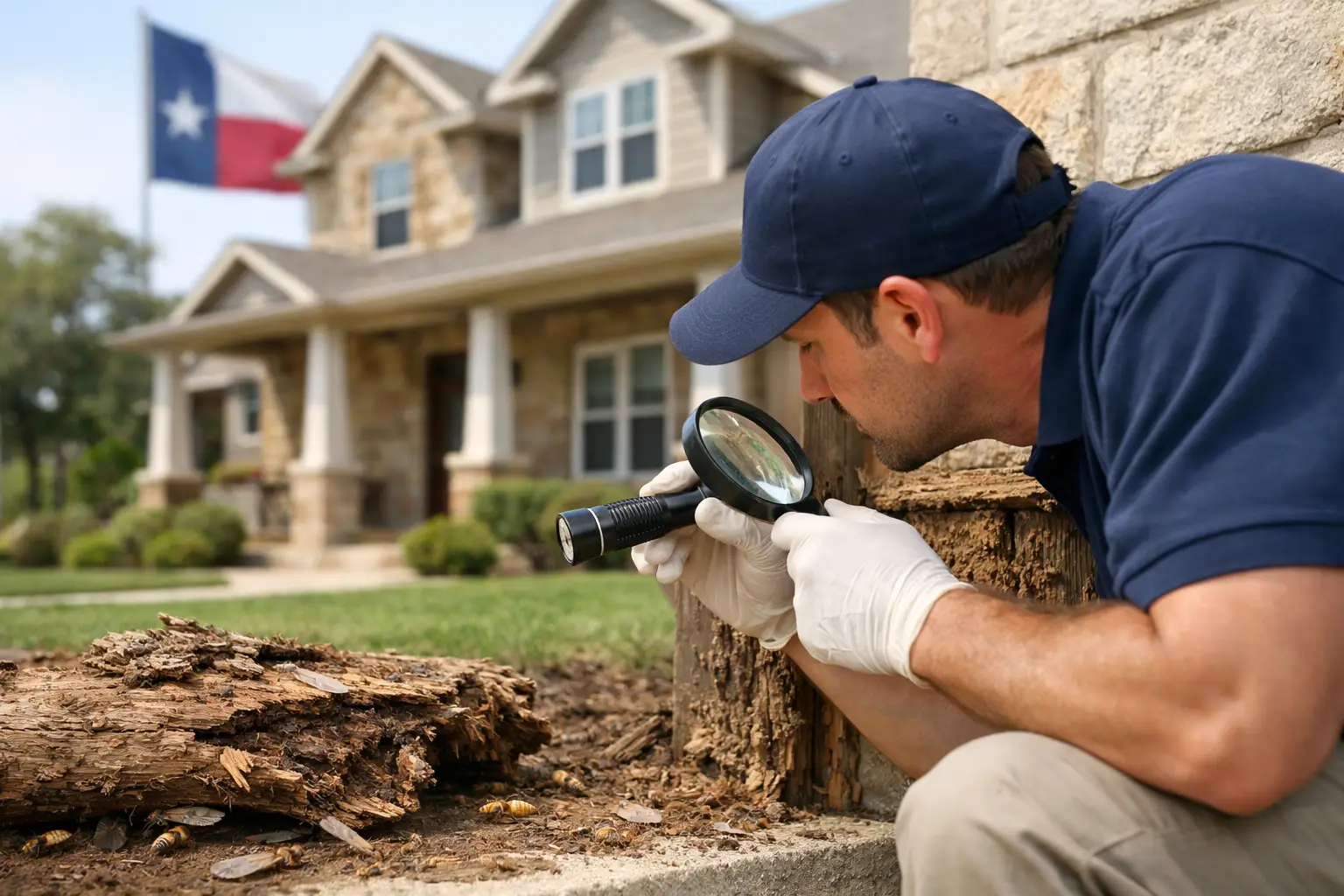
A termite issue rarely announces itself with a clear warning. More often, it shows up as soft trim at a garage door, blistered paint along a wall, mud tubes at the slab edge, or damaged framing hidden in a crawlspace or attic. That is why buyers and property owners often ask when is termite inspection required – not just by rule, but by common sense.
In Southeast Texas, that question matters more than it does in many other parts of the country. Termites and other wood-destroying insects are part of the risk profile here. Moisture, warm weather, dense vegetation, and slab-on-grade construction can all contribute to conditions that allow activity to go unnoticed until damage is advanced. A good answer has to separate what is legally or contractually required from what is simply the prudent decision before money changes hands.
When is termite inspection required during a real estate transaction?
In many Texas real estate transactions, a termite inspection is not automatically required by state law just because a property is being sold. A standard home sale can move forward without a separate wood-destroying insect report if the buyer, seller, lender, and insurer do not demand one. That surprises some first-time buyers, especially in areas where termites are a known concern.
What often makes the inspection required is the transaction itself. If a loan program calls for a wood-destroying insect report, then the report becomes part of the file. If the sales contract requires one, it becomes a negotiated obligation. If visible evidence of infestation or damage raises concern during the general home inspection, then a separate termite inspection may become necessary to clarify the extent of the issue and support repair decisions.
So the practical answer is this: termite inspection is required when a lender, contract, program guideline, or property condition triggers that need. Outside of those situations, it may not be mandatory on paper, but it can still be one of the most important inspections in the deal.
Loan programs that may require a WDI report
A termite inspection is commonly tied to financing requirements rather than the deed transfer itself. VA loans are one of the most familiar examples. Depending on location and lender overlays, a wood-destroying insect report may be required before closing. Some agricultural or rural property loan scenarios can also bring added scrutiny, especially if structures have visible moisture exposure, older wood framing, or detached buildings that are part of the collateral.
Conventional financing is less uniform. One lender may not ask for a termite report unless there is visible evidence of damage, while another may request it based on the appraiser’s comments or underwriting concerns. FHA transactions can also vary depending on the property condition and what gets flagged during the process.
This is where buyers lose time if they assume all loans work the same way. It is better to verify the requirement early with the lender and agent than to find out days before closing that a report is now needed.
What lenders are really trying to confirm
Most lenders are not looking for perfection. They are trying to determine whether active infestation or significant wood-destroying insect damage affects the property’s value, safety, or marketability. If a report shows prior treatment with no active infestation, that is a very different situation from active termites in structural members or widespread inaccessible damage.
The details matter. A report may identify active evidence, prior evidence, conducive conditions, or areas that could not be inspected. Those distinctions can affect whether treatment, repair documentation, or further evaluation is requested.
When is termite inspection required by the contract or negotiation?
Sometimes the requirement is created during negotiation. A buyer may request a termite inspection as part of the option period. A seller may agree to provide a current wood-destroying insect report to reassure buyers. In commercial transactions, the due diligence process often expands beyond a basic building inspection and includes pest-related review if wood-framed structures, older outbuildings, or moisture-related deterioration are present.
This matters because “required” does not always mean imposed by statute. It can mean required to satisfy a buyer’s risk tolerance. If the home inspection reveals suspicious trim damage, settlement around an exterior wall, or chronic moisture at the bath or laundry area, a termite inspection quickly moves from optional to necessary in practical terms.
Cases where termite inspection is not required but strongly recommended
There are plenty of situations where no one is forcing the issue, but skipping the inspection is still a gamble.
Older homes are a clear example. A house with decades of repairs, additions, pier and beam sections, or heavy landscaping near the foundation deserves closer review for wood-destroying insects. The same goes for vacant homes, rental properties with deferred maintenance, and houses where exterior grading or drainage problems have kept soil and moisture too close to the structure.
Rural properties in Southeast Texas deserve particular caution. Barns, detached garages, sheds, fencing transitions, and wood-to-soil contact around the site can create multiple entry points and concealment areas. Even if the main house looks clean, other structures may show activity that suggests broader site conditions favorable to infestation.
A recent remodel is another situation where a separate termite inspection is often wise. Fresh paint and finish work can hide prior damage. New flooring may cover patched subfloor areas. Cosmetic updates do not answer the question of whether wood-destroying insect activity is current, repaired, or simply concealed.
What a termite inspection is actually looking for
A proper termite or WDI inspection is not limited to spotting live insects. In many cases, the more important findings involve evidence and conditions. That includes mud tubes, damaged or hollowed wood, frass from certain insects, moisture intrusion, wood-to-ground contact, and structural areas that are blocked from view.
In this region, moisture history is a major part of the story. Leaking hose bibs, poor drainage at the slab, roof leaks at eaves, unsealed utility penetrations, and plumbing issues under sinks can all create favorable conditions. The inspector is not just checking for insects. The inspector is evaluating whether the building is offering them an opportunity.
That distinction matters for buyers. A report may not say there is active termite infestation today, but it may still identify conditions that make future activity more likely if not corrected.
Why Southeast Texas properties deserve closer attention
Southeast Texas properties deal with a mix of heat, humidity, heavy rain events, and soil movement. Those factors affect more than foundations. They also influence how moisture accumulates around structures and how easily damage can be masked. Expansion and contraction can open gaps at penetrations and joints. Landscaping can trap moisture against siding. Detached structures often receive less maintenance than the main residence.
For that reason, the safest approach is not to ask only whether a termite inspection is technically required. The better question is whether the property type, age, condition, and financing make the risk of skipping it too high.
Companies such as Texas Country Inspection, LLC see that pattern regularly in field conditions. The value of local inspection experience is not just knowing what termites do. It is knowing where regional construction practices and moisture patterns tend to hide the evidence.
Timing matters more than many buyers realize
If a termite inspection may be needed, schedule it early. Waiting until the end of the option period or just before closing compresses the timeline for treatment, repair estimates, or lender review. If active infestation is found, you may need time to determine whether the issue is localized, whether structural repairs are needed, and who will pay for what.
Early scheduling also helps when findings overlap with the general property inspection. Wood deterioration can result from termites, moisture, fungal decay, or a combination of causes. The sooner those issues are sorted out, the easier it is to make informed decisions rather than rushed ones.
The practical standard buyers should use
If you are wondering whether to order a termite inspection, start with three questions. Is your lender asking for a WDI report? Did the contract or agent recommend one? Did the property inspection reveal wood damage, moisture concerns, or conditions favorable to infestation?
If the answer to any of those is yes, treat the inspection as necessary. If the answer to all three is no, you still need to weigh the age, location, and construction of the property. In Southeast Texas, termite risk is common enough that “not required” should never be mistaken for “not needed.”
A careful inspection does more than satisfy paperwork. It helps you understand whether you are buying a sound structure, inheriting a concealed repair issue, or stepping into a preventable problem that should be addressed before it gets more expensive.
The best time to ask about termites is before the closing table, while you still have options and leverage.
