
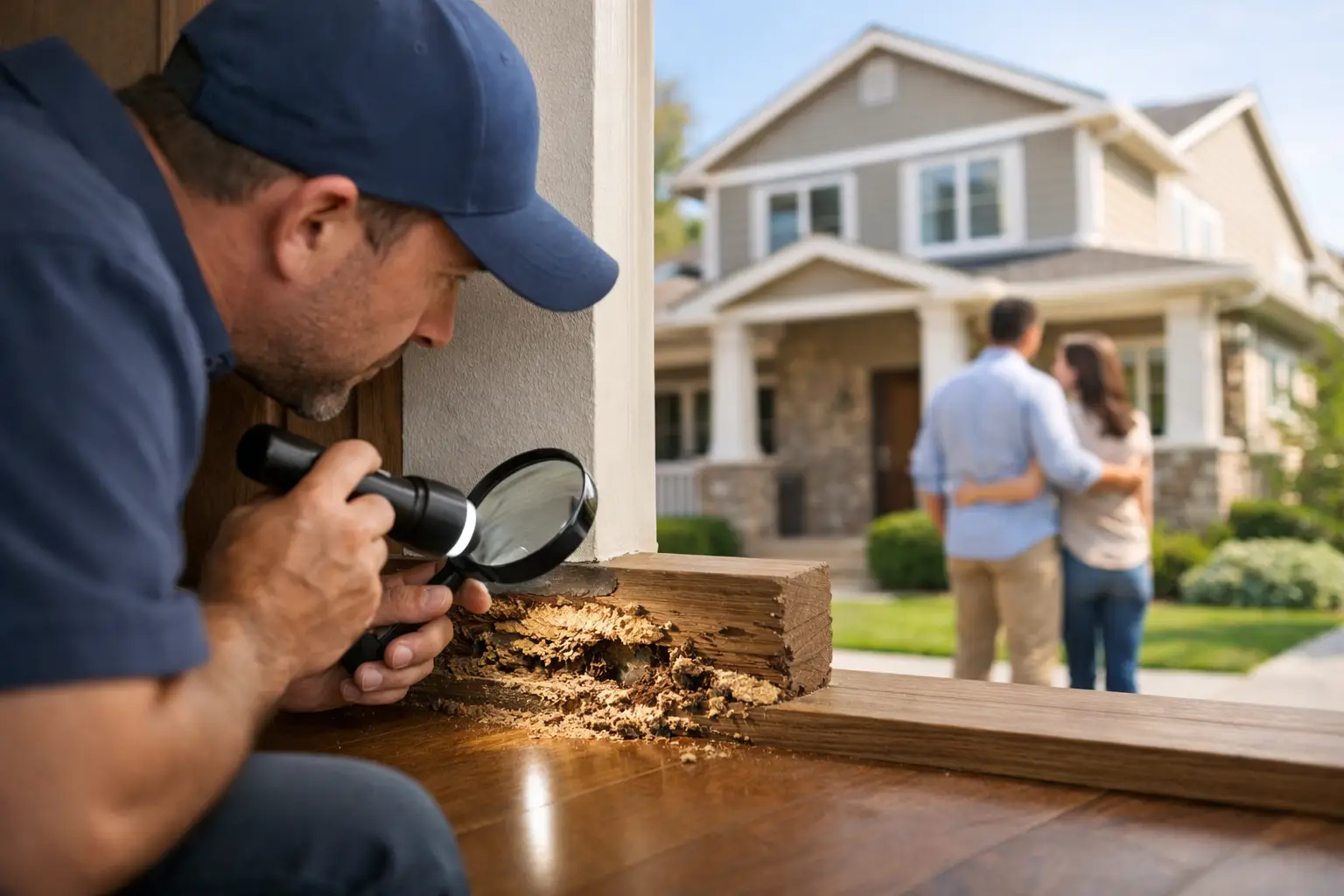
A house can look clean, freshly painted, and move-in ready while termite activity stays hidden behind siding, inside walls, or below floor coverings. That is why a termite inspection for home purchase should never be treated as a minor add-on during the transaction. In Southeast Texas, where heat, humidity, and moisture create favorable conditions for wood-destroying insects, this inspection can reveal damage, active infestation, or conditions that increase the likelihood of future problems.
For buyers, the issue is not just whether termites are present on the day of the inspection. The larger question is whether the home shows evidence of past or current wood-destroying insect activity, concealed damage, or moisture patterns that deserve closer attention before closing. A good report helps you understand risk, not just check a box.
Why a termite inspection for home purchase matters
Termites rarely announce themselves in obvious ways. By the time a homeowner notices a soft baseboard, a sticking door, or a blistered wall surface, damage may already be established. During a real estate transaction, that matters because repairs can be expensive, treatment may be needed immediately, and structural concerns sometimes overlap with moisture intrusion or deferred maintenance.
This is especially relevant in Southeast Texas homes. Slab foundations, crawlspaces, wood siding, earth-to-wood contact, poor drainage, and high humidity can all contribute to conditions termites favor. Even when a house has been treated in the past, that does not guarantee there is no current activity or no accessible evidence of damage. Treatments vary, warranties have limits, and construction details can create hidden entry points.
A termite inspection also matters because a general home inspection and a wood-destroying insect inspection are not the same thing. A home inspection may note damaged wood, moisture concerns, or conditions conducive to infestation, but a dedicated WDI inspection is focused on identifying visible evidence of termites and other wood-destroying insects. Some lenders and loan programs may require that separate documentation.
What inspectors are actually looking for
A proper termite inspection is not just a quick walk around the exterior. The inspector is looking for visible signs of current or past infestation, damage patterns, and site conditions that support termite activity. That includes mud tubes on foundation surfaces, damaged trim, blistered wood, hollow-sounding framing, frass from certain wood-destroying insects, high-moisture areas, and points where wood is in direct contact with soil.
The inspection also includes context. A stained garage wall may not be termite related at all. A cracked piece of fascia may be simple weathering. On the other hand, what looks like minor trim damage can sometimes point to concealed activity extending into wall framing. Experience matters because the findings need to be interpreted accurately, not exaggerated and not dismissed.
In many homes, the most important observations are the conditions conducive to infestation. Poor grading that holds water near the foundation, leaking hose bibs, clogged gutters, unsealed exterior penetrations, and vegetation packed tightly against the structure all raise concern. These conditions do not prove termites are active, but they do increase risk and deserve correction.
Areas that deserve close attention
Most buyers expect inspectors to check the obvious wood members, but termite activity often turns up in transition areas where moisture and concealment come together. Exterior door frames, window trim, garage perimeter walls, subfloor framing, pier supports, attic framing near roof leaks, and bath plumbing penetrations are all common concern points.
On slab homes, inspectors often pay close attention to foundation edges, expansion joints, attached porches, and spots where landscaping or mulch is built up too high. On pier and beam homes, crawlspace accessibility becomes important. If the crawlspace is tight, wet, obstructed, or unsafe to enter, the scope of visible inspection can be limited. That does not mean the house is clear. It means the buyer needs to understand that visibility affects what can and cannot be reported.
This is one reason detailed documentation matters. A strong inspection report should state what was seen, what was not accessible, and what those limitations mean for the transaction.
What a termite report can and cannot tell you
Buyers sometimes expect a termite inspection to function like a guarantee that no insects exist anywhere in the structure. That is not realistic. Termite and WDI inspections are visual inspections of accessible areas. If activity is concealed behind finished surfaces, inside wall cavities, beneath insulation, or under flooring, the report may not confirm it unless there are visible clues.
That limitation does not make the inspection less valuable. It makes the inspector’s training and thoroughness more important. Visible mud tubes, damaged trim, shelter tubes in the garage, or moisture-damaged wood at an exterior wall can provide enough evidence to justify further evaluation, treatment, repair estimates, or negotiation before closing.
A good report can also separate issues that are often confused. Fungal deterioration, water damage, carpenter ants, and old construction defects can resemble termite damage to an untrained eye. Buyers need clarity because repair decisions, seller negotiations, and treatment plans depend on accurate identification.
Why Southeast Texas buyers need a regional approach
Termite risk is not the same in every market. In Southeast Texas, moisture is a constant factor, and moisture is often part of the story even when termites are the main concern. Soil conditions, drainage patterns, heavy rains, long warm seasons, and older housing stock can all affect what inspectors find.
Regional experience helps when evaluating homes with recurring drainage problems, previous foundation movement, older outbuildings, detached garages, and rural structures with multiple wood elements exposed to weather. It also helps when the property includes septic components, wells, fencing, wood decks, or auxiliary buildings that may show insect activity or moisture-related deterioration.
This is where a company like Texas Country Inspection, LLC brings practical value. When the same inspection team understands general building performance, moisture behavior, and wood-destroying insect evidence, buyers get a more useful picture of how these issues interact.
When to schedule the termite inspection
The best time is during the option period or inspection contingency window, not after the deal is already moving toward final approval. Waiting too long compresses your decision-making and leaves less room for estimates, treatment proposals, or repair negotiations.
If the loan program requires a WDI report, schedule it early enough to avoid last-minute delays. If the home has a history of treatment, ask for service records, warranty documentation, and any prior repair information. Those documents do not replace a current inspection, but they can help explain what has been done and whether follow-up is still active.
Buyers should also be prepared for the possibility that one finding leads to another. Evidence of termite damage may justify repair review by a contractor. Moisture readings may point to plumbing leaks or envelope issues. A sticking door near damaged framing may raise questions about both wood deterioration and structural movement. Real inspections work this way. One defect can overlap with another.
What to do if termites or damage are found
Do not assume every finding is a deal breaker. Some properties show evidence of previous termite activity with no visible current infestation. Others need treatment but have limited damage. Still others show concealed or extensive deterioration that changes the financial picture of the purchase.
The right response depends on the extent of findings. Buyers may request treatment by a licensed pest control provider, repairs to damaged materials, further invasive evaluation where concealed damage is suspected, or credits that reflect the true scope of work. The key is getting enough information to make a sound decision rather than reacting to the word termites alone.
It also helps to stay focused on documentation. Ask what was observed, where it was observed, whether activity appeared current or past, what areas were inaccessible, and what follow-up is recommended. A vague verbal reassurance is not enough when you are about to buy a property.
The bigger issue is protecting the investment
A termite inspection is not just about insects. It is about reducing uncertainty before you take ownership of a major asset. Buyers deserve to know if visible evidence suggests active infestation, if prior damage may affect repair costs, and if site conditions are setting the home up for future problems.
That is why the best inspection process is careful, direct, and grounded in field experience. Not every stain is termite damage, and not every damaged board means the structure is compromised. But when warning signs are present, they need to be documented clearly and taken seriously.
Before you commit to closing, make sure the property has been evaluated with the same level of care you would want if the house were already yours. That is the kind of caution that saves money, protects negotiating leverage, and helps buyers move forward with clearer expectations.
