
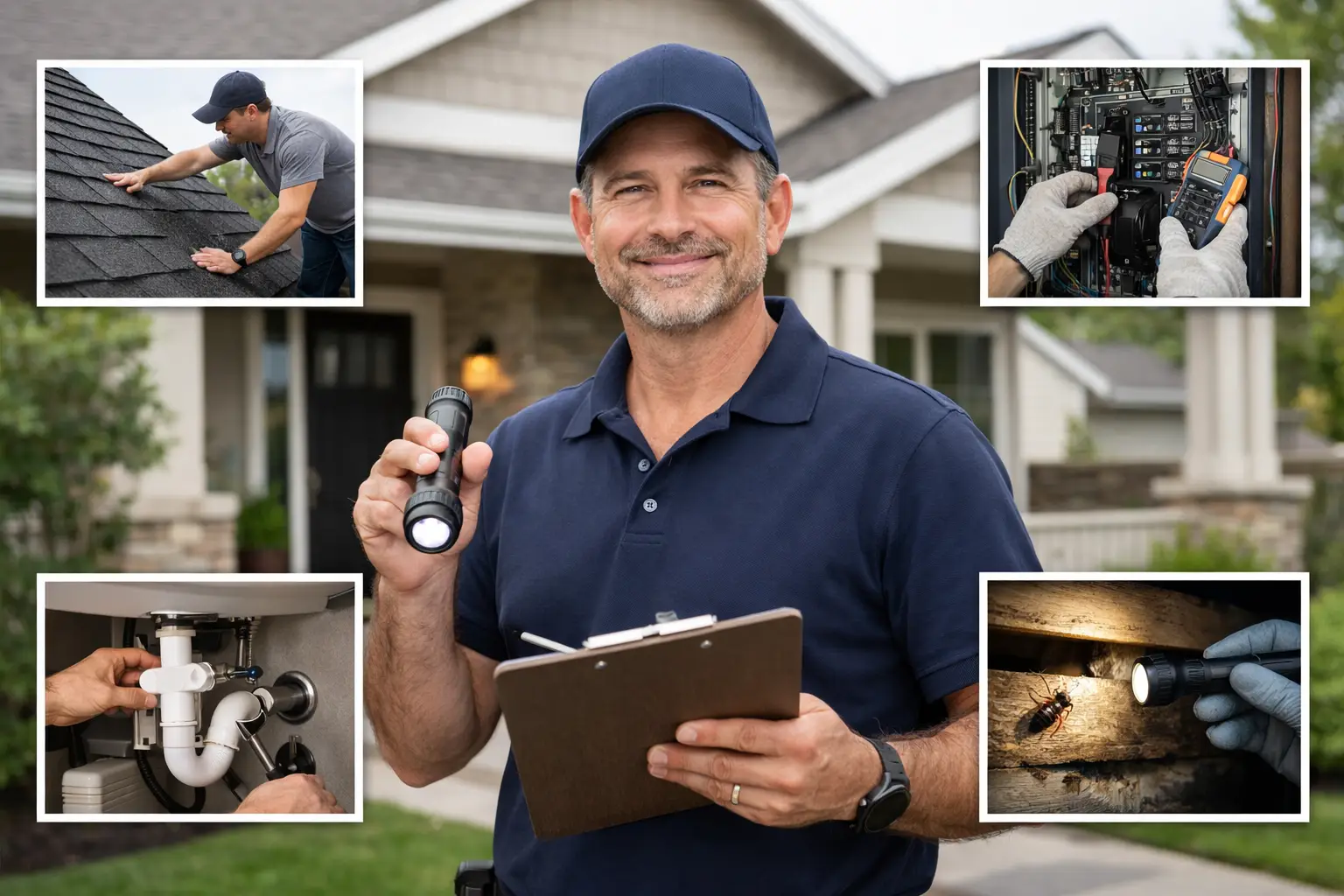
A house can look solid at showing time and still have active moisture intrusion in the walls, foundation movement in the slab, a failing aerobic system, or termite damage hidden behind trim. That is why understanding the different types of home inspections matters before you close, renew a warranty, or take on a repair budget you did not expect.
Not every property needs the exact same inspection package. A newer subdivision home on city utilities raises different concerns than an older home on a septic system and water well outside town. In Southeast Texas, high humidity, shifting soils, heavy rainfall, wood-destroying insects, and drainage problems all change what a careful buyer or owner should be looking at.
Types of home inspections and what they cover
When people say home inspection, they often mean a general residential inspection. That is the starting point, but it is not the only category. Several types of home inspections address different systems, risks, and timelines, and the right mix depends on the property.
General home inspection
A general home inspection is the broad evaluation most buyers order during an active real estate transaction. It typically covers the roof, attic, structure, foundation, exterior, interior, electrical system, plumbing, HVAC equipment, insulation, ventilation, windows, doors, and built-in appliances. The goal is not to predict every future failure. It is to document visible deficiencies, safety concerns, installation issues, and signs that a larger problem may be developing.
On a Southeast Texas property, that often means paying close attention to roof wear, signs of past or active leaks, grading that directs water toward the home, cracked brick veneer, door-frame distortion, moisture staining, deteriorated caulking, and HVAC performance under high heat and humidity. A thorough report helps buyers make repair requests, budget realistically, and decide whether the condition matches the asking price.
Wood-destroying insect inspection
A wood-destroying insect inspection, often called a termite report or WDI report, focuses on evidence of termites and other insects that damage wood components. This is not just a box-checking service for loans. It can reveal active infestation, previous treatment indicators, damaged framing, compromised trim, or conditions that increase risk, such as wood-to-soil contact and excessive moisture.
This inspection is especially relevant in Southeast Texas, where termite activity is a real concern. Some transactions require it, including certain VA and agricultural loan situations, but even when it is optional, it can be a smart step. A clean-looking wall does not tell you what is happening inside a sill plate or behind a garage baseboard.
Pool and spa inspection
A pool or spa inspection looks beyond whether the water is blue and the pump turns on. It evaluates visible condition and operation of accessible components such as pumps, filters, heaters, timers, drains, coping, decking, safety barriers, and basic bonding-related observations where visible.
This matters because pool repairs can become expensive quickly. Cracked plaster, non-functioning equipment, missing safety features, and leakage indicators can all affect ownership costs. On homes where the backyard pool is part of the appeal, buyers should treat it like any other major system rather than assuming it is fine because it looks clean.
Septic system inspection
A septic inspection is critical for homes that are not connected to municipal sewer. A standard home inspection may identify the presence of a septic system and note visible concerns, but a dedicated septic evaluation goes further. It looks at tank condition, accessible components, drainage behavior, possible backup indicators, and whether the system appears to be functioning as intended.
Rural and semi-rural buyers often underestimate septic risk. A failing system may not announce itself during a brief walk-through, especially if the home has been vacant or lightly occupied. Slow drains, soggy soil, odors, or improper modifications can point to trouble, but some issues are less obvious without a targeted inspection.
Water well and water testing inspection
For properties with private wells, the water source deserves separate attention. A well-related inspection may include reviewing visible well equipment, pressure behavior, and coordination of water testing for quality concerns. The exact scope can vary, but the point is straightforward: a home is not fully evaluated if the water supply is assumed rather than checked.
This is particularly important on rural properties. Buyers need to know not only whether water is available, but whether the system appears reliable and whether lab testing identifies concerns that affect health, usability, or lender requirements. A nice kitchen does not compensate for an unreliable well or questionable water quality.
11-month warranty inspection
One of the most overlooked types of home inspections is the 11-month warranty inspection for newer homes. Many builders provide a one-year warranty, and this inspection is scheduled before that coverage expires. The purpose is to document defects while the builder may still be responsible for repair.
This is not a formality. Even newer homes can develop drainage problems, foundation movement indicators, roof defects, HVAC issues, plumbing leaks, or incomplete installations that did not become obvious during the first months of occupancy. In this region, seasonal moisture changes and soil movement can reveal problems after the first heavy weather cycle. Waiting until month thirteen can turn a covered issue into your own expense.
How specialized inspections differ from a standard inspection
A standard home inspection is broad. Specialized inspections are deeper and narrower. That distinction matters because buyers sometimes assume one report covers everything in equal detail.
For example, a general inspection may note evidence of termite activity, but a formal WDI report has its own inspection standards and documentation. A general inspection may identify that a property is served by a septic system, but a dedicated septic inspection is where you get a more focused look at its performance and condition. The same logic applies to pools, spas, wells, and water testing.
That does not mean every property needs every add-on. It means the inspection scope should match the property itself. A condo on city utilities will not need the same approach as a rural home with outbuildings, private water, and an aerobic system.
Which types of home inspections make sense for your property?
The right answer depends on age, location, utility type, loan requirements, and visible risk factors. Buyers in established neighborhoods may be most concerned with aging roofs, original electrical components, plumbing leaks, and foundation movement. Buyers in rural areas may need a more layered review that includes septic, well, water testing, and wood-destroying insect documentation.
Property condition also changes the equation. If there are signs of previous settlement repairs, expansive soil movement, poor drainage, or moisture intrusion, the inspection should be especially attentive to structural indicators and water-related damage. In Southeast Texas, those are not fringe concerns. They are common drivers of expensive post-closing surprises.
This is where local experience helps. An inspector familiar with the region is more likely to recognize patterns tied to slab performance, wet-area damage, pier-and-beam movement, fungal growth conditions, exterior deterioration, and termite-prone construction details. Texas Country Inspection, LLC builds much of its value around that kind of field-based judgment, not just checklist completion.
What these inspections can and cannot do
A good inspection reduces uncertainty, but it does not eliminate it. Inspectors evaluate visible and accessible conditions at the time of the inspection. They do not open walls, guarantee future performance, or promise that a currently functional system will stay that way forever.
That said, a careful inspection can still save buyers and owners from major mistakes. It can identify active leaks, unsafe wiring, deficient cooling performance, structural red flags, wood rot, missing safety protections, and evidence that a system is near the end of its service life. It can also support better decisions when negotiating repairs or deciding whether to proceed at all.
The key is choosing the right inspection scope from the start. If a property has a septic system, inspect it. If it has a pool, inspect it. If termites are a regional concern or the loan requires a report, do not skip the WDI inspection and assume the general report is enough.
Why inspection timing matters
Inspection quality matters, but timing matters too. Buyers need enough time during the option period or due diligence window to review findings, ask follow-up questions, and bring in additional specialists if needed. Homeowners using a builder warranty need to schedule before deadlines pass. Rural property buyers may need extra coordination time for well, water, and septic-related services.
Rushing this part of the process usually benefits no one except the defects that stay hidden. A property inspection should give you room to make a clear-headed decision, not force you into one.
A home purchase is expensive enough without guessing at what is happening beneath the surface. The right mix of inspections gives you something better than reassurance – it gives you facts you can use.
