
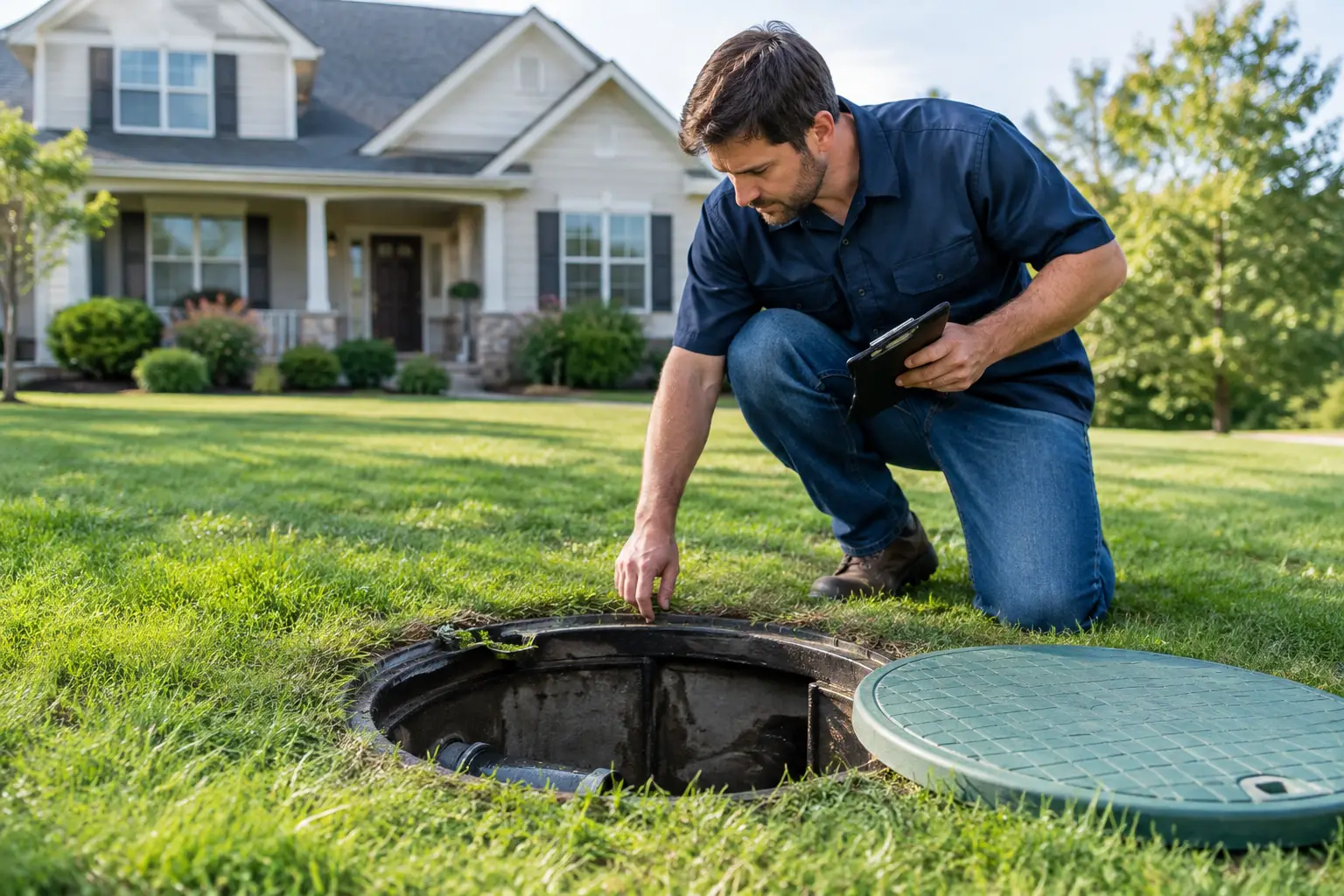
A septic problem can turn an otherwise promising rural or suburban property into a major expense shortly after closing. The top septic system red flags are not always obvious from inside the house, either. A toilet may flush during a brief showing while the drainfield outside is overloaded, poorly located, or nearing failure. For buyers in Southeast Texas, where high groundwater, heavy rainfall, clay soils, and older country properties can all affect onsite wastewater systems, a careful evaluation matters.
A septic system is not one component. It is a working system that includes the plumbing leaving the home, the tank, baffles, access covers, distribution components, and the soil absorption area or drainfield. A defect in one area can create symptoms somewhere else. The goal is not to assume every older system is failing. It is to identify conditions that justify further evaluation, documentation, repair estimates, or a decision to walk away.
Top Septic System Red Flags to Watch For
Sewage odors near the house, tank, or drainfield
A persistent sewage odor is one of the clearest warning signs. Odors around a tank lid may result from a damaged, loose, or improperly sealed cover. Odors over the drainfield can point to wastewater surfacing below grade, a saturated absorption area, or poor venting. The location and timing matter. An odor that appears after showers, laundry, or several days of rain deserves more attention than a brief odor near an open cleanout.
Do not accept “it just needs to be pumped” as a complete explanation. Pumping may be appropriate maintenance, but it does not repair a failed drainfield, damaged pipe, or improperly functioning tank component.
Wet, soft, unusually green, or sunken areas in the yard
The grass over a drainfield may be somewhat greener than surrounding grass because it receives moisture and nutrients. That alone does not prove failure. However, standing water, muddy soil during dry weather, spongy ground, sewage surfacing, or a strong odor are serious concerns.
A sunken area can also indicate a deteriorated tank lid, settling soil around a tank, or an abandoned component below ground. This is a safety issue as well as a system concern. Septic tanks and their covers should not be treated casually. A damaged or unsecured lid can create a dangerous fall hazard.
In the Golden Triangle and other low-lying parts of Southeast Texas, recent rain can make interpretation more complicated. Saturated ground after a significant storm does not automatically mean the septic system has failed. Still, a properly functioning system should not routinely discharge wastewater onto the surface. A knowledgeable inspection considers weather conditions, site drainage, soil moisture, and the location of the suspected absorption field before drawing conclusions.
Slow drains, gurgling fixtures, or sewage backups
Slow sinks and tubs can come from a localized plumbing blockage. When several fixtures drain slowly, toilets bubble, or wastewater backs up into a tub, shower, or floor drain, the concern is much greater. These symptoms may indicate a blockage in the building sewer line, a full tank, a damaged outlet baffle, a clogged effluent filter, or a drainfield that can no longer accept wastewater.
Pay attention to which fixtures are affected. A backup at the lowest fixture in the home often means the restriction is downstream of the fixture, not in that individual drain. If the home is vacant, be cautious about relying on a quick fixture test. Limited water use may not place enough demand on the system to reveal an intermittent or capacity-related problem.
Missing records or an unclear system location
A seller who cannot identify the tank, drainfield, system type, installer, or maintenance history is not automatically hiding a defect. Many older properties simply have incomplete records. But missing information increases the buyer’s risk, especially when the home has been remodeled, expanded, or converted from a weekend property into a full-time residence.
System capacity should generally be appropriate for the number of bedrooms and expected occupancy, not merely the home’s current number of residents. If a property has added bedrooms, a guest house, converted garage space, or a large addition, verify whether the septic system was designed and permitted for that use. An undersized system may appear to function until occupancy increases.
The location also matters. The tank and drainfield should be protected from vehicle traffic, construction activity, excessive grading, and deep-rooted tree growth. A driveway or heavy equipment path over septic components can crack pipes, damage tank covers, compact soil, and reduce drainfield performance.
Damaged risers, lids, baffles, or visible tank defects
When accessible components are visible, their condition can tell an important story. Broken lids, open risers, makeshift covers, cracked concrete, deteriorated masonry, and damaged inspection ports are not minor cosmetic issues. They can allow surface water into the system, create a safety concern, and complicate maintenance.
Tank baffles are particularly important because they help keep floating scum and solids from entering the outlet line and drainfield. If baffles are missing or deteriorated, solids can migrate out of the tank and shorten the life of the absorption area. Repairs may be manageable if caught early, but a long-term lack of maintenance can lead to much more extensive work.
A tank that is filled above its normal operating level at the outlet should not be ignored. It may be caused by an outlet restriction, a clogged filter, saturated soil conditions, or drainfield failure. The specific cause requires a qualified septic professional to evaluate the system beyond a visual inspection.
Improper drainage around the system
Surface water is a frequent issue on Southeast Texas properties. Roof runoff directed toward the septic area, drainage swales crossing the field, leaking water lines, or poor grading can keep the soil too wet to accept treated effluent. The result may be slow drainage, odors, ponding, or premature system failure.
Look beyond the tank itself. Downspouts, landscape grading, nearby ponds, drainage ditches, and the slope of the lot can all affect performance. A system may have been installed correctly years ago, then become vulnerable after a patio, driveway, pool, shed, or grading project altered how water moves across the property.
A system that has been pumped immediately before listing
Recent pumping is not inherently suspicious. Routine pumping is responsible maintenance, and a seller who provides an invoice may be demonstrating good care. The concern arises when a system was pumped just before listing, no records are available, and the seller cannot explain why it was needed.
An empty or recently pumped tank may temporarily reduce symptoms that would otherwise be apparent. Ask for the service provider’s report, the date of service, whether repairs were recommended, and whether the tank was pumped as scheduled maintenance or in response to backups. A pumping receipt is useful information, but it is not proof that the drainfield is sound.
What a Careful Septic Inspection Can and Cannot Confirm
A property inspection can identify accessible conditions, functional symptoms, visible damage, site concerns, and red flags that warrant a specialist’s evaluation. Inspectors may operate plumbing fixtures, observe drainage behavior, locate accessible components, and document evidence of seepage, odor, improper covers, or unsuitable site drainage.
There are limits. Septic tanks, distribution boxes, and drainfields are largely underground, and full performance cannot always be confirmed during a standard visual inspection. Soil conditions, recent rain, occupancy, water usage, inaccessible covers, and limited testing time all affect what can be observed. When warning signs are present, the prudent next step may be a septic contractor’s evaluation, tank pumping with internal component review, camera inspection of drain piping, or other testing appropriate to the system type and local requirements.
Questions Buyers Should Ask Before Their Option Period Ends
Ask the seller when the tank was last pumped, who performed the work, and whether any repairs or recommendations were made. Confirm the system type, approximate age, tank and drainfield location, and whether there are permits or as-built documents available. If the property has a well, ask about the distance and relationship between the well and wastewater system.
Also ask whether the system has ever backed up, required frequent pumping, been repaired after flooding, or had drainfield work performed. Direct questions often produce more useful information than a broad request for “septic records.” If answers are vague, do not fill in the gaps with assumptions.
For a purchase involving a septic system, the right decision is not always to reject an older property. Many older systems can continue to serve a home when they have been maintained, protected from excess water, and matched to the property’s use. The key is to understand the condition before closing, when you still have the ability to request documentation, negotiate repairs, obtain specialist input, or make a fully informed decision about the investment.
