
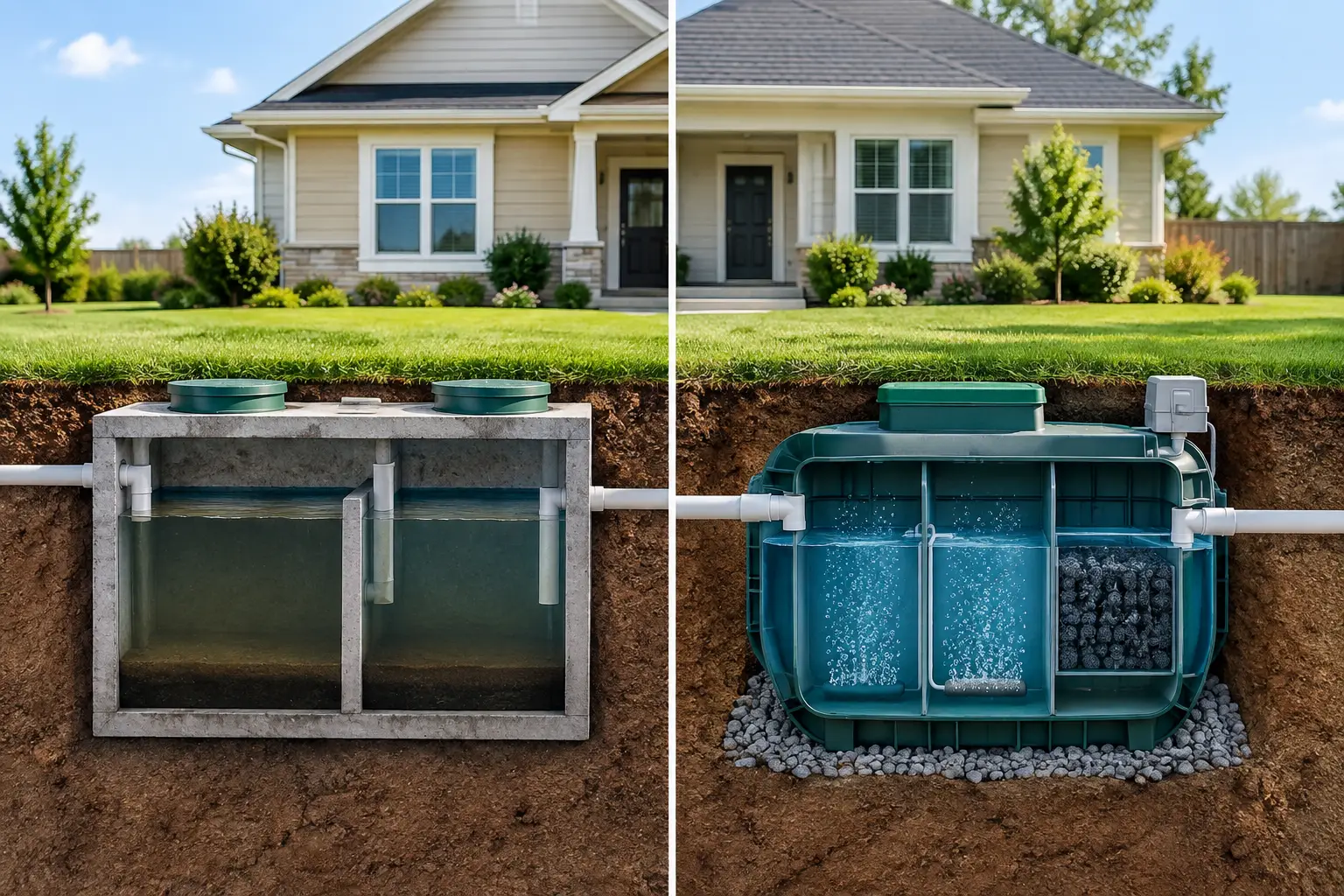
A septic tank versus aerobic system decision can affect a property’s operating costs, maintenance obligations, resale questions, and even whether the site can support the home as built. For buyers looking at rural and semi-rural properties in Southeast Texas, the right question is not simply which system is better. It is whether the installed system is appropriate for the home, permitted for the site, and functioning as intended.
A conventional septic system is often simpler and less expensive to operate. An aerobic treatment unit can provide a higher level of wastewater treatment and may work where a conventional drainfield is not practical. That added treatment comes with pumps, controls, electrical components, and a maintenance burden that buyers should understand before closing.
How a Conventional Septic Tank Works
A conventional septic system typically consists of a septic tank and a soil absorption area, often called a drainfield or leach field. Wastewater enters the tank, where solids settle to the bottom as sludge and floating materials form a scum layer. The liquid portion flows to the disposal field, where soil provides the final stage of treatment.
The system depends heavily on the condition and suitability of the soil. A drainfield needs enough usable soil, proper separation from groundwater, and adequate drainage to accept treated effluent. If the soil stays saturated, if groundwater rises into the treatment area, or if the field is compacted by traffic, wastewater may not disperse properly.
Conventional systems have fewer mechanical parts than aerobic units. There is usually no air compressor, control panel, or spray pump to maintain. That simplicity is an advantage, but it does not make the system maintenance-free. Tanks still need periodic pumping, and the drainfield can be damaged by excessive water use, vehicle traffic, tree roots, or years of neglected maintenance.
A septic tank alone is not the entire wastewater system. During an inspection, a visible tank lid does not confirm the condition of the drainfield, the baffles, or the underground piping. A home can have toilets that flush normally while the disposal area is already near failure.
How an Aerobic System Treats Wastewater
An aerobic treatment system uses oxygen and microorganisms to treat wastewater more aggressively than a conventional septic tank. In simple terms, an air pump or compressor introduces oxygen into a treatment chamber, supporting bacteria that break down waste. Many residential aerobic systems then send treated effluent to a pump tank and distribute it through spray heads or another approved disposal method.
Because the wastewater receives additional treatment, aerobic systems can be used on some sites with restrictive soil conditions, smaller available areas, or limitations that make a standard drainfield difficult. This is one reason they are common on certain properties around the Golden Triangle and other parts of Southeast Texas where wet conditions, shallow groundwater, and challenging soils can affect onsite sewage design.
The trade-off is complexity. An aerobic unit normally relies on electricity, mechanical aeration, pumps, floats, alarms, filters, and control components. If the compressor quits, a breaker is off, a pump fails, or an alarm has been ignored, treatment performance can decline quickly. Spray heads may also be blocked, damaged, poorly adjusted, or covered by landscaping.
An aerobic system should have a visible and functioning alarm. An alarm does not automatically mean the system has failed, but it should never be dismissed as a minor nuisance. It may indicate a high-water condition, pump problem, loss of air pressure, or electrical issue that requires service.
Septic Tank Versus Aerobic System: The Practical Differences
The biggest difference is the method of treatment and disposal. A conventional septic system primarily relies on the tank and the soil absorption field. An aerobic system provides more treatment within the equipment before effluent reaches its final disposal area.
That difference affects ownership in several ways. A conventional system generally has lower routine operating costs because it uses fewer powered components. An aerobic system uses electricity and usually requires regular professional service. Depending on the permit, local requirements, and system design, an ongoing maintenance agreement or documented service visits may be required. Buyers should request those records instead of assuming the seller has kept up with service.
Aerobic systems also require more attention during power outages. A short outage may not create an immediate problem, but extended outages can interrupt aeration and pumping. Properties with frequent outages, vacant homes, or backup generators should be evaluated with that operational reality in mind.
Neither system should receive wipes, grease, feminine hygiene products, coffee grounds, paint, solvents, or harsh quantities of antibacterial chemicals. These materials can clog components, interfere with treatment, and shorten the service life of the system. A garbage disposal can also increase solids loading, which means more frequent pumping may be needed.
Site Conditions Matter More Than Preference
A buyer may prefer a conventional septic system because it appears simpler. That preference does not change the site conditions. Soil texture, lot size, drainage, groundwater levels, flood exposure, existing wells, setbacks, and the number of bedrooms all influence the type and capacity of an onsite sewage facility that can be permitted.
In Southeast Texas, heavy rain and high groundwater deserve special attention. Standing water around a drainfield, surfacing sewage, unusually green strips of grass, sewage odors, or slow drainage after extended rain can point to a stressed disposal area. Those signs are not always visible on a dry inspection day, which is why system history and service documentation matter.
For aerobic systems with spray distribution, the location of spray heads matters. Treated effluent should be distributed in the approved area, not spraying vehicles, patios, neighboring property, or areas where people regularly gather. Broken spray heads, poor coverage, or water pooling near the unit may indicate a maintenance or drainage problem.
What to Review Before Buying a Property
A general property inspection can identify visible conditions and operational concerns, but onsite sewage systems are partly buried and cannot be fully evaluated without appropriate access, records, and sometimes specialty testing. The most useful pre-purchase review combines inspection observations with documentation from the owner, installer, maintenance provider, and local permitting authority.
Ask for the permit, design or site plan, final approval records, and any repair permits. Confirm the system type, rated capacity, and approved location of the treatment and disposal areas. A three-bedroom home may have been designed for a different wastewater load than a larger home with added bedrooms, a guest house, or frequent occupancy.
For a conventional system, useful records include pumping invoices, tank size, baffle repairs, drainfield repairs, and any history of backups or wet areas. For an aerobic system, request service reports showing compressor operation, pump function, alarm status, chlorine or disinfection requirements where applicable, filter cleaning, and repairs to spray equipment.
It is also wise to ask whether the system has been altered. A new driveway over a drainfield, a deck built over a tank access lid, added landscaping around spray heads, or an unpermitted bathroom can change how the system performs. These are not cosmetic details. They can affect access, capacity, and the ability to make future repairs.
Inspection Findings That Deserve Follow-Up
Some conditions should prompt further evaluation by a qualified onsite sewage professional before the option period expires. These include sewage odors, wet or unusually lush disposal areas, slow fixtures throughout the home, backups, damaged tank lids, missing risers, nonfunctioning alarms, exposed wiring, inactive compressors, and standing water near an aerobic unit.
A system that appears to be working on the day of inspection may still have hidden deficiencies. Many problems develop gradually, especially in drainfields and buried piping. A thorough evaluation should distinguish between what was observed, what could not be accessed, and what documentation is needed to reduce the buyer’s risk.
Texas Country Inspection approaches septic-related observations with the same practical mindset used for the rest of a property: document visible conditions, identify material concerns, and recommend the appropriate next step when a component cannot be confirmed through a standard inspection.
Choose the System the Property Can Support
A conventional septic system can be a sound, durable choice when the soil and lot conditions support it and the owner maintains it properly. An aerobic system can be the better solution when a site requires higher treatment or a different disposal approach, provided the owner is prepared for scheduled service and mechanical upkeep.
Before closing, focus less on labels and more on evidence. A permitted design, accessible components, credible maintenance records, proper drainage, and a system that matches the property’s use are far more valuable than a seller’s statement that the septic is “fine.”
