
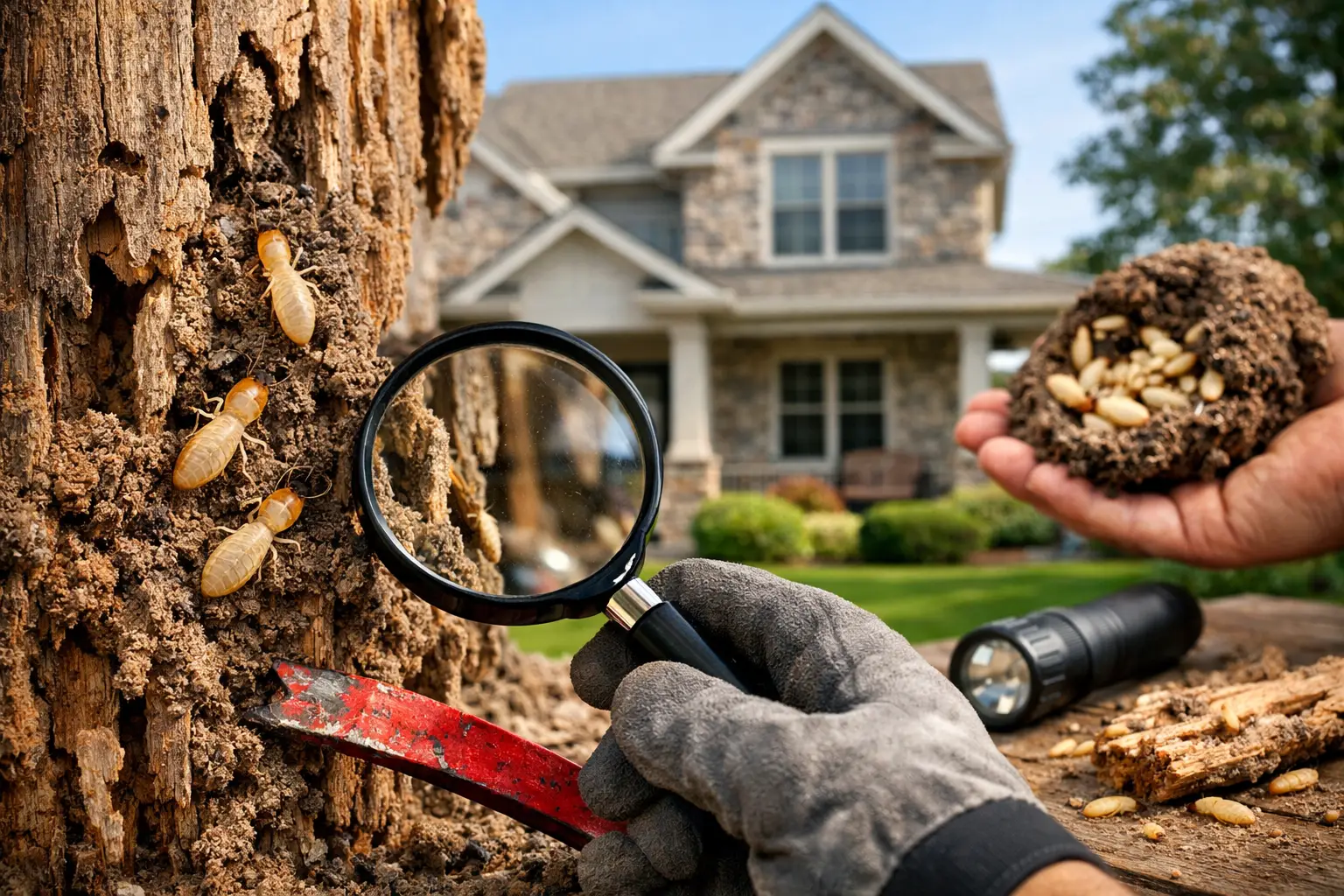
A small line of dried mud on a foundation wall can be easy to dismiss. So can a door that suddenly sticks or paint that looks bubbled near a baseboard. In Southeast Texas, those details can be early termite damage signs, particularly where high humidity, frequent rain, warm temperatures, and wood-to-soil contact create favorable conditions for subterranean termites.
Termites do not always leave obvious evidence in the open. They work from protected areas behind wall coverings, under flooring, inside framing, and below the structure. By the time surface damage is visible, there may already be concealed deterioration that deserves a closer evaluation. Buyers and owners should understand what they are seeing, what it may mean, and where a visual inspection has limits.
Why Termite Activity Is Easy to Miss
Subterranean termites need moisture and protection from open air. They typically travel from soil to wood through covered pathways, then consume wood from the inside out. That behavior allows activity to remain hidden behind drywall, insulation, siding, cabinetry, and finished floor materials.
A home can look clean and well maintained while having termite evidence in a crawlspace, at an exterior door frame, below a bathroom, or around a garage wall. This is one reason a standard walk-through is not a substitute for a detailed wood-destroying insect inspection. Inspectors evaluate accessible areas for evidence of infestation, damage, and conditions that are conducive to future activity, but concealed components cannot be fully evaluated without invasive removal of finishes.
Not every damaged piece of wood is termite damage. Fungal decay, carpenter ants, moisture deterioration, old repairs, and construction defects can create similar-looking concerns. The significance depends on the location, pattern, moisture conditions, and whether there is evidence of current insect activity.
Termite Damage Signs to Watch For
Mud tubes on foundations, piers, or walls
Shelter tubes are among the most recognizable signs of subterranean termites. These narrow, mud-like tunnels may run up a slab edge, masonry foundation, plumbing penetration, pier, garage wall, or crawlspace support. They protect termites as they move between the soil and a food source.
An intact tube may indicate possible current activity, but a broken or empty tube should not automatically be treated as harmless. It can reflect prior activity, a disrupted route, or treatment history. A qualified inspection helps determine whether live termites are present and whether additional evaluation or treatment is appropriate.
Wood that sounds hollow or breaks easily
Termites often leave a thin outer layer of wood while consuming softer material beneath it. A damaged baseboard, window trim, door casing, or framing member may sound hollow when tapped or crush more easily than expected when probed.
In severe cases, wood can show irregular internal galleries packed with soil-like material. Unlike clean, smooth carpenter ant galleries, subterranean termite damage is often rough and may contain mud or debris. Still, identification should be based on the full evidence, not one visual clue.
Blistered paint, buckled trim, or unexplained surface changes
Paint that bubbles, drywall that appears slightly swollen, or trim that separates from a wall can be associated with termite activity. These symptoms are not specific to termites. Water intrusion is also a common cause, and moisture itself can attract termites or support wood decay.
That overlap matters. A careful inspection should not stop at the surface symptom. The source of moisture, the condition of nearby materials, and the extent of accessible damage all need to be considered together.
Doors and windows that become difficult to operate
A sticking door is often blamed on foundation movement, seasonal expansion, or humidity. In Texas, all of those are realistic possibilities. But when a door frame, sill, or nearby trim has been weakened by termite damage, the opening can shift or the wood may no longer hold fasteners properly.
One sticking door alone does not prove termites. A door that sticks along with damaged trim, mud tubes, or soft wood deserves more attention.
Swarmers and discarded wings
Winged reproductive termites, often called swarmers, may appear indoors near windows, doors, light fixtures, or vents. They are commonly seen after warm, wet weather when colonies are attempting to establish new ones. Small piles of matching, translucent wings are another clue.
Swarmers can be confused with flying ants. Termites generally have straight antennae, a broad waist, and wings of similar length. Ants have elbowed antennae, a narrow waist, and front wings that are longer than their rear wings. If possible, preserve a specimen or take a clear photograph for identification rather than relying on a quick guess.
Soft flooring or damage below sinks and bathrooms
Moisture-prone areas deserve close attention. Leaking supply lines, failed shower surrounds, poor drainage, plumbing penetrations, and wet crawlspace conditions can create a favorable environment for termites and wood decay.
A soft spot near a tub, toilet, exterior wall, or kitchen sink may be caused by water damage, but termites can take advantage of wet or deteriorated wood. In an inspection, accessible subflooring, sill plates, joists, framing, and plumbing areas should be reviewed for both insect evidence and the moisture condition that may be contributing to the problem.
Conditions That Increase Termite Risk
Termite activity is not limited to neglected houses. Even newer homes can develop conditions that allow termites to travel unnoticed. The issue is often less about housekeeping and more about moisture management, construction details, and concealed access.
Common risk conditions include soil or mulch placed too high against siding, wood siding or trim in direct contact with soil, firewood stacked against the house, clogged gutters, poor grading, leaking exterior faucets, and unaddressed plumbing leaks. In crawlspaces, standing water, inadequate drainage, excessive humidity, and wood debris can increase concern.
These conditions do not confirm an infestation. They do, however, reduce the separation between termites and the structure. Correcting them is worthwhile whether or not active termites are found.
What a WDI Inspection Can and Cannot Tell You
A wood-destroying insect inspection focuses on visible and accessible evidence of termites and other wood-destroying insects, along with visible damage and conducive conditions. It is frequently requested during real estate transactions and may be required for certain VA, FHA, agricultural, or lending situations.
The report is not a warranty that a structure is free from termites, and it does not eliminate the possibility of concealed activity. Furniture, stored belongings, finished walls, insulation, floor coverings, locked areas, and inaccessible crawlspace conditions can limit what is visible on the inspection date. That limitation is not a shortcut. It is a practical reality of inspecting an occupied or finished building without dismantling it.
For buyers, the value of the inspection is documentation and risk awareness before closing. Visible termite damage may lead to further evaluation, treatment recommendations, repair negotiations, or a closer review of structural components. For owners, an inspection can identify conditions that should be corrected before they become more expensive repairs.
Texas Country Inspection, LLC approaches WDI observations with the same field-focused attention used throughout a property inspection. When evidence is present, the goal is to document what is visible, explain the concern clearly, and distinguish between active signs, prior evidence, damage, and contributing moisture or access conditions.
If You Find Possible Termite Evidence
Avoid spraying household insecticide into a suspected tube or damaged area before it can be evaluated. Disturbing visible evidence may make identification more difficult and does not address the colony or hidden routes through the structure.
Instead, photograph the area, note its location, and avoid removing tubes, wings, or damaged material if a professional evaluation is planned. If wood is soft around a door, window, bath area, or structural support, limit unnecessary loading until the extent of deterioration is understood. A pest-control professional may recommend treatment, while significant damage may require repair evaluation by a qualified contractor or structural professional.
For a buyer near Lumberton, Beaumont, Orange, or the surrounding Southeast Texas area, timing matters. A WDI report obtained before closing can identify visible concerns while there is still an opportunity to ask questions, request documentation, and make informed decisions. Waiting until after move-in may turn an inspection issue into an unexpected ownership expense.
The most useful approach is not to panic over every crack, sticking door, or bit of damaged wood. Pay attention to patterns, moisture sources, and evidence that connects the soil to the structure. When termite damage signs appear, a thorough inspection provides the practical next step: clear documentation, realistic limits, and a better basis for protecting the property.
